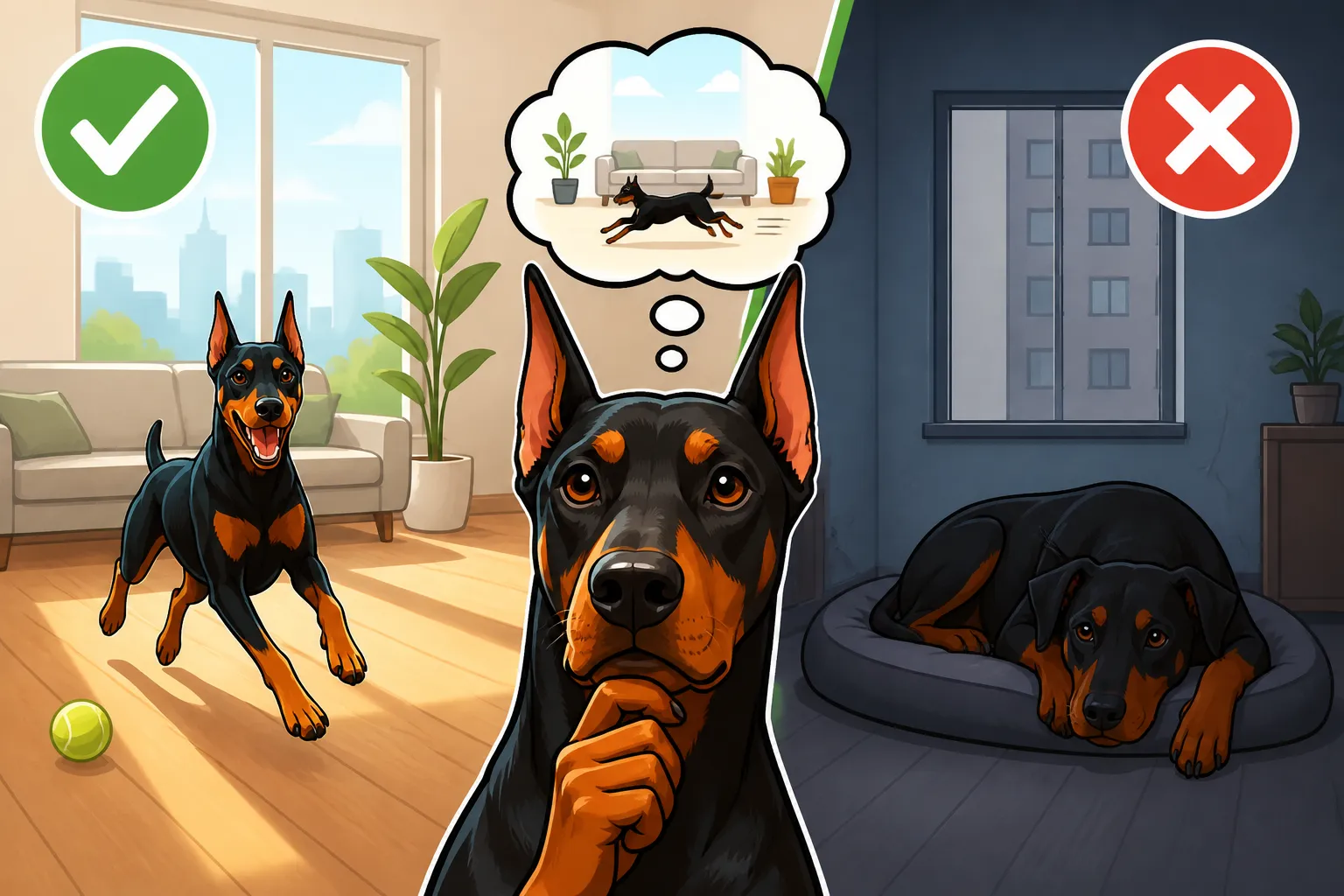
Whether an Apartment Doberman Gets Enough Room
The idea of bringing a magnificent Doberman into an apartment often sparks immediate doubt and a flurry of "Are you crazy?" questions from well-meaning friends and even strangers. Many assume that a dog of such stature and energy must have a sprawling backyard, but the truth is far more nuanced. This guide aims to tackle that common misconception head-on, exploring whether an apartment lifestyle can truly provide enough for a Doberman to thrive, and what it really takes to make it work.
Understanding the Doberman's Energy and Exercise Needs
Let's be real, a Doberman isn't a couch potato breed by nature. They were meticulously bred to be working dogs, guardians, and companions, roles that demand intelligence, athleticism, and a strong drive. Simply put, they come with a built-in engine that needs to run, and that's often where the apartment debate begins.
The Doberman's Natural Drive
Think about the history of the Doberman. They weren't lounging around a manor house; they were working alongside Karl Dobermann, protecting him on his tax collection rounds. This isn't just anecdotal fluff; it's ingrained in their DNA. This means they possess a high level of innate energy, a keen intellect, and a profound desire to have a job to do. Their intelligence, while a blessing in training, can quickly become a curse if not properly channeled. A bored Doberman isn't just mildly mischievous; they can become destructive, anxious, or develop undesirable behaviors simply because their brilliant minds and powerful bodies aren't being engaged. Their need isn't solely about burning off physical energy, but also about satisfying their mental hunger for purpose and challenge. Without this outlet, they're likely to invent their own "jobs"—and you probably won't appreciate their choices.
Daily Exercise Requirements
So, what does this "engine that needs to run" actually translate to in daily life? It’s not just about a leisurely stroll around the block twice a day. A Doberman needs purposeful exercise, a mix of physical exertion and mental engagement. We're talking about vigorous activity that gets their heart rate up and allows them to stretch those long, powerful legs. For many Dobermans, this means at least an hour, if not two, of dedicated, high-quality exercise daily. This might include brisk jogging, intense fetch sessions, agility work, or long hikes. The key word here is quality. A slow amble won't cut it. They need to sprint, to leap, to feel that burn in their muscles. And remember, that doesn't just happen on its own. It's something you, as their owner, need to actively provide and structure into your routine, regardless of whether you have a sprawling estate or a cozy studio apartment. This physical exertion is also crucial for preventing behavioral issues that often stem from pent-up energy, like excessive barking, destructive chewing, or frantic pacing.
Maximizing Space and Enrichment in an Apartment Setting
The biggest hurdle for apartment Doberman owners isn't necessarily the lack of a private yard, but the perception that this lack is insurmountable. In reality, with some creativity and consistent effort, you can absolutely provide ample physical and mental enrichment for your Doberman within an apartment living situation. It's all about intentionality and turning limitations into opportunities.
Creative Solutions for Physical Activity Indoors
When the weather is terrible, or you simply can't get out for a full romp, indoor activities become essential. Don't underestimate the power of structured indoor play. Think "hide-and-seek" with favorite toys, practicing quick retrieves down a long hallway, or even setting up a mini agility course with household items. Engaging their prey drive with a flirt pole can also provide intense, short bursts of exercise that can be incredibly tiring. The goal isn't just mindless running; it's about channeling their energy into something productive. Puzzle Work That Actually Tires a Doberman is a fantastic resource here; puzzle toys can be lifesavers for burning mental energy, which in turn tires them out physically. Stuffing Kongs or other treat-dispensing toys with frozen goodies can keep them occupied for significant periods, working both their minds and jaws. Indoor training sessions, even just 10-15 minutes of practicing commands like "stay," "down," and "come," can be surprisingly exhausting for a Doberman, especially if you introduce new tricks or higher levels of distraction. Remember, consistency is key; short, frequent bursts of activity throughout the day can add up significantly.
Mental Stimulation Beyond the Walk
Physical exercise is only half the battle. A Doberman's sharp mind needs as much, if not more, attention than their body. Without mental stimulation, they can become bored, frustrated, and even anxious. This is where training becomes a lifestyle, not just a one-time class. Daily obedience refreshers, learning new tricks, or engaging in scent work games (like hiding treats around the apartment for them to find) are paramount. These activities tap into their natural problem-solving abilities and desire to work. Keeping a Doberman Mentally Tired is about providing these intellectual challenges. Consider things like "101 Things to Do With a Box" – literally teaching them to interact with an empty box in various ways, fostering creativity and independent thought. Rotating toys, so they don't get bored, and regularly introducing novel objects or sounds can also keep their minds engaged. Even simple things like asking them to "settle" on their mat while you're busy, and rewarding them for it, is a form of mental work that teaches self-control and patience.
Designated "Downtime" Zones
Even the most active Doberman needs a place to truly unwind and feel secure, especially in a busy apartment environment. This means creating a designated "downtime" zone that is exclusively theirs. A properly sized crate, as discussed in Crate Sizing for a Doberman at Full Height, isn't a punishment but a safe den, a personal sanctuary where they can retreat from the hustle and bustle. This space should be comfortable and inviting, perhaps outfitted with soft Beds That Cushion a Bony Doberman to protect their lean joints and provide warmth. It should be a place where they aren't disturbed, a refuge from constant human interaction. Teaching them to settle in this area, perhaps with a long-lasting chew toy, fosters independence and self-soothing. This "off switch" is incredibly important for Dobermans, who can be prone to overstimulation. Having a predictable, quiet space helps them regulate their emotions and ensures they get adequate rest, preventing them from becoming constantly "on edge."
Overcoming Apartment-Specific Challenges
Living with a Doberman in an apartment isn't without its unique set of challenges. From neighborly relations to managing their famously "Velcro" personalities, there are practical considerations that differ from having a dog in a house with a private yard. Acknowledging these potential issues upfront and having strategies in place will make all the difference.
Noise Sensitivity and Neighborly Relations
Dobermans are naturally alert and observant dogs. This means they are often quick to notice every hallway sound, every passing footstep, and every creak from the apartment above or below. This acute awareness, combined with their strong guarding instincts, can unfortunately lead to barking. And let's be honest, Doberman barks are not usually quiet little yips; they're deep, resonant, and can easily carry through walls, leading to understandably frustrated neighbors. Early and consistent training is crucial here. Teaching a "quiet" command, desensitizing them to common apartment noises, and ensuring they have sufficient mental and physical exercise to reduce anxiety-induced barking are vital. Socialization, from puppyhood, to a variety of sounds and situations helps build their confidence, making them less likely to react fearfully or defensively to every new stimulus. Remember, a calm Doberman is a quiet Doberman, and a quiet Doberman makes for a happy neighbor. Establishing a strong "place" command, where they go to their designated spot and stay there when visitors arrive or when there's commotion, can also be a game-changer.
Managing Potty Breaks and "Velcro" Tendencies
One of the most immediate practical differences in apartment living is the frequency and logistics of potty breaks. There's no quick dash into the backyard. Every potty break requires leashing up, taking an elevator or stairs, and going outside, often in all weather conditions. For a puppy, this means hourly trips, day and night, which can be exhausting. For an adult, it still means multiple trips a day, rain or shine. This is a significant time commitment that needs to be factored into your daily schedule.
Beyond the practicalities, Dobermans are famous for being "Velcro dogs" – they want to be right by your side, all the time. Living With a Doberman That Follows You Everywhere is a testament to this trait. While this devotion is endearing, it can quickly escalate into separation anxiety if not managed proactively. If you're going to be out of the apartment for long stretches, this tendency becomes a real problem. Dogs with separation anxiety can engage in destructive behaviors, incessant barking, or self-harm when left alone. It's crucial to teach your Doberman how to cope with solitude from an early age, gradually building up their tolerance to being alone. A Doberman That Cannot Cope When You Go Out delves into these issues, and resources like Building a Doberman's Alone Time From Minutes provide practical steps for helping them adjust. Crate training, mentioned earlier, is invaluable here, as it provides a safe, contained space where they can feel secure while you're away. Enrichment toys, white noise, and even background music can also help create a calming environment.
Navigating Breed Restrictions and Public Perception
Let's face it, Dobermans, despite their loyal and often goofy personalities with their families, carry a certain public image. They are frequently misunderstood and, unfortunately, often appear on breed restriction lists for apartments and rental properties. This is a very real challenge for prospective apartment owners. Before even starting your search, you need to be prepared to encounter these restrictions. Whether Dobermans Appear on US Breed Restriction Lists highlights how widespread these can be.
You'll need to be proactive. Have a comprehensive "dog resume" ready, detailing your Doberman's training, temperament, and health records. Offering to meet the landlord or property manager with your well-behaved Doberman, demonstrating their excellent manners, can go a long way. Obtaining a Canine Good Citizen (CGC) certification can be incredibly helpful, as it provides objective proof of your dog's good behavior. Convincing a Landlord a Doberman Is Trained offers strategies for this. Be honest and upfront about your breed. Trying to hide your Doberman will almost certainly backfire and could lead to eviction. It's a frustrating reality, but navigating this public perception requires patience, advocacy, and a beautifully behaved Doberman as your best ambassador.
The Owner's Commitment: More Important Than Square Footage
Ultimately, whether a Doberman thrives in an apartment has less to do with the square footage of your living space and everything to do with the size of your commitment. A Doberman can be utterly miserable in a mansion with an acre of yard if their human is neglectful, and they can flourish in a small apartment if their human is dedicated, active, and engaged.
Time Investment and Consistency
Owning a Doberman, especially in an apartment, is a lifestyle choice that demands a significant investment of your time. This isn't a "set it and forget it" breed. You must be prepared to dedicate consistent time each day to their exercise, training, and mental enrichment. This means committing to those daily walks, jogs, or park visits, regardless of your personal schedule or the weather. It means prioritizing training sessions and interactive play, even when you're tired. Their routine needs to be consistent; Dobermans thrive on predictability. Skipping walks, neglecting training, or leaving them bored and alone for extended periods will inevitably lead to behavioral issues and an unhappy dog. The Owner a Doberman Actually Needs is someone who understands this deep commitment and is willing to integrate their Doberman's needs into their daily life, treating them as a true member of the family rather than just a pet. It's about showing up, day after day, with intention and energy.
Financial Considerations
Let's not sugarcoat it: owning a Doberman is not cheap, and some of the expenses can be amplified when living in an apartment. While you might save on lawn care, you'll likely spend more on alternatives to a private yard. Consider costs like doggy daycare, especially if you work long hours. Daycare That Accepts a Doberman can be a fantastic outlet for their energy and social needs, but it's an ongoing expense. Professional dog walkers for those midday breaks, enrolling in obedience classes, or participating in dog sports all add up. High-quality food, durable toys (because Dobermans can be power chewers!), and potential vet bills for a breed prone to certain health issues (like DCM) also contribute to the overall cost. Take a look at Monthly Spending on an Adult Doberman to get a realistic picture. You might find yourself investing in more sophisticated puzzle toys, durable chews, or even specialized training equipment to keep them mentally stimulated indoors. These are not optional extras; they are necessities for a well-adjusted apartment Doberman.
The Bond and Adaptability
The most crucial factor for a Doberman's well-being is the strength of the bond they share with their human family. These dogs are intensely loyal and thrive on connection. They are "people dogs" through and through, preferring to be with their owners wherever they are, regardless of the size of the dwelling. If you are consistently providing physical exercise, mental challenges, and affectionate companionship, a Doberman will adapt remarkably well to apartment living. They will see you as their world, and as long as that world is fulfilling, the lack of a sprawling yard becomes secondary. A Doberman that feels loved, understood, and has its needs met will be a happy, settled companion, whether their home is a grand house or a cozy urban apartment. It’s about quality of interaction, not quantity of space.
| Factor | Apartment Living (Doberman) – Potential Challenges | Apartment Living (Doberman) – Solutions & Considerations |
|---|---|---|
| Physical Space | Limited indoor running room | Daily vigorous outdoor exercise is non-negotiable; indoor games (fetch in hallways, flirt pole) |
| Potty Breaks | Requires leashing, elevator/stairs, outdoor access for every break, rain or shine | Strict, consistent schedule; puppy pads for emergencies; frequent trips (especially with puppies) |
| Noise & Neighbors | Dobermans are alert, can be vocal; barking carries easily | Early desensitization to apartment noises; "Quiet" command training; ample exercise to reduce anxiety |
| Separation Anxiety | "Velcro dog" tendency can lead to distress when alone | Gradual alone-time training; crate training; puzzle toys; professional help if severe |
| Breed Restrictions | Often on "dangerous breed" lists for rentals | Proactive communication with landlords; Canine Good Citizen (CGC) certification; tenant liability insurance |
| Mental Stimulation | Less natural "things to do" without a yard | Daily training sessions; puzzle toys; scent work; interactive games; rotating toys |
| Owner Time Commitment | Higher demand for structured exercise/enrichment outings | Must dedicate 1-2 hours daily to purposeful activity; consistent routine is vital |
| Cost | Increased costs for daycare, dog walkers, training | Budget for these services; consider pet insurance for health issues |
| Socialization | More exposure to public spaces, people, and dogs required | Regular park visits, dog-friendly cafes, puppy classes, continued socialization |
| Weather Challenges | Outdoor exercise required even in rain/snow/extreme heat | Invest in appropriate gear (coats, boots); adjust exercise times; strong indoor alternatives |
The bottom line is that a Doberman can absolutely thrive in an apartment, but it hinges entirely on the owner's dedication and lifestyle. It demands more intentionality, more structure, and more consistent effort than perhaps a less demanding breed or one with a sprawling backyard at its disposal. If you are committed to meeting their needs for vigorous exercise, mental stimulation, and constant companionship, your Doberman will repay you with unwavering loyalty and be a happy, well-adjusted member of your apartment family.
Disclaimer
This article is for general informational purposes only and does not constitute professional advice. Laws, prices and regulations vary by location and change over time. Consult a qualified professional for guidance on your specific situation.