Dobermans in Film and Their Screen Image
A sleek silhouette, upright ears, and a low growl can make a Doberman look like the perfect movie villain. That image is memorable, but it can leave viewers with an unrealistic idea of what the breed is like at home. This guide looks at how film shaped the Doberman’s screen reputation, what those portrayals get wrong, and how to separate dramatic storytelling from real dog behavior.
How Dobermans became movie shorthand for danger
The visual features filmmakers emphasize
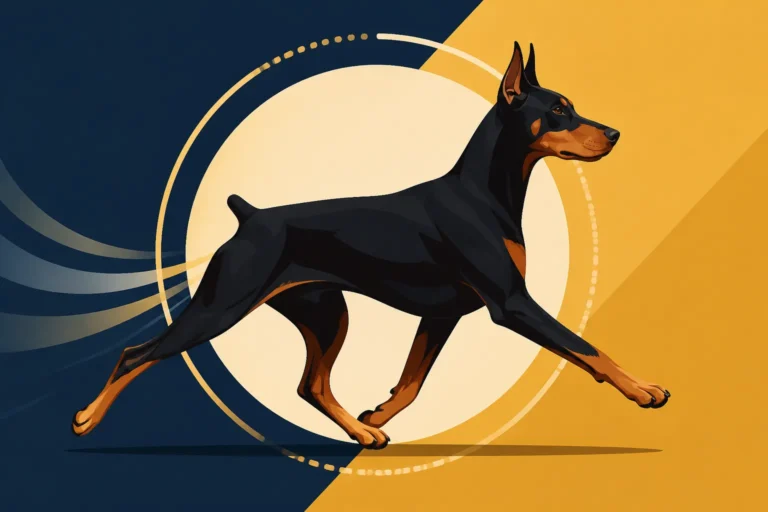
Dobermans have a distinctive outline: a deep chest, long legs, narrow muzzle, and alert posture. On screen, that shape reads clearly even in a dark hallway or a wide shot. Filmmakers can use a dog’s silhouette to suggest danger before the audience knows anything about the character or the plot.
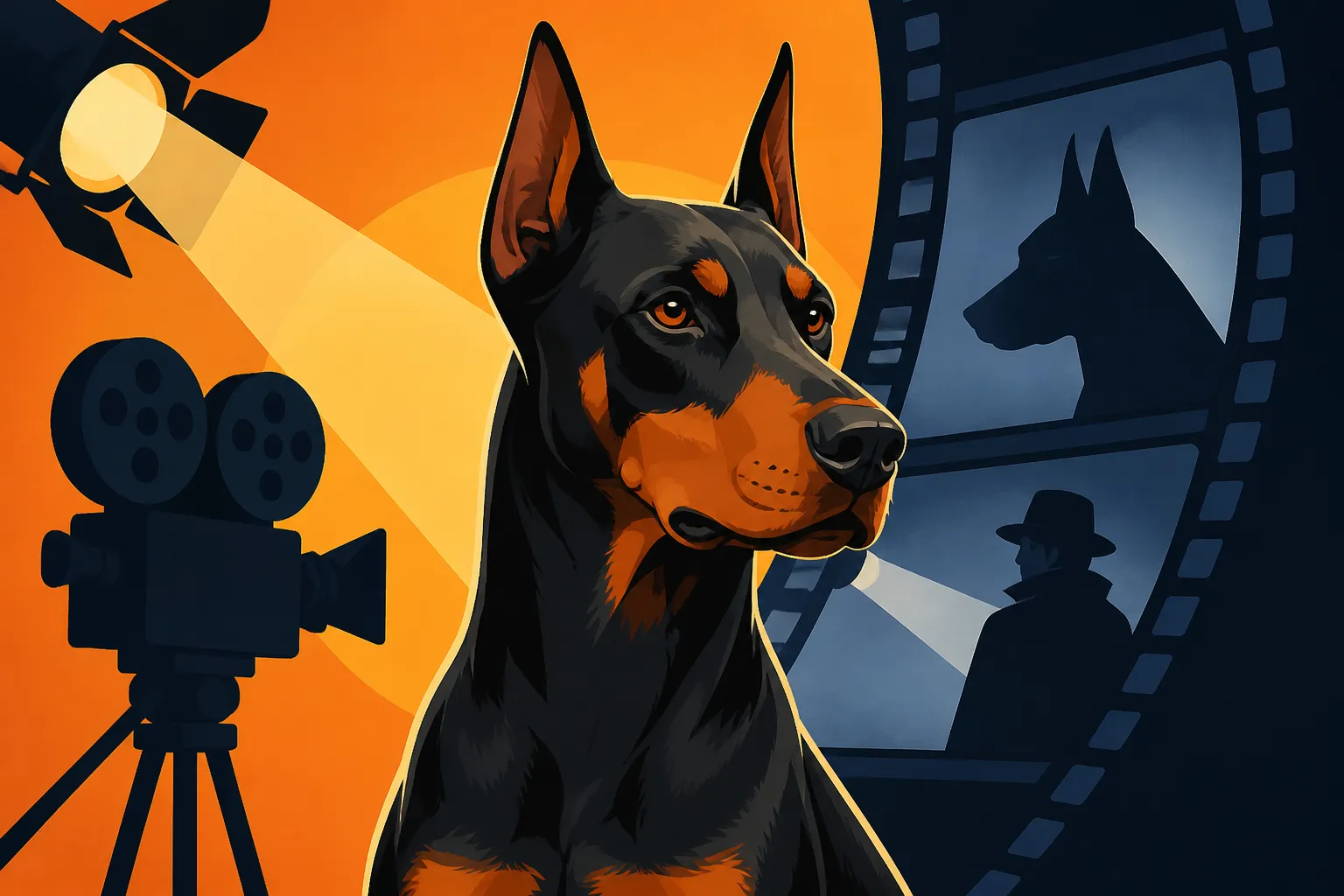
Sound and framing add to the effect. A close-up of a focused face, a sudden turn toward the camera, or a growl heard before the dog appears can make an ordinary moment feel threatening. A Doberman standing silently beside a stern character can communicate “guard dog” without a line of dialogue. The movie is using the dog’s appearance as visual shorthand, not offering a balanced picture of the breed.
The same physical traits can suggest very different things in another story. A Doberman moving confidently beside a handler may look capable and composed; the exact same dog, filmed from below and paired with ominous music, can seem menacing. Lighting, editing, and the character’s role often shape the impression as much as the dog itself.
The villain’s guard dog and the loyal partner
For decades, popular stories have often placed Dobermans beside criminals, wealthy villains, or intimidating authority figures. Their job in those scenes is usually simple: block an entrance, chase someone, or make a character appear powerful. The dog may have little personality beyond being dangerous on command.
That pattern is especially easy to spot in older genre films, where a recognizable breed can help establish a setting quickly. The viewer sees a large, alert dog behind a gate and understands that the property is meant to feel unsafe. A Doberman can fill that role visually, even when the story gives no explanation for the dog’s training, history, or relationship with its handler.
Screen stories have also given Dobermans more playful or heroic roles. In The Doberman Gang, trained Dobermans are central to a crime-comedy plot, a far more unusual premise than the standard guard-dog image. The contrast shows how a dog’s on-screen meaning depends on the script: the same breed can serve as a threat, a clever accomplice, or a source of comedy.
Why the image sticks
A frightening portrayal can be more memorable than an ordinary, uneventful one. Viewers may remember the dog that lunged at a door, but not the many scenes in which a dog simply walked beside a character. Repetition matters too: when films, cartoons, and advertisements reuse the same visual cue, audiences can start to treat it as a fact about the breed.
That impression may follow people into everyday life. Someone who has only seen Dobermans presented as attack dogs might tense up when one passes on a sidewalk, even if the dog is walking calmly on a loose leash. A parent might worry that the breed is inherently unsafe around children, while a prospective owner may mistakenly assume a Doberman will guard a home effectively without careful training and management.
This reputation is part of the broader question explored in Why Dobermans Have a Frightening Reputation. It also helps to compare the cinematic stereotype with Doberman Temperament as the Standard Describes It, which focuses on the breed’s intended qualities rather than a role written for a movie scene.
What movie portrayals leave out about real Dobermans
A breed is not a behavior prediction
A dog’s breed can offer clues about common physical traits and historical purpose, but it does not tell you exactly how an individual dog will behave. Temperament is shaped by many influences, including genetics, early experiences, health, training, and the environment. A movie that shows a Doberman attacking on cue is showing a character’s trained action within a scripted scene, not evidence that all Dobermans are naturally aggressive.
Real dogs communicate through more than a growl or bark. They may turn away, stiffen, pause, lower their body, or seek distance when uncomfortable. A production may edit out those quieter signals or use sound and reaction shots to make a scene seem more dramatic. The audience sees a brief, carefully selected moment, not the dog’s complete behavior or the conditions around the performance.
It is useful to keep that distinction in mind when asking Whether a Doberman Is Naturally Suspicious. A dog’s alertness should not be mistaken for a guarantee that it will distrust every stranger, just as a friendly scene in a family film does not prove every Doberman will welcome every visitor.
Guarding instinct is not the same as aggression
Dobermans were developed as working dogs, and many are attentive to their surroundings and closely bonded with their people. Those traits can be mistaken for a constant urge to attack. In real life, a dog that notices a sound or watches a visitor is not necessarily a threat; what happens next depends on the individual dog, the context, and how people manage the situation.
A calm greeting, appropriate boundaries, and a reliable way to settle are useful skills in an ordinary household. Owners should not assume that a dog will know how to distinguish a harmless delivery driver from a genuine threat. Nor should they encourage a dog to act intimidating because a film made that behavior look impressive. Responsible training is about helping a dog respond safely and predictably, not turning a dramatic image into a household goal.
The difference between a dog at home and one in an unfamiliar public setting can be significant. A Doberman relaxed with family may still need careful introductions to new people or dogs. For more on those distinctions, see The Difference Between a Doberman at Home and Out and Whether a Doberman Is Good With Strangers.
Screen time hides the ordinary work of ownership
Movies rarely show the daily habits that help a real dog thrive. They do not usually linger on leash practice, gradual socialization, veterinary visits, rest, or the patient repetition involved in teaching a dog to settle. Yet those ordinary routines matter much more to a household than whether a dog looks imposing beside the front door.
A Doberman needs thoughtful exercise, companionship, and mental activity. A bored or under-stimulated dog may invent its own entertainment, which can mean chewing, barking, or pestering the family. That behavior is not proof of a “bad” breed; it may be a sign that the dog needs a more suitable routine, training plan, or professional assessment.
Owners planning for everyday life should consider practical details as well as the breed’s screen image. For instance, a secure harness, suitable toys, and food storage can make daily routines easier. Some people compare basic options at retailers such as Chewy, but the important step is choosing items that fit the individual dog and asking a veterinarian or qualified trainer when a specific need calls for expert guidance.
How films create the Doberman image
Training, editing, and the controlled set
A movie dog’s performance is usually the result of planning, training, and careful production choices. A dog may repeat a familiar behavior in a controlled environment while a handler stays nearby. Camera angles and editing can make a brief action look more intense or more spontaneous than it was. The audience sees the finished scene, not the preparation that made it possible.
That distinction matters when viewers compare a screen performance with a real dog. A scene in which a Doberman appears to charge at someone may have involved a trained movement, a safe distance, and several takes. It does not mean that the dog was behaving unpredictably or that the same behavior would be safe to copy at home. Film is designed to create an emotional response; it is not a how-to guide for training.
Well-managed productions also need to consider animal welfare and safety. Dogs should not be pushed into frightening or dangerous situations for the sake of a dramatic shot. If a scene makes a dog appear to attack, the performance should be created through controlled techniques rather than by putting people or animals at genuine risk.
How familiar tropes shape what viewers expect
A few recurring choices can build a powerful stereotype. The Doberman is placed behind a fence, shown in low light, or made to appear when a character enters a supposedly dangerous space. The dog’s presence is used to tell the audience how to feel before the story gives it any individual traits.
Those conventions can create unreasonable expectations in both directions. Some people assume a Doberman will automatically protect them. Others assume a calm dog is an exception to the breed. In reality, neither assumption is dependable. A dog’s behavior cannot be selected like a movie role, and protection work is not a casual extension of owning a large breed.
It is also worth remembering that a dog can be attentive without being hostile. The breed standard’s language about alertness and determination is not a promise that every dog will respond identically to every situation. What Determined and Alert Mean in the Doberman Standard offers helpful context for separating those qualities from the simplified “attack dog” character.
A quick comparison of screen image and real life
| Screen convention | What it may lead viewers to assume | More realistic perspective |
|---|---|---|
| Doberman appears beside a villain | The breed is naturally dangerous | A film assigns a role; individuals vary in temperament and experience |
| Dog growls at a visitor | Growling always means an attack is imminent | Growling is communication that should be understood in context and handled safely |
| Dog guards a property without guidance | Protection behavior happens automatically and reliably | A dog’s responses are not a substitute for secure home safety or professional training |
| Dog obeys dramatic commands instantly | Training is quick and effortless | Reliable behavior takes consistency, practice, and suitable support |
| Dog is calm in every family scene | Every Doberman will be comfortable with every person | Social comfort varies, and introductions should be managed thoughtfully |
How to watch Doberman scenes with a more realistic eye
Separate the dog’s appearance from the story’s message
When a Doberman appears in a film, ask what the scene wants you to feel. Is the dog shown as a threat because of its behavior, or because of ominous music, shadows, and the character standing behind it? Does the story give the dog a name and a relationship with people, or use it only as a warning sign?
This small pause can help you notice the difference between character design and real-world information. A dog’s body language in a scene may be difficult to interpret because editing can remove what happened before and after. If the image is especially dramatic, remember that the director wants a clear emotional effect, not a complete lesson in canine communication.
It may also help to compare the scene with real examples of responsible dog handling. A calm dog walking with a family or resting at home is less cinematic than a dramatic chase, but it is often more representative of the routines that matter to owners.
If a film inspires you to consider the breed
It is perfectly understandable to become interested in a breed after seeing it on screen. The important next step is learning about the real commitment, rather than choosing a dog based on a powerful image. Spend time with well-managed Dobermans, talk with responsible breeders or rescue organizations, and ask about health, temperament, training, and the support a dog may need throughout its life.
Think through your own situation honestly. Do you have time for exercise, training, and companionship? Can you handle a large, energetic dog on a leash? Are the people and animals in your household comfortable with a careful introduction process? The questions are not about whether the breed looks impressive; they are about whether a particular dog’s needs fit your home.
If a film prompts you to start gathering supplies, keep the dog’s actual needs at the center of those decisions. A properly fitted walking setup, enrichment activities, and a comfortable place to rest can be more useful than novelty gear chosen to imitate a movie character. Chewy is one place shoppers may compare everyday pet supplies, but fit, safety, and the dog’s individual needs matter more than a product’s association with a screen image.
Talk about the breed without repeating the stereotype
If someone says, “Those dogs are dangerous,” a calm response is usually more useful than an argument. You might explain that films often use Dobermans as visual shorthand for danger, but an individual dog’s behavior depends on many factors. That does not mean every dog is automatically safe; it means judging the actual dog and managing interactions responsibly is more reasonable than relying on a movie trope.
Parents can use the same approach with children. Teach them not to approach an unfamiliar dog without permission, not to disturb a dog that is eating or resting, and to give dogs space when they move away. Those are sensible habits around any breed, not proof that Dobermans are uniquely threatening.
Owners can also help by making everyday encounters predictable. Keep dogs under control, respect other people’s comfort, and seek qualified help if a dog is showing concerning behavior. Chewy may be a convenient place to compare routine supplies such as toys or walking accessories, but equipment alone cannot replace supervision, training, and a thoughtful plan for public outings.
The breed’s history and reputation deserve nuance. The Doberman's War Record explores another part of the breed’s public image, while Whether Doberman Bite Statistics Match the Fear addresses how fear and claims about danger can become tangled. Looking beyond the film stereotype makes room for a more accurate conversation: Dobermans are individual dogs, and responsible care matters far more than a villain’s soundtrack.
Disclaimer
This article is for general informational purposes only and does not constitute professional advice. Laws, prices and regulations vary by location and change over time. Consult a qualified professional for guidance on your specific situation.