Whether a Doberman Mix Escapes the Heart Risk
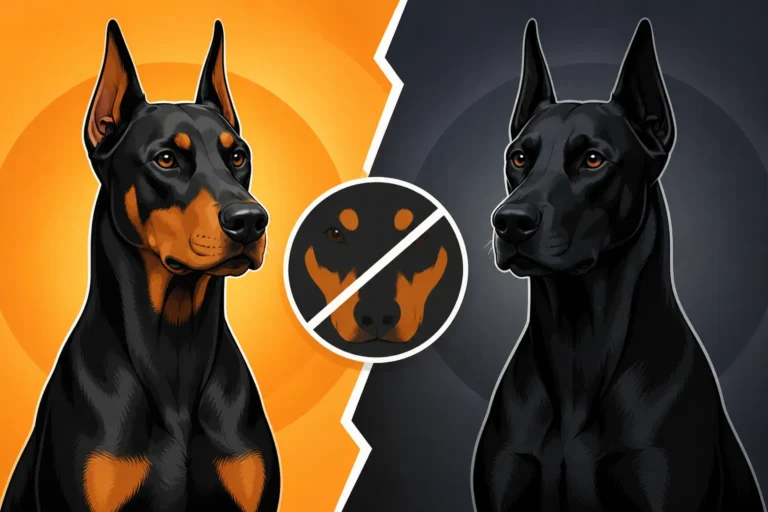
A Doberman mix does not automatically avoid the breed’s heart risks. If one parent is a Doberman, inherited risk may still matter, and a mixed-breed appearance or a clear DNA result cannot rule out heart disease. This guide explains what ancestry can tell you, what it cannot, and how to discuss sensible screening with your veterinarian.
Why mixing breeds does not erase Doberman heart risk
Heart risk follows ancestry, not just appearance
Dilated cardiomyopathy, or DCM, is a serious disease associated with Dobermans. The heart muscle becomes weakened or enlarged and may pump less effectively. In some dogs, abnormal heart rhythms can develop before obvious signs appear. A dog can inherit relevant risk factors even if it does not look much like a purebred Doberman.
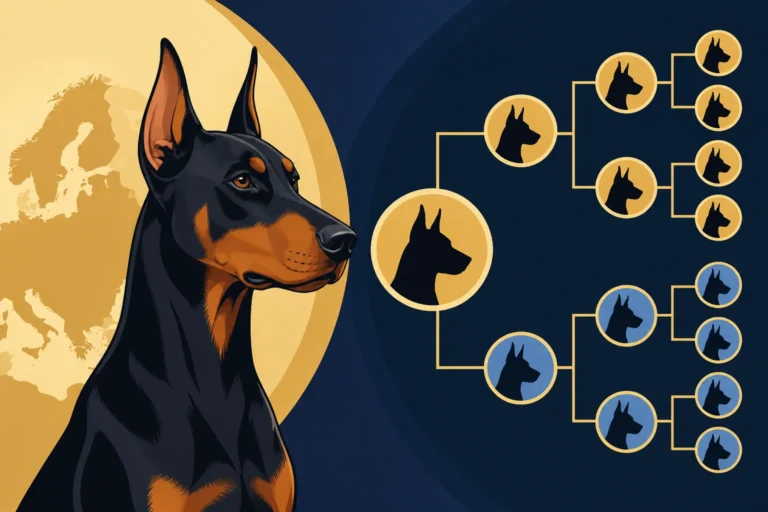
A mix’s risk depends partly on its family tree. A dog with one Doberman parent is not genetically identical to a purebred Doberman, but crossing breeds does not guarantee that Doberman-associated variants or other inherited contributors disappear. A mix several generations removed may have a different risk profile from a first-generation cross, yet appearance alone cannot tell you which genes it inherited.
That is why “he’s only half Doberman” is not enough to settle the question. It may be useful background, but it is not a diagnosis or a clean bill of health. If you know the other breed and have reliable information about the parents and grandparents, share it with your veterinarian. A family history of DCM, unexplained fainting, sudden death, or heart medication can be relevant even when the dog is mixed.
For more background on the condition in the breed, see The Heart Disease That Reaches Most Dobermans and How Many Dobermans Develop DCM. Those discussions concern Dobermans as a population; they do not provide a precise prediction for an individual mix.
There is no simple “percentage Doberman” risk calculator
It is tempting to treat ancestry as arithmetic: half Doberman means half the risk, or a quarter Doberman means a quarter of the risk. Inherited disease does not work so neatly. Risk can involve multiple genes, the particular variants a dog receives, and factors that are not fully understood. A mixed-breed dog can inherit relevant risk from a Doberman parent, while another dog with similar ancestry may not develop the same condition.
The other parent’s breed also matters, but it does not necessarily cancel the Doberman contribution. Some other breeds have their own inherited heart conditions, and a dog may inherit risk from either side of its family. Even when the other breed is not known for DCM, that does not prove the cross is protected.
A responsible way to think about it is: Doberman ancestry is a reason to ask questions, not a reason to assume the worst. The practical next step is to gather the history you can and discuss screening based on your dog’s age, health, and family information.
What DNA testing can and cannot tell you
A gene test is not a prediction of the whole future
Doberman DCM gene tests look for particular variants associated with risk. They can add useful information, especially when the dog’s ancestry is known, but they do not test for every possible genetic influence on heart disease. A result that is clear for the variants included in a test does not guarantee that a dog will never develop DCM.
Likewise, a positive result is not the same as a diagnosis. It does not tell you that the dog already has an enlarged heart, an abnormal rhythm, or symptoms. It indicates a genetic finding that should be interpreted alongside the dog’s health, family history, and veterinary screening.
This distinction matters for mixes because a panel may be designed to test specific variants associated with Dobermans, but its meaning still depends on the test and the dog’s ancestry. Ask which variants are included, whether the lab has validated the test for your dog’s breed background, and how your veterinarian would use the result. For a closer look, read The Two Doberman DCM Gene Tests and Whether a Doberman DNA Panel Replaces Screening.
A clear result does not replace heart screening
Heart screening looks for evidence of disease in the dog, rather than only checking for selected genetic variants. Depending on the dog and the veterinarian’s concerns, evaluation may include an examination, an echocardiogram, and an electrocardiogram recording over time, often called a Holter monitor. These tests answer different questions: an echocardiogram assesses heart structure and function, while a Holter can capture abnormal rhythms that may not show up during a brief visit.
A clear gene result can therefore be reassuring in one limited way without ruling out the disease itself. A dog can test clear for variants on a panel and still develop DCM. The reverse is also important: a positive genetic result does not prove that the dog currently has heart disease. See A Doberman That Tests Clear and Still Gets DCM for why those findings are not interchangeable.
Screening recommendations are not identical for every mixed-breed dog. A veterinarian may consider ancestry, age, examination findings, symptoms, and family history when deciding whether a cardiology referral or testing is appropriate. If the dog has a known Doberman parent or a close relative with DCM, bring that information to the appointment rather than relying on a consumer DNA report alone.
| Information or test | What it may help show | What it cannot establish by itself |
|---|---|---|
| Breed ancestry or family records | Whether Doberman ancestry or a family history is plausible | Whether the dog has DCM |
| A DNA test for selected variants | Whether the tested variants were detected | That the dog will or will not develop DCM |
| Veterinary examination | Whether there are findings that need follow-up | That there is no early or intermittent disease |
| Echocardiogram | Heart structure and pumping function at the time of the scan | Every abnormal rhythm |
| Holter monitoring | Heart rhythm over an extended recording period | Whether all possible heart disease is absent |
Signs, screening, and when to seek veterinary help
Heart disease can be quiet at first
One of the hardest parts of heart disease is that a dog may seem completely normal at home, especially early on. Some rhythm abnormalities are intermittent, and early structural changes may not produce an obvious change in appetite, play, or daily routine. A dog that still greets you at the door and enjoys walks can still need evaluation if there is a concerning family history or a veterinarian finds something unusual.
Watch for changes such as reduced stamina, unusual tiredness, coughing, faster or more effortful breathing, weakness, or fainting. These signs can have many causes, so they do not automatically mean DCM. But they deserve prompt veterinary attention, particularly in a dog with Doberman ancestry. Sudden collapse, severe breathing difficulty, or blue or very pale gums warrants emergency care.
Try to describe changes specifically. “He seems off” is understandable, but details help: when the change started, whether it happens during exercise or at rest, how long it lasts, and whether the dog recovers quickly. A short video of an episode may help your veterinarian if it is safe to record and does not delay care. For more on subtle changes, see Why a Doberman Can Look Fine and Be Ill and Coughing and Breathlessness in a Doberman.
Make a screening plan with your veterinarian
If your dog has a Doberman parent, close Doberman ancestry, or a family history of heart disease, bring that up during a routine appointment—even if the dog appears well. Ask whether the history changes the timing or type of screening your veterinarian recommends. The appropriate plan may depend on age, symptoms, physical findings, and what is known about the dog’s relatives.
For a dog with a clearer Doberman background, your veterinarian may discuss periodic screening with a veterinary cardiologist. Screening can include an echocardiogram and Holter monitoring because one test may not answer the same questions as the other. The interval should be set with your veterinary team rather than inferred from a single normal result. A normal test describes what was found at that time; it is not a lifetime guarantee. See Annual Echo and Holter Screening for a Doberman, The Age to Start Screening a Doberman's Heart, and The Silent Years Before a Doberman's Heart Shows.
If testing is recommended, ask what each test is intended to detect, how to prepare your dog, and when you should expect the results to be reviewed. Keep copies of reports and note the date of each screening. If you already organize your dog’s food or prescribed items through Chewy, you can keep those purchase records separate from veterinary test reports; neither kind of record substitutes for the clinical results.
Practical steps for owners of Doberman mixes
Gather the history you can
When adopting or buying a Doberman mix, ask for the parents’ breeds and any available health information. If the dog comes from a rescue, a complete family history may not exist, and that is common. Do not let missing paperwork stop you from asking your veterinarian what information would be useful. A rescue or foster may know whether the dog has had prior heart tests, fainting episodes, or medications, even if relatives are unknown.
If you have a DNA ancestry report, bring the full report rather than relying on a headline percentage. Ask your veterinarian whether the report meaningfully changes the screening discussion. Consumer ancestry estimates are not the same as a complete medical evaluation, and a breed label should not be treated as a diagnosis.
Keep a simple health log with dates, test results, medication instructions, and changes in exercise tolerance. If you use Chewy or another retailer for routine supplies, that may help you keep purchase information together, but store prescriptions and cardiology reports in a separate health file. Chewy is not a replacement for a veterinary pharmacy or the clinician’s guidance; use the source your veterinarian approves for any prescribed treatment.
Avoid false reassurance and unnecessary panic
A mixed breed is not automatically safe from Doberman-associated heart risk, but ancestry alone does not mean the dog is destined to become ill. Both extremes can make care harder: skipping screening because the dog is mixed, or assuming a diagnosis based solely on breed ancestry or a DNA result.
Food choices and supplements also should not be treated as a substitute for screening. If you are considering a diet change, a supplement, or a product marketed for heart support, discuss it with your veterinarian first. Keep the exact product name and ingredient list available; if you buy food through Chewy, the listing can help you identify the product, but the suitability of a diet depends on the individual dog and veterinary advice. For more on one commonly asked diet concern, see Whether Grain-Free Food Adds to Doberman DCM.
The most useful approach is steady and practical: share what you know about ancestry, take new symptoms seriously, and use veterinary testing when it is appropriate. That gives you a clearer picture than breed percentages or a single DNA result can provide—and helps you make decisions based on your dog rather than assumptions about the label “mix.”
Disclaimer
This article is for general informational purposes only and does not constitute professional advice. Laws, prices and regulations vary by location and change over time. Consult a qualified professional for guidance on your specific situation.