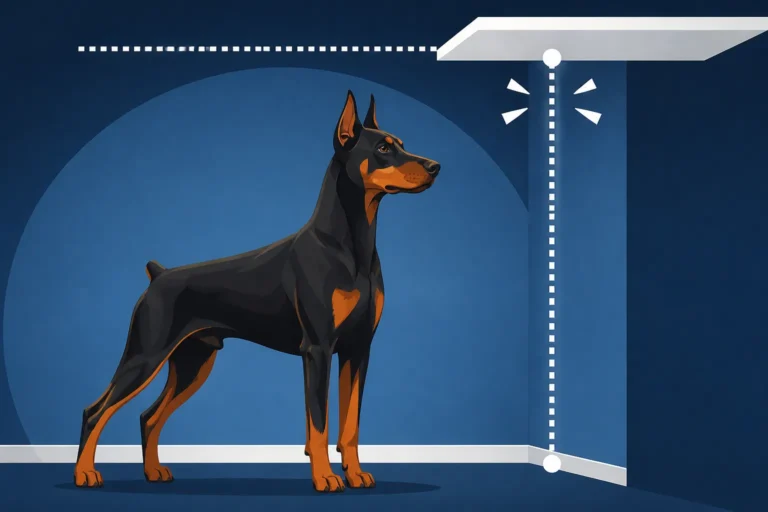
What Determined and Alert Mean in the Doberman Standard
One of the biggest misconceptions about Dobermans often comes from a misunderstanding of their inherent traits, leading many to fear or mismanage these incredible dogs. When you read the breed standard, you'll often see terms like "determined" and "alert" used to describe the ideal Doberman temperament. These aren't just fancy words; they encapsulate the very essence of what makes a Doberman a Doberman, and understanding them is key to a successful, happy life with one. This guide will dive deep into what these two crucial traits truly mean and how they shape the Doberman personality.
Deconstructing "Determined": More Than Just Stubbornness
When the breed standard calls a Doberman "determined," it's not suggesting a dog that's simply stubborn or hard-headed, though they can certainly be that way if not given proper guidance! Instead, "determined" speaks to an unwavering focus, a profound sense of purpose, and an incredible drive to complete a task once it's set. This trait is deeply rooted in the breed's history, where they were bred for protection and companionship, requiring a dog that would not back down from a challenge and would see its duties through.
The Historical Roots of Doberman Determination
Think back to the origins of the Doberman. Karl Dobermann, the breed's creator, needed a dog that was fearless, loyal, and capable of guarding him effectively during his rounds as a tax collector. The Tax Collector Who Invented the Doberman He wasn't looking for a casual companion; he needed a canine partner with an undeniable will to protect and serve. This determination wasn't about aggression for aggression's sake, but rather an innate resilience and commitment. It meant a dog that, once given a command or assigned a task, would stick with it, even in the face of distractions or discomfort. This tenacity was a matter of survival for both dog and owner in those early days. It’s what allowed them to be effective guardians and working dogs, whether in the military or protecting property.
This historical blueprint means that modern Dobermans still carry this strong genetic predisposition. They aren't easily deterred from their goals, which can be a double-edged sword for owners. On one hand, it makes them incredibly capable in training and sports, pushing through obstacles. On the other, if a Doberman decides its goal is to get that sock from the laundry basket or chase that squirrel through the garden, its determination can feel like outright defiance to an unprepared owner. It’s not necessarily defiance; it’s simply their nature to focus intently on what they perceive as their objective. Understanding this helps you redirect that powerful drive rather than getting frustrated by it.
How Determination Manifests in Daily Life
In your home, "determination" can look like several things, both positive and challenging. On the positive side, it's the Doberman who, once taught to retrieve, will tirelessly bring back the ball for as long as your arm holds out. It's the dog who will focus intently on a puzzle toy until every last treat is extracted, or the one who will master a complex obedience routine with unwavering concentration. This breed thrives on having a job, and their determination makes them excellent candidates for everything from competitive obedience and agility to tracking and protection sports. The Working Sports a Doberman Was Built For They excel when given clear goals and the opportunity to apply their mental and physical energy.
However, this determination also means they are not "casual" dogs. A Doberman won't just "get over" something easily if it's deeply invested. If they decide they don't like another dog or a certain person, it can take significant, consistent, and determined effort on your part to change that perception, if it’s even possible. Similarly, if they develop a bad habit, like counter-surfing or digging, their determination means you need to be equally determined in your training and management to correct it. Simply telling them "no" once won't cut it. They need clear boundaries, consistent enforcement, and positive reinforcement to guide that powerful drive towards acceptable behaviors. A Doberman who decides the garbage can is an interesting diversion will pursue it with a fervor that can surprise first-time owners. Having durable, engaging toys readily available, perhaps from a selection on Chewy, can help redirect this strong drive.
Understanding "Alert": A Doberman's Constant Awareness
Beyond being determined, the Doberman breed standard emphasizes them as "alert." This isn't just about being awake; it's about a state of heightened sensory awareness, a constant readiness to perceive and react to their environment. An alert Doberman isn't necessarily paranoid or anxious, but rather highly observant and keenly attuned to every sight, sound, and smell around them. This trait also ties directly into their heritage as guardians. A good guardian isn't asleep at the wheel; they're the first to notice a change, a new presence, or a subtle shift in the atmosphere.
The Physical Cues of an Alert Doberman
You can often tell an alert Doberman just by looking at them. Their posture is typically regal and poised, often with a slight tension in their muscles, suggesting readiness. Their eyes, often described as dark and almond-shaped, will be scanning, taking everything in. Those famously cropped ears (if you've chosen that path, though natural ears are also common) will swivel and twitch, independently picking up on distant sounds that you might never notice. Even their whiskers seem to be on high alert, providing extra sensory input about their immediate surroundings. What Cropped Ears Hide About a Doberman's Mood
When something truly catches their attention, their entire body language will communicate "alert." Their head will snap up, ears will lock onto the sound, and their gaze will fix on the perceived source. They might stand motionless, processing the information, before deciding whether a response is warranted. This isn't just being "aware" in a general sense; it's a finely tuned vigilance that makes them excellent watchdogs. They are often the first to know when someone is approaching your home, whether it's a friendly delivery person or an unexpected stranger. This constant awareness, while excellent for protection, also means that a Doberman can be overstimulated in busy environments if not properly socialized from a young age. The Sixteen Weeks That Set a Doberman Up
The Mental Acuity Behind Doberman Alertness
It's not just about physical cues; the "alert" nature of a Doberman also points to their exceptional mental acuity. They are highly intelligent dogs, capable of quickly assessing situations and making decisions. This intelligence is intertwined with their alertness, allowing them to not just perceive information but to interpret it rapidly. They're often thinking a step or two ahead, trying to understand what's happening and what their role might be. This is why they learn routines so quickly and can anticipate your next move. A Doberman That Learns Your Routine Too Well
Their alertness means they pick up on subtle cues from people, other animals, and their environment. A Doberman will notice a change in your tone of voice, a shift in someone's body language, or a new car parked down the street. This sharp intellect combined with their sensory awareness contributes to their reputation as being highly trainable and responsive. However, it also means they need mental stimulation to thrive. A bored Doberman isn't just destructive; an unengaged alert Doberman can channel that keen awareness into developing anxieties or undesirable behaviors if not given appropriate mental outlets. They need to use their brains just as much as their bodies, perhaps through interactive feeding toys or brain games you might find on Chewy.
Balancing Instinct with Training: Nurturing a Stable Doberman
Understanding "determined and alert" makes it clear that owning a Doberman isn't for the faint of heart or the inconsistent. These powerful traits require a dedicated owner who can provide consistent training, clear boundaries, and ample opportunities for appropriate mental and physical exercise. The goal isn't to suppress these instincts, but to channel them into positive, productive behaviors that foster a stable, confident, and well-behaved family member.
Channeling Drive into Positive Outlets
A determined and alert Doberman thrives when given a purpose. This is why so many Doberman owners find success in various dog sports and advanced training. Competitive obedience, agility, tracking, and even nose work are fantastic ways to engage their minds and bodies. These activities provide constructive outlets for their determination to succeed and their alertness to notice details. For instance, in nose work, their alertness is honed to detect specific scents, and their determination keeps them focused until the target is found.
Even if competitive sports aren't your thing, daily training sessions are vital. Keep them short, engaging, and consistent. Puzzle toys, interactive feeders, and training games that involve problem-solving can help satisfy their intelligent and alert nature. Long walks where they get to sniff and explore, varied environments for socialization, and opportunities to learn new tricks all contribute to a well-rounded Doberman. A Doberman who feels challenged and engaged is a happy Doberman, less likely to channel their determination into destructive behaviors or their alertness into anxious reactivity. Remember, a tired Doberman is a good Doberman, but a mentally tired Doberman is even better. You might find a great selection of enrichment toys or high-quality training treats on Chewy to help keep them engaged.
The Pitfalls of Misinterpreting "Determined and Alert"
Where owners often go wrong is by misinterpreting these traits as aggression or stubbornness, leading to heavy-handed or inconsistent training. A Doberman that "freezes when corrected" might not be showing submission; they might be shutting down because their alert mind is overwhelmed or confused by harsh methods. A Doberman That Freezes When Corrected Their determination means they might push back against perceived unfairness or inconsistency. Yelling or using punitive methods can damage the bond and create a Doberman that is either fearful or, ironically, more determined to do things their own way.
Another pitfall is failing to provide enough mental and physical stimulation. An alert Doberman who isn't given enough to do will find their own jobs, which might include excessive barking, digging, or even guarding things they shouldn't. Their determination means they'll stick to these self-appointed tasks. Early and consistent socialization is paramount to ensure their alertness doesn't turn into unwarranted suspicion or reactivity towards strangers or other dogs. Exposing a Doberman Puppy to Strangers Without this foundation, their natural instincts, while valuable in the right context, can become challenging to manage in a typical household environment.
The Impact of "Determined and Alert" on Ownership
Owning a Doberman is a commitment, a partnership where both dog and human must understand and respect each other's inherent nature. The traits of "determined and alert" define much of what makes a Doberman unique, but also what makes them a demanding, yet incredibly rewarding, companion.
Why a Doberman Owner Needs to Be Equally Determined
To successfully manage a Doberman, you, the owner, need to embody a similar level of determination and consistency. You need to be determined in your training, your routine, and your boundaries. This isn't a dog that you can train sporadically or let rules slide with. If you are not determined in your leadership, your Doberman's natural determination will fill that void, and they will lead themselves, which rarely works out well for human harmony. The Owner a Doberman Actually Needs This means committing to daily exercise, regular training sessions, and continuous socialization throughout their lives.
Your alertness, too, is key. You need to be alert to your Doberman's subtle cues, recognizing when they are uncomfortable, stressed, or about to make a poor decision. Spotting the Moment a Doberman Is Uncomfortable Understanding their body language – a stiffening posture, a quick glance, pinned ears – allows you to intervene before a situation escalates. Being proactive rather than reactive is crucial with a breed so keenly aware of its surroundings. This kind of attentive ownership fosters trust and a deep bond, which are essential for a Doberman to truly thrive. Many owners find that signing up for consistent training classes and perhaps getting a trainer who specializes in Dobermans is an excellent investment. Finding a Trainer Who Has Worked With Dobermans
Living with a Doberman: A Partnership of Minds
Ultimately, living with a Doberman is a dynamic partnership. These aren't dogs that are content to simply exist in the background; they want to be involved, to understand, and to contribute. Their determination means they are fiercely loyal and devoted to their family, often becoming "Velcro dogs" who follow you everywhere. Where the Velcro Doberman Nickname Comes From Their alertness means they are always attuned to your presence and mood, often seeming to know what you need before you do.
| Trait | Positive Manifestation in Doberman | Potential Challenge for Owners | Owner's Role |
|---|---|---|---|
| Determined | Loyal, persistent, excellent in training, sees tasks through, resilient. | Can be stubborn, prone to fixating on undesirable behaviors, needs clear boundaries. | Consistent training, clear rules, positive reinforcement, channeling drive into productive outlets. |
| Alert | Excellent watchdog, highly perceptive, intelligent, quick learner, aware. | Can be overstimulated, prone to reactivity if unsocialized, needs mental stimulation. | Early and ongoing socialization, mental enrichment, understanding body language, proactive management. |
Embracing these core traits means accepting that your Doberman will challenge you, but also inspire you with their intelligence, loyalty, and unwavering spirit. They demand a thoughtful, engaged owner who can appreciate their unique capabilities and guide them with patience and resolve. If you can rise to that challenge, you will find yourself with an incomparable companion, a dog whose determined spirit and alert mind enrich your life in countless ways.
Disclaimer
This article is for general informational purposes only and does not constitute professional advice. Laws, prices and regulations vary by location and change over time. Consult a qualified professional for guidance on your specific situation.