A Doberman That Chases the Cat
It’s a scenario many Doberman owners dread: you bring home a sleek, intelligent Doberman, perhaps a bouncy puppy, only to find them fixated on the family cat. That playful chase can quickly escalate into a stressful, potentially dangerous situation for everyone involved, leaving you feeling frustrated and unsure how to create harmony in your home. This guide will help you understand why your Doberman might be chasing your feline friend and offer actionable strategies to foster a peaceful, multi-species household.
Understanding the Doberman's Instinct to Chase
When your Doberman eyes your cat and then launches into a pursuit, it’s easy to feel like they’re being deliberately naughty or even aggressive. However, more often than not, this behavior stems from deep-seated instincts that are part of what makes a Doberman, well, a Doberman. It’s important to understand this isn’t usually personal, but a hardwired drive.
The Prey Drive: It's Not Personal
Dobermans were originally bred for protection and guardianship by Karl Friedrich Louis Dobermann, a tax collector who needed a fearless companion. Their lineage includes breeds known for their keen senses, speed, and determination. While they are not traditionally scent hounds, they possess a strong prey drive – an instinct to chase, capture, and sometimes kill small, fast-moving animals. Think of it as an inherent program running in the background.
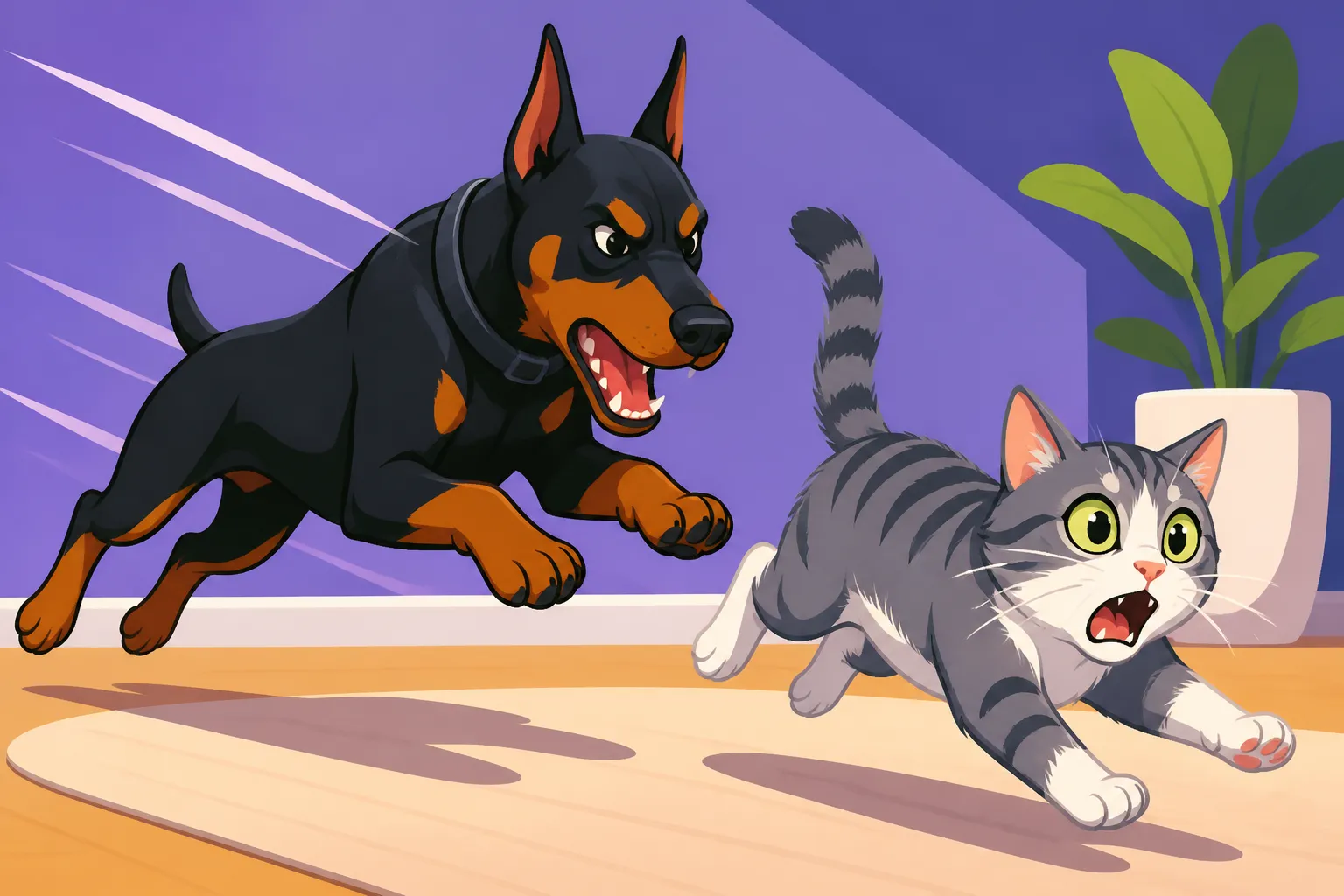
This isn't to say your Doberman is going to kill your cat, but rather that the impulse to chase is a powerful, natural reaction. Small, scurrying creatures, quick movements, or even certain sounds can flip that switch. For a Doberman, especially a young one or one that hasn't had much impulse control training, that sudden darting movement of a cat can be an irresistible invitation to play a game of chase. It’s a very difficult instinct for them to ignore, and it’s a source of immense frustration for many owners who worry about the safety of their smaller pets.
Why Cats Are Such Tempting Targets
Cats, with their inherent feline grace and agility, are practically custom-made to trigger a Doberman's prey drive. Imagine it from your Doberman’s perspective: a small creature, often with erratic movements – a sudden dash across the floor, a playful pounce on a toy, or even just a quick flick of a tail. These are all high-value triggers for a dog programmed to respond to movement.
The way cats often react can also exacerbate the problem. If a cat feels threatened and runs, that immediately reinforces the Doberman’s chase instinct. The Doberman thinks, "Aha! The game is on!" For many Dobermans, especially in the early stages, this isn’t about malice; it’s a high-energy, exciting "game." They might bark, lunge, or even mouth the cat if they catch it, not necessarily with intent to harm, but because their arousal level is so high. However, what starts as a "game" can quickly become genuinely dangerous due to the Doberman's size, strength, and sharp teeth. This is why addressing the behavior quickly and effectively is so crucial.
Setting Up Your Home for Success
When you have a Doberman and a cat, creating an environment where both can feel safe and co-exist is paramount. It’s not just about training your Doberman; it’s about strategically designing your home space to reduce triggers and provide essential security for your feline family member. This physical management is often the first, and most important, step in achieving harmony.
Creating Safe Zones for Your Cat
One of the most effective strategies is to establish clear, inviolable safe zones where your cat can retreat and relax without fear of being chased. Cats thrive on having high ground and escape routes. Think vertically! Investing in tall cat trees, wall-mounted shelves, or even high perches can give your cat sanctuary from your Doberman. These elevated spaces not only provide safety but also allow your cat to observe the household from a secure vantage point, reducing their stress. You can find a huge variety of these types of items on Amazon, ranging from simple scratching posts with platforms to elaborate wall-climbing systems.
Beyond vertical space, consider using baby gates or pet barriers to section off parts of your home. A "cat-only" room, perhaps with a microchip-activated pet door or a gate that allows the cat to slip through but blocks the Doberman, can be a lifesaver. This gives your cat a designated eating area, litter box location, and sleeping spot where they are completely safe from your Doberman's intrusions. It allows the cat to eat their meals in peace, which is vital for their well-being, and prevents the Doberman from getting into cat food – a common source of conflict and digestive upset. Remember, a relaxed cat is less likely to bolt, which in turn reduces the Doberman’s impulse to chase.
Managing Interactions and Supervision
Until you are absolutely confident that your Doberman and cat can coexist calmly, direct supervision is non-negotiable. This means that whenever your Doberman is in the same room as your cat, your Doberman should be on a leash. A house line, which is a lightweight leash dragged around the house (under strict supervision, to avoid tangles), can be incredibly useful. It allows you to calmly step on the leash or guide your Doberman away the instant you see their attention shift towards the cat, preventing any chase before it even begins. Leash Manners for an Eighty-Pound Doberman can be a great resource for understanding how to maintain control, even in distracting environments.
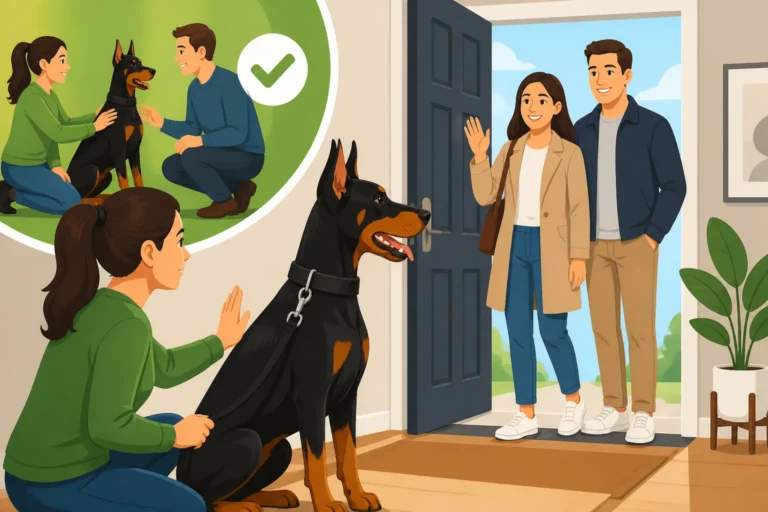
Controlled introductions are key. Start with very short, positive interactions, always with your Doberman on a leash, and generously rewarding calm behavior. The goal is to slowly desensitize your Doberman to the cat's presence, associating it with good things rather than an invitation to chase. Never force interactions, and always be ready to separate them if either animal shows signs of stress. Building a consistent daily routine can also help both pets feel more secure, reducing anxiety that might contribute to undesirable behaviors.
Training Strategies for a Multi-Pet Household
Physical management alone won't solve the underlying chase instinct; you also need robust training. Dobermans are highly intelligent, and with the right approach, they can learn to control their impulses. This requires patience, consistency, and a deep understanding of positive reinforcement.
Foundation Obedience and Impulse Control
Before you can tackle the specific issue of cat-chasing, your Doberman needs a solid foundation in basic obedience and, crucially, impulse control. Commands like "Leave It" and "Stay" are your best friends here. Practice "Leave It" with tempting objects first, then gradually introduce distractions, working your way up to practicing it when your cat is moving nearby (always with your Doberman on a leash, of course). The goal is to teach your Doberman that resisting the urge to chase results in a much better reward from you.
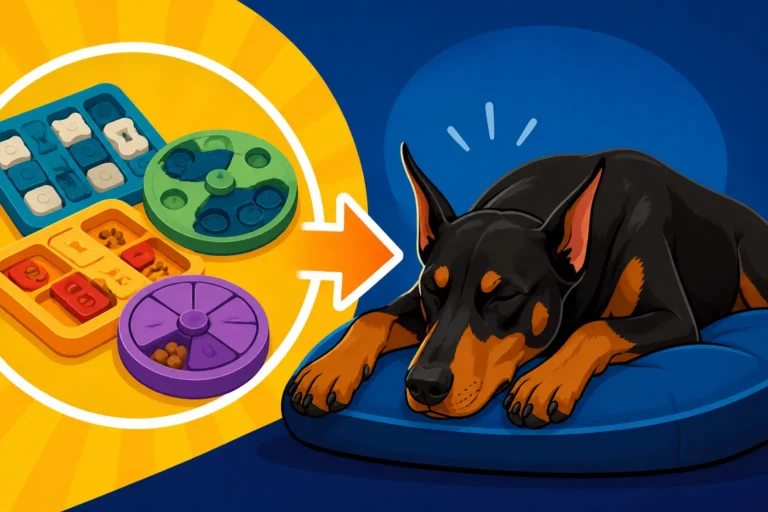
Focusing on you, even amidst distractions, is another vital skill. Practice "Watch Me" or other attention-getting cues in various environments, starting in low-distraction areas and slowly increasing the challenge. High-value treats – think small pieces of cheese, cooked chicken, or hot dogs – are essential for motivating a Doberman to override their instincts. They need to understand that choosing to ignore the cat and pay attention to you is the most rewarding option. If you're looking for structured guidance, online training programs, like those offered by BAXTER & Bella, can provide excellent step-by-step instruction on these fundamental obedience skills, helping you build a strong communicative bond with your Doberman. A mentally tired Doberman is also less likely to be looking for trouble; consider incorporating Puzzle Work That Actually Tires a Doberman into their routine.
Desensitization and Counter-Conditioning
This is where you systematically change your Doberman’s emotional response to the cat. Instead of the cat being a trigger for chase, you want the cat's presence to become a signal for something positive to happen. Start with your Doberman on a leash, with the cat at a distance where your Doberman is aware of the cat but not reacting with intense focus or chase behavior.
Every time your cat appears, and your Doberman remains calm – even just glancing at the cat and then back at you – immediately mark that moment (with a clicker or a verbal "yes!") and reward them generously with a high-value treat. This is called counter-conditioning. You are literally changing your Doberman's emotional response from "cat means chase!" to "cat means yummy treats!" Gradually, over days or weeks, you can decrease the distance between them, always ensuring your Doberman stays below their reactivity threshold.
If your Doberman starts to fixate or gets too excited, increase the distance again. It's a slow process, and you might take two steps forward and one step back. A long line (a lightweight rope or leash, 15-30 feet long) can be used in a secure, cat-safe area to allow your Doberman a bit more freedom while still giving you the ability to gently interrupt any unwanted chase attempts without having to yell or physically intervene harshly. Remember, Why Yelling Shuts a Doberman Down is a crucial concept – keep interactions positive and rewarding. Building this kind of positive association takes time and consistency, but it's incredibly effective in the long run.
When to Seek Professional Help and What to Expect
Sometimes, despite your best efforts, the dynamic between your Doberman and cat just isn't improving, or perhaps the situation feels too risky to manage on your own. There's absolutely no shame in reaching out for professional guidance. In fact, for a Doberman, a breed known for its strong personality and drives, it's often the wisest course of action.
Recognizing When You Need More Support
How do you know when it’s time to call in a professional? If your Doberman’s chasing behavior is persistent, escalating, or accompanied by any signs of genuine aggression (such as snarling, growling, or attempting to bite the cat rather than just playing), it’s definitely time. Even if it's "just" playful chasing, but your cat is constantly stressed – hiding, not eating, or exhibiting fear – that's a clear signal you need help. Your own frustration and feeling overwhelmed are also valid reasons. Living with constant anxiety about your pets' safety isn't sustainable for anyone.
A professional behaviorist or certified trainer can offer an objective assessment of the situation, identify specific triggers you might be missing, and develop a tailored training plan. They can help you decipher your Doberman's body language more accurately, as well as your cat's stress signals, allowing for more nuanced interventions. Never hesitate to seek help if you feel the safety or well-being of either pet is at risk. The Sixteen Weeks That Set a Doberman Up highlights the importance of early intervention and proper socialization, but it's never too late to start improving the situation with professional support.
Finding a Qualified Trainer or Behaviorist
Finding the right professional is critical. Look for a certified professional dog trainer (CPDT-KA) or a certified applied animal behaviorist (CAAB) who has experience working with Dobermans and successfully integrating dogs and cats. It's really important to find someone who uses positive reinforcement and force-free methods. Avoid trainers who advocate for harsh corrections, shock collars, or other punitive tools, especially in a delicate situation like inter-species household dynamics. These methods can often suppress behavior without addressing the underlying issue, leading to increased fear, anxiety, or even aggression from your Doberman. Finding a Trainer Who Has Worked With Dobermans can help guide your search.
A good professional will usually start with an in-home consultation to observe your Doberman and cat in their natural environment. They'll ask detailed questions about their history, routines, and the specific incidents that concern you. Be prepared for the process to take time; integrating a Doberman and a cat is often a marathon, not a sprint. With consistent effort, patience, and professional guidance, many households find a way for their Dobermans and cats to coexist peacefully, and sometimes even form surprising friendships.
| Strategy | Description | Benefits | Considerations |
|---|---|---|---|
| Safe Zones | Creating designated, inaccessible areas for the cat (e.g., high shelves, gated rooms). | Immediate safety for the cat, reduces stress, prevents Doberman access to cat resources. | Requires physical modifications to the home, may reduce cat-dog interaction. |
| Leash Management | Keeping the Doberman on a leash when the cat is present. | Prevents chasing, allows immediate interruption of unwanted behavior, ensures safety. | Requires constant supervision, can be cumbersome in the house. |
| Foundation Obedience | Teaching "Leave It," "Stay," and "Watch Me" with high distractions. | Builds impulse control, teaches Doberman to defer to owner, creates focus. | Requires consistent training sessions, high-value rewards are essential. |
| Desensitization & Counter-Conditioning | Gradually exposing Doberman to cat, rewarding calm behavior with treats. | Changes Doberman's emotional response to cat, fosters positive associations. | Slow, gradual process, requires patience, may need professional guidance. |
| Mental & Physical Exercise | Ensuring the Doberman is sufficiently exercised and mentally stimulated. | Reduces excess energy and boredom-driven behaviors, promotes calm. | Must be appropriate for Doberman's age and health, needs daily commitment. |
Disclaimer
This article is for general informational purposes only and does not constitute professional advice. Laws, prices and regulations vary by location and change over time. Consult a qualified professional for guidance on your specific situation.