Whether a Doberman Is Safe Around Children
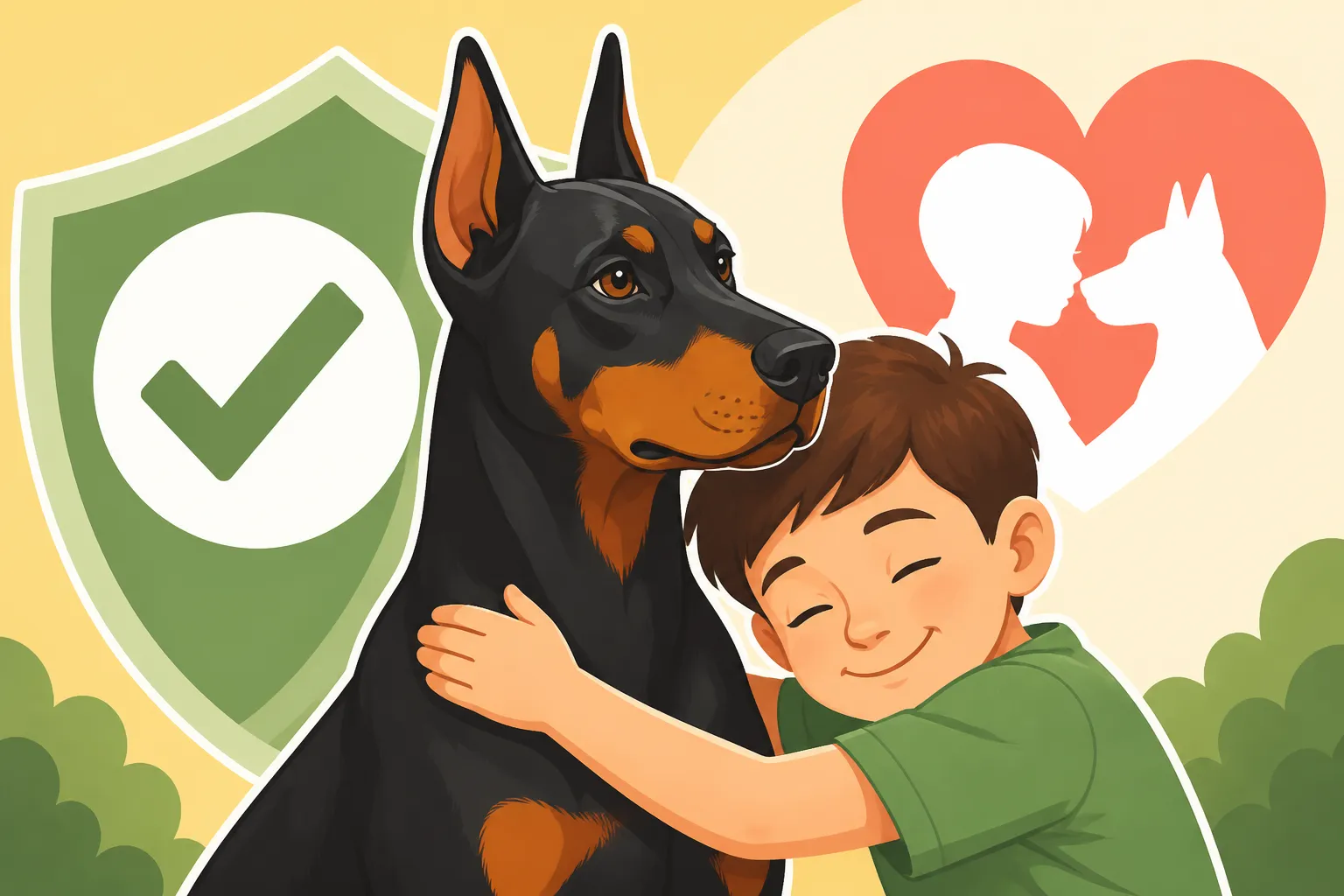
One of the most profound concerns for anyone considering bringing a Doberman into a home with children, or bringing children into a home that already has a Doberman, revolves around safety. The Doberman's powerful build and protective reputation can lead to a lot of anxiety and speculation, making it difficult to discern fact from fiction. This comprehensive guide aims to cut through that noise, offering realistic insights into the Doberman temperament, crucial training strategies, and essential management techniques to foster a harmonious and safe environment for both your Doberman and your little ones.
Understanding the Doberman Temperament and Its Impact on Family Life
Let's be real, the Doberman isn't a fluffy golden retriever. They were bred for a specific purpose: protection. This heritage means they come with inherent traits that, while wonderful in the right hands, require thoughtful management in a family setting, especially when children are involved. It’s not about whether they can be safe, but how intentionally you work to make them safe.
The Doberman's Natural Guarding Instinct
Dobermans are renowned for their loyalty and protective nature. They bond deeply with their families and often view their home and yard as their territory to defend. This isn't necessarily a bad thing; it’s what many people seek in the breed. However, this instinct can manifest in problematic ways if not properly channeled and managed. A Doberman might see a child's friend running into the yard or an excited playmate jostling them as a threat, even if it's completely innocent. Their first instinct might be to intervene, which, given their size and strength, can be frightening and potentially dangerous.
This natural guarding extends to resources, too. A Doberman might guard its food bowl, toys, or even its favorite sleeping spot. While an adult understands these boundaries, a curious toddler or a child who forgets the rules could inadvertently trigger a defensive response. It's not about malice, but about instinct. Understanding Doberman Guarding Instinct and Where It Tips Over is essential for proactive management. This isn't to say all Dobermans are inherently resource guarders, but the potential is there due to their genetic makeup, and it's something every owner with children must be keenly aware of and train for from day one. You're essentially teaching them that human children are not a threat, and that all resources are shared or belong to the humans.
High Intelligence and Sensitivity
Dobermans are incredibly intelligent, often ranking among the smartest dog breeds. This sharp mind means they pick up on cues quickly, but it also means they can be incredibly sensitive to their environment and to the emotions of their people. They thrive on consistency and clear communication. A chaotic household with unpredictable children, loud noises, and inconsistent rules can be incredibly stressful for a Doberman, even a well-trained one. This sensitivity can sometimes manifest as anxiety, fear, or even reactivity if they don't feel secure or understand their role.
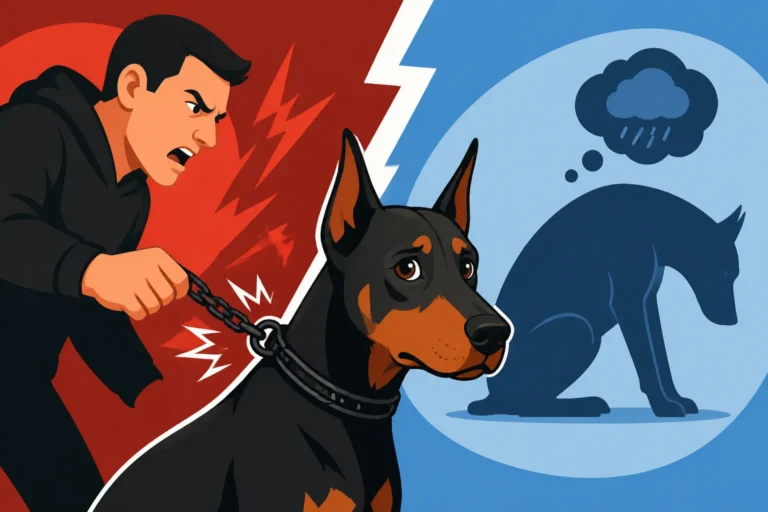
This intelligence is a double-edged sword: it makes them highly trainable, but also means they can "outsmart" an inexperienced owner or develop their own ideas about how things should run. When it comes to children, a sensitive Doberman might react to a child's sudden movements, high-pitched squeals, or even tears, especially if they haven't been properly socialized to these common childhood behaviors. They also observe everything and learn patterns, so any negative early experiences with children can be deeply ingrained. This is why consistent, positive reinforcement training is so vital; harsh corrections, which can sometimes be seen in an attempt to curb unwanted behaviors, can actually backfire on a Doberman and erode trust, potentially making them more fearful or reactive. Understanding Why a Clever Doberman Is Harder to Train can help manage expectations.
The "Velcro" Doberman Phenomenon
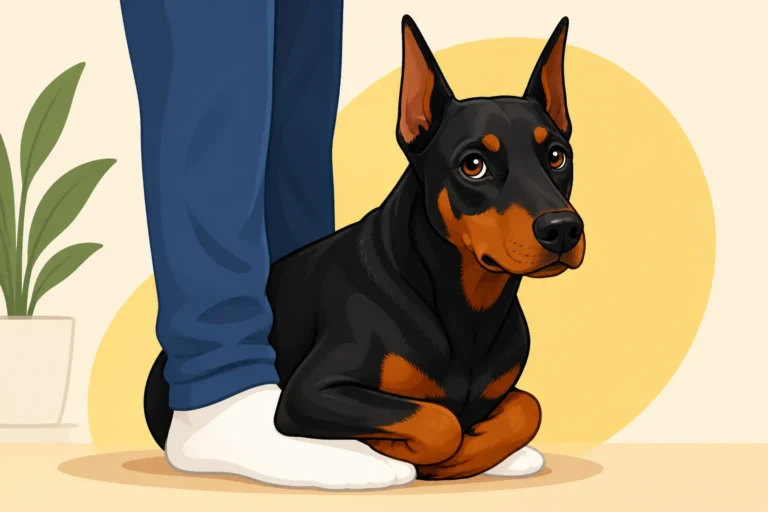
If you've spent any time researching Dobermans, you've likely heard the term "Velcro dog." It’s absolutely true – Dobermans are notorious for sticking close to their favorite people, often following them from room to room, leaning on them, or resting their head on a lap. While this deep attachment is endearing and forms the basis of their loyalty, it can present challenges when children are vying for attention or personal space. A Doberman might see a child as competition for your affection or closeness, leading to subtle or not-so-subtle attempts to get between you and the child.
This constant desire for proximity and attention can also make it difficult for them to learn appropriate boundaries with children. A Doberman who is used to having free access to you might struggle when a child is on your lap or demanding your focus. They might nudge, whine, or even try to push their way in. While this isn't aggression, it’s certainly an indication of a lack of clear boundaries and understanding on the dog's part, and it can easily lead to accidental knocks or an overwhelmed child. Training them to respect personal space and "go to their mat" even when you're interacting with children is a critical skill. Sometimes, it feels like A Doberman That Follows You Everywhere is just a quirk, but with kids, it becomes a management consideration.
Early Socialization: The Cornerstone of a Child-Safe Doberman
You cannot overstate the importance of early, positive socialization for any dog, but it is absolutely non-negotiable for a Doberman, especially one destined to live with or around children. This isn't just about exposing them to things; it's about creating positive associations with a wide variety of experiences.
Puppyhood: The Critical Window
The period from 8 to 16 weeks is often called the "critical socialization window" for puppies. This is when their brains are most open to new experiences, and they form lasting impressions of the world. For a Doberman puppy who will interact with children, this window is precious. It means intentional exposure to children of different ages, sizes, and energy levels, always under strict supervision, and always ensuring positive experiences. Think about structured, calm interactions rather than letting children swarm the puppy. A good breeder will have already started this process, but it's vital for you to continue it intensely once your puppy comes home.
This means inviting friends with well-behaved children over for short, supervised visits. It means taking your puppy to places where children are present, like parks (observing from a distance if necessary, until vaccinations are complete and you can engage more closely), school pick-up lines, or even just sitting on a bench outside a playground. Crucially, every single interaction with a child should be positive and rewarding for the puppy. Treats, praise, and calm interactions help build a foundation that children are pleasant and bring good things. Avoid any situation where the puppy might feel scared or overwhelmed, as a negative experience can be far more impactful at this impressionable age. Don't forget that this early work is key to Building a Doberman Puppy That Is Confident, Not Sharp.
Exposure to the Sounds and Sights of Childhood
Children are loud, unpredictable, and move in jerky, uncoordinated ways that can be alarming to a dog not used to them. Therefore, socialization must extend beyond just direct interaction. It means exposing your Doberman puppy to the soundscape and visual chaos of children in a controlled, positive way. This could involve playing recordings of children laughing, crying, screaming, and running at a low volume, gradually increasing it as your puppy remains calm and happy. Reward calm behavior with high-value treats.
Visually, think about children on scooters, bicycles, skateboards, or playing with balls. These objects and movements can trigger a Doberman’s chase instinct or protective urges. By calmly exposing your puppy to these sights from a safe distance, rewarding their relaxed demeanor, you teach them that these common childhood activities are not a threat and do not require their intervention. Remember, the goal is not just tolerance, but a positive, neutral, or even joyful association. This preparation is part of Exposing a Doberman Puppy to Strangers and all the varied experiences of the world.
Socialization is a Lifelong Process
It’s easy to think of socialization as something you do only during puppyhood, but for a Doberman, especially one sharing a home with children, it's a lifelong commitment. As your Doberman matures, and as children grow and change, their interactions will also evolve. Adolescent Dobermans, much like human teenagers, can go through phases of testing boundaries or being more easily spooked. Continued exposure to new people, places, and situations, always with positive reinforcement, reinforces their confidence and adaptability.
Even an adult Doberman who has always been good with children benefits from ongoing positive exposure. If your Doberman only ever sees your own kids, they might be fine with them but react nervously or defensively to visiting nieces, nephews, or school friends. Keep up with controlled, positive interactions with children from outside the immediate family. This continuous reinforcement helps solidify their understanding that children, in general, are part of their safe and normal world.
Training for a Child-Friendly Doberman: Essential Skills
A well-trained Doberman is a confident Doberman, and confidence goes a long way in preventing fear-based reactions around children. Beyond basic obedience, there are specific skills that are absolutely paramount for a Doberman sharing space with kids.
Impulse Control: The "Leave It" and "Drop It" Commands
Children often leave toys, food, or other enticing objects on the floor. For a powerful, curious Doberman, this presents a constant temptation. Teaching a rock-solid "leave it" command is critical. This command tells your Doberman to ignore something that's on the ground or in someone's hand. Practice this extensively with various distractions, from dropped food to tempting toys, gradually increasing the difficulty. The goal is for your Doberman to reliably disengage and look to you for a reward instead.
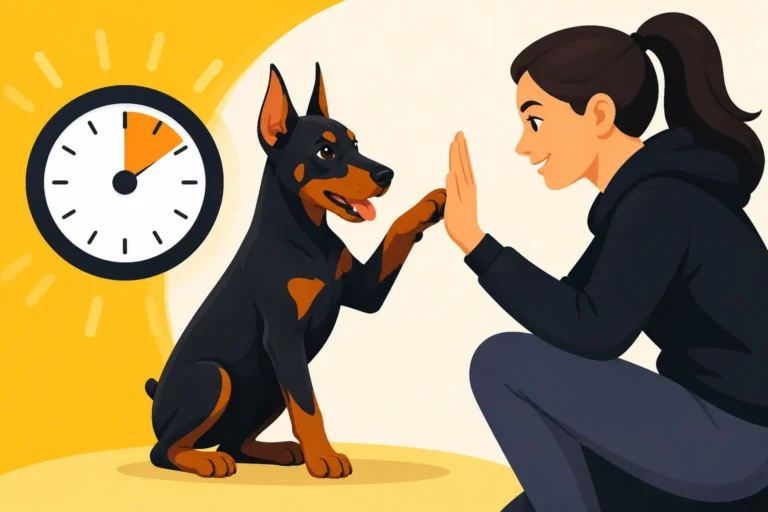
Equally important is the "drop it" command. Children might try to take a toy from a dog, or a Doberman might grab something it shouldn't. "Drop it" teaches your dog to release whatever is in their mouth on command. This prevents resource guarding issues and can avert potential conflicts. Practice with toys first, then gradually introduce more tempting items (always supervised, of course). Remember, if your Doberman drops it, immediately reward them with an even better treat or toy so they associate dropping with a positive outcome, not a loss. Investing in quality, durable chew toys you can rotate can help prevent resource guarding by making high-value items less scarce. Many excellent options are available on Amazon that can stand up to a Doberman's powerful jaws.
Polite Greetings and "Go to Your Place"
Excitement can lead to jumping, and a large Doberman jumping on a child, even playfully, can cause serious injury. Train your Doberman to greet people, especially children, with all four paws on the floor. This involves rewarding calm behavior and immediately disengaging or turning away if they jump. Consistency is key here; no one should encourage jumping, even if it's "just this once." A loose leash walk where your Doberman learns to ignore distractions like children is also very important, as discussed in Leash Manners for an Eighty-Pound Doberman.
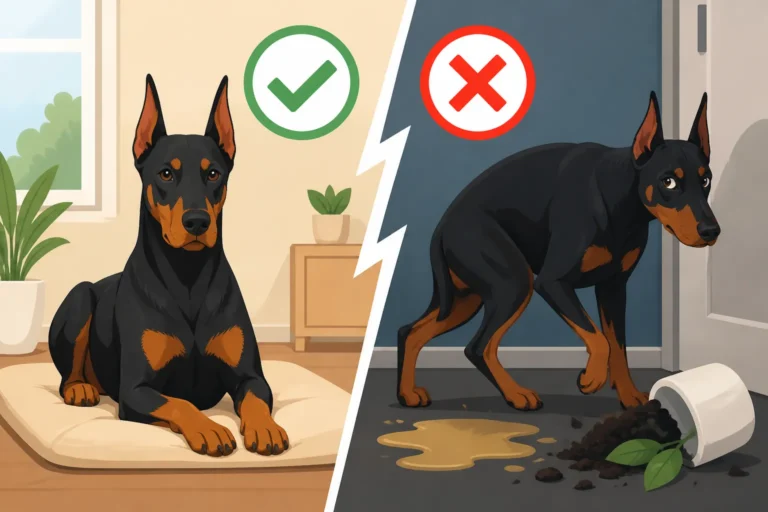
The "go to your place" or "go to your mat" command is invaluable in a household with children. This teaches your Doberman to go to a designated spot (a bed, crate, or mat) and stay there until released. This allows you to create physical distance when children are playing rambunctiously, when visitors arrive, or during meal times. It gives your Doberman a safe, quiet space to retreat to, and it gives you control over potential chaotic interactions. Start by rewarding them for simply going to the mat, then gradually increase the duration and add distractions. An online puppy program like the one offered by BAXTER & Bella can be incredibly helpful for structured, step-by-step guidance on commands like "place" and impulse control.
Recall and Emergency Commands
A reliable recall is crucial for safety, whether you're at the park or in your own backyard. If a child suddenly appears or an interaction becomes too boisterous, you need to be able to call your Doberman away immediately, without hesitation. Practice the "come" command in increasingly distracting environments. Make it the most exciting thing your Doberman can do, always rewarding with high-value treats and praise when they return to you.
Beyond a standard "come," consider teaching an "emergency recall" – a unique word or sound used only for critical situations, always rewarded lavishly. This is your ultimate safety net. Additionally, a "stay" or "wait" command can be a lifesaver, allowing you to create a momentary pause or boundary if you need to quickly intervene between your dog and a child. Think of scenarios: a child running with a toy, a sudden loud noise, or a new person entering the room. These commands provide you with crucial milliseconds to prevent an undesirable interaction.
Supervision and Boundaries: Non-Negotiables for Safety
Even the most well-trained, well-socialized Doberman should never be left unsupervised with children. This isn't about distrusting your dog; it's about acknowledging that accidents happen and both dogs and children can be unpredictable.
The "Never Leave Alone" Rule
This rule is absolute: a Doberman and a child, especially a young child, should never be left alone together, even for a second. This means if you have to step away to answer the door, use the restroom, or grab something from another room, either the child or the dog goes with you, or they are separated by a physical barrier like a baby gate or crate. This rule isn't just for puppies; it applies to adult Dobermans who have lived with children for years. Children can inadvertently step on a paw, pull an ear, or stumble into a sleeping dog, provoking a startle reaction. Dogs, even good-natured ones, have limits and can react defensively if startled or hurt.
This constant supervision can feel exhausting, especially for new parents. But it's the single most effective way to prevent incidents. Think of it as supervising two toddlers at once – you wouldn't leave a child alone in a room with a stove, and you shouldn't leave a dog alone with a child who doesn't fully understand canine body language or boundaries. This vigilance is a major component of What a First Doberman Demands of Its Owner.
Teaching Children How to Interact Respectfully
While training your Doberman is paramount, it’s equally important to teach children how to interact respectfully and safely with dogs. This education should begin as early as possible and be reinforced consistently. Teach children:
- Gentle hands: No hitting, pulling ears or tails, or poking.
- Respect personal space: Don't climb on the dog, interrupt them when they're sleeping or eating, or corner them.
- Read body language: Teach them what a wagging tail means (not always friendly!), what a stiff body or averted gaze might indicate, and when a dog wants to be left alone.
- Ask permission: Always ask an adult before approaching any dog, even their own.
- Offer the back of the hand: Allow the dog to sniff before petting, and only pet where the dog enjoys it (usually shoulders or chest, not over the head).
- Don't share food: Human food is often unsafe or can lead to resource guarding issues.
For very young children, this teaching might be more about managing their environment and direct physical intervention. As they grow, you can explicitly teach these rules. There are many excellent books and resources available to help children understand dog behavior.
Creating Safe Spaces for Both Dog and Child
Just as children need their own space, your Doberman needs a sanctuary where they can retreat and feel safe from the hustle and bustle of family life. This might be a comfortable dog bed in a quiet room, a crate in a den, or a corner of the living room behind a baby gate. Teach children that when the dog is in their "place," they are to be left undisturbed. This "den" provides an invaluable escape valve for your Doberman, preventing them from becoming overwhelmed or stressed by constant interaction.
Conversely, children also need their own safe zones where the Doberman is not allowed. This could be their bedroom with the door closed, a playpen for toddlers, or a specific area of the house gated off. These boundaries are crucial for mental and physical safety for everyone involved. Investing in sturdy baby gates is a must; many parents find practical, easy-to-install options on Amazon that can span wide doorways or staircases. These physical barriers are not punishments but rather tools for managing access and ensuring peace of mind.
Addressing Common Concerns: Specific Doberman Behaviors Around Children
Even with the best intentions and training, Dobermans can exhibit behaviors that concern owners, especially when children are present. Recognizing these and knowing how to address them is key.
Jumping and Over-Excitement
A Doberman's exuberance can be a lot for a small child. They might jump up in greeting, paw at a child for attention, or get overly excited during playtime, leading to accidental knocks or scratches. This isn't usually aggression, but simply a lack of manners. The key here is consistent training (as discussed with polite greetings) and management.
When your Doberman gets overly excited around children, immediately intervene. This might mean gently removing them, placing them on their "place" command, or calmly turning your back until they settle. Reward calm behavior around children lavishly. If the children are old enough, teach them to "be a tree" (stand still and quiet) when the dog jumps, and only engage when the dog has all four paws on the floor. It takes a unified front from all family members to extinguish this behavior, otherwise, it will persist. The goal is to teach your Doberman that calm interactions are the only way to get attention.
Mouthing and Nipping
Doberman puppies, like all puppies, explore the world with their mouths. They'll nip and mouth during play, which can be painful for tender human skin, especially a child's. It's vital to teach bite inhibition early on. If your puppy mouths too hard, let out a high-pitched yelp, withdraw attention immediately, or even leave the room for a few seconds. This teaches them that painful biting ends playtime. Over time, they learn to be gentler. For an adolescent Doberman, mouthing can sometimes recur, requiring a return to these earlier lessons, and sometimes indicates a lack of mental stimulation or understanding of appropriate play.
For older Dobermans, mouthing or nipping can sometimes be a sign of overstimulation, frustration, or even a precursor to guarding. If an adult Doberman mouths a child, it's a serious warning sign and requires immediate professional intervention from a certified professional dog trainer or veterinary behaviorist. Never punish a growl or a snarl, as this removes a dog's warning system and can lead to a dog biting without warning. Instead, identify the trigger and manage the environment to prevent it from happening again while you seek help. This situation could benefit from exploring Doberman Puppy Biting and Adolescent Mouthing.
Resource Guarding: Toys, Food, and Space
Resource guarding is when a dog stiffens, growls, or even snaps when someone approaches a valued item (food, toy, chew bone) or space (bed, crate). While it can be a natural instinct, it's an unacceptable behavior when children are present. As mentioned, Dobermans can have this tendency, so proactive training is crucial. Start by teaching your Doberman to "leave it" and "drop it." Practice trading treats for toys, gradually working up to removing a food bowl and returning it with an even better treat. This teaches them that hands approaching their resources bring good things, not a threat.
If you observe any signs of resource guarding with children, no matter how subtle, it's critical to manage the environment to prevent future incidents. This means ensuring your Doberman always eats in a quiet, undisturbed area (like their crate or a separate room) and that high-value chew bones or toys are only given when children are out of the picture or the dog is safely confined. Any instance of growling or snapping over a resource with a child should trigger an immediate call to a professional. This is not something to try and fix on your own as it could escalate.
Integrating a Doberman into a Family with Children: Step-by-Step
Whether you're bringing a new Doberman puppy into a home with existing children or introducing children to an adult Doberman, a structured and controlled approach is vital for success and safety.
Bringing Home a New Doberman Puppy with Children
If you're bringing a Doberman puppy into a home with children, preparation is everything. Before the puppy arrives, establish clear rules for the children about how they can and cannot interact with the puppy. Explain that the puppy is a baby and needs gentle handling, quiet time, and its own space. Create a safe "puppy zone" using a crate and baby gates where the puppy can retreat and children cannot intrude.
The initial introduction should be calm and brief. Allow the children to meet the puppy one at a time, sitting quietly on the floor. Supervise every single interaction, teaching children to pet gently and offering treats to the puppy for calm behavior. Keep interactions short, positive, and end them before the puppy or children get overstimulated. Remember, puppies need a lot of sleep, so enforce nap times in their crate, away from children. This controlled exposure helps the puppy to see children as a normal, positive part of their world, rather than a constant source of chaos. For those eager to start right, consider programs like BAXTER & Bella which offer comprehensive guides for new puppy owners.
Introducing Children to an Adult Doberman
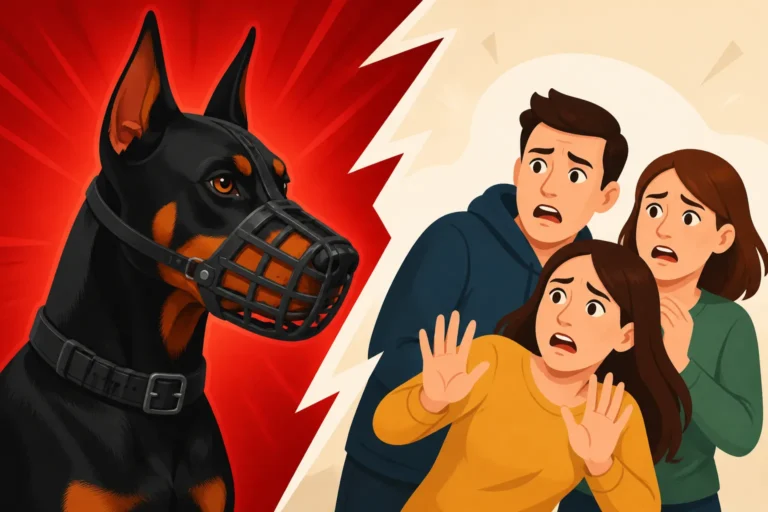
Introducing an adult Doberman, whether a new rescue or an existing family dog, to children requires even more caution and a slower approach. If it's a new rescue, be sure to ask the rescue organization or previous owners about the dog's history with children. Even then, proceed with extreme care. The first meetings should be highly controlled and brief, with the Doberman on a leash and muzzle (if there's any uncertainty about their history or temperament) and the children supervised by another adult or at a distance.
Allow the Doberman to observe the children calmly first, rewarding relaxed behavior. Then, introduce the children one at a time, ensuring they are calm and quiet. Keep the Doberman on a leash, and have the handler reward calm interactions. Never force interactions. If the Doberman seems stressed or uncomfortable, create more distance. Gradually increase the duration and proximity of interactions, always supervising and always ready to intervene. This process can take weeks or even months to build trust and comfort for both the dog and the children. For comprehensive guidance on training an adult dog, Retraining an Adult Doberman From Rescue offers valuable insights.
Establishing a Consistent Routine and Rules
Dobermans thrive on routine and predictability. Establishing a consistent daily schedule for feeding, walks, potty breaks, and playtime will help your Doberman feel secure and understand expectations. This is especially important when integrating with children, as it reduces anxiety and helps prevent behavioral issues that can arise from uncertainty. Ensure that meal times, for instance, are sacred and undisturbed, preferably with the Doberman eating in their crate or a separate room.
Consistency in rules is equally vital. Everyone in the household, including older children, needs to be on the same page regarding what the Doberman is allowed to do and what behaviors are unacceptable. If one person allows jumping and another punishes it, the Doberman will become confused and stressed. Hold family meetings to discuss and agree upon rules, and make sure everyone understands their role in reinforcing positive behaviors and maintaining boundaries.
When to Seek Professional Help: Recognizing Red Flags
Sometimes, despite your best efforts, behaviors emerge that are beyond your comfort or skill level to address. Knowing when to call in a professional is critical for safety.
Warning Signs Not to Ignore
There are specific behaviors that, when displayed by a Doberman towards children, should never be ignored and warrant immediate professional intervention. These include:
- Growling, snarling, or baring teeth: These are clear warning signals that the dog is uncomfortable, fearful, or potentially aggressive. Never punish a growl, as it removes the warning system.
- Snapping or air-snapping: A dog opening its mouth and closing it near a child without making contact is a serious warning that contact could be next.
- Stiff body language, staring, or whale eye: These subtle cues often precede more overt aggression. A stiff body, a direct stare, or "whale eye" (where the whites of the eyes are visible) indicate extreme discomfort or tension. Learning to interpret What Cropped Ears Hide About a Doberman's Mood can be tricky, so paying attention to the full body is vital.
- Avoiding or hiding from children: While not aggressive, a Doberman who actively tries to avoid children or hides when they are present is clearly stressed. This stress can eventually lead to a fear-based reactive response if pushed too far.
- Intense resource guarding: If your Doberman growls, snaps, or bites when a child approaches their food, toys, or resting spot, this is a dangerous situation.
If you observe any of these behaviors, immediately separate the dog and child and contact a qualified professional.
Choosing the Right Professional: Trainers vs. Behaviorists
It's important to understand the difference between a dog trainer and a veterinary behaviorist when seeking help for behavioral issues around children.
- Dog Trainer: A certified professional dog trainer (CPDT-KA) is excellent for teaching basic and advanced obedience, impulse control, and polite manners. They can help you implement management strategies and modify behaviors through positive reinforcement techniques. Look for trainers who use force-free, positive methods, as harsh corrections can be detrimental to a Doberman's sensitive temperament and exacerbate fear-based aggression. Many excellent trainers have experience working with Dobermans, which is crucial as Finding a Trainer Who Has Worked With Dobermans ensures they understand the breed's specific needs.
- Veterinary Behaviorist: If the behaviors are severe (growling, snapping, biting), appear suddenly, or seem rooted in anxiety or fear, a veterinary behaviorist (DACVB) is the best choice. These are veterinarians with specialized training in animal behavior, who can diagnose underlying medical conditions that might be contributing to behavioral issues, prescribe medication if necessary, and develop comprehensive behavior modification plans. They can address complex issues like aggression, severe anxiety, or phobias.
Never rely on advice from unqualified individuals or resort to punitive training methods, especially when safety around children is at stake. The wrong approach can make the situation much worse.
Choosing the Right Doberman for a Family: Breeder or Rescue?
The decision of where to get your Doberman, especially when children are in the home, is one of the most critical you'll make. It directly impacts temperament, health, and predictability.
What to Look for in a Responsible Breeder
If you choose to get a Doberman puppy, selecting a responsible breeder is paramount. A good breeder prioritizes health and temperament above all else. They will:
- Health Test Parents: This includes extensive health clearances for genetic conditions common in Dobermans, such as Dilated Cardiomyopathy (DCM), Von Willebrand Disease (vWD), thyroid issues, and Wobbler Syndrome. They should be transparent and willing to show you documentation for these tests. Understanding The Health Testing a Doberman Breeder Must Show is crucial.
- Temperament First: They should be breeding dogs with stable, confident, and outgoing temperaments, not overly sharp or fearful dogs. They'll be able to tell you about the personalities of the parents and how they interact with people and children.
- Early Socialization: The breeder should be actively socializing puppies from birth, exposing them to various sights, sounds, and gentle human interaction (including children, if applicable) in a safe and positive manner.
- Interview You: A responsible breeder will ask you many questions about your lifestyle, home environment, and experience with dogs and Dobermans, ensuring their puppy is a good fit for your family.
- Provide Support: They should be a lifelong resource, willing to answer questions and offer guidance throughout your dog's life.
- Allow Visits: They should welcome you to visit their facility, meet the mother dog (and ideally the father, or at least see videos/photos), and observe the puppies in their environment.
Be wary of breeders who don't health test, rush the sale, or have multiple litters available at once. While it might seem easier to get a puppy quickly, the long-term consequences of a poorly bred dog can be devastating, especially with children in the home.
Considerations for Adopting from a Doberman Rescue
Adopting an adult Doberman from a breed-specific rescue can be a wonderful option for families, but it requires careful consideration. Rescues often have a better understanding of an adult dog's established temperament and history, which can be a huge advantage. They will:
- Assess Temperament: Rescues spend a lot of time evaluating their dogs, often in foster homes, getting to know their personalities, quirks, and history with children, other dogs, and various situations.
- Provide History: While sometimes incomplete, they will typically share as much information as they have about the dog's past, including any known interactions with children.
- Matchmaking: Good rescues are excellent at matchmaking, helping you find a Doberman whose personality and needs align with your family's lifestyle and experience level. They won't place a dog with a known history of being uncomfortable around children into a family with young kids. This process is key to Choosing a Doberman Breeder or a Rescue.
- Support: Many rescues offer post-adoption support and guidance.
The primary challenge with rescue dogs is that their full history might not always be known, particularly concerning previous interactions with children. However, a reputable rescue will be transparent about this and will typically not recommend a dog for a home with children unless they have observed positive interactions or know the dog's history well. It's crucial to be honest with the rescue about your family dynamic and children's ages and temperaments.
The Importance of Health and Temperament Together
Regardless of whether you choose a breeder or a rescue, always prioritize health and temperament together. A Doberman with chronic pain or discomfort due to underlying health issues (like joint pain, thyroid imbalance, or even an undiagnosed heart condition) can become grumpy, irritable, or unpredictable, increasing the risk of adverse reactions to children. A Doberman who is naturally nervous or "soft" in temperament may also be more prone to fear-based aggression if overwhelmed by the chaos of children.
A truly safe family Doberman is one who is both physically healthy and mentally sound. Don't compromise on either aspect when making such a significant decision for your family. It's an investment in years of companionship and peace of mind.
Here’s a table summarizing key age-appropriate interactions and supervision levels between Dobermans and children:
| Child's Age Group | Doberman's Age Group | Recommended Interaction Type | Supervision Level | Key Considerations |
|---|---|---|---|---|
| Infant (0-1 year) | Puppy (0-6 months) | Observation from distance | 100% Direct | Puppy needs rest; infant unpredictable. Separate zones. |
| Infant (0-1 year) | Adult (1+ year) | Observation from distance | 100% Direct | Adult Doberman may be confused by crying, sudden movements. |
| Toddler (1-3 years) | Puppy (0-6 months) | Gentle, seated petting (supervised) | 100% Direct | Toddlers are grabby; puppies are mouthy. High risk of accidental injury. |
| Toddler (1-3 years) | Adult (1+ year) | Gentle, seated petting (supervised) | 100% Direct | Toddlers lack boundaries; Dobermans may feel trapped. Safe spaces vital. |
| Preschool (3-5 years) | Puppy (0-6 months) | Structured play, training (supervised) | 100% Direct | Children learn rules, puppy learns manners. Short sessions. |
| Preschool (3-5 years) | Adult (1+ year) | Structured play, training (supervised) | 100% Direct | Reinforce "gentle hands" and "place" command. Teach dog body language. |
| School-age (6-12 years) | Puppy (0-6 months) | Active play, training, chores (supervised) | Close/Active | Children can assist with care and training. Still need supervision. |
| School-age (6-12 years) | Adult (1+ year) | Active play, training, chores (supervised) | Close/Active | Children learn responsibility. Doberman values routines. |
| Teenager (13+ years) | Puppy (0-6 months) | Can take lead in training/care (guided) | Indirect/Guidance | Teens can be great trainers, but need adult guidance and oversight. |
| Teenager (13+ years) | Adult (1+ year) | Responsible care, training, companionship | Indirect/Guidance | Can be strong partners in dog's care, but ultimate responsibility remains with adults. |
Disclaimer
This article is for general informational purposes only and does not constitute professional advice. Laws, prices and regulations vary by location and change over time. Consult a qualified professional for guidance on your specific situation.