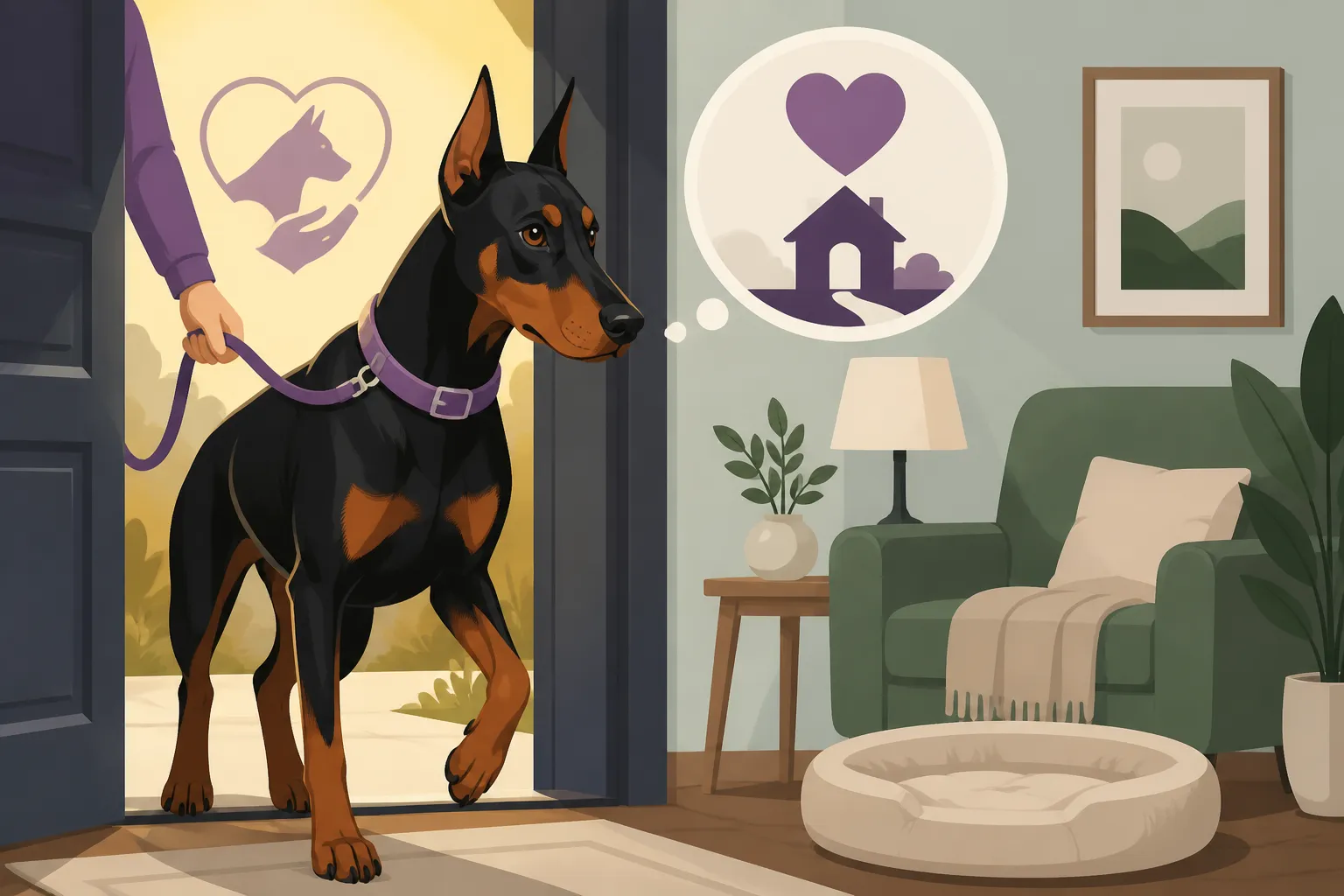
Bringing a Rescue Doberman Into a Quiet House
Bringing a rescue Doberman into a quiet home might sound like the ideal scenario, a tranquil haven for a dog who's perhaps seen too much chaos. You picture peaceful naps by the fireplace and serene walks, a stark contrast to a noisy shelter or a previous life marked by neglect. But the truth is, for many rescue Dobermans, the sudden quiet can be just as unsettling as constant noise, sometimes even more so, leading to anxiety you never anticipated. This guide will walk you through preparing for and navigating this delicate transition, ensuring your Doberman finds true peace, not just silence, in your home.
Understanding Your Rescue Doberman's Past and Needs
When you welcome a rescue Doberman into your home, you're not just getting a dog; you're adopting a history, a tapestry of experiences, both good and bad, that have shaped who they are. Their previous life, often unknown in detail, will heavily influence how they adjust to your quiet environment.
The Shadow of the Past: Why Quiet Can Be Unsettling
It sounds counterintuitive, doesn't it? We crave peace and quiet after a long day, so surely a rescue Doberman, who might have come from a bustling shelter or even an abusive situation, would too. But for many dogs, especially those with a traumatic past, extreme quiet can be profoundly unsettling. It's not the peaceful haven we imagine; it's simply different, and that difference can be perceived as a threat.
Imagine a Doberman who spent their early life constantly exposed to loud noises – perhaps barking dogs in a crowded kennel, the blare of a TV, or even the unpredictable shouts of a former owner. Their coping mechanism might have been to ignore the noise, or to stay hyper-vigilant within it. When suddenly thrust into a truly quiet space, that learned vigilance doesn't just disappear. Instead, every small creak of the house, every distant siren, or even the sound of their own breathing can become amplified and alarming. They might be waiting for the "other shoe to drop," unable to relax because silence has never equated to safety in their experience. For these dogs, true peace isn't about the absence of sound, but the presence of predictable, benevolent stability.
Assessing Initial Temperament and Triggers
Your first few days and even weeks with a rescue Doberman are less about training and more about observation. You need to become a silent detective, watching for clues about their inner world. Give them space, and simply observe how they navigate their new surroundings. Do they constantly scan the room, ears swiveling at every subtle sound? Do they gravitate towards hiding spots, or do they pace restlessly, unable to settle?
Look for the subtle, unspoken language of canine stress. This might include repetitive yawning when not tired, excessive lip licking, rapid blinking, a stiff or hunched posture, tail tucked low, or avoiding eye contact. These aren't signs of a "bad" Doberman; they are vital communications from a dog who is feeling overwhelmed or insecure. They're telling you they're uncomfortable, and that's incredibly valuable information. Whether a Doberman Whale Eye Means Trouble can sometimes be an indicator of stress or discomfort, so pay attention to their eyes too.
In a quiet household, what might seem insignificant to you can be a massive trigger for your Doberman. The ping of a microwave, the mail slot rattling, a reflection from a window dancing on the wall, or even the distant thrum of a delivery truck can elicit a startle response. Begin to mentally (or physically) log these reactions. Understanding their triggers is the first step towards managing them and helping your Doberman feel secure. It allows you to anticipate moments of stress and intervene proactively with reassurance or redirection.
Creating a Calm and Predictable Environment
For a rescue Doberman to truly thrive in a quiet home, the environment needs to be more than just silent; it needs to be a sanctuary of predictability and safety. This means actively shaping the space and your interactions within it.
Establishing a Safe Space and Den
Every Doberman, especially a rescue, benefits immensely from having their own designated safe space – a true den where they can retreat, decompress, and feel utterly secure. Even in the most spacious and quiet home, the constant presence of humans or the vastness of an open floor plan can be overwhelming for a dog still adjusting to their new reality. This dedicated spot provides a much-needed mental break and a sense of ownership over a small part of their new world.
For many Dobermans, a well-chosen and positively introduced crate serves this purpose perfectly. Ensure the crate is appropriately sized, allowing your Doberman to stand, turn around, and lie down comfortably. Covering the crate with a blanket or crate cover can enhance the den-like feel, providing a cozy, enclosed space that feels private and safe. Place this den in a quiet, low-traffic area of your main living space, not tucked away in an isolated room like a basement, which could inadvertently make them feel exiled. Choosing a Crate for a Doberman involves considering their full adult size and specific temperament.
Introduce the crate gradually and with positive associations. Never use it as a punishment. Instead, lure them in with irresistible treats or a favorite chew toy. Feed their meals inside with the door open initially. The goal is for them to associate their crate with comfort, security, and relaxation, turning it into their personal haven rather than a confinement tool. If a crate isn't feasible, a designated room or a cozy corner with a comfortable dog bed, fresh water, and a long-lasting chew can function similarly. The key is to ensure this space is consistently respected as their undisturbed retreat.
Minimizing Sudden Changes and Stimuli
Predictability is a powerful antidote to anxiety, especially for a rescue Doberman with an unknown past. Establishing and sticking to a consistent daily schedule right from the start can dramatically reduce their stress. This means feeding at the same times each day, scheduling potty breaks at regular intervals, and maintaining consistent times for walks and quiet downtime. When they know what to expect, they can relax rather than constantly anticipate the unknown.
Beyond routine, be mindful of sudden changes or jarring stimuli within the home, particularly during those crucial first weeks. If a door creaks loudly, or you're about to drop something, try to preface it with a soft verbal cue like "oops" or "hold on" to prevent startling them. While you can't eliminate every unexpected sound, a conscious effort to move calmly and deliberately will go a long way in creating a sense of security.
The quietness of your home, while seemingly desirable, can sometimes amplify minor sounds, making them more jarring. To counteract this, consider introducing some low, ambient noise. Soft classical music, dog-specific calming playlists available on streaming services, or even a white noise machine can provide a consistent background soundscape. This gentle hum can help mask external noises like distant traffic or neighbors, preventing sudden silence from feeling oppressive and allowing your Doberman to truly relax without being on high alert for every tiny sound.
Calming Aids and Environmental Support
Sometimes, even with the best intentions, a rescue Doberman needs a little extra help to decompress and feel safe in a new environment. Thankfully, there are several tools and strategies that can complement your efforts to create a peaceful home.
Pheromone diffusers, such as those from Adaptil, release synthetic versions of the dog-appeasing pheromone, a natural chemical produced by lactating mother dogs to calm their puppies. Plugging these into the areas where your Doberman spends most of their time can create an invisible, reassuring scent that signals safety and security, helping to reduce general anxiety. They are subtle and can make a noticeable difference for many anxious dogs.
For Dobermans with higher anxiety levels, your veterinarian might discuss the possibility of calming supplements. These often contain natural ingredients like L-theanine, tryptophan, or various herbal extracts known for their mild calming properties. It's crucial to consult your vet before introducing any supplements to ensure they are safe, appropriate for your dog's specific health, and won't interact negatively with any existing conditions or medications. These are not sedatives but can help take the edge off their stress response, allowing them to be more receptive to training and environmental changes.
Finally, never underestimate the power of mental enrichment. Puzzle toys, snuffle mats, and long-lasting chews can provide a healthy and engaging outlet for anxious energy. Instead of pacing or fixating on sounds, your Doberman can channel their focus into solving a puzzle or enjoying a satisfying chew. This not only distracts them but also provides mental stimulation that can be surprisingly tiring. Search for durable, Doberman-proof options on Amazon, as their strong jaws can make quick work of lesser toys. Puzzle Work That Actually Tires a Doberman is a great way to help them settle and feel more at ease.
Establishing Trust and Routine
A quiet house can be a wonderful place for a rescue Doberman to heal, but only if it's built on a foundation of trust and consistent routines. These elements are far more important than any specific training command in the early days.
Gentle Introduction to Family Members
Integrating a rescue Doberman, especially one with an unknown background, requires a thoughtful, "no pressure" approach when introducing them to family members. Your Doberman needs time to assess their new human and animal companions, and rushing these introductions can create fear or insecurity.
For children, this means proactive education. Teach them to approach calmly, with a soft voice, and to understand canine body language. Crucially, teach them to respect the Doberman's space, particularly when they are in their crate or resting. All interactions between children and the Doberman must be supervised, no matter how brief. A Doberman who has never lived with children might find their unpredictable movements and higher-pitched voices alarming. Focus on teaching children how to be calm around the dog, and how to offer a treat gently, rather than initiating play too soon.
Introducing other pets, especially other dogs, requires even more patience and careful management. Start with parallel walks outside, where they can sniff each other's scent on the environment without direct nose-to-nose contact. Gradually progress to short, supervised on-leash introductions in a neutral territory, then briefly indoors. Always have an exit strategy, and never force interactions. Your Doberman needs to feel safe before they can consider expanding their social circle within the home.
Positive Reinforcement and Confidence Building
Positive reinforcement is the absolute bedrock for building trust with a rescue Doberman. Every positive interaction, no matter how small, helps reshape their world view from one of uncertainty to one of safety and reward. Think of treats, praise, and calm, gentle petting as the currency you use to show them that good things happen in their new home.
Start with simple cues they might already know, like "sit" or "stay," or even just rewarding them for making eye contact or offering a calm behavior. Use high-value treats – something truly irresistible that makes them light up. The moment they perform the desired action, immediately follow it with the treat and a soft, encouraging "yes!" or "good dog!" This isn't just about teaching commands; it’s about establishing a clear, positive communication channel and building their confidence that they can understand and succeed in this new environment.
Celebrate every small win. A Doberman choosing to lie down calmly in their bed, offering a relaxed sigh, or even just looking at you with soft eyes instead of a worried expression – these are moments to acknowledge and reward. These acts of positive reinforcement build a resilient spirit, slowly chipping away at their past anxieties and replacing them with a sense of security and belonging.
Many online resources, such as those offered by BAXTER & Bella, provide structured, positive reinforcement-based training programs that can be incredibly helpful for rescue Doberman owners. They can guide you through exercises that build confidence and communication from day one, helping your Doberman feel more secure in their new, quiet home. Whether a Doberman Works Better for Food or Tug often depends on the individual dog, but high-value food is usually the best bet for a new rescue building trust.
The Power of Predictable Interaction
In a quiet home, the nature and predictability of your interactions with your Doberman are especially impactful because there are fewer distractions. Consistent, calm engagement is key to building security and strengthening your bond.
Gentle, structured leash walks are not just for exercise; they are powerful bonding opportunities. Allow your Doberman to explore and sniff at their own pace. These outings, especially in quiet areas, build confidence and expose them to the outside world in a controlled, positive manner.
Structured playtime, perhaps with a sturdy tug toy or a game of fetch in a secure yard, provides an outlet for their natural Doberman energy without overwhelming their sensitive nature. It's crucial to keep these play sessions brief and to end them before your Doberman becomes overstimulated or frantic. This teaches them that play is fun, but also that you guide the activity and bring them back to a calm state.
While it's natural to want to shower a rescue Doberman with affection, constant, unstructured attention can be overwhelming. Instead, offer quiet, inviting cuddle times when they seek it out, or when you initiate a calm grooming session or a gentle ear rub. This teaches them that affection is predictable and available, rather than something that is constantly demanded or intrudes on their quiet space. Your calm and consistent demeanor will be their greatest source of reassurance. Retraining an Adult Doberman From Rescue often starts with these fundamental relationship-building interactions.
Navigating the First Weeks and Months
The journey with a rescue Doberman is a marathon, not a sprint. Understanding the typical adjustment phases and how to navigate potential setbacks will be crucial for success in your quiet home.
The Three-Day, Three-Week, Three-Month Rule for Rescues
Bringing home a rescue dog, especially a Doberman who might have a complex past, can be an emotional rollercoaster. To help manage expectations and remind us that true integration takes time, many in the rescue community refer to the "3-3-3 Rule." This isn't a strict timeline, but a helpful guideline for understanding the psychological and behavioral stages your Doberman will likely go through.
-
The First Three Days: "Survival Mode." Your Doberman is likely overwhelmed, confused, and may be experiencing a significant amount of stress. They are trying to figure out their new surroundings and establish a sense of safety. During this period, don't expect much interaction. They might hide, refuse food, or even have house-training accidents. Your role is to provide a safe space (their crate or den), ensure access to food, water, and potty breaks, and keep interactions minimal, calm, and predictable. They are observing you and the environment intensely, trying to piece together what their new life will be.
-
The First Three Weeks: "Learning the Routine." As the initial shock wears off, your Doberman will start to understand the household routine. They might begin to show more of their personality, both the good and the challenging aspects. This is often when some behavioral issues, previously suppressed by stress, might emerge as they feel more comfortable expressing themselves. They are learning your rules and boundaries, and this is the time to gently reinforce positive behaviors, continue building trust through consistent interactions, and deepen their understanding of their new life.
-
The First Three Months: "Settling In." By this point, your Doberman should be fully settled, feeling secure, and considering your home their true home. They've formed bonds with family members, understand the daily routine, and are comfortable expressing their genuine selves. This is when you'll truly see the dog they are meant to be – the loyal, intelligent companion you hoped for. This extended timeframe allows for a full psychological integration into your quiet household, moving beyond mere survival to true belonging. How Long a Rehomed Doberman Takes to Attach will largely depend on their past experiences and your consistent patience.
| Adjustment Phase | What to Expect (Doberman) | Your Role | Potential Setbacks |
|---|---|---|---|
| First 3 Days | Overwhelmed, withdrawn, observing. May not eat/drink much. | Provide safe space, minimal interaction, basic needs. | Hiding, refusing food, house training accidents. |
| First 3 Weeks | Starting to learn routine, personality emerges, some anxiety may show. | Consistent routine, positive reinforcement, gentle exploration. | Mouthiness, barking at new sounds, some guarding behaviors. |
| First 3 Months | Settled, forming bonds, understanding rules, confident in routine. | Continue training & socialization, build trust, enjoy bond. | Occasional regressions, testing boundaries, new fear responses. |
Recognizing and Addressing Setbacks
It’s easy to fall into the trap of thinking that once your rescue Doberman starts making progress, it’s all smooth sailing. However, the path to full integration is rarely linear. Be prepared for setbacks, as they are a normal part of the adjustment process. Your Doberman might suddenly regress in housetraining, exhibit increased anxiety, or develop new fears you hadn't seen before.
These regressions are often not a sign of failure, but rather an indication that your Doberman is processing something, perhaps an accumulation of stress, a new trigger they encountered, or simply a phase in their deeper adjustment. Your response during these times is critical. Avoid punishment, as it will only increase their anxiety, erode the trust you've painstakingly built, and potentially exacerbate behavioral issues.
Instead, when a setback occurs, calmly revert to earlier, simpler steps. If housetraining lapses, don't assume they've forgotten. Increase the frequency of potty breaks, reward heavily for outdoor successes, and clean any indoor accidents thoroughly with an enzymatic cleaner to eliminate odors that might encourage repeat incidents. If anxiety spikes, ensure their safe space is readily available, and introduce more calming activities like puzzle toys or gentle massage. A Doberman That Cannot Cope When You Go Out might show heightened distress if left alone, and setbacks could involve separation anxiety resurfacing.
Remember that immense patience is your most powerful tool. Each setback is an opportunity to reinforce that you are a consistent, safe, and understanding presence, regardless of the challenges. It's a testament to your commitment to their well-being and a chance for them to learn that their new home is truly safe.
Continued Socialization, Desensitization, and Training
Even though you’re providing a quiet home, it doesn’t mean your Doberman should live in isolation. Continued, carefully managed exposure to the wider world is vital for building their confidence and ensuring they remain well-adjusted. Think of it as "quality over quantity" when it comes to outside experiences.
Controlled, positive socialization experiences could include short walks in quiet parks during off-peak hours, brief, calm visits to a pet-friendly hardware store where they can observe people without direct interaction, or carefully orchestrated introductions to calm, known dogs. The key is to keep these experiences positive, brief, and to end them before your Doberman shows any signs of stress. The goal is to build positive associations with new sights, sounds, and people, not to overwhelm them.
Desensitization to common household or neighborhood sounds is also an ongoing process. If your Doberman reacts to the doorbell, for instance, you can use a technique where you softly ring the doorbell, immediately followed by a high-value treat, gradually increasing the volume over many repetitions and sessions. You can find various sound effect apps to help you practice with a wide range of noises in a controlled environment.
Finally, ongoing training isn't just about teaching commands; it's a powerful tool for continuing to build your Doberman's confidence and strengthening your bond. Enroll in a beginner obedience class (after they've settled in for a few months), or commit to daily, short training sessions using positive reinforcement at home. This mental stimulation helps them feel more engaged and secure, understanding the expectations of their new life. Training a Doberman That Is Smarter Than You Expect means they will thrive on consistent mental challenges. It’s a lifelong process of communication and mutual understanding.
Disclaimer
This article is for general informational purposes only and does not constitute professional advice. Laws, prices and regulations vary by location and change over time. Consult a qualified professional for guidance on your specific situation.