Training a Doberman That Is Smarter Than You Expect
Many Doberman owners discover quickly that while their dog might look formidable, the real challenge lies in their dazzling intelligence. It’s a wonderful trait, of course, but it can also lead to a Doberman who outsmarts you at every turn, finding creative ways to get what they want or entertain themselves in ways you’d rather they didn’t. This guide is here to walk you through understanding that brilliant Doberman mind and harness its power for positive training outcomes, making your life together harmonious and truly rewarding.
Understanding the Doberman Mind: More Than Just Muscle
When most people picture a Doberman, they often imagine a powerful, sleek, and perhaps a bit intimidating animal. What many don't immediately grasp is the incredible brainpower ticking beneath that elegant skull. Dobermans aren't just athletic; they are profoundly intelligent, often ranking high in studies on canine intelligence. This sharp mind is both a blessing and, if not properly channeled, a significant challenge for their human companions.
This breed was originally developed by Karl Dobermann, a tax collector who needed a loyal, protective, and intelligent companion to accompany him on his rounds. He wasn't just looking for brawn; he needed a dog that could think, assess situations, and act decisively when necessary. This inherent capacity for thought and problem-solving has been passed down through generations, making today's Doberman a complex and highly capable creature. They observe, they learn, and they remember, which means every interaction you have with your Doberman is a learning opportunity for them, whether you intend it to be or not.
The depth of a Doberman's understanding extends far beyond simple commands. They pick up on routines, subtle body language, changes in tone of voice, and even your emotional state. They're like sponges, absorbing information about their environment and the people in it constantly. This means training isn't just about teaching them to sit or stay; it's about building a consistent language and predictable framework that their intelligent mind can latch onto. Without this, their cleverness might lead them to create their own rules, which, while logical to them, can be quite frustrating for you.
The Double-Edged Sword of Doberman Intelligence
Having a smart dog sounds fantastic, and it truly is for many aspects of life with a Doberman. They grasp new commands with astounding speed, sometimes within just a few repetitions. This makes them absolute stars in obedience classes and allows them to excel in various dog sports. They often seem to anticipate your next move, leading to a truly responsive and engaged companion. If you've ever felt like your Doberman is reading your mind, you're probably not far off; their observational skills are top-notch.
However, this high intelligence comes with its own set of challenges, and it's something many new Doberman owners aren't fully prepared for. A Doberman isn't content to simply lie around all day. Their brains need to be worked just as much, if not more, than their bodies. Without adequate mental stimulation, that clever mind will find its own projects. And trust me, their projects rarely align with your household rules. This could manifest as excessive barking, destructive chewing, digging, counter-surfing, or even intricate escape attempts. This is Why a Clever Doberman Is Harder to Train for many people, because it requires constant engagement.
Another common frustration is that a Doberman learns everything, including what they can get away with. If you're inconsistent with commands or rules, they'll quickly figure out the loopholes. For example, if "off the couch" is only enforced sometimes, they'll test that boundary every single time. They're not being stubborn in the way a less intelligent dog might be; they're simply being logical within the framework you've (inadvertently) provided. This can be incredibly exasperating for owners who are just trying to live their lives, only to find their dog constantly pushing the boundaries.
Foundational Training for the Brilliant Doberman Puppy
Starting off on the right paw with a Doberman puppy is absolutely critical because their minds are developing so rapidly. The first few months are a whirlwind of growth, learning, and absorbing the world around them, and this period lays the groundwork for their entire adult life. It's during this time that you want to cultivate confidence, a strong bond, and good habits, rather than letting their natural smarts lead them astray.
Early Socialization: Building a Confident Companion
Socialization isn't just about letting your puppy play with other dogs; it's about carefully exposing them to a vast array of sights, sounds, smells, people, and environments in a positive and controlled way. For a Doberman, with their natural guarding instincts, this is paramount. You want them to be comfortable and confident in new situations, rather than fearful or overly suspicious. Think about all the things an adult dog will encounter: people of different ages, sizes, and ethnicities; people with hats, glasses, or beards; people on skateboards, bikes, or in wheelchairs; loud trucks, bustling markets, quiet parks, and the vet's office.
The ideal window for intensive socialization closes around 16 weeks of age. This is The Sixteen Weeks That Set a Doberman Up for success. During this time, your puppy's brain is highly receptive to new experiences and less likely to develop lasting fear responses. Every positive interaction builds resilience. If your Doberman puppy only experiences your quiet home, they might grow up to be anxious or reactive in the wider world, which can be a significant challenge given their size and strength. Invest heavily in positive socialization now, even if it feels like a lot of work.
To make socialization effective, ensure every experience is positive. Pair new sights or sounds with high-value treats and praise. For example, when Meeting Men in Hats With a Doberman Puppy, offer a treat the moment they see the person. This creates a positive association. Avoid overwhelming your puppy with too many new things at once, and always supervise interactions closely. Puppy classes are an excellent way to expose them to other puppies and people in a structured environment, but don't rely on them as your sole source of socialization. Your daily walks and planned outings are just as, if not more, important for Exposing a Doberman Puppy to Strangers and the world.
Basic Obedience: The Building Blocks of Communication
Basic obedience commands aren't just tricks; they are vital communication tools that establish a common language between you and your Doberman. Commands like "sit," "stay," "come," "down," and "leave it" are the foundation for safety, control, and a well-mannered companion. Because Dobermans learn so quickly, you'll likely be amazed at how fast they pick up these cues. The key, however, isn't just teaching the command, but practicing it consistently in many different environments and with increasing distractions.
Start in a quiet, low-distraction environment, like your living room. Use high-value rewards – small, soft, super-tasty treats or a favorite toy. Keep sessions short, fun, and positive. Dobermans thrive on positive reinforcement and will shut down quickly if training becomes harsh or intimidating. As your Doberman reliably performs a command in a quiet setting, gradually introduce more distractions, moving to different rooms, then the backyard, and eventually out in public. This process, known as generalization, is crucial for ensuring your Doberman will respond reliably no matter where you are.
Consistency from everyone in the household is non-negotiable. If one person allows the Doberman to jump on them while another discourages it, your clever Doberman will quickly learn who to jump on and when. Agree on commands, hand signals, and what behaviors are acceptable. This breed will constantly test boundaries, and a united front is the best way to ensure they understand the rules. For a truly intelligent dog like the Doberman, clarity and predictability are your best friends in building a strong, respectful relationship.
Keeping a Doberman Mentally Engaged
One of the biggest mistakes an owner can make with a Doberman is underestimating their need for mental stimulation. Physical exercise alone, while important, will not tire out their active minds. A bored Doberman is a destructive Doberman, and their intelligence means they can be remarkably creative in their destructive endeavors. Preventing boredom is a constant, ongoing task, but a deeply rewarding one that fosters a happy and well-adjusted dog.
The Power of Puzzle Toys and Enrichment
Puzzle toys are an absolute godsend for Doberman owners. These aren't just frivolous gadgets; they are essential tools for engaging your dog's brain and providing a healthy outlet for their problem-solving skills. Instead of simply eating their meal from a bowl in two minutes, make them work for it! Kongs stuffed with kibble and peanut butter (or plain yogurt, mashed banana, wet food) and then frozen can keep a Doberman occupied for a good chunk of time. Snuffle mats, treat-dispensing balls, and interactive feeders also make mealtime a mental exercise.
Beyond mealtimes, consider investing in more complex puzzle toys that require multiple steps to solve. Brands like Kong, Nina Ottosson, and West Paw offer durable options designed to challenge intelligent dogs. You can find a wide variety of interactive toys on Amazon that cater to different difficulty levels. Introducing new puzzle toys regularly or rotating existing ones keeps things fresh and prevents your Doberman from mastering them too quickly. For Puzzle Work That Actually Tires a Doberman, you want toys that genuinely make them think, not just bat around.
Don't underestimate the simple act of scent work. Hiding treats around the house or yard and encouraging your Doberman to "find it" is a fantastic way to engage their primal sniffing instincts. This low-impact activity is incredibly mentally stimulating and can tire them out more effectively than a long walk. Even just scattering their kibble in the grass instead of putting it in a bowl can turn a meal into a brain game.
Learning New Tricks and Skills
Dobermans thrive on learning and having a job to do, and that job doesn't always have to be formal obedience or protection work. Teaching them new tricks or more advanced skills is a wonderful way to keep their minds sharp and deepen your bond. Think beyond the basic "sit" and "stay." Teach them to "wave," "roll over," "play dead," or even string together multiple commands. The process of learning new things engages their cognitive abilities and provides a sense of accomplishment.
Consider enrolling in a trick training class or exploring online resources for more complex behaviors. Many online platforms, like BAXTER & Bella, offer structured courses that can guide you through teaching advanced tricks and skills. This not only challenges your Doberman but also gives you a framework for consistent training. The more you teach your Doberman, the more receptive they become to learning, creating a positive feedback loop.
Even daily walks can become learning opportunities. Practice "heel" in different environments, work on "stay" while you step away, or play "find it" with their favorite toy. Incorporate short, fun training sessions throughout the day rather than just one long, formal session. This keeps your Doberman engaged and thinking, reducing the likelihood of boredom-driven behaviors. A Doberman who is regularly learning and problem-solving is a much happier and better-behaved companion.
Navigating Common Doberman Training Challenges
Despite their intelligence, Dobermans present specific training challenges that can test even experienced owners. Their strong opinions, intense focus, and natural guarding instincts require a thoughtful and consistent approach. Understanding these common hurdles is the first step toward effectively addressing them.
Stubbornness and Selective Hearing
It's not uncommon for Doberman owners to feel like their dog sometimes has "selective hearing." They know the command, they've done it a hundred times, but in a distracting environment or when they'd rather be doing something else, they suddenly "forget." This isn't true stubbornness in the sense of defiance; it's often a combination of being highly intelligent and constantly assessing what's in their best interest at that moment. "Is that squirrel more rewarding than obeying my human?" is a thought process you might practically see on their face.
The key to overcoming this isn't force or punishment, which can actually make a Doberman shut down or become resentful. Instead, it's about making yourself consistently more rewarding and interesting than the distraction. Use higher-value treats, more enthusiastic praise, and playful encouragement, especially in challenging environments. Gradually increase distractions during training sessions, always setting your Doberman up for success. If they're failing repeatedly, the environment is too distracting, and you need to scale back.
Another aspect is building a strong "recall" or "come" command that is absolutely bulletproof. This often takes months, even years, of consistent, positive practice. Never use "come" when you're angry or to do something unpleasant (like giving a bath or leaving the park). You want "come" to always mean something wonderful happens. If you struggle, consider enrolling in a class focused on recall or working with a professional trainer. Marker Training a Doberman From Scratch can be incredibly effective for building clear communication and responsiveness, especially with intelligent breeds.
Reactivity and Over-Guardiness
Dobermans have an inherent guarding instinct, which is one of their defining traits. When managed properly through socialization and training, this translates into a loyal protector. However, without proper guidance, this instinct can tip over into reactivity – barking, lunging, or growling at strangers, other dogs, or anything they perceive as a threat to their family or territory. This is where Doberman Guarding Instinct and Where It Tips Over becomes a serious concern.
Addressing reactivity requires patience, consistency, and often the help of a certified professional dog trainer or behaviorist. Avoid methods that rely on punishment or fear, as these can exacerbate reactivity and erode your Doberman's trust in you. Instead, focus on positive reinforcement to change your Doberman's emotional response to triggers. This might involve desensitization (gradually exposing them to triggers at a distance where they remain calm) and counter-conditioning (pairing the trigger with something highly positive, like delicious treats).
For situations where your Doberman might be over-guarding, such as visitors coming to the house, proactive management is key. Teach your Doberman to "go to mat" or "place" when guests arrive and reward them heavily for staying there calmly. Keep them on a leash initially if needed. Consistency helps them learn that you are handling the situation, and they don't need to take on the responsibility. Remember, a Doberman's guarding instinct is powerful, but with the right training, it can be directed and controlled.
Finding the Right Training Methods and Tools
Given the Doberman's intelligence and sensitive nature, the how of training is just as important as the what. Methods that rely on intimidation or harsh corrections are not only ineffective in the long run but can also damage your relationship with your Doberman and stifle their willingness to learn.
The Power of Positive Reinforcement
For Dobermans, positive reinforcement is, hands down, the most effective and humane training approach. This means rewarding desired behaviors with something your Doberman loves – high-value treats, enthusiastic praise, a favorite toy, or a quick game of tug. When a behavior is rewarded, your Doberman is more likely to repeat it. This approach builds confidence, fosters a joyful attitude towards learning, and strengthens the bond between you and your dog.
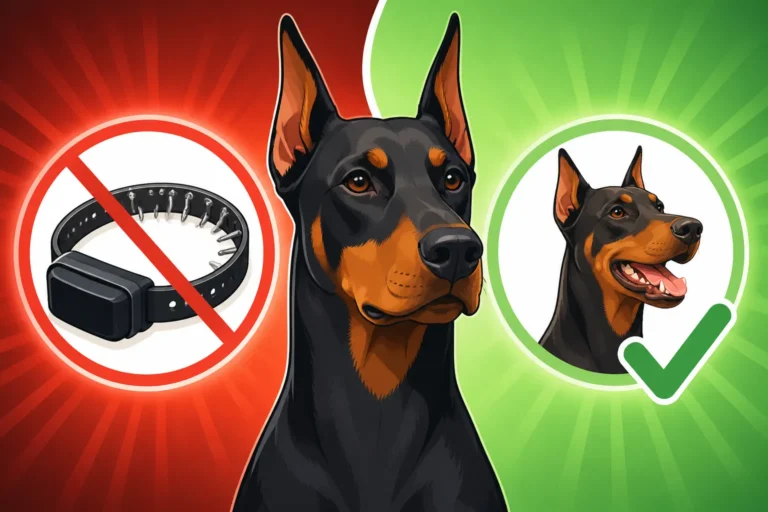
Avoid punishment-based methods that involve yelling, startling noises, physical corrections, or equipment designed to cause discomfort. Not only can these methods cause fear and anxiety in a sensitive Doberman, but they can also create new behavioral problems. Your Doberman's intelligence means they'll likely associate the punishment with you rather than the undesired behavior, leading to avoidance or a breakdown in trust. As many experienced Doberman owners will tell you, Why Yelling Shuts a Doberman Down is a lesson learned quickly. Instead of punishing an unwanted behavior, focus on redirecting them to a desirable alternative and rewarding that.
Consistency in applying positive reinforcement is crucial. Make sure everyone in the family understands and uses the same rewards and signals. Short, frequent training sessions are often more effective than long, drawn-out ones, especially with a young Doberman. Keep it fun, keep it positive, and you'll find your Doberman eager to engage and learn with you.
Choosing Appropriate Training Tools
The right tools can make a big difference in the effectiveness and comfort of your Doberman training journey. For a powerful breed like a Doberman, a sturdy, well-fitting harness or flat collar is essential for walks. While some trainers advocate for certain tools, it's generally best to start with and stick to equipment that prioritizes comfort and clear communication without relying on pain or fear.
For leash training an energetic Doberman, a front-clip harness can be incredibly helpful. It redirects their pulling power towards their chest, making it harder for them to pull you off balance, without applying pressure to their throat or causing discomfort. Alternatively, a head halter can offer excellent control for strong pullers, guiding their head allows you to direct their body. Ensure any equipment fits properly to prevent chafing or discomfort.
When it comes to specialized training equipment, always consult with a reputable, positive-reinforcement trainer who has experience with Dobermans. Tools like prong collars or e-collars are highly controversial and can be detrimental to a Doberman's sensitive temperament if used improperly or by inexperienced individuals. The general consensus among many Doberman enthusiasts and ethical trainers is that Whether an E-Collar Belongs on a Doberman is a question that usually gets a resounding 'no' if you prioritize building trust and positive associations. Focus on building a strong relationship and clear communication through humane methods, and you'll find these tools unnecessary.
Advanced Training and Doberman Sports
With their impressive intelligence, athleticism, and desire to work, Dobermans are prime candidates for a wide range of advanced training and dog sports. These activities provide an excellent outlet for their energy, keep their minds stimulated, and further strengthen the bond between dog and owner. Engaging in these pursuits can transform a well-behaved pet into an exceptionally skilled companion.
Exploring Working Sports and Obedience
Dobermans were originally bred for utility, and their natural aptitude for work means they excel in various canine sports. Competitive obedience is a fantastic arena for a Doberman, allowing them to showcase their intelligence, focus, and responsiveness to commands. They learn intricate routines and perform with precision, which is incredibly satisfying for both dog and owner. Similarly, rally obedience offers a slightly less formal but equally engaging challenge, where dogs navigate a course of numbered stations, performing different exercises at each.
Beyond obedience, Dobermans are often champions in protection sports like Schutzhund (now officially known as IGP). This sport, which originated in Germany, tests a dog's tracking, obedience, and protection skills. It's not about making a dog aggressive; rather, it's about channeling their natural drives and instincts into a highly controlled, disciplined sport. For owners interested in this path, it's crucial to find a club with experienced, ethical trainers who prioritize safety and sound temperament. The Working Sports a Doberman Was Built For truly bring out their best attributes.
Other working activities like tracking and scent work are also incredibly enriching. Dobermans have a keen nose and love to use it. Tracking involves following a human scent trail, while scent work (often called "nose work") teaches dogs to locate specific odors, much like detection dogs. These sports are low-impact but immensely mentally tiring, providing a fantastic outlet for their problem-solving brains.
Agility and Beyond
If your Doberman has a love for speed and jumping, agility might be the perfect fit. Agility courses involve navigating a series of obstacles – tunnels, jumps, weave poles, and seesaws – in a timed sequence. Dobermans, with their athleticism and eager-to-please attitude, can thrive in this fast-paced sport. It requires both physical dexterity and mental focus, as the dog must understand and execute a complex sequence of commands from their handler.
For Doberman owners considering agility, it's important to start with proper foundation training to ensure safe execution of obstacles and protect their joints. This is particularly relevant for a long-backed breed. A good instructor will guide you through building confidence and body awareness before introducing full-height obstacles or complex sequences. Always prioritize your Doberman's physical well-being.
Beyond structured sports, consider therapy work or canine good citizen titles. Dobermans, despite their imposing appearance, can be incredibly gentle and intuitive companions, making them excellent candidates for visiting hospitals or nursing homes, bringing comfort to those in need. Achieving a Canine Good Citizen (CGC) title demonstrates that your Doberman is a well-mannered member of society and is a fantastic goal for any owner. This range of options highlights just how versatile and intelligent a Doberman can be when given the opportunity to learn and grow.
The Lifelong Learning Journey with Your Doberman
Bringing a Doberman into your life isn't just about training them through puppyhood or adolescence; it's about embarking on a continuous journey of learning and discovery together. Their intelligence means they are always observing, always adapting, and always capable of picking up new skills, no matter their age. This commitment to lifelong engagement is what truly defines a successful partnership with this remarkable breed.
Maintaining Mental Sharpness in Adulthood
Just like humans, dogs can benefit from ongoing mental stimulation to keep their brains healthy and sharp as they age. Don't stop teaching your Doberman new things just because they're an adult and know the basics. Continue to introduce new tricks, revisit old commands in novel environments, and explore new puzzle toys. Even a few minutes of brain games each day can make a big difference in their overall well-being and prevent cognitive decline.
Consider refreshing their obedience skills with occasional advanced classes or workshops. This not only reinforces their training but also exposes them to new challenges and keeps their problem-solving abilities honed. You might find an adult Doberman, with their developed focus, excels even more in certain training tasks than they did as a rambunctious puppy. This ongoing mental exercise helps prevent boredom and the behavioral issues that can arise from it, ensuring a happier household for everyone.
For an older Doberman, who might not be as physically agile as they once were, mental games become even more crucial. Scent work, interactive feeders, and quiet puzzle challenges are perfect for keeping their minds active without putting strain on their joints. Regularly asking them to think and solve problems can contribute significantly to their quality of life as they mature.
Adapting Training for Life Changes
Life is full of changes, and your Doberman's training journey will need to adapt right along with it. Whether you're moving to a new home, welcoming a new family member, or adjusting to changes in your work schedule, your Doberman will benefit from consistent guidance through these transitions. Their intelligence means they'll notice every shift, and clear communication from you can help them navigate these changes with confidence.
If you find yourself in a new environment, take time to re-establish routines and practice known commands in the new setting. What might have been easy in your old home could be challenging in a new one due to different distractions or acoustics. Re-socialize them to the new neighborhood, gradually introducing them to new sights and sounds. If you're struggling with a particular behavior change during a transition, don't hesitate to seek advice from a professional positive reinforcement trainer or behaviorist.
The incredible bond you share with your Doberman, forged through consistent, positive training and understanding their unique intelligence, is a powerful tool. By embracing their cleverness, providing consistent boundaries, and continuously engaging their minds, you'll find that living with a Doberman is not just manageable, but an incredibly enriching and rewarding experience. They truly are partners in every sense of the word.
| Training Category | Focus Area | Benefits for Dobermans | Example Activities/Tools |
|---|---|---|---|
| Foundational Obedience | Basic commands, clear communication | Establishes control, builds common language, prevents self-reinforcement of unwanted behaviors | "Sit," "Stay," "Come," "Leave It," leash walking, Marker Training a Doberman From Scratch |
| Socialization | Positive exposure to people, places, sounds | Prevents fear/reactivity, builds confidence, creates a well-adjusted adult | Puppy classes, carefully managed outings, Exposing a Doberman Puppy to Strangers, paired treats |
| Mental Enrichment | Cognitive engagement, problem-solving | Reduces boredom, prevents destructive behaviors, satisfies intellectual needs | Puzzle Work That Actually Tires a Doberman, Kongs, snuffle mats, scent games, "Find It" |
| Advanced Skills/Sports | Complex tasks, physical/mental challenge | Provides purpose, outlet for energy, enhances bond, demonstrates versatility | Competitive obedience, agility, tracking, IGP, learning advanced tricks |
| Behavioral Management | Addressing specific challenges | Corrects unwanted behaviors, reinforces good manners, ensures safety | Desensitization for reactivity, "Go to Mat" for visitors, consistent boundary setting |
Disclaimer
This article is for general informational purposes only and does not constitute professional advice. Laws, prices and regulations vary by location and change over time. Consult a qualified professional for guidance on your specific situation.