How a Doberman Behaves When You Come Home
Oh, the Doberman homecoming! It's a scene most Doberman owners know all too well – that explosion of joy, the full-body wiggles, the vocalizations that could rival an opera singer, and maybe even a little piddle. It's endearing, yes, but also a bit much, especially when you're just trying to get through the door with groceries or simply craving a moment of peace after a long day. This guide will help you understand why your Doberman turns into a furry, enthusiastic tornado upon your return and, more importantly, how to manage that overwhelming excitement into a calmer, more respectful greeting that benefits both of you.
Typical Doberman Greeting Behaviors
Let's be real, a Doberman's greeting isn't subtle. It's a full-contact sport, often involving every ounce of their impressive athleticism and vocal range. Understanding these common behaviors is the first step to addressing them, because knowing what to expect helps you prepare and react appropriately.
The "Velcro" Effect in Overdrive
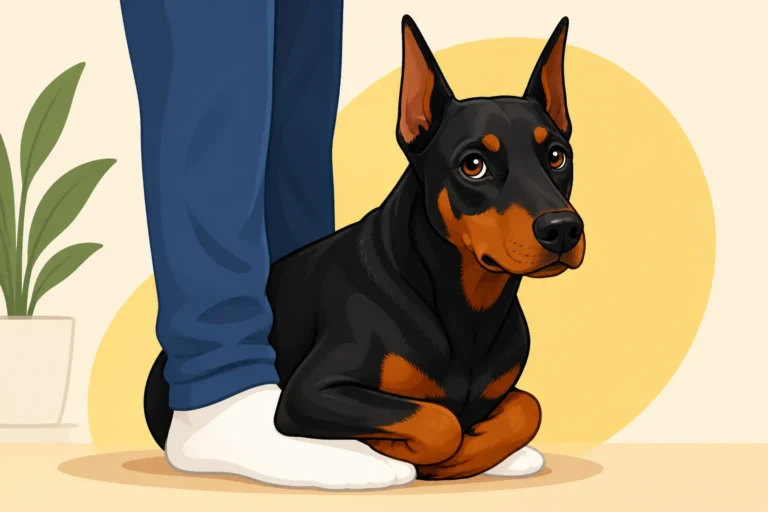
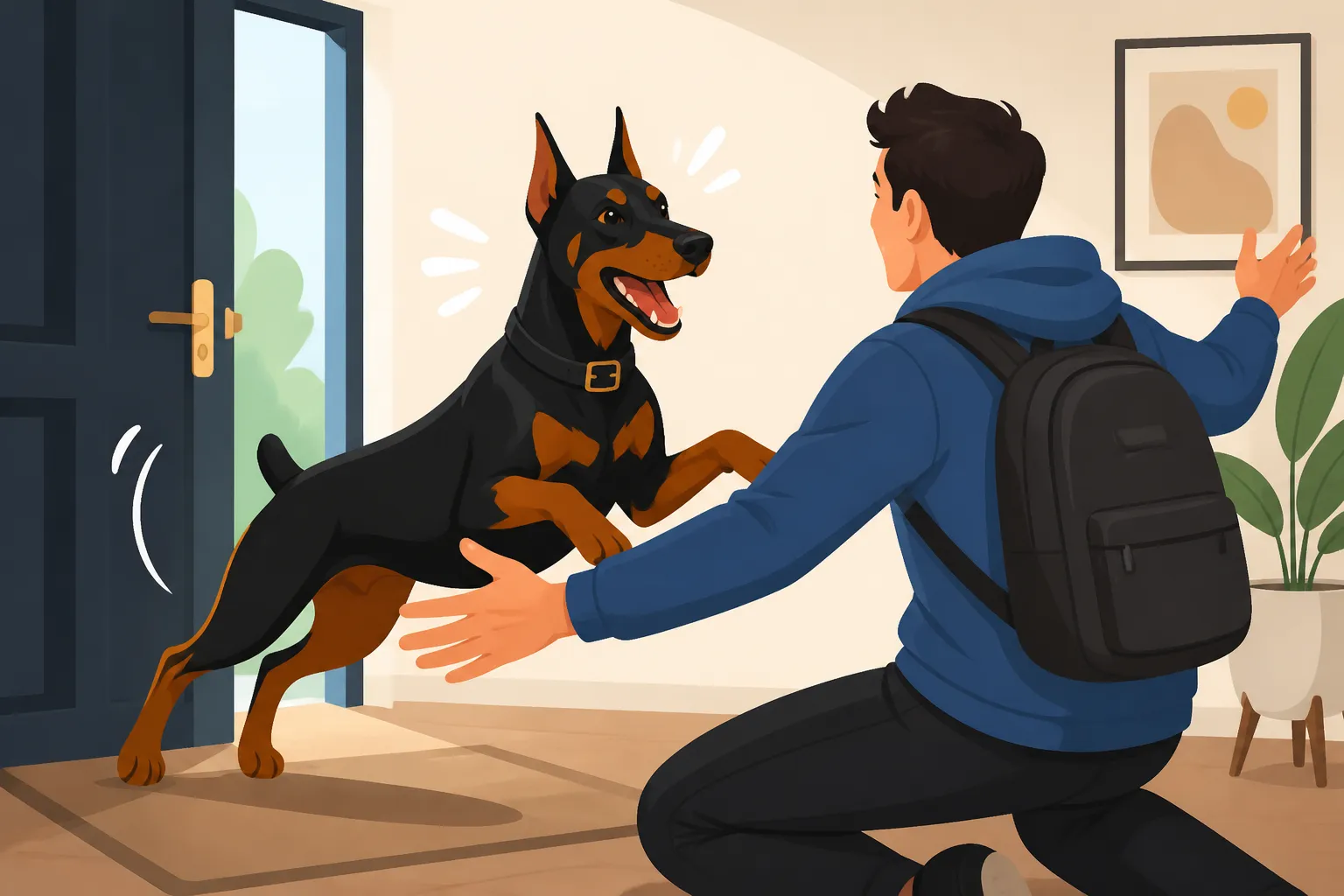
You've probably heard the term "Velcro Doberman," and nowhere is it more apparent than when you walk through the door. This isn't just a casual tail wag; it's a full-on physical assault of affection. Your Doberman might launch itself at you, often jumping up with paws on your chest, trying to get as close to your face as possible. It's their way of saying, "You're back! I thought you were gone forever! Don't ever leave me again!" They might weave between your legs, making it almost impossible to move without tripping, and lean their entire body weight against you. It's an intense physical manifestation of their deep bond, but it can also be genuinely overwhelming, even knocking you off balance if you're not ready. This constant physical proximity is characteristic of the breed, a topic explored further in Living With a Doberman That Follows You Everywhere.
For many Dobermans, this isn't just a brief moment of excitement. It can last for several minutes, sometimes even longer, as they try to absorb all of your attention. They might follow you from room to room, nudging your hand for pets, or trying to climb into your lap the moment you sit down. This intense focus, while flattering, can make simple tasks like taking off your shoes or putting away your coat a real challenge. They're not being naughty; they're simply expressing their immense joy and relief that their favorite person has returned, often with a complete lack of self-control in their exuberance.
Vocalizations and Zoomies
Beyond the physical contact, Dobermans often add a significant auditory component to their welcome home fanfare. This can range from high-pitched whines and excited yips to full-throated barks that echo through the house. It's not usually aggressive barking, but rather a clear expression of arousal and anticipation. They're communicating their excitement loudly and clearly for all to hear. Coupled with these vocalizations, many Dobermans will engage in "zoomies" – sudden bursts of frantic running around the house or yard. They'll race in circles, dart back and forth, often bumping into furniture or even you in their frenzy.
These zoomies are a way for them to discharge pent-up energy and overwhelming emotion. It's a chaotic dance of pure joy, and while it can be amusing, it also speaks to a level of over-stimulation that isn't ideal for a calm household. Imagine trying to unwind after a stressful day, only to be met with a barking, spinning, and leaping Doberman. It can be exhausting for both you and your dog. Sometimes, the zoomies are so intense that they actually help a Doberman wind down a little before they approach you for pets, having burned off some of that initial explosion of energy.
Submissive or Excitement Urination
Perhaps one of the most frustrating, and often misunderstood, greeting behaviors is excitement or submissive urination. You walk in, your Doberman greets you with all the enthusiasm in the world, and suddenly there's a puddle on the floor. This isn't a sign of defiance or a lack of house training. Instead, it's an involuntary physical response to extreme emotional arousal or a display of deference. Young Doberman puppies are especially prone to this, but even adult dogs can do it, particularly if they are easily over-stimulated or have a more sensitive temperament.
Excitement urination happens when the bladder relaxes involuntarily due to overwhelming joy. Submissive urination, on the other hand, is a clear signal of "I mean no harm" from your dog. They might crouch low, avoid eye contact, and then urinate. It's often triggered by perceived intimidation, even if you don't intend it. Both types are difficult for your Doberman to control in the moment, making it crucial for owners to manage the environment and their own reactions. Scolding or punishing this behavior almost always makes it worse, as it increases their anxiety and the likelihood of future accidents.
Why Dobermans Get So Excited at Your Return
Understanding the "why" behind your Doberman's dramatic welcome home is crucial for addressing it effectively. It's rarely malicious and almost always rooted in their innate breed characteristics, their daily routine, and sometimes, unintentional reinforcement from us.
Breed Predisposition for Bonding
Dobermans are renowned for their intense loyalty and deep bond with their families. They are truly "people dogs" and thrive on companionship. This strong attachment, often leading to the "Velcro Doberman" moniker, means they genuinely miss you when you're gone. For them, your absence can feel like an eternity, even if it's only been an hour. They are highly tuned into their human companions, and your return signals the restoration of their social structure and the source of their comfort and security. This deep bond is a wonderful trait, but it also means they experience profound joy and relief when you reappear.
Think about it from their perspective: you are their world. When you leave, a huge part of their world goes with you. Your return is like the sun reappearing after a long, dark night. It's no wonder they react with such unbridled enthusiasm! This inherent desire to be close and connected is a core part of the Doberman temperament, making them incredibly devoted but also susceptible to over-the-top greetings if not guided toward calmer behavior. It speaks to why they bond so strongly to particular family members, a topic explored further in Whether a Doberman Bonds to One Person.
Lack of Mental and Physical Stimulation
A Doberman is a highly intelligent and active breed. If they're left alone for extended periods without adequate mental and physical stimulation, they're going to have a lot of pent-up energy and boredom to unleash when you finally walk through the door. A bored Doberman is often an over-excited Doberman. Imagine being stuck in a house all day with nothing to do. When someone finally arrives, you'd probably be pretty excited too! This isn't just about physical exercise; mental exercise is just as important for these sharp dogs.
Without enough engaging activities – like puzzle toys, training sessions, or stimulating walks – your Doberman's excitement over your return can become their primary outlet for all that suppressed energy. They haven't had a chance to "work" their brains or bodies, so your arrival becomes the most exciting event of their day, leading to an explosion of energy and emotion. Ensuring they get enough appropriate stimulation throughout the day can significantly temper their reactions to your homecoming, making a massive difference in their overall demeanor. Providing enrichment is key to Keeping a Doberman Mentally Tired.
Learned Behavior: How Owners Unintentionally Reinforce Excitement
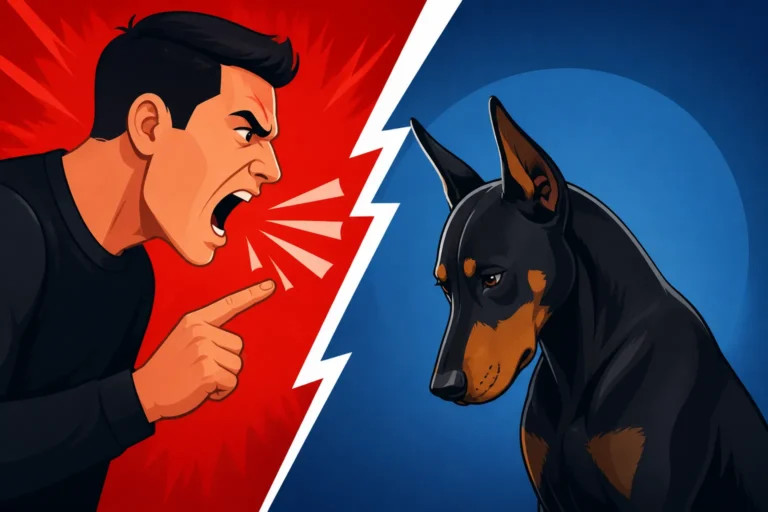
Here's the hard truth: we, as owners, often inadvertently contribute to the problem. When our Doberman greets us with jumping, barking, and frantic energy, our natural reaction is often to respond in kind. We might say "hello," pet them, talk to them in an excited voice, or even make direct eye contact. While this feels natural and loving, from your Doberman's perspective, it's a huge reward for their excited behavior. They learn that jumping on you gets them attention, barking gets them a response, and frantic wiggling earns them pets.
Every time we give attention to an overly excited Doberman, we are reinforcing that behavior. They don't differentiate between "good" attention and "bad" attention; any attention is a win. This creates a cycle where they learn that the more over-the-top their greeting, the more likely they are to get what they want – your focus. Breaking this cycle requires a conscious effort to change our own habits and teach them that calm greetings are what earn them praise and affection. It's about teaching them self-control and that patience pays off.
Strategies for Managing Over-the-Top Greetings
Taming your Doberman's enthusiastic homecoming isn't about crushing their spirit; it's about channeling that excitement into calmer, more appropriate behaviors. It takes consistency, patience, and a united front from everyone in the household.
The "Ignore and Reward Calm" Method
This is perhaps the most effective strategy, though it requires significant self-discipline on your part. The core idea is simple: ignore any excited, attention-seeking behaviors upon your arrival, and only acknowledge your Doberman when they offer a calm behavior.
Here’s how it works in practice:
- Preparation is Key: Before you even open the door, take a deep breath. Have treats ready in your pocket, not in your hand, so you don't inadvertently create more excitement.
- Enter Calmly: When you come home, enter the house as quietly and calmly as possible. Avoid eye contact with your Doberman. Keep your body language neutral – no excited greetings, no talking, no petting.
- Turn Away or Walk Away: If your Doberman jumps on you, turns in circles, or barks, immediately turn your back to them or calmly walk into another room. Do not speak to them, push them away, or make eye contact. This removes the "reward" of your attention.
- Wait for Calm: Wait until your Doberman has all four paws on the floor, is sitting, or is simply standing calmly without jumping or excessive vocalizations. This might take a minute or two, or even longer initially.
- Reward the Calm: The instant they are calm, turn back, make quiet eye contact, and softly praise them ("Good dog," "Nice and calm"). Then, and only then, give them a gentle pet or a small, low-value treat. Keep your tone and movements low-key. If they start to get excited again, repeat the turning away step.
- Consistency is Paramount: Every family member must follow this rule, every single time. One inconsistent greeting can set you back significantly. Your Doberman needs to learn that only calm behavior earns your attention. This method is explored more generally in Correcting a Doberman Without Breaking It.
| Do's for Calm Doberman Greetings | Don'ts for Calm Doberman Greetings |
|---|---|
| Do approach the door calmly. | Don't use an excited voice or make eye contact immediately. |
| Do turn your back if your Doberman jumps. | Don't pet, push away, or scold a jumping dog. |
| Do wait for all four paws on the floor. | Don't acknowledge until they are truly calm. |
| Do offer a quiet, gentle greeting once calm. | Don't allow them to herd you through the door. |
| Do be consistent, every time, with everyone. | Don't rush the process; patience is key. |
| Do give a small, low-value treat for calm. | Don't use high-value treats for initial calm. |
Pre-Emptive Management and Decompression
Sometimes, ignoring isn't enough, or you need to manage the environment to prevent the over-excitement from even starting. This is where pre-emptive management comes in.
- Arrival Routine: If your Doberman is prone to excitement urination, try to let them out to potty immediately before you enter the house fully. If you have a fenced yard, go straight to the back door, let them out, and then proceed with your calm entry once they've relieved themselves.
- Containment: Consider using a crate or a baby gate to create a barrier for your initial entry. Your Doberman can still see and hear you, but they can't physically interact with you in an overwhelming way. This allows you to get your coat off, put groceries down, and decompress for a minute before initiating a calm greeting. You can find sturdy crates suitable for Dobermans on Amazon. Once you're settled, you can release them for a calm, controlled greeting. More about crates is in Choosing a Crate for a Doberman.
- Mental Warm-up: Before you come inside, give them a mentally stimulating toy. A frozen Kong or a puzzle feeder filled with a portion of their dinner can keep them occupied for a few minutes while you get in and settled. This shifts their focus away from your arrival and onto a rewarding activity. You can find a wide variety of engaging puzzle toys on Amazon.
By managing the initial moments, you reduce the intensity of the greeting, making it easier for your Doberman to offer a calm behavior and for you to reinforce it. This decompression period helps both of you transition smoothly into being together again.
Teaching an Alternative Greeting Behavior
Instead of just telling your Doberman "no" to jumping, teach them what you want them to do. A solid "place" command or a "sit-stay" near the door can be invaluable.
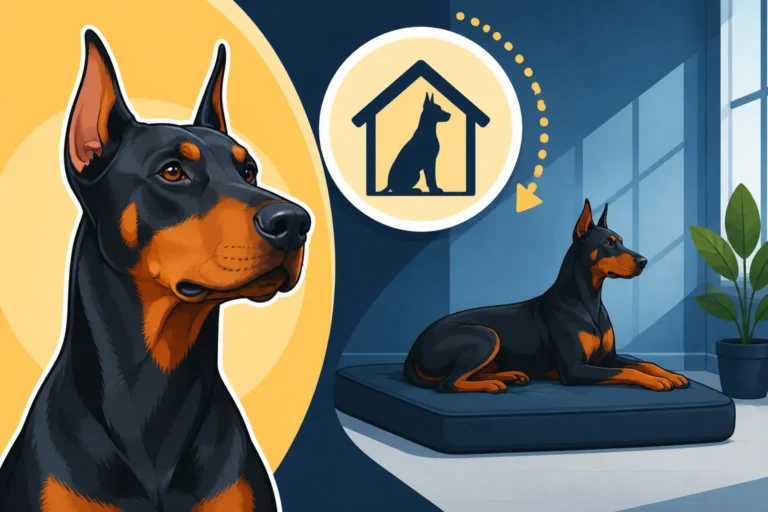
- "Go to Place" or "Mat" Training: Teach your Doberman to go to a designated "place" (like a dog bed or mat) when asked, and to stay there until released. Practice this command regularly, not just when you come home. When you arrive, ask them to "place" before you even step fully inside. Reward heavily for staying on their place while you put away your things.
- Automatic Sit: Train your Doberman that when you arrive, the default behavior is to sit. This takes many repetitions outside of greeting times. Practice opening and closing the door, stepping in and out, and rewarding a sit every single time. Over time, your Doberman will start to offer a sit automatically when they see you come through the door, knowing it's the gateway to your attention.
- Four Paws on the Floor: This is a simple, yet powerful rule. Any time your Doberman greets you, their four paws must remain on the floor. If a paw lifts, attention is removed. This can be combined with the "ignore and reward calm" method.
By giving them a clear, positive alternative behavior, you are setting them up for success. They want to please you and connect with you, and teaching them a polite way to do that empowers them to control their impulses.
Addressing Underlying Issues: Anxiety and Lack of Self-Control
Sometimes, the over-the-top greeting isn't just excitement; it can be a symptom of deeper emotional needs or insufficient management of their energy levels. Identifying and addressing these can lead to a much calmer, happier Doberman overall.
Separation Distress vs. Excitement
It's crucial to differentiate between genuine separation distress (formerly called separation anxiety) and mere over-excitement at your return. While both manifest with intense greetings, separation distress involves significant anxiety when left alone, often including destructive chewing, inappropriate urination/defecation, constant barking/howling, or pacing while you are gone. If your Doberman displays these behaviors in your absence, their excited greetings might be rooted in profound relief and anxiety rather than just joy.
If you suspect separation distress, consult with a professional dog behaviorist. This condition requires a more structured and often gradual approach to build your Doberman's confidence when alone. Ignoring alone-time issues can lead to chronic stress for your dog and won't be resolved with simple greeting management techniques. There are specific strategies and resources for dogs that struggle with being alone, as discussed in A Doberman That Cannot Cope When You Go Out and Building a Doberman's Alone Time From Minutes. Sometimes, calming supplements or even prescribed medication from a vet can be part of a comprehensive management plan, as detailed in Medication for a Doberman With Separation Distress.
Enrichment and Exercise for a Balanced Doberman
A tired Doberman is a good Doberman – and a calmer one. Dobermans need significant physical exercise and, just as importantly, mental stimulation to prevent boredom and pent-up energy from manifesting in frantic greetings.
- Daily Exercise: Ensure your Doberman gets at least 60-90 minutes of vigorous exercise daily. This isn't just a leisurely stroll; it could involve brisk walks, running, fetch in a secure yard, or structured play.
- Mental Games: Integrate regular mental exercises throughout the day. This could be short training sessions, scent work, puzzle toys, or even just hiding treats around the house for them to find. Puzzle Work That Actually Tires a Doberman offers great ideas. A Doberman is highly intelligent, as noted in Training a Doberman That Is Smarter Than You Expect, and they thrive on having their brains engaged.
- Consistent Routine: Dogs, especially Dobermans, benefit greatly from a predictable routine. Knowing when walks, meals, and training sessions will happen can reduce anxiety and make them feel more secure, lessening the desperate excitement when you return.
When your Doberman's needs for exercise and mental engagement are consistently met, they are far more likely to be settled and calm upon your arrival. Their emotional cup will be full, so your return is a pleasant addition to their day rather than the sole highlight they've been obsessing over.
Professional Help and Training Resources
If you're struggling to implement these strategies consistently or if your Doberman's behavior is particularly challenging, don't hesitate to seek professional help. A certified professional dog trainer or behaviorist can offer tailored advice, help you troubleshoot issues, and provide hands-on guidance. They can help you understand your specific dog's motivations and develop a plan that works for your household.
Many excellent online training platforms, like BAXTER & Bella, offer structured programs that cover polite greetings and impulse control, which can be invaluable for Doberman owners. These resources can provide step-by-step instructions and support, allowing you to learn and apply techniques at your own pace. Sometimes, having an objective expert observe your interactions can reveal subtle cues you're inadvertently giving your dog that are contributing to the problem. Investing in good training, especially for a powerful and intelligent breed like the Doberman, is one of the best investments you can make for a harmonious life together. You can even find trainers who specialize in breeds like the Doberman, as discussed in Finding a Trainer Who Has Worked With Dobermans.
Disclaimer
This article is for general informational purposes only and does not constitute professional advice. Laws, prices and regulations vary by location and change over time. Consult a qualified professional for guidance on your specific situation.