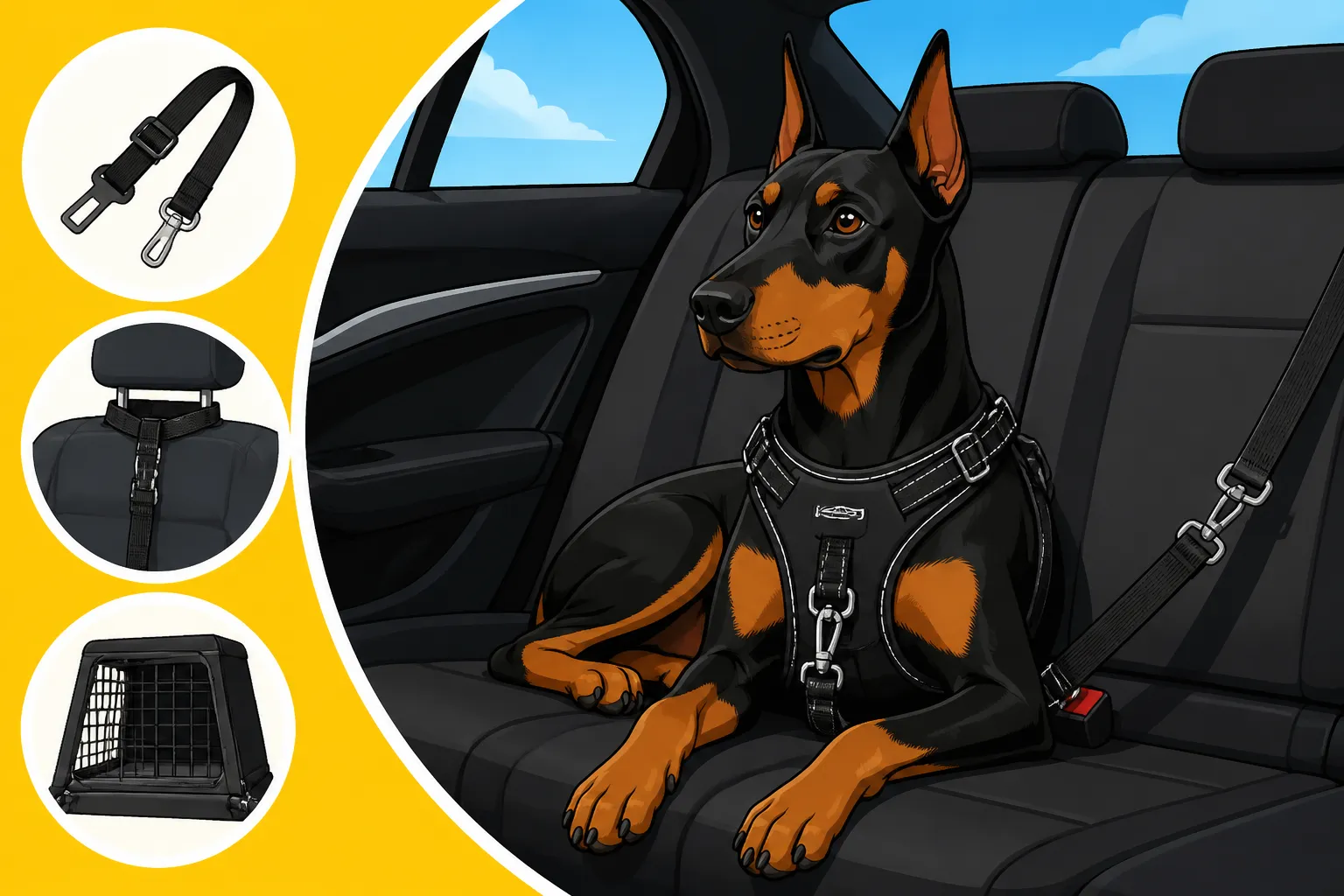
Car Restraints for an Eighty-Pound Doberman
It's a common scenario for Doberman owners: you're ready to head out, and your powerful, affectionate Doberman is equally eager. But an eighty-pound dog, no matter how well-behaved, can become a significant hazard in a moving vehicle if not properly secured. This guide aims to walk you through the various car restraint options available, helping you understand their pros and cons, and ultimately ensure every trip with your Doberman is as safe and stress-free as possible for both of you.
Why Your Eighty-Pound Doberman Needs Safe Car Restraints
Let's be honest, taking your Doberman for a ride can be one of life's simple pleasures, but it also comes with real responsibilities. Many of us have been tempted to just let our beloved Dobermans roam free in the back seat, assuming they'll settle down. However, the reality of a large, strong dog like a Doberman in a moving vehicle without proper restraints can quickly turn into a dangerous situation, far beyond just keeping them from jumping on your lap.
Beyond the Law: The Dangers of an Unrestrained Doberman
First off, it’s not just about what the law says in your particular state or county (though that's certainly a factor!). An unrestrained Doberman, even one that's usually calm, becomes a massive projectile in the event of a sudden stop or, heaven forbid, an accident. Imagine an 80-pound furry missile hurtling forward – that's a serious risk not just to your dog, but to every human occupant in the car. We love our Dobermans fiercely, and the thought of them being injured, or inadvertently injuring us, is heartbreaking. This isn't fear-mongering; it's a stark reality many pet owners overlook until it's too late.
Beyond the impact risk, there's the distraction factor. A Doberman who decides the front seat looks more interesting, or spots a squirrel out the window and tries to get closer, can instantly divert your attention from the road. One quick glance away, one sudden movement, and you could easily find yourself in a preventable accident. For a breed as intelligent and watchful as the Doberman, their curiosity and loyalty mean they are often highly engaged with what's going on around them, making distractions all the more likely.
Doberman Specifics: Strength, Size, and Temperament
Our Dobermans are magnificent animals, known for their athleticism, power, and often, their unwavering desire to be close to their people. This combination makes them unique passengers. Their lean, muscular build means they have significant kinetic energy in motion. A standard seatbelt designed for a human body simply won't suffice for their anatomy, and a flimsy restraint might give way under their strength. You need something robust enough to contain an eighty-pound powerhouse.
Furthermore, consider their temperament. While many Dobermans are calm and composed, some can experience anxiety in the car, pacing, whining, or even trying to get into spaces they shouldn't. Others might be overly excited by the prospect of an outing, making them restless. You might have a Doberman that shadows one family member, even in the car, trying to constantly get closer. Addressing these behaviors with a proper restraint system not only ensures physical safety but can also help manage their stress and create a more positive travel experience. Ensuring they are securely and comfortably restrained can actually reduce anxiety, as they learn the boundaries of their travel space.
Exploring Different Types of Car Restraints for Large Dobermans
When it comes to securing your eighty-pound Doberman in the car, you're not limited to just one option. The right choice often depends on your specific vehicle, your Doberman's personality, and the type of travel you typically do. Let's break down the most common and effective solutions.
Crash-Tested Harnesses
A good quality, crash-tested car harness is often the first thing people consider for their Dobermans. These harnesses are designed to attach to your car's seatbelt system, either directly through a loop or via a separate attachment that clicks into the seatbelt buckle. The "crash-tested" part is crucial here; it means the product has undergone rigorous testing to ensure it can withstand impact forces and keep your dog safe, much like human seatbelts. Many reputable brands offer these, and looking for certifications from organizations like the Center for Pet Safety (CPS) can help you identify truly effective options.
Pros:
- Keeps them Secure: Prevents your Doberman from becoming a projectile in a collision or sudden stop.
- Reduces Driver Distraction: Limits movement, keeping your Doberman safely in one spot.
- Comfortable: A well-fitted harness, like many available on Chewy, distributes force across the chest, away from the throat, making it relatively comfortable for your Doberman during travel.
- Easy to Use: Once fitted correctly, it's usually a quick click or two to secure them.
- Versatile: Can often double as a walking harness once you reach your destination.
Cons:
- Fit is Key: An ill-fitting harness can be ineffective or even cause injury. It needs to be snug but not restrictive. Dobermans have a deep chest and lean build, so finding the right fit for Harnesses and Leads for a Strong Doberman can sometimes be a challenge.
- Can Allow Some Movement: While it prevents major displacement, a Doberman might still be able to shift, stand, or lie down, which could be an issue for dogs prone to car sickness or extreme restlessness.
- Not All are Crash-Tested: Be very diligent in your research. Many harnesses are marketed as "car harnesses" but lack independent crash test data, making them little more than glorified leashes in an accident.
Travel Crates and Carriers
For many Doberman owners, a sturdy travel crate is the gold standard for car safety. Crates provide a confined, secure space that prevents movement, offers a sense of security for the dog, and significantly reduces projectile risk. When dealing with an 80-pound Doberman, you'll need a large, robust crate.
- Hard-Sided Crates (Crash-Tested): These are the most secure option. Look for crates specifically designed and crash-tested for vehicle use. They are typically made from durable materials like aluminum or reinforced plastic and come with features to secure them to the car's cargo area or even back seat. They offer superior protection against impact and can provide a cozy "den" for your Doberman, making travel less stressful. Finding a crate that offers Crate Sizing for a Doberman at Full Height is important for comfort and safety.
- Pros: Highest level of protection, prevents all movement, can act as a safe zone, often easier to clean.
- Cons: Can be very bulky and heavy, taking up significant cargo space. Can be expensive. Requires proper securing within the vehicle to prevent the crate itself from becoming a projectile.
- Soft-Sided Crates/Carriers: While these are popular for smaller dogs, they are generally not suitable for an 80-pound Doberman for car travel. They offer minimal protection in a crash and can easily collapse or tear under the weight and force of a large dog. They are better suited for containing a dog in a stationary location, like at a hotel, rather than for crash protection.
- Pros: Lightweight, portable.
- Cons: Offers virtually no crash protection for a large Doberman. Not recommended for an 80-pound Doberman as a primary car restraint.
Vehicle Barriers
Vehicle barriers are designed to separate the dog from the driver and front passenger area, or to keep them contained within the cargo space of an SUV or hatchback. They can be metal grids, fabric nets, or even custom-built partitions.
Pros:
- Prevents Front Seat Access: Keeps your Doberman from jumping into the front, reducing driver distraction.
- Contains Mess: Helps keep shedding hair, dirt, and drool in a designated area.
- Space: Allows your Doberman more room to move around within the secured area compared to a harness.
Cons:
- No Crash Protection for the Dog: This is the critical downside. A barrier contains your Doberman but does not restrain them. In a collision, your Doberman will still be thrown around inside the compartment, risking severe injury.
- Still a Projectile: While they won't reach the front seats, they can still hit the back of the seats or the sides of the cargo area with significant force.
- Installation Can Be Tricky: Some barriers require drilling or intricate adjustments to fit securely.
Table: Comparing Car Restraint Types for an Eighty-Pound Doberman
| Restraint Type | Key Benefit | Main Drawback | Best For |
|---|---|---|---|
| Crash-Tested Harness | Good balance of safety and comfort. | Requires precise fit; some movement still possible. | Dogs that like to see out; owners needing versatility. |
| Hard-Sided Crate | Highest level of impact protection. | Bulky, heavy, takes up significant space. | Owners prioritizing maximum safety; anxious travelers; cargo areas. |
| Vehicle Barrier | Prevents front seat access; more freedom of movement. | No actual crash protection for the dog. | Containing a calm Doberman in cargo area (supplement with harness). |
Choosing and Using the Best Restraint for Your Doberman
Deciding on the perfect car restraint isn't a one-size-fits-all situation, especially when you have a magnificent eighty-pound Doberman. It involves considering your dog's unique traits, your vehicle, and your lifestyle. Once you've chosen, proper usage and acclimation are paramount.
Factors to Consider When Selecting a Restraint
- Your Doberman's Temperament: Is your Doberman a relaxed passenger who settles down quickly, or do they exhibit signs of anxiety, pacing, or trying to get your attention? If you have A Doberman That Cannot Cope When You Go Out even for short periods, a crate might offer a more secure and den-like environment that reduces stress. For a calm Doberman, a well-fitted crash-tested harness might be sufficient. Observe their behavior on short trips to understand their needs.
- Your Vehicle Type:
- Sedans/Coupes: Crash-tested harnesses are usually the most practical choice here, allowing your Doberman to ride in the back seat. A large crate might not fit or would take up the entire back seat.
- SUVs/Hatchbacks/Vans: These offer more cargo space, making a secured, hard-sided travel crate a viable and often superior option. You'll need to ensure the crate fits and can be anchored properly to prevent it from sliding or tipping. If you opt for a barrier, ensure it's robust enough for a Doberman and securely installed.
- Frequency and Length of Travel: For quick trips to the vet or dog park, a harness might be convenient. For longer road trips, a spacious, secured crate might be more comfortable and safer overall, allowing your Doberman to stretch out and sleep without disturbing the driver. Think about how often you drive with your Doberman, and what kind of adventures you embark on.
- Your Budget: Crash-tested harnesses and crates can be an investment, but they are an investment in safety. While specific prices fluctuate, expect to pay more for products that have undergone rigorous safety testing. Don't skimp on safety for your Doberman.
Proper Fit and Installation: Don't Skip the Details!
Even the best restraint is useless if it's not installed or fitted correctly. This is where attention to detail truly matters.
- Harnesses: Follow the manufacturer's instructions precisely. The harness should be snug around your Doberman's chest and shoulders, allowing no more than two fingers to slip underneath. Adjust all straps so they don't rub or chafe, especially in sensitive areas like the armpits. A Doberman's deep chest means some harnesses might need extra adjustment to fit correctly without being too tight or too loose around the neck or belly. Test it before a long trip.
- Crates: If using a hard-sided crate, measure your cargo area carefully before purchasing. Once in the car, the crate must be secured. Use cargo straps, bungee cords, or the vehicle's integrated cargo hooks to anchor the crate to prevent it from shifting, sliding, or tipping during travel. Many crash-tested crates come with specific securing mechanisms or recommendations. Never assume a crate is secure just because it's heavy; a sudden stop can make it a heavy, uncontrolled projectile.
- Barriers: Ensure the barrier is installed according to instructions and is tight and stable. A flimsy barrier can come loose or break, defeating its purpose.
Remember, the goal is to protect your Doberman from sudden impacts, and that means minimizing their movement within the vehicle and ensuring the restraint itself stays put.
Acclimation and Training for a Happy Traveler
Your Doberman isn't going to magically love a new car restraint right away. This is especially true for our sensitive Dobermans, who thrive on routine and comfort. Patience and positive reinforcement are key.
- Introduce Gradually: Start by letting your Doberman inspect the harness or crate at home. Offer treats and praise.
- Short Sessions: For a harness, put it on for short periods inside the house, then in the parked car. For a crate, make it a comfortable place at home with a favorite blanket or toy from Ollie (if they love their food, a few kibbles never hurt as encouragement!).
- Positive Association: Feed meals in the crate, or give high-value treats when they're wearing the harness in the car.
- Short Rides: Begin with very short drives around the block. Gradually increase the duration as your Doberman becomes more comfortable.
- Consistency: Always use the restraint, every single time. Consistency helps your Doberman understand it's part of the routine.
- Praise and Reward: Lavish praise and provide rewards for calm behavior in the restraint.
If your Doberman reacts poorly or seems stressed, go back a step. Never force them or make the experience negative, as this will only exacerbate any fear or anxiety. Building a positive association with their car restraint will make future travels much smoother.
Beyond the Restraint: Comprehensive Car Safety for Your Doberman
While a proper restraint system is your first line of defense for your eighty-pound Doberman's safety in the car, true peace of mind comes from adopting a holistic approach to car travel. Thinking beyond just the harness or crate can prevent common travel woes and ensure your Doberman's overall well-being on the road.
Hydration and Breaks: Essential for Dobermans on the Go
Dobermans, with their active nature and short coats, can be particularly susceptible to overheating, especially in warmer weather or if stressed. Why a Doberman overheats in summer too is a real concern. Always ensure you have plenty of fresh water available for your Doberman during car trips, even short ones. A travel bowl is invaluable for this.
For longer journeys, regular breaks are not just a luxury; they are a necessity. Plan stops every few hours for your Doberman to stretch their legs, relieve themselves, and have a drink. This helps prevent discomfort, reduces the risk of urinary tract issues, and allows them a mental break from confinement. These breaks are also a great opportunity to check for any rubbing or irritation from their harness or any signs of car sickness. Remember that a Doberman that tires faster than it used to might be trying to tell you something, so pay attention to their energy levels on these breaks.
Identification and Emergency Preparedness
Imagine the unthinkable: an accident, and your Doberman, scared and disoriented, manages to escape the vehicle. The thought alone is enough to send shivers down any Doberman owner's spine. This is why proper identification and an emergency kit are non-negotiable for car travel.
- Up-to-Date ID: Ensure your Doberman wears a collar with current ID tags, including your name and phone number. A microchip, registered with your current contact information, is also vital as a permanent form of identification.
- Emergency Contact: Keep a laminated card in your glove box with your Doberman's name, your contact details, and the number of your veterinarian, as well as an emergency contact who can care for your dog if you are incapacitated.
- Doberman-Specific Emergency Kit: Beyond a basic human first-aid kit, pack one specifically for your Doberman. This should include:
- Extra water and a collapsible bowl.
- A small bag of their regular food (even if you typically use Ollie at home, a travel portion of any palatable food is good).
- Any necessary medications (in a clearly labeled container).
- Vet wrap, gauze, antiseptic wipes, and pet-safe pain relief (consult your vet for recommendations).
- A muzzle (even if your Doberman is normally gentle, pain or fear can make any dog unpredictable).
- A leash and extra collar.
- A familiar blanket or towel for comfort or to staunch bleeding.
- Poop bags, always!
Having these items readily accessible can make all the difference in a crisis. It's a small effort that provides immense peace of mind. Consider pet insurance like Healthy Paws to help cover unexpected emergency vet bills, as accidents can happen despite our best efforts.
Addressing Behavioral Considerations and Socialization
Some Dobermans might inherently struggle with car travel. If your Doberman gets overly excited, whines incessantly, or displays anxiety, it’s worth addressing these behaviors proactively. Early and consistent Exposing a Doberman Puppy to Strangers and different environments, including car travel, can build confidence.
- Positive Exposure: Make car rides fun, not just for vet visits. Take them to the dog park, for a walk in a new area, or to visit a friend.
- Management: For dogs with high anxiety, your vet might suggest calming aids or behavioral modification techniques. Never sedate your Doberman for travel without veterinary guidance, as some sedatives can have adverse effects.
- Training: Practice good leash manners and impulse control. If your Doberman is constantly trying to push between people or climb into the front seat, reinforcing a "place" command or teaching them to settle can be beneficial, even within their restraint.
By combining a safe car restraint with responsible pet ownership practices and proactive planning, you can ensure that every road trip with your eighty-pound Doberman is not only safe but also enjoyable for everyone involved.
Disclaimer
This article is for general informational purposes only and does not constitute professional advice. Laws, prices and regulations vary by location and change over time. Consult a qualified professional for guidance on your specific situation.