Toys a Doberman Will Not Destroy
It’s a tale as old as time for Doberman owners: you excitedly bring home a new toy, envisioning hours of happy, quiet play for your intelligent companion, only to find it in shreds mere minutes later. The floor is littered with stuffing, squeakers are dismembered, and that supposedly "indestructible" toy now looks like a crime scene. This guide is here to help you navigate the daunting world of Doberman-proof toys, offering practical advice and specific types of toys that stand a fighting chance against that powerful Doberman jaw and relentless drive.
Why Dobermans Are So Good at Toy Destruction
Understanding why your Doberman turns toys into confetti so quickly is the first step to finding ones that last. It's not personal; it's just Doberman. They are, by their very nature, powerful, intelligent, and driven dogs.
The Doberman’s Jaw Strength and Bite Pressure
Let's be real, a Doberman's bite is no joke. These dogs were bred for protection, and that includes a strong, scissor-like jaw designed for holding and gripping. When they get a new toy, especially one with a satisfying texture, they don't just idly chew; they work at it. Many toys are simply not designed to withstand the sustained, focused pressure a Doberman can apply. It's not malicious destruction, but rather an innate drive to use their mouths and explore their world with their teeth. Think of it less as a naughty habit and more as an expression of their powerful genetics. When you see your Doberman meticulously dismantling a toy, it’s often a testament to their focus and determination.
This intense chewing isn't just about force; it's about technique. Many Dobermans will find the weakest point – a seam, a tag, an exposed corner – and systematically exploit it. A toy that might last a smaller dog weeks could be de-seamed by a Doberman in under five minutes. It’s a frustrating cycle for owners, as the money spent on what seems like a sturdy toy quickly turns into discarded plastic and fabric.
Boredom and Lack of Mental Stimulation
A Doberman is a smart cookie. They rank high in intelligence, and an under-stimulated Doberman is a Doberman looking for a job. If that job isn't provided through training, exercise, or constructive play, they'll often create their own tasks—and those tasks frequently involve deconstructing household items, including their toys. A toy that doesn't offer a challenge, or that is too easily conquered, quickly loses its appeal and becomes a prime target for swift annihilation.
Imagine a highly intelligent person given a simple, repetitive task; they'd likely get bored and find ways to entertain themselves, even if it means taking things apart. Your Doberman is no different. If they’re left alone for long stretches without engaging activities, or if their daily routine lacks variety and mental puzzles, that pent-up energy and cleverness will manifest. This is why some Dobermans are prone to A Doberman That Cannot Cope When You Go Out, often expressing their anxiety and boredom through destructive chewing. Providing a range of stimulating toys, rather than just basic chewables, can make a huge difference in keeping them content and your house intact.
Instinctual Chewing Habits
Beyond boredom, Dobermans have a natural, instinctual need to chew. Puppies chew to relieve teething discomfort, but adult Dobermans continue to chew for various reasons: stress relief, jaw exercise, cleaning teeth, and simply because it feels good. It's a natural canine behavior, and for a breed with such powerful jaws, it's an important outlet. Providing appropriate chew items can redirect this instinct away from your furniture and towards safe, durable toys.
This instinct isn't just about "gnawing." For Dobermans, it can be a form of self-soothing or a way to burn off excess energy. Without proper outlets, this powerful drive can become problematic. This is why a well-chosen, durable chew toy is not just a luxury but a necessity for Doberman ownership. It gives them a designated item to funnel that energy into, reducing the likelihood of them seeking out less appropriate targets. Think about it: if they don't have something robust enough to satisfy that deep-seated need, they'll just keep looking until they find something that does give them that resistance.
Characteristics of Doberman-Proof Toys
So, what exactly should you look for when shopping for toys that can stand up to a Doberman? It comes down to a few key characteristics that prioritize durability, safety, and engagement.
Material Matters: Rubber, Nylon, and Beyond
The material of a toy is perhaps the most critical factor. Forget plush toys for unsupervised play – they’re a snack, not a toy. Instead, gravitate towards materials known for their toughness.
Solid Rubber Construction
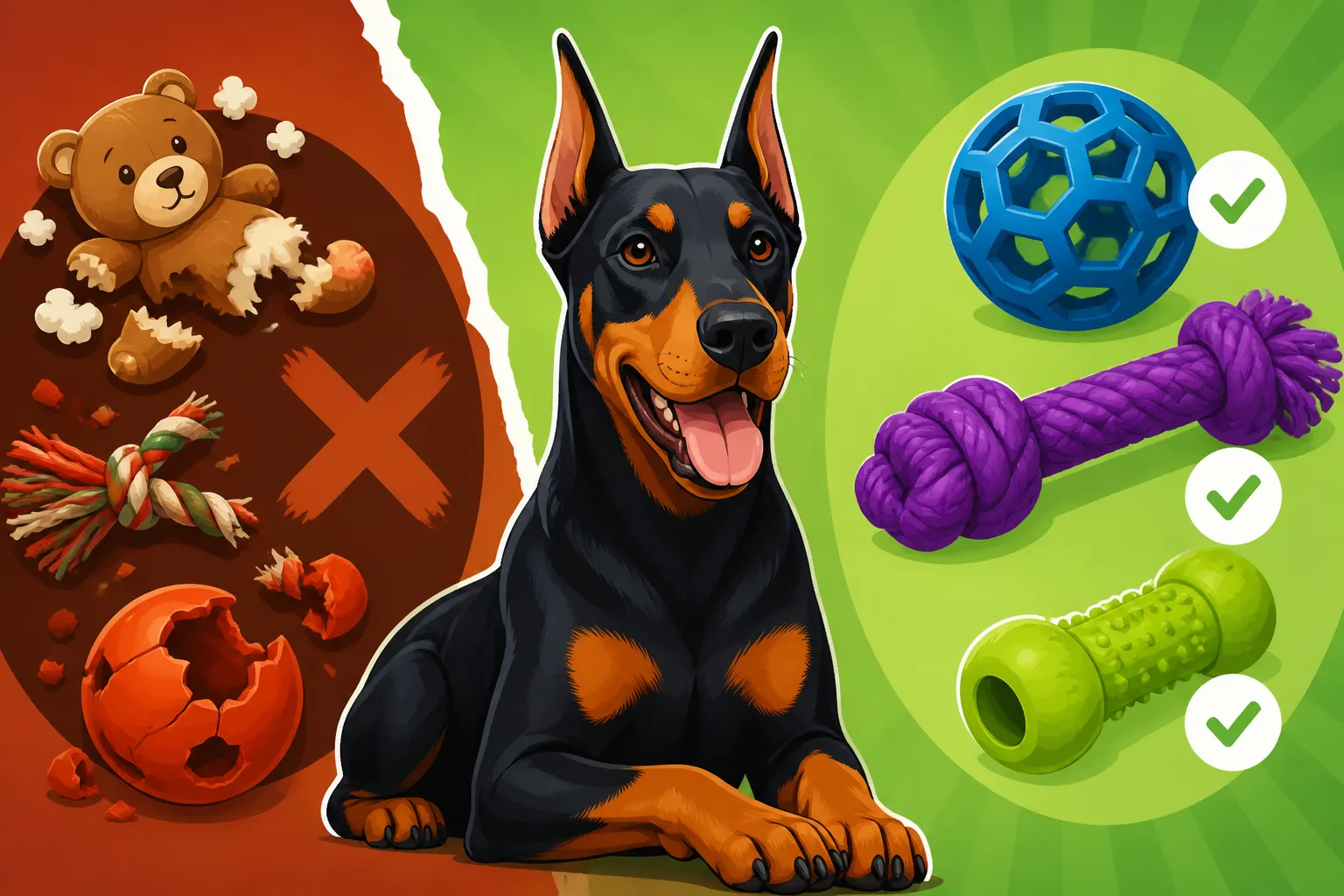
Heavy-duty, solid rubber toys are often a Doberman owner's best friend. Brands like Kong, West Paw, and Goughnuts specialize in incredibly dense rubber compounds designed to withstand aggressive chewing. Look for thick walls and minimal seams. These toys offer resistance, satisfying the chewing instinct without easily breaking apart. They’re also often bouncy, adding an element of play.
When choosing a rubber toy, pay attention to its weight and density. A lighter, softer rubber will still be torn apart quickly. You want something that feels substantial in your hand, almost heavy. These toys are usually designed to be cleaned easily, which is a bonus, and many can even hold treats or Ollie portions, turning a simple chew into a rewarding puzzle. The key here is solid rubber; hollow or thin-walled rubber toys will inevitably succumb to that Doberman determination.
High-Density Nylon Chews
Nylon chews are another excellent option, often designed with textures and shapes that appeal to dogs. They are virtually indestructible, though your Doberman might manage to shave off small pieces over time. The key is to ensure these pieces are tiny and smooth, not sharp shards that could cause injury. Always supervise your Doberman with nylon chews, especially when they're new, to ensure they aren't trying to break off large chunks.
Nylon chews come in various flavors and shapes, mimicking bones or sticks. They provide a different chewing sensation than rubber, offering a hard, unyielding surface. When selecting a nylon chew, consider the size. It should be large enough that your Doberman cannot get the entire thing into their mouth, which reduces the risk of accidental swallowing. While they are incredibly durable, they don't offer the same flexibility or bounce as rubber toys, so they fulfill a different chewing need.
Reinforced Canvas and Fire Hose Materials
While fabric toys are usually a no-go, some specialized options exist. Toys made from reinforced canvas, ballistic nylon, or actual fire hose material offer a much higher degree of durability than your average plush toy. These are often used for tugging games or retrieve, providing a different kind of interaction. While not truly "indestructible," they last considerably longer than softer fabrics.
These materials are typically woven tightly, making them harder to tear. They're great for supervised interactive play, offering a satisfying texture for your Doberman to grab and pull. Just remember, no fabric toy is truly invincible against a determined Doberman left unsupervised. The goal with these is to provide an engaging, tougher alternative for specific play sessions, rather than a solo chew toy. Think of them as high-quality tools for specific games.
Design Features for Durability
Beyond material, the way a toy is designed plays a huge role in its longevity. Smart design can minimize weak points and maximize resistance.
Seamless and Solid Construction
The fewer seams a toy has, the better. Seams are inherent weak points where a Doberman can start their systematic deconstruction. Toys molded from a single piece of rubber or nylon are generally far more durable than those with stitched or glued components. For toys that do have seams, ensure they are deeply embedded or extremely robust.
This principle applies across all toy types. Even for puzzle toys, look for robust, tightly fitted components that don't offer easy leverage for a powerful jaw. A Doberman will test every joint and connection, so a toy designed with seamless integrity in mind will always outperform one that has obvious weak spots. It's about denying them the easy entry point for destruction.
Appropriate Size and Shape
A toy that is too small can be a choking hazard or easily swallowed, potentially leading to expensive emergency vet visits (something you'll be glad to have pet insurance for, like Healthy Paws, if it ever happens!). It should be large enough that your Doberman cannot swallow it whole, but also manageable enough for them to pick up and carry comfortably. Shapes that are irregular or difficult to get a full bite grip on can also extend a toy's life, as they don't offer the same leverage for chewing.
Think about the size of your Doberman’s mouth and jaw. A toy should be substantial. For example, a heavy-duty rubber ball should be too large to fit entirely into their throat, preventing choking. Some toys have unique shapes, like "knobby" designs or irregular angles, that make it harder for the dog to get a consistent, destructive bite. These shapes can force them to change their chewing angle, adding a layer of challenge and preventing rapid destruction.
Types of Doberman-Approved Toys
Now that we know what to look for, let's talk about specific categories of toys that tend to hold up well against the Doberman might.
Extreme Chew Toys
This is the bread and butter for Doberman owners. These toys are explicitly marketed for "power chewers" or "aggressive chewers" for a reason.
Indestructible Rubber Toys (e.g., Kong Extreme, Goughnuts)
These are the heavy hitters. Kong's black "Extreme" line is a classic, designed for stuffing with treats or kibble to provide mental stimulation as your Doberman works to get the goodies out. Goughnuts toys are another fantastic option, often featuring a red indicator core that tells you when the toy has been chewed through, signaling it's time for a replacement. They even offer a replacement guarantee. These toys are usually made from extremely dense, pet-safe rubber.
The key with these brands is consistency and material quality. They understand the science of dog chewing. These aren't just thick; they're engineered to withstand incredible force. Stuffing a Kong with peanut butter, yogurt, or even some Ollie kibble mixed with wet food and freezing it can extend the enjoyment for hours, providing both mental and physical satisfaction. This kind of sustained engagement is exactly what a smart Doberman needs. Puzzle Work That Actually Tires a Doberman is crucial for their well-being.
Durable Nylon Bones and Chew Toys (e.g., Nylabone Power Chew)
Nylabone's Power Chew line offers a range of shapes and flavors specifically for intense chewers. While they won't disappear quickly, they will slowly abrade, creating small shavings. These are generally safe as long as your Doberman isn't breaking off large pieces. They're great for solo chewing sessions and can help maintain dental hygiene by scraping tartar from teeth.
It’s important to choose the right size and type within the Nylabone line. The "Souper" or "Monster" sizes are usually appropriate for adult Dobermans. The act of chewing on these hard toys can be very satisfying for a Doberman, providing that necessary oral fixation. Always inspect nylon chews regularly for damage and replace them if large chunks are coming off, or if they become too small.
Interactive and Puzzle Toys
These toys not only withstand chewing but also engage your Doberman's formidable intellect, offering Keeping a Doberman Mentally Tired.
Treat-Dispensing Rubber Toys
These combine the durability of rubber with the mental challenge of a puzzle. Your Doberman has to figure out how to get treats (or even a portion of their Ollie meal) out of the toy, rolling it, nudging it, or batting it around. This engagement uses their brainpower, reducing boredom-driven destruction. Look for designs that are difficult to access, requiring real effort.
Many brands like Kong, West Paw, and Planet Dog make excellent treat dispensers. The beauty of these toys is their versatility; you can vary the treats and the difficulty level. For a Doberman, choose designs that require more than a simple roll. Some have internal baffles or adjustable openings to make the challenge greater. This prolonged engagement helps to satisfy their intrinsic need for a "job," and reduces the likelihood of them seeking destructive outlets.
Hard Plastic Puzzle Feeders
For Dobermans who enjoy a challenge, hard plastic puzzle feeders can be invaluable. These might involve sliding panels, lifting covers, or manipulating levers to get to food. They’re usually too complex for a Doberman to simply chew apart, as the focus is on problem-solving. Always ensure the plastic is thick, durable, and non-toxic.
These puzzles are excellent for slowing down fast eaters and providing mental enrichment, especially on days when weather limits outdoor exercise. Look for puzzles with multiple steps or varying levels of difficulty to keep your Doberman engaged. Brands like Nina Ottosson (available on Chewy, for example) offer a range of these, from beginner to advanced. The harder the puzzle, the longer it will take your Doberman to solve, offering extended mental stimulation. Just make sure to monitor the toy for any damage over time, as even the toughest plastic can eventually show wear.
Tug and Fetch Toys (for Supervised Play)
While not truly "chew" toys, durable tug and fetch toys are essential for interactive play with your Doberman and can last if used correctly.
Heavy-Duty Rope Toys (with Caution)
Thick, tightly woven rope toys can be fantastic for tug-of-war. The key here is "heavy-duty" and "supervised." A Doberman can shred a standard rope toy quickly, and ingesting strands of rope can lead to serious digestive issues. Use them for supervised play only, and put them away immediately afterward. Look for ropes made from natural fibers like cotton, or specialized synthetic fibers known for strength.
The benefit of rope toys is the interactive element they provide. Tug-of-war is a great way to bond with your Doberman and burn off physical energy. However, the caution cannot be overstated: never leave a Doberman unsupervised with a rope toy. As soon as you see fraying or strands coming loose, it's time to discard it. The risk of internal obstruction if swallowed is simply too high.
Hard Rubber Balls and Retrieving Toys
For fetching, opt for solid rubber balls or retrieving toys that can withstand impact and chewing. Think about the standard black rubber balls or durable rubber frisbees. These are meant to be chased, caught, and brought back, not sat down and chewed on indefinitely.
Brands like Kong and Chuckit! offer excellent durable balls and retrieve toys. The key is to teach your Doberman to "drop" the toy rather than settling down for a chew session with it. This preserves the toy for its intended purpose and prevents premature destruction. These are fantastic for high-energy Dobermans, providing a safe outlet for their athleticism. A Doberman That Tires Faster Than It Used To might still enjoy a good game of fetch, but adjust the intensity to their current stamina.
| Toy Type | Primary Material | Durability Rating (1-5) | Best Use Case | Considerations |
|---|---|---|---|---|
| Solid Rubber Chew | Dense Rubber | 5 | Solo Chewing, Treat Dispensing | Check for size, monitor for damage over time |
| High-Density Nylon Bone | Nylon | 4 | Solo Chewing, Dental Aid | Watch for large pieces breaking off |
| Reinforced Fabric | Ballistic Nylon, Canvas | 3 | Supervised Tug/Fetch | Not for unsupervised chewing, inspect frequently |
| Hard Plastic Puzzle | Durable Plastic | 4 | Mental Stimulation, Slow Feeding | Ensure pieces are too large to swallow |
| Heavy-Duty Rope | Tightly Woven Cotton | 2 (supervised 4) | Supervised Tug | High risk of ingestion if unsupervised |
Strategies for Toy Longevity and Engagement
Even with the toughest toys, a smart strategy can significantly extend their life and keep your Doberman engaged and happy.
Toy Rotation and Novelty
Don't give your Doberman access to every single durable toy all at once. Rotate them! Keep a few out for a week or so, then swap them for others that have been "resting." This maintains novelty and prevents your Doberman from getting bored with any single toy and deciding to systematically dismantle it. The "newness" keeps their interest peaked.
Think of it like a child with a toy chest; if everything is always available, nothing is truly special. By rotating toys, you present a "fresh" challenge or item, making it more exciting for your Doberman. This also allows you to inspect toys that are out of rotation for any wear and tear before they are reintroduced. A good rotation strategy is key to keeping a Doberman mentally stimulated and prolonging the life of your investment in durable toys.
Supervised Play and Timed Access
Some toys, even durable ones, are best reserved for supervised play. Tug toys, for instance, should be used for interactive sessions and then put away. This not only preserves the toy but also strengthens your bond through shared activity. For extreme chewers, even rubber toys might need to be put away if your Doberman becomes obsessive.
The concept of "timed access" is crucial for Dobermans. If they have unlimited access to even the toughest chew toy, they might eventually wear it down. By giving them a designated "chew time" of 30-60 minutes and then putting the toy away, you teach them that these special items are finite resources. This can actually increase the perceived value of the toy and encourage more focused, respectful chewing when it is available. It also allows you to monitor their chewing habits and ensure they're not breaking off pieces that could be dangerous.
Matching the Toy to the Mood
Consider your Doberman's mood and energy level when offering a toy. A high-energy Doberman might benefit from a vigorous game of fetch with a durable rubber ball, while a more relaxed Doberman might prefer a treat-stuffed Kong in their crate. Don't offer a high-energy "work" toy when they need to settle down, or a quiet chew when they're bursting with energy.
For instance, if your Doberman has just come in from a walk and is still buzzing, a tough tug toy might be perfect. If they're winding down for the evening, a puzzle toy filled with their dinner (perhaps from Chewy's selection of puzzle feeders) can provide calming mental engagement. Understanding these nuances helps ensure the toy serves its purpose effectively and safely. This thoughtful approach can significantly contribute to Training a Doberman That Is Smarter Than You Expect, as you're constantly engaging their mind in appropriate ways.
Regular Inspection and Timely Replacement
Even the most "indestructible" toy will eventually show wear. Regularly inspect all of your Doberman's toys for cracks, tears, sharp edges, or pieces that could break off. A worn toy, even if it's made from a tough material, can become a hazard. When in doubt, throw it out. It's far better to replace a toy than to face an emergency vet bill because your Doberman ingested a piece.
This is where pet insurance, like Healthy Paws, can offer peace of mind. While the goal is always prevention through durable toys, accidents can happen. Knowing you have coverage for unexpected incidents, such as a swallowed toy fragment requiring surgery, can alleviate significant financial stress. Regular inspection isn't just about saving money on new toys; it's about safeguarding your Doberman's health. It’s part of responsible ownership, just like ensuring your Doberman gets proper nutrition and training.
Disclaimer
This article is for general informational purposes only and does not constitute professional advice. Laws, prices and regulations vary by location and change over time. Consult a qualified professional for guidance on your specific situation.