Whether Show Dobermans Can Still Work
Show Dobermans retain historical working drives and can excel in various capacities beyond the conformation show ring.
Is this the right one for you?
Origins and temperament, size and coat, what living with one is actually like, and how it compares to the breeds people weigh against it.

Show Dobermans retain historical working drives and can excel in various capacities beyond the conformation show ring.
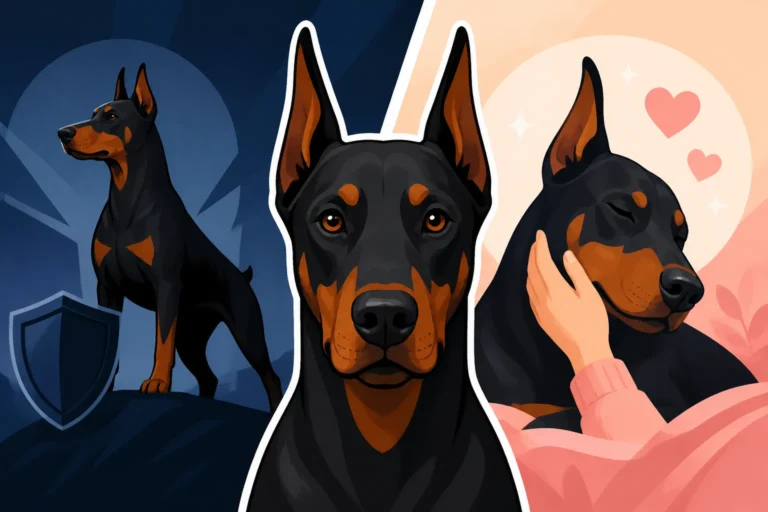
American Doberman temperament compared to European lines reveals key differences in sensitivity, working drive, and physical traits.

European Doberman health testing standards, screening approaches, and shared genetic conditions compared with American lineages.
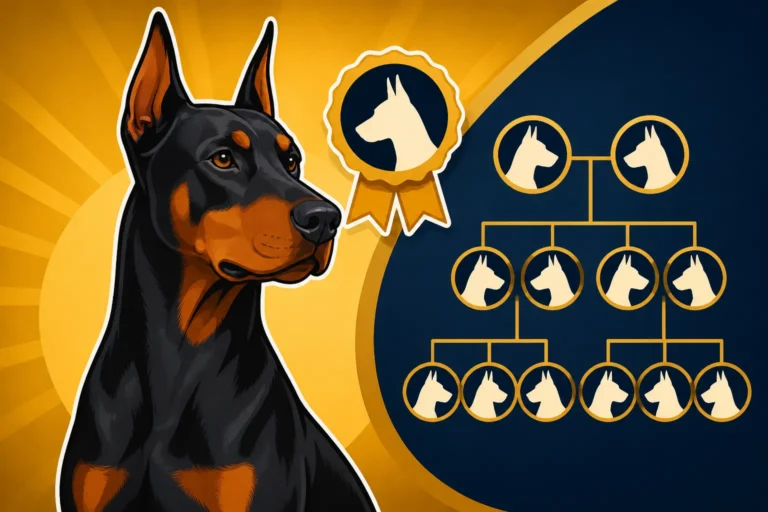
Working titles on Doberman pedigrees indicate character, intelligence, and capabilities through rigorous training tests.

European Doberman temperament traits include higher energy levels and working drives compared to American lines.
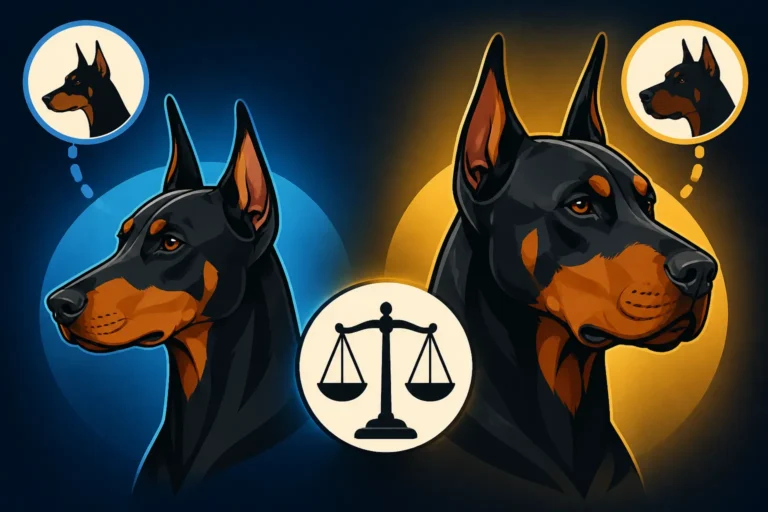
European Doberman head shapes differ from American lines due to breeding standards emphasizing robust working conformation and broader skulls.
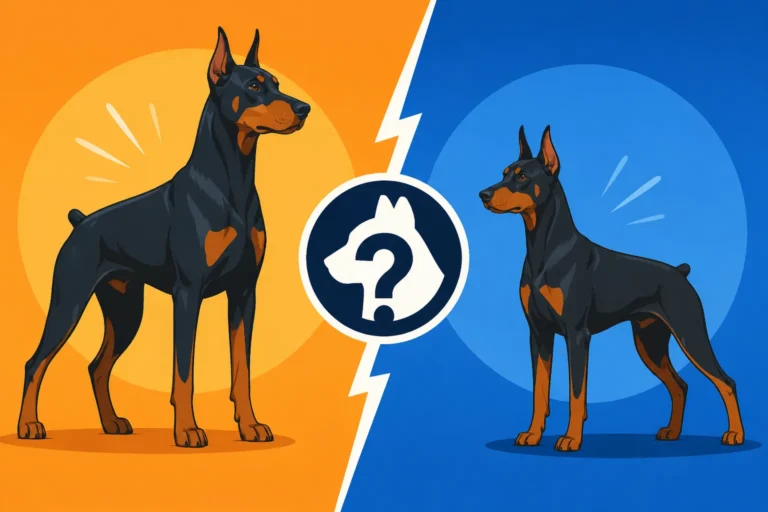
European Dobermans and American Dobermans have size differences, weight standards, and build variations defined by kennel clubs.
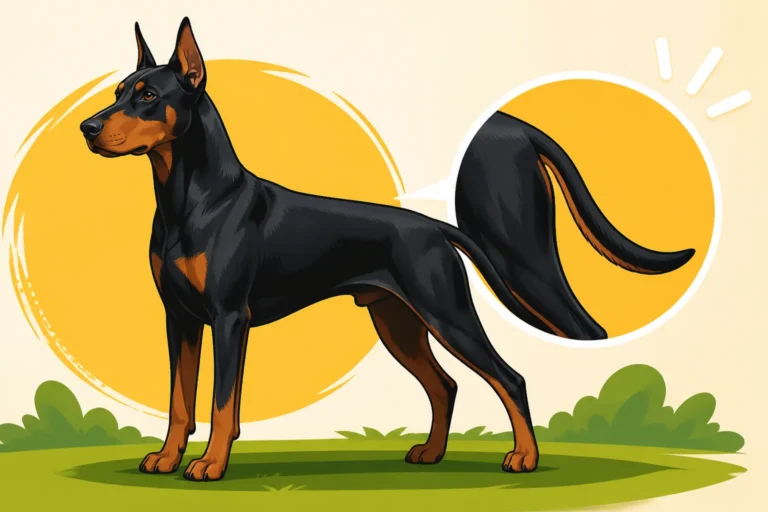
A natural Doberman tail is a long, thick, muscular appendage that reaches the hocks and forms a saber-like curve.
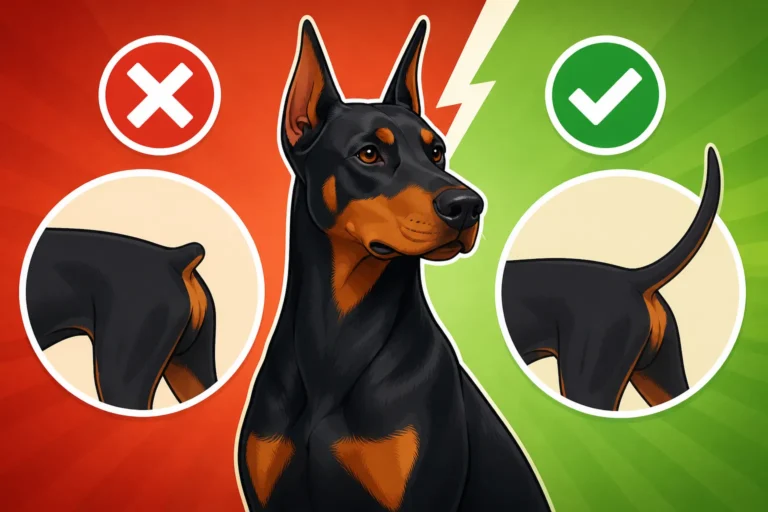
Doberman tail docking practices and history explained, showing how standards differ between working origins and modern pet owners.
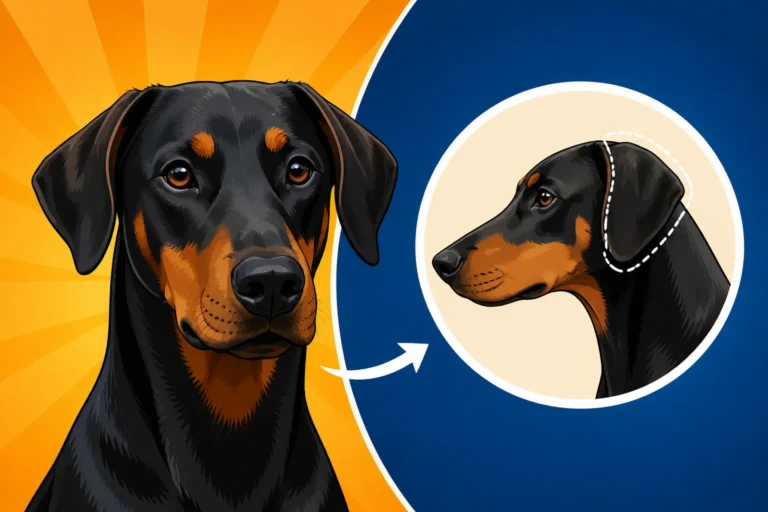
Uncropped Doberman ears are medium-sized and thin, hanging close to the cheek with a fold above the skull for a soft look.