Whether a European Doberman Is Bigger
It's a really common question, and one that often causes a fair bit of head-scratching for prospective Doberman owners: are European Dobermans genuinely bigger than their American counterparts? You see pictures online, hear anecdotes at the dog park, and suddenly you’re left wondering if you need to build a bigger house to accommodate a continental giant. This guide will meticulously break down the nuances of size, substance, and standard differences to help you understand what "bigger" truly means in the Doberman world and how it might impact your decision.
Understanding the Doberman Breed Standard
When we talk about Doberman size, it’s crucial to understand that there isn't just one universally accepted "Doberman." The breed has evolved slightly differently in various parts of the world, primarily influenced by the main governing kennel clubs. These standards dictate what is considered ideal for the breed in terms of temperament, conformation, and, yes, size.
The American Kennel Club AKC Standard for Doberman Pinschers
In the United States, the Doberman Pinscher is recognized by the American Kennel Club (AKC). Their standard emphasizes an elegant, athletic, and agile dog. While still a powerful breed, the AKC Doberman tends to be bred for a more refined appearance, often described as sleek and graceful.
For males, the AKC standard calls for a height of 26 to 28 inches at the withers (the highest point of the shoulder blades). Females are typically 24 to 26 inches. In terms of weight, the standard suggests that the weight should be in proportion to the height and build, generally ranging from 75 to 100 pounds for males and 60 to 80 pounds for females. The emphasis is on a lean, muscular physique that allows for speed and endurance. When you look at an AKC-bred Doberman, you’re often seeing a dog that epitomizes a striking, almost sculptural, presence, built for movement and a certain level of finesse in the show ring. The standard is quite particular about traits like neck length, topline, and leg angulation, all contributing to this picture of elegant athleticism.
The Fédération Cynologique Internationale FCI Standard for Dobermanns
Across Europe, the Doberman (or Dobermann, as it's spelled internationally) falls under the purview of the Fédération Cynologique Internationale (FCI). This is the world governing body of dog breeds, and its standard is adopted by most European national kennel clubs. The FCI standard, while similar in many aspects, often results in a Doberman with a noticeably different physical presence.
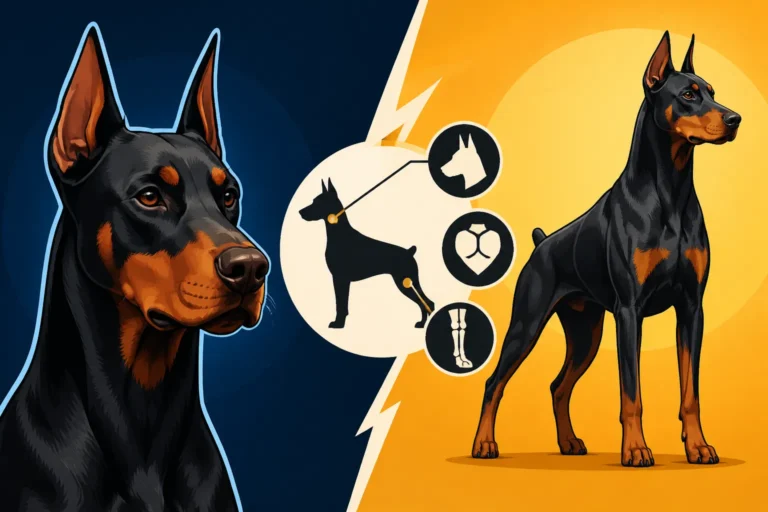
For males, the FCI standard lists a height of 68 to 72 cm (approximately 26.77 to 28.35 inches) at the withers. Females are 63 to 68 cm (approximately 24.8 to 26.77 inches). Weight-wise, males are specified as 40 to 45 kg (approximately 88 to 99 pounds), and females as 32 to 35 kg (approximately 70 to 77 pounds). While the height ranges are quite comparable, the subtle differences, especially in the upper limits for females and the lower limits for males, can be telling. More significantly, the FCI standard often places a strong emphasis on substance – a deeper chest, heavier bone structure, and a more robust overall build that speaks to the breed's working dog heritage. When people discuss How a European Doberman Is Built Differently, they're often referring to this very aspect of substance and bone. This isn't just about weight; it's about the feeling of density and power when you stand next to one.
Perceived Differences Between European and American Dobermans
It’s not just an optical illusion; there are tangible reasons why European Dobermans often appear bigger, even if their height measurements don't always dwarf their American cousins. This perception is rooted in both historical breeding priorities and the specific characteristics valued in different show rings and working venues.
The "Bigger" Perception and Its Origins
The perception that European Dobermans are universally "bigger" stems from a few key factors. Firstly, their heavier bone structure and broader chests give them a more substantial, imposing look. They often have more pronounced musculature, making them appear denser and more powerful. Imagine two athletes of the same height: one a lean marathon runner, the other a powerful weightlifter. Both are the same height, but one clearly appears "bigger" due to muscle mass and build. This analogy often holds true for Dobermans.
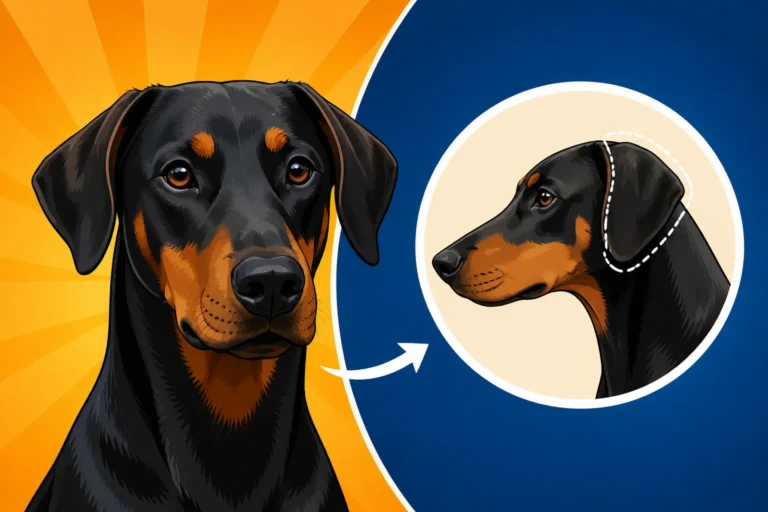
Additionally, the breeding goals in Europe have traditionally focused more on working ability and a hardy, resilient physique. This means selecting for dogs that not only meet the standard but also possess the physical and mental fortitude for demanding tasks like Schutzhund or IGP. This often translates to a more rugged, less refined build compared to some American lines that have, over generations, been bred with a stronger emphasis on elegance and specific aesthetic qualities for the show ring. If you’ve ever compared a Doberman from a European import line to one from a predominantly American show line, you can often immediately spot the difference in overall mass and head type. European Dobermans often have broader, deeper muzzles and more substantial heads, contributing to that "bigger" impression. This is part of the discussion when people ask Why European Dobermans Have Heavier Heads.
Impact of Breeding Goals on Phenotype
The divergence in breeding goals between Europe and America has undeniably shaped the Doberman's phenotype—its observable characteristics. In Europe, especially in countries where the Dobermann originated and remains a strong working breed, breeders often prioritize temperament, drive, and physical soundness for performance tasks. This means selecting dogs that are robust, have excellent stamina, and possess a confident, stable character. The emphasis is on a "whole dog" that can perform demanding physical and mental work. This focus naturally favors a more substantial build, deeper chest, and stronger bone that can withstand the rigors of training and competition.
Conversely, in the American show ring, while soundness and temperament are certainly important, the interpretation of the standard often leans towards a more sleek, refined, and elegant dog. The ideal American Doberman is often described as a "gentleman's dog," showcasing a noble and aristocratic appearance. This can lead to selection for finer bone, a more tucked-up abdomen, and a lighter overall build, which contributes to an appearance of greater agility and grace. It's a different aesthetic preference, and neither is inherently "wrong," but it does result in visually distinct dogs. This is why discussions around American Against European Dobermans often highlight these subtle yet significant differences in overall impression and build. Some might even wonder Whether a European Doberman Is Harder to Live With due to their perceived intensity and size, though this is often more about individual temperament and training than geographical origin.
Decoding Height and Weight Ranges
It’s easy to get caught up in the numbers, but understanding the practical application of breed standards for height and weight is where the real insight lies. It’s not always a clear-cut case of one being definitively larger across the board.
Overlap and Individual Variation
Here's the interesting part: if you look closely at the breed standards, the height ranges for American and European Dobermans actually overlap quite a bit. A tall American male Doberman might be just as tall as, or even slightly taller than, a smaller European male. The same goes for females. The true difference often lies not in height, but in overall mass and substance at that height.
Think of it this way: a European Doberman at 27 inches might weigh 95 pounds with heavy bone and broad musculature, while an American Doberman at 27 inches might weigh 85 pounds and appear more finely built. Both are within their respective standards, but one clearly feels more substantial. This individual variation means that you can find American Dobermans that are quite robust and European Dobermans that are on the leaner side. It's not a strict binary, but rather a spectrum influenced by individual genetics and specific breeding lines.
To illustrate, here's a general comparison of the standards:
| Characteristic | AKC Doberman Pinscher (American) | FCI Dobermann (European) |
|---|---|---|
| Males Height | 26-28 inches (66-71 cm) | 26.77-28.35 inches (68-72 cm) |
| Males Weight | 75-100 lbs (34-45 kg) | 88-99 lbs (40-45 kg) |
| Females Height | 24-26 inches (61-66 cm) | 24.8-26.77 inches (63-68 cm) |
| Females Weight | 60-80 lbs (27-36 kg) | 70-77 lbs (32-35 kg) |
| General Build | Elegant, athletic, refined | Robust, substantial, powerful |
| Bone Structure | Finer | Heavier |
| Head | More refined, longer muzzle | Broader, deeper muzzle |
As you can see, the weight ranges for males are quite similar, but the lower end of the European male weight is higher than the American's lower end. For females, the European standard actually has a higher minimum weight range. This table clearly highlights how Doberman Height and Weight in the Ring can differ even when the numbers seem close.
Beyond the Tape Measure: Substance, Bone, and Muscle
When we discuss "bigger" in the context of Dobermans, it's rarely just about a couple of inches here or there. It's about overall substance. This term refers to the dog's bone structure, muscle mass, and general body depth and breadth. A dog with excellent substance feels solid and powerful, even if its height isn't exceptional.
European Dobermans are often characterized by heavier bone. This means their leg bones are thicker, their joints appear more substantial, and their frames feel more dense. They also tend to carry more muscle, particularly through the chest and hindquarters, which gives them a "packed" look. Their chests are often deeper and broader, contributing to a more powerful silhouette. This combination of heavier bone and increased muscle mass creates the impression of a significantly larger dog, even if they stand at a similar height to a leaner American Doberman.
This focus on substance also extends to the head. Why European Dobermans Have Heavier Heads is a frequent topic, and it's because their heads are typically broader between the ears and have a more pronounced stop and deeper muzzle. This contributes to a more imposing and robust overall appearance, reinforcing the idea of a "bigger" dog. It's truly a full-body difference that goes beyond simple height and weight measurements. So, while an individual American Doberman might reach the upper limits of the AKC standard for height, it’s unlikely to have the same sheer bulk or bone density as a typical European Doberman, making the latter seem inherently "bigger" to most observers. This perception also means that if you're comparing dogs, asking for photos of the parents and ideally seeing the dog in person is crucial, rather than just relying on numbers.
Practical Considerations for Owners
Understanding the differences between American and European Doberman lines isn't just about winning arguments at the dog park; it has real, practical implications for owners, from daily care to long-term management. Whether you prioritize a sleek, elegant look or a more substantial, powerful presence, these distinctions will affect your daily life with your Doberman.
Feeding a Doberman of Any Size
Regardless of whether you have an American or European Doberman, feeding an eighty-pound Doberman well is a commitment. However, a Doberman with a more substantial build and higher muscle mass, as is often seen in European lines, may naturally have a higher caloric requirement to maintain their weight and energy levels. They might need more protein to support that muscle and denser bone. It's not a universal rule, of course, as activity level plays a huge role. A working-line European Doberman that is actively training for protection sports or other demanding activities will burn significantly more calories than a sedentary American Doberman pet.
You'll need to pay close attention to their body condition, looking at their ribs and hip points to gauge if they are at an ideal weight. If your Doberman is looking a bit too lean, you might need to adjust their portions. Brands like Chewy offer a vast selection of high-quality kibbles, raw food options, and supplements that can help you tailor your Doberman’s diet to their specific needs. It's always a good idea to consult with your vet or a canine nutritionist to ensure you're providing a balanced diet that supports their growth, activity level, and overall health. Feeding an Eighty-Pound Doberman Well is a nuanced task, and the "size" difference can play a subtle role in how much exactly "well" translates to in their food bowl.
Equipment and Housing: How Size Influences Choices
The difference in substance can certainly influence your choices in equipment. A more heavily-boned, substantial European Doberman might require a larger, more robust crate. While an American Doberman at full height still needs a generously sized crate, Crate Sizing for a Doberman at Full Height becomes even more critical for a wider, deeper-chested dog to ensure they can stand, turn around, and lie down comfortably without feeling cramped. You might find that standard sizes that work for a lean Doberman feel too snug for one with more bulk.
Similarly, harnesses and leads designed for a strong Doberman need to be extra durable. A powerful, eighty-to-ninety-pound Doberman with more muscle mass will exert significant force if they pull on the leash. You’ll want to invest in Harnesses and Leads for a Strong Doberman that are designed for large, powerful breeds and fit their chest configuration properly to avoid chafing or restriction. Wider, padded harnesses can offer better comfort and control for a more substantial dog. Your car also needs to accommodate them; a larger Doberman might take up more space, requiring specific car restraints or even a dedicated large crate for safe travel. You may also find that finding a dog bed that comfortably supports a Doberman with a larger frame and less natural padding is a challenge, often requiring extra-large or orthopedic options.
Training and Handling: Managing a Powerful Dog
While temperament is more about individual genetics and early socialization than country of origin, a dog with greater physical presence and strength naturally requires a more confident and consistent handler. Both American and European Dobermans are highly intelligent and capable, but a more substantial dog can be physically harder to manage if they haven't been properly trained from a young age.
Early and consistent training is non-negotiable for any Doberman. A strong, determined dog needs to learn leash manners, impulse control, and basic obedience commands without fail. Why a Doberman Learns a Cue in Three Repetitions highlights their intelligence, which can be a double-edged sword if not channeled correctly. With a physically larger or stronger dog, it becomes even more critical to teach them to walk politely on a leash, to not jump on guests, and to respect boundaries. Their sheer power can accidentally knock over a small child or elderly person, even in play.
It's not about one type being inherently "harder" to train; rather, it’s about recognizing that a more powerful dog demands a higher level of dedication and physical capability from the owner. If you're considering a European Doberman specifically because of the desire for a "bigger" dog, you must also commit to the training and handling necessary for a substantial, strong, and highly intelligent animal. No matter the origin, a well-socialized and consistently trained Doberman is a joy to live with, and a poorly managed one can be overwhelming, regardless of their precise measurements. Always remember that confidence, consistency, and positive reinforcement are your best tools, whether your Doberman hails from a long line of American champions or European working titans.
Disclaimer
This article is for general informational purposes only and does not constitute professional advice. Laws, prices and regulations vary by location and change over time. Consult a qualified professional for guidance on your specific situation.