Whether a Doberman Positive for Both Genes Is Doomed
Doberman genetic test results showing positive markers for both DCM1 and DCM2 gene variants explain heart disease risks and health management.
Know what to watch for.
Breed-specific conditions, screening and DNA tests, what surgery actually costs, and the daily habits that stretch a healthy lifespan.

Doberman genetic test results showing positive markers for both DCM1 and DCM2 gene variants explain heart disease risks and health management.
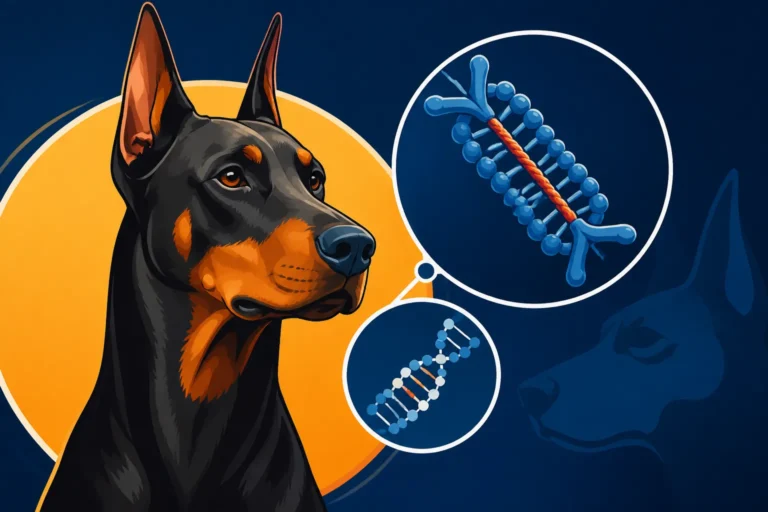
The DCM2 Titin variant in Dobermans explains the genetic marker and heart failure risks associated with dilated cardiomyopathy.
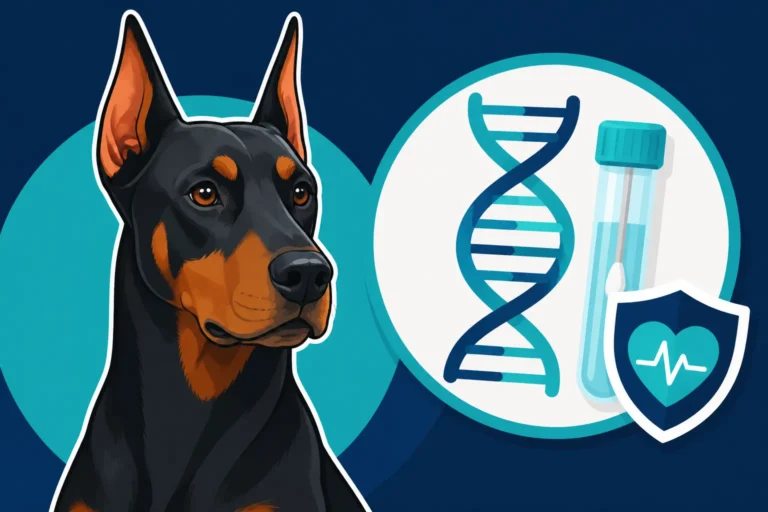
The DCM1 gene test detects a PDK4 mutation linked to dilated cardiomyopathy, explaining its role in early detection and care.
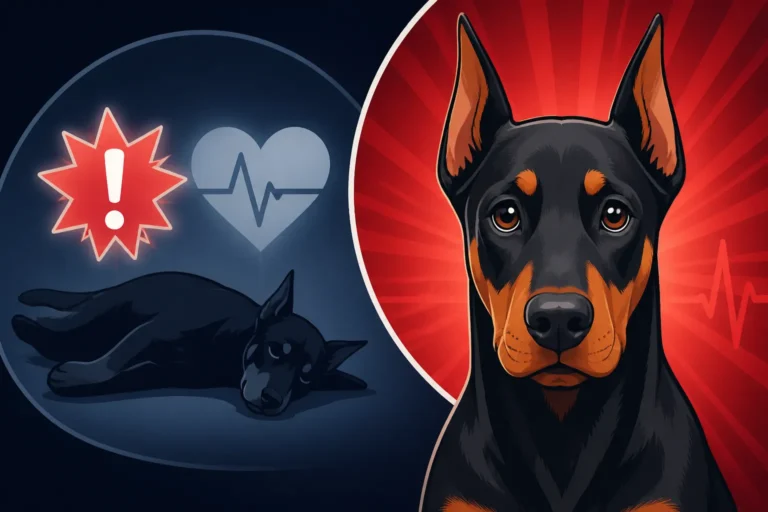
Dilated cardiomyopathy causes heart failure and sudden collapse in young Dobermans through electrical abnormalities and ventricular arrhythmias.

Medications for a Doberman in the occult phase of dilated cardiomyopathy help delay clinical symptoms and extend symptom-free life.
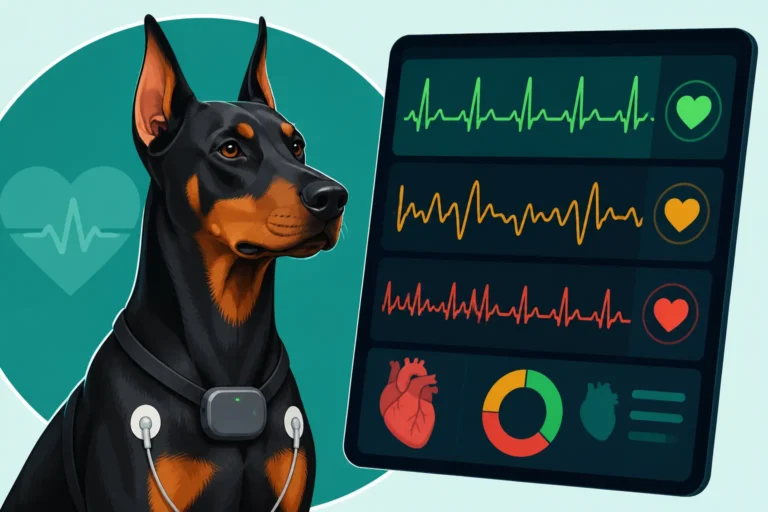
Doberman heart health screening using a 24-hour Holter monitor detects irregular rhythms and monitors dilated cardiomyopathy risks.
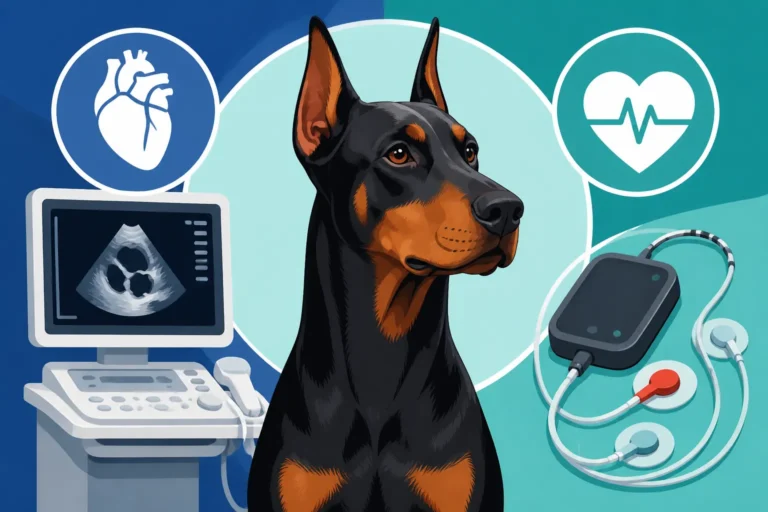
Annual echocardiogram and Holter monitoring detect early signs of dilated cardiomyopathy in Dobermans before symptoms appear.

Dilated Cardiomyopathy in Dobermans progresses silently for years before symptoms appear, weakening heart muscle and reducing pumping efficiency.

European and American Doberman breed standards, health testing protocols, and breeding philosophies explain differences in health and lifespan.
Dilated Cardiomyopathy in Dobermans explains the genetic causes, silent progression, and screening methods for this aggressive heart disease.