The Silent Years Before a Doberman’s Heart Shows
It’s a truly devastating reality for Doberman owners: the silent enemy lurking within their beloved companions, slowly and imperceptibly weakening their hearts. We’re talking about Dilated Cardiomyopathy (DCM), a condition that often progresses for years without a single outward sign, leaving you completely unaware until the disease has already taken a firm, frightening hold. This guide aims to pull back the curtain on those deceptive "silent years," empowering you with the knowledge and proactive strategies needed to safeguard your Doberman's heart health as best you can.
Understanding Dilated Cardiomyopathy DCM in Dobermans
There are few phrases that strike more fear into the heart of a Doberman owner than "Dilated Cardiomyopathy," or DCM. It’s a genetic ticking time bomb that, for many of us, feels like an inevitable part of Doberman ownership. But understanding what it is and how it progresses is the first, crucial step in fighting back.
What Exactly is Doberman DCM?
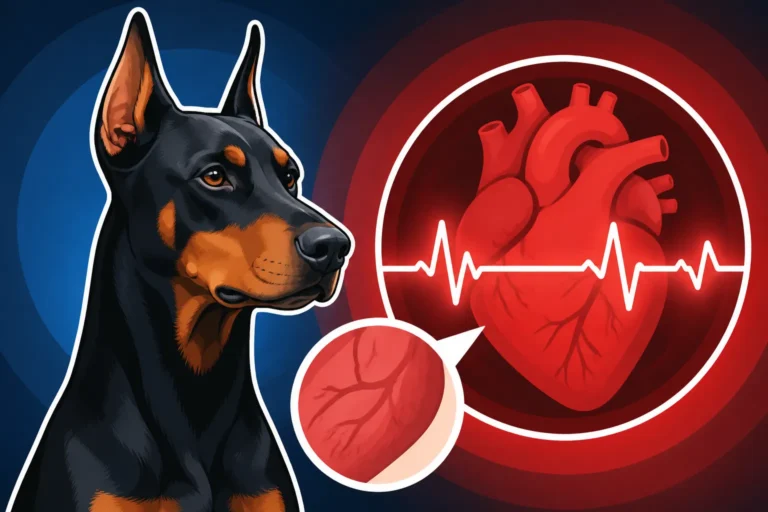
Let's break it down simply, without getting lost in too much medical jargon. Imagine your Doberman's heart, which is a powerful muscle designed to pump blood efficiently throughout its body. In a Doberman with DCM, this muscle starts to weaken and stretch out, becoming thinner and more flabby, especially in the left ventricle—the main pumping chamber. This stretching, or "dilation," means the heart can't squeeze as forcefully as it should. Think of a worn-out rubber band; it doesn't snap back with the same vigor. As the heart dilates, its chambers become larger, but paradoxically, they pump less blood with each beat.
This reduced pumping efficiency means less oxygen and nutrients are delivered to the rest of the body, and blood can start to back up, leading to fluid accumulation in the lungs (pulmonary edema) or abdomen (ascites) in later stages. What makes it particularly heartbreaking for Dobermans is their strong genetic predisposition, meaning it’s not just a random ailment but often inherited through generations. This breed is disproportionately affected compared to almost any other, which is why heart health is such a huge topic for us.
The Stages of Doberman DCM
Doberman DCM doesn't just appear overnight with dramatic symptoms. It follows a distinct, often cruel, progression that’s vital for owners to understand.
The journey typically begins with what's called the occult (or preclinical) phase. This is the period we’re focusing on in this guide – the silent years. During this time, your Doberman's heart is undergoing structural and electrical changes, but they haven’t manifested into any visible signs you'd pick up on at home. Your dog might seem perfectly healthy, energetic, and completely normal. They’ll run, play, and eat with gusto, masking the insidious changes happening internally. This phase can last for months, or even years, making it incredibly deceptive. The heart might be slightly enlarged, or there might be abnormal electrical activity (arrhythmias) that only specialized equipment can detect. This is where early, proactive screening becomes a literal lifesaver.
Eventually, if left undetected and untreated, the disease progresses into the symptomatic phase, also known as overt heart failure. This is when those devastating clinical signs finally appear. You might notice your Doberman coughing, struggling to breathe, becoming lethargic, or even fainting. By this point, the heart's function is severely compromised, and the quality of life can rapidly decline. Understanding the occult phase isn't about being paranoid; it's about giving your Doberman the best possible chance by catching this disease long before it screams for attention.
Why the Silent Phase is So Treacherous
The silent nature of Doberman DCM is arguably its most dangerous characteristic. It lures owners into a false sense of security, making it incredibly difficult to intervene when treatment can have the greatest impact.
The Deceptive Nature of Early Heart Disease
Dobermans, like many dogs, are remarkably stoic creatures. They have an incredible ability to mask pain or illness, and nowhere is this more evident than with heart disease. In the early, occult phase of DCM, your Doberman might outwardly appear to be the picture of health. They're still charging around the dog park, greeting you with their usual enthusiastic jumps, and demanding attention with that signature Doberman lean. You might attribute a slight decrease in stamina to them getting older, or a bit of a slower pace on a walk to the heat of the day. It's so easy to rationalize these subtle shifts, especially when you want to believe your dog is perfectly fine.
This deceptive nature is truly heartbreaking because it often leaves owners feeling immense guilt when a diagnosis finally comes. You might hear the dreaded words "heart failure" and immediately think, "How could I have missed this? What did I do wrong?" The truth is, you didn't miss it because it wasn't there to be seen with the naked eye. The early changes are microscopic, structural, and electrical, requiring specialized diagnostic tools to uncover. This is precisely why the standard veterinary check-up, while important, won’t typically catch early DCM without specific heart screening. It's a frustration many Doberman parents share, battling the invisible enemy within their beloved companions.
The Rapid Progression Once Symptoms Emerge
The cruel irony of the silent phase is that once it ends, the symptomatic phase often progresses with terrifying speed. By the time you notice your Doberman is coughing, struggling to breathe, or collapsing, the disease is usually quite advanced, and their heart is severely compromised. It can feel like your dog went from seemingly perfectly healthy to critically ill in a matter of days or weeks.
This rapid decline is often due to the heart’s inability to compensate any longer. The fluid that's been slowly building up now overwhelms the lungs, leading to overt respiratory distress. The arrhythmias that were once intermittent become more frequent and severe, disrupting the heart's rhythm and causing fainting spells, known as syncope. Learning about Sudden Death in a Young Doberman can be particularly distressing, as some Dobermans in the occult phase can experience a fatal arrhythmia with little to no prior warning. This makes the thought of early intervention not just desirable, but absolutely critical for us Doberman owners.
The Critical Role of Early Screening
Given the silent and aggressive nature of Doberman DCM, early and regular screening isn't just a recommendation; it's an essential part of responsible Doberman ownership. It's the only way to uncover the disease during those crucial occult years.
Annual Echo and Holter Monitoring
If you own a Doberman, "annual echo and Holter" should become as familiar as "sit" and "stay." These two diagnostic tools are the gold standard for detecting DCM in its early stages. An echocardiogram (often just called an "echo") is essentially an ultrasound of the heart. It allows a veterinary cardiologist to visualize the heart's structure in real-time. They can measure the size of the heart chambers, assess the thickness of the muscle walls, and observe how efficiently the heart is contracting and relaxing. This is how they identify the early signs of dilation and reduced pumping function. We know that The Age Doberman Heart Disease Usually Starts is typically around 3-5 years old, making annual screenings from that age absolutely vital.
Complementing the echo is the 24-hour Holter monitor. Unlike an echo, which provides a snapshot of the heart at one moment, a Holter is a wearable ECG device that continuously records your dog's heart rhythm for a full day. This is crucial because arrhythmias (abnormal heartbeats), especially ventricular premature contractions (VPCs), are often intermittent and might not be present during a brief vet visit. The Holter can catch these electrical disturbances, which are a hallmark of Doberman DCM. It’s a bit of an inconvenience to have your dog wear a vest for 24 hours, but the data it provides is invaluable. Together, Annual Echo and Holter Screening for a Doberman offer the most comprehensive picture of your Doberman's heart health, allowing for the earliest possible diagnosis and intervention.
Interpreting Screening Results
Once your Doberman has undergone an echo and a Holter, the cardiologist will meticulously review the results. For the echo, they'll be looking for any signs of left ventricular enlargement (LVE) and reduced systolic function (how well the heart squeezes blood). These are the earliest structural changes indicative of DCM. Even subtle changes in these measurements can signal the onset of the occult phase.
When it comes to the Holter, the cardiologist will count the number of VPCs detected over the 24-hour period. While a few VPCs can be normal, a significant number is a strong indicator of DCM. A common benchmark for concern is often quoted as over 100-300 VPCs in 24 hours, but ultimately, How Many Abnormal Beats Worry a Doberman Cardiologist will depend on the individual case and other findings. It's not just the quantity but also the morphology (shape) and pattern of these abnormal beats that matter. Additionally, a blood test called NT-proBNP can serve as another screening tool. This test measures a specific protein released when heart muscle cells are stretched or stressed, offering a good general indicator that The Blood Test That Flags a Doberman Heart might be under strain, though it's less specific than an echo or Holter for DCM.
Genetic Testing and Its Limitations
Genetic testing has become a hot topic in Doberman circles, offering a peek into a dog's predisposition to DCM. While certainly valuable, it’s critical to understand what these tests can and cannot tell us.
The Known DCM Gene Tests for Dobermans
Currently, two primary genetic mutations have been identified and are widely tested for in Dobermans that are associated with an increased risk of DCM. The first is the DCM1 gene, a deletion in the PDK4 gene. You might hear about The DCM1 Gene Test Explained for Doberman Owners as it was one of the first major genetic markers identified. Dobermans can be clear, a carrier (heterozygous), or affected (homozygous) for this mutation. The second is the DCM2 gene, a titin variant. Both of these genes are considered significant risk factors. However, it’s important to remember that these tests identify a genetic predisposition, not a guarantee of disease. A Doberman testing positive for one or both mutations has a higher likelihood of developing DCM, but it's not a certainty, and the severity and age of onset can vary greatly.
What makes Doberman DCM so frustratingly complex is that it’s not just these two genes at play. Researchers believe there are many other genetic factors, some yet undiscovered, that contribute to the disease. This explains why A Doberman That Tests Clear and Still Gets DCM is a very real, albeit disheartening, possibility. It highlights the polygenic nature of the disease—meaning multiple genes interact, often with environmental factors, to cause the condition. So, while getting your Doberman tested offers valuable information, it's just one piece of a much larger puzzle.
How Genetic Tests Inform but Don't Replace Screening
This is a point that cannot be overstated: a clear genetic test for DCM1 and DCM2 does not mean you can skip annual heart screenings. I’ve seen too many owners mistakenly believe that a clear genetic panel means their Doberman is "safe" from heart disease, only to be blindsided years later. As mentioned, there are other unknown genetic factors, and sometimes environmental influences can play a role. Even a Doberman with a completely clear genetic panel for the known variants can still develop DCM.
Think of genetic testing as providing a piece of the puzzle, but not the whole picture. It helps breeders make informed decisions about breeding pairs, aiming to reduce the prevalence of these known mutations in future generations. For pet owners, it can serve as a heads-up, signaling that annual screenings are even more critical. If your Doberman tests positive for a DCM gene, it simply reinforces the absolute necessity of rigorous, proactive cardiac monitoring with an echo and Holter starting at a young age. It gives you advanced notice to be vigilant, but it doesn't give you permission to relax on the vital annual check-ups that truly assess the current state of your dog's heart.
Proactive Steps and Management in the Occult Phase
Discovering your Doberman is in the occult phase of DCM can feel like a punch to the gut. However, it also presents a crucial window of opportunity. With proactive management and early intervention, we can significantly extend the quality and length of their lives.
Lifestyle and Dietary Considerations
While DCM is primarily genetic, lifestyle and diet still play a supportive role in overall heart health. Maintaining a lean body condition is paramount for any Doberman, but especially for one with a compromised heart. Extra weight puts undue strain on the cardiovascular system. Regular, moderate exercise is also important – we're not talking about marathon training, but consistent, enjoyable walks and play sessions that keep them fit without overexertion.
The debate around "grain-free" dog foods and their potential link to DCM, particularly in breeds like Dobermans, is a significant one. While the exact mechanisms are still being researched, there have been concerns raised by the FDA regarding diets heavy in legumes (peas, lentils) and potatoes that lack adequate taurine. If your Doberman is eating a "boutique," exotic ingredient, or grain-free (BEG) diet, it's crucial to discuss this with your vet or a veterinary nutritionist. You might find that Whether Grain-Free Food Adds to Doberman DCM is a risk you don't want to take. Some cardiologists recommend supplementing with taurine and L-carnitine, but this should always be done under veterinary guidance. While some owners give Taurine and Carnitine for a Doberman Heart proactively, a vet can advise on appropriate dosages and whether it's truly necessary for your specific dog.
Early Pharmacological Intervention
This is where the real game-changer comes in for Dobermans diagnosed in the occult phase: early pharmacological intervention. For years, veterinarians waited until a Doberman showed outward symptoms of heart failure before starting medication. However, groundbreaking research, particularly the EPIC study, has shown that starting a specific medication called Pimobendan (often sold under the brand name Vetmedin) can significantly delay the onset of clinical signs and improve survival rates in Dobermans with occult DCM.
Pimobendan works by improving the heart's ability to contract and by dilating blood vessels, making it easier for the heart to pump blood. Administering Pimobendan Before a Doberman Shows Signs has been proven to give Dobermans many more months, and often years, of good quality life before they progress to symptomatic heart failure. This isn't a cure, but it's a powerful tool to manage the disease and buy precious time. If your Doberman is diagnosed with occult DCM, your cardiologist will likely recommend starting Pimobendan. This decision is based on clinical findings from the echo and Holter, not just genetic test results. It is a monumental step forward in managing this devastating disease, allowing us to keep our Dobermans feeling well for longer. So, knowing about Medication for a Doberman in the Occult Phase is crucial for any Doberman owner.
Financial Preparedness for a Doberman's Heart Health
Let's be brutally honest: owning a Doberman means facing the reality of significant potential veterinary costs, especially when it comes to heart health. It's not a matter of "if" but often "when" these expenses arise. Being prepared is not just smart, it's essential.
The Costs of Screening and Treatment
The annual cardiac screenings themselves are a significant financial commitment. An echocardiogram can cost anywhere from $300 to $700, depending on your location and whether it's performed by a specialist. A 24-hour Holter monitor and its interpretation can add another $200 to $500. When you factor in these costs year after year, it quickly adds up. This is a recurring expense, not a one-time fee. Many Doberman owners budget for The Yearly Heart Bill for a Doberman as part of their routine expenses, knowing it's crucial preventative care.
Once a Doberman is diagnosed with DCM and starts medication, those costs escalate dramatically. Pimobendan, while life-saving, is not inexpensive. Depending on the size of your dog and dosage, you could be looking at hundreds of dollars per month for this medication alone. As the disease progresses, other drugs like diuretics, ACE inhibitors, and antiarrhythmics might be added, further increasing the monthly medication bill. Lifetime Heart Medication for a Doberman can truly strain a budget, making financial planning a necessity.
The Value of Pet Insurance
Given the high likelihood of a Doberman developing DCM and the considerable costs associated with its diagnosis and management, pet insurance is not just a good idea—it's practically a necessity. The critical thing to understand is that pet insurance needs to be in place before any signs or diagnosis of DCM emerge. Once a veterinary cardiologist identifies heart changes on an echo or Holter, or once symptoms appear, DCM becomes a pre-existing condition, and it will likely be excluded from coverage. This means getting insurance when your Doberman is a young puppy, ideally before their first cardiac screening around age two or three, is paramount. If you wait until your Doberman is four and showing early signs, it's often too late for coverage.
Companies like Healthy Paws are well-regarded for their comprehensive coverage, and having a policy in place can provide immense peace of mind. Imagine facing monthly medication costs of $300 or more, plus annual screenings and potential emergency visits, knowing that a significant percentage of those bills will be reimbursed. It transforms a terrifying financial burden into a manageable one. Researching Insuring a Doberman Before the Heart Turns and actively looking into Getting a Doberman Covered Before the First Echo should be high on your priority list as a Doberman owner. It's an investment that can truly make the difference between being able to afford gold-standard care and having to make agonizing choices for your beloved dog.
Comparing Doberman Heart Screening Methods
To help you visualize the different heart screening methods, here's a quick comparison. Each plays a vital role in detecting Doberman DCM in its silent years.
| Screening Method | What it Measures / Detects | When it's Recommended | Pros | Cons |
|---|---|---|---|---|
| Echocardiogram | Heart size, muscle thickness, pumping function, blood flow. | Annually from 2-3 years of age. | Direct visualization of heart structure; gold standard for detecting early dilation and dysfunction. | Requires a specialized veterinary cardiologist; more expensive; dog must remain still (sometimes sedated). |
| Holter Monitor | Continuous 24-hour electrical activity of the heart (arrhythmias, VPCs). | Annually from 2-3 years of age. | Detects intermittent arrhythmias that might be missed during a brief exam. | Requires owner to fit device; dog wears a vest for 24 hours; results require specialist interpretation. |
| NT-proBNP Blood Test | Levels of a hormone released when heart muscle is stretched/stressed. | Can be used as a pre-screening or adjunctive test. | Relatively inexpensive and non-invasive blood draw. | Less specific for DCM; can be elevated for other heart conditions; not a substitute for echo/Holter. |
| Genetic Testing | Presence of known DCM1 (PDK4) and DCM2 (Titin) gene mutations. | Can be done at any age, typically once. | Identifies genetic predisposition; informs breeding decisions. | Does not guarantee disease; a clear test doesn't mean no DCM; doesn't replace physical screening. |
Disclaimer
The information provided in this article is for informational purposes only and does not constitute veterinary medical advice. Always consult with a qualified veterinary professional for diagnosis and treatment of any medical condition or before making any decisions related to your pet's health.