Whether Doberman Thyroid Explains Aggression
Thyroid hormone levels in Dobermans explain unexpected canine aggression and behavioral changes linked to canine hypothyroidism.
Know what to watch for.
Breed-specific conditions, screening and DNA tests, what surgery actually costs, and the daily habits that stretch a healthy lifespan.
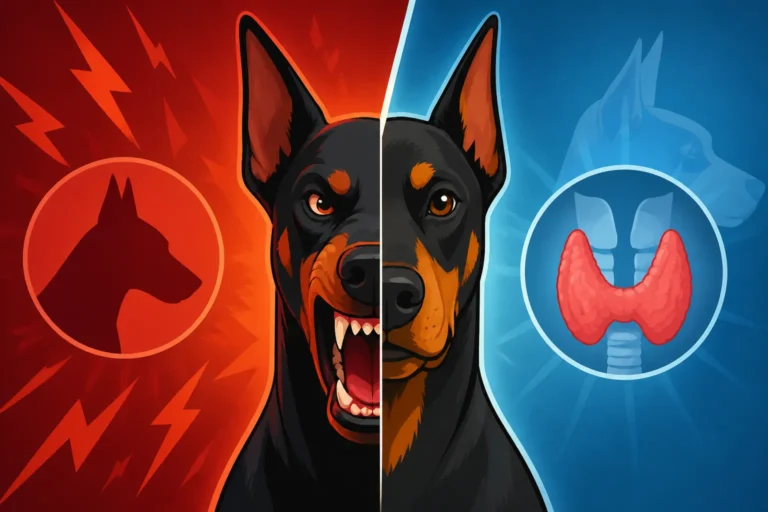
Thyroid hormone levels in Dobermans explain unexpected canine aggression and behavioral changes linked to canine hypothyroidism.
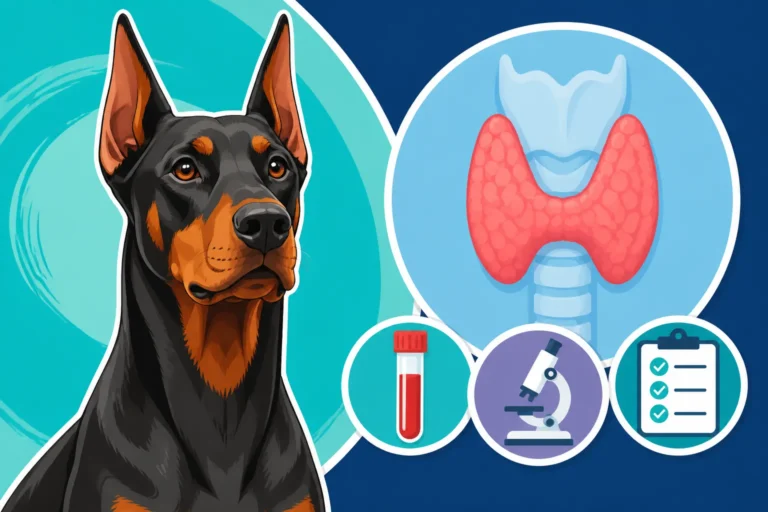
Standard total T4 blood tests often fail to diagnose Doberman hypothyroidism because the breed has lower baseline hormone levels.
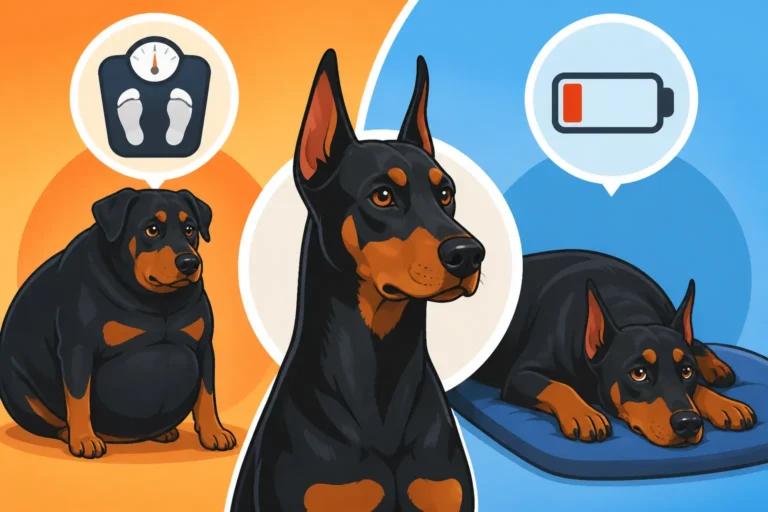
Weight gain and low energy in Dobermans often stem from natural aging or medical conditions like hypothyroidism affecting older dogs.
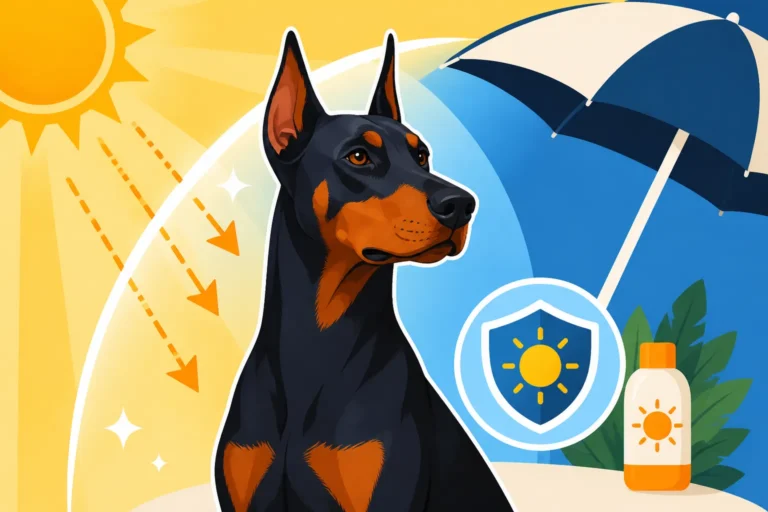
Doberman sun protection strategies protect sensitive skin and thin coats on blue, fawn, black, and rust dogs from painful sunburns and skin cancer.
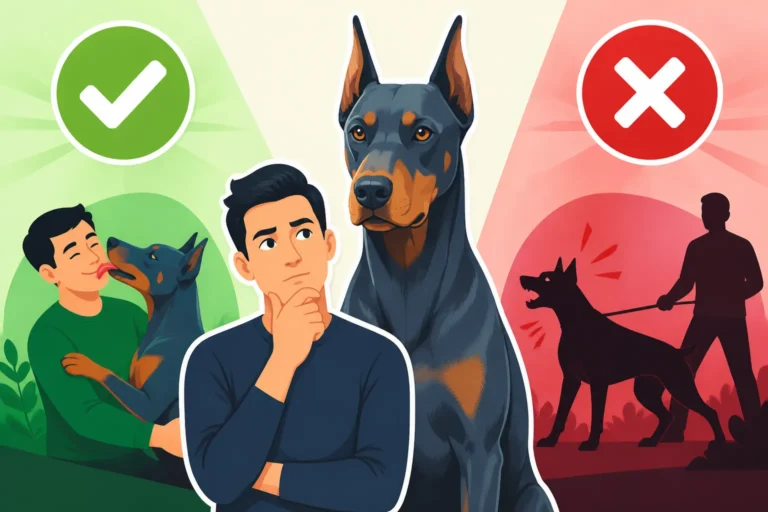
Blue Doberman health challenges, including Color Dilution Alopecia, explain why this unique coat color requires careful consideration.
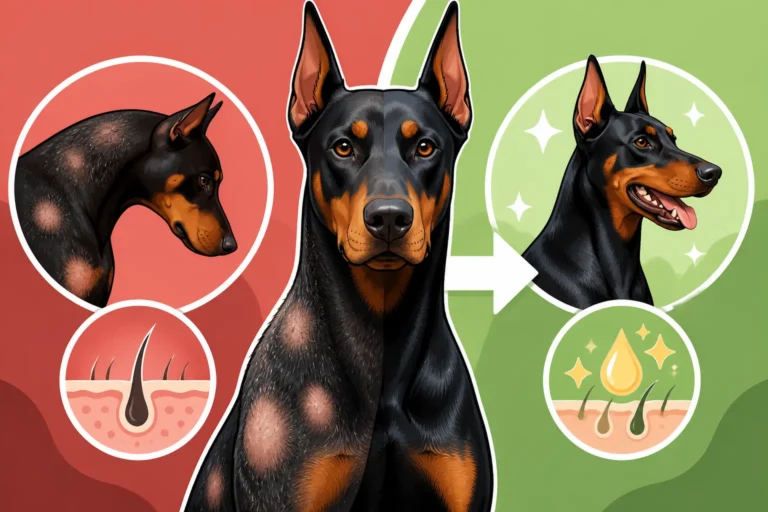
Doberman coat loss causes and treatment options, including allergies, parasites, and hormonal imbalances like hypothyroidism.
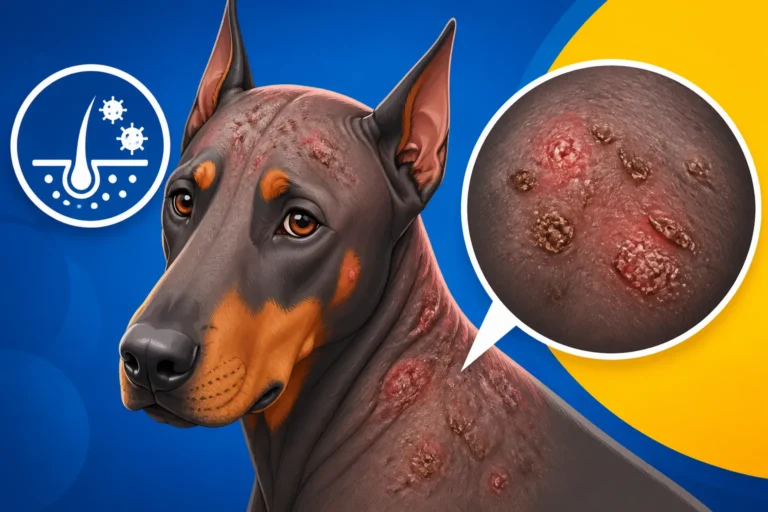
Doberman skin infections and color dilution alopecia cause hair loss, thin skin, and bacterial issues requiring management.
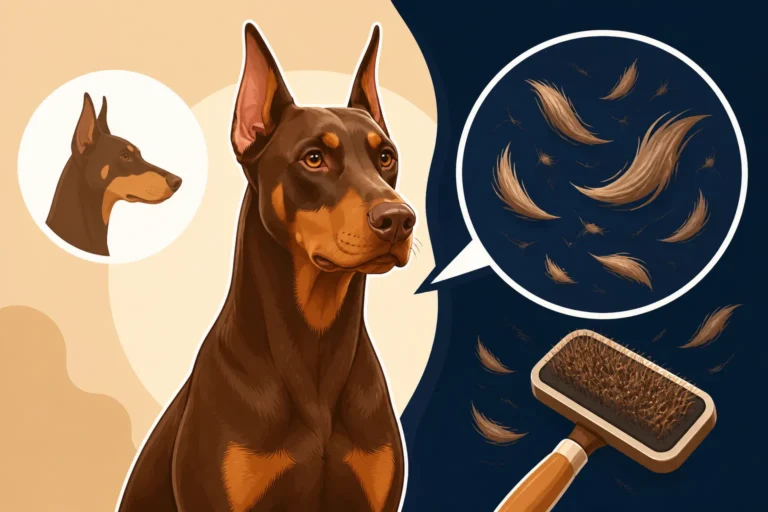
Fawn Dobermans and their susceptibility to Color Dilution Alopecia, explaining why dilute coat colors cause hair loss and breakage.
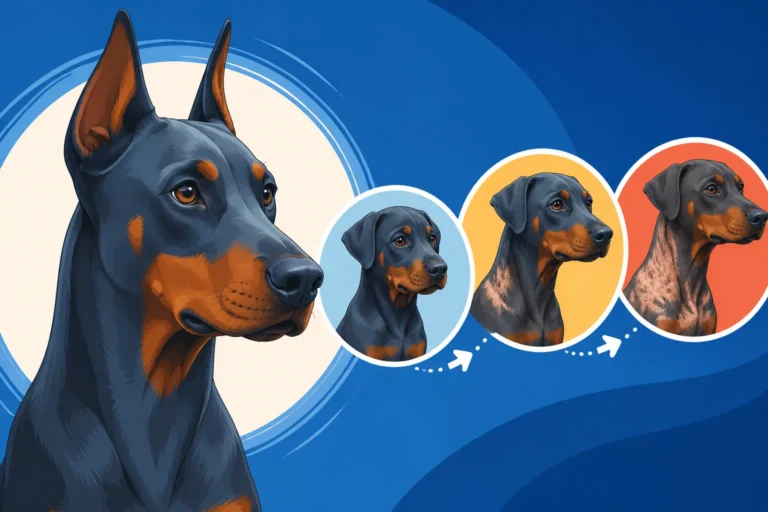
Color Dilution Alopecia, a genetic condition tied to diluted blue and fawn coats, clumps pigment in the hair shaft and weakens it, causing thin or bald patches.
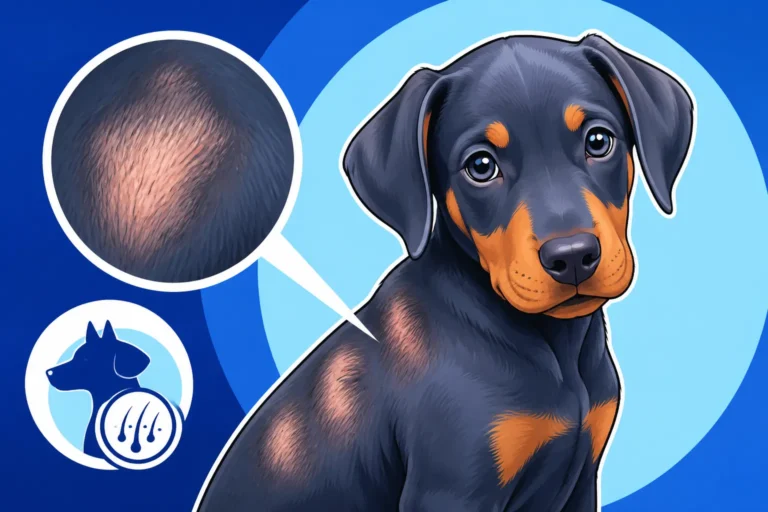
Color Dilution Alopecia is a genetic condition causing brittle hair, hair loss, and thinning coats in blue Doberman puppies.