Whether a Wobbler Doberman Should Wear a Collar
Collar pressure on a Doberman with Wobbler Syndrome worsens cervical spinal cord compression, increasing pain and neurological damage.

Collar pressure on a Doberman with Wobbler Syndrome worsens cervical spinal cord compression, increasing pain and neurological damage.
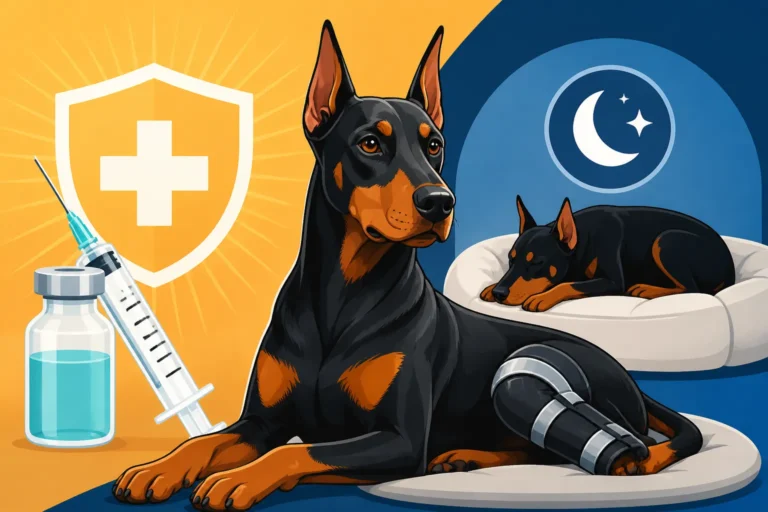
Steroids and strict rest help manage spinal cord compression in Dobermans with Wobbler Syndrome by reducing inflammation.
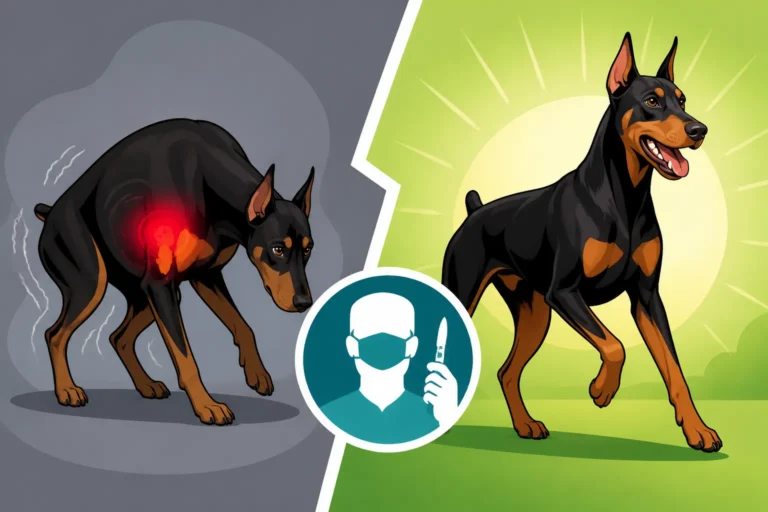
Doberman Wobbler surgery aims to relieve spinal cord compression and stabilize neck vertebrae in dogs aged three to eight years.
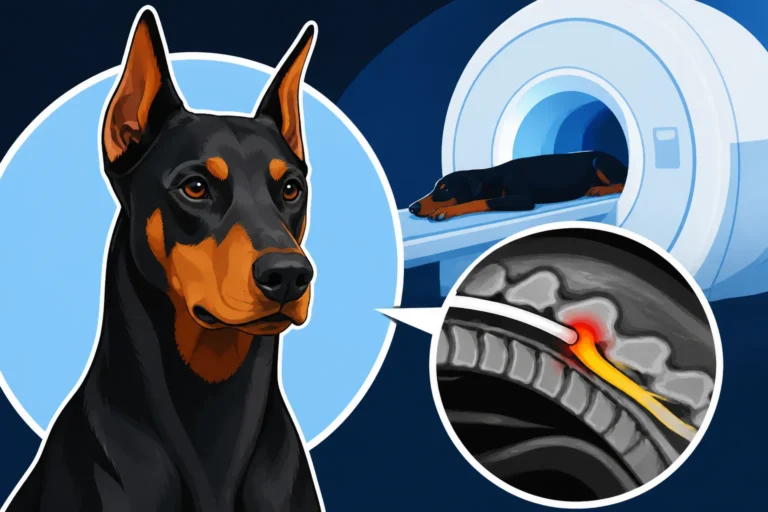
Doberman magnetic resonance imaging reveals spinal cord compression in the neck, showing the exact cause of Wobbler Syndrome.
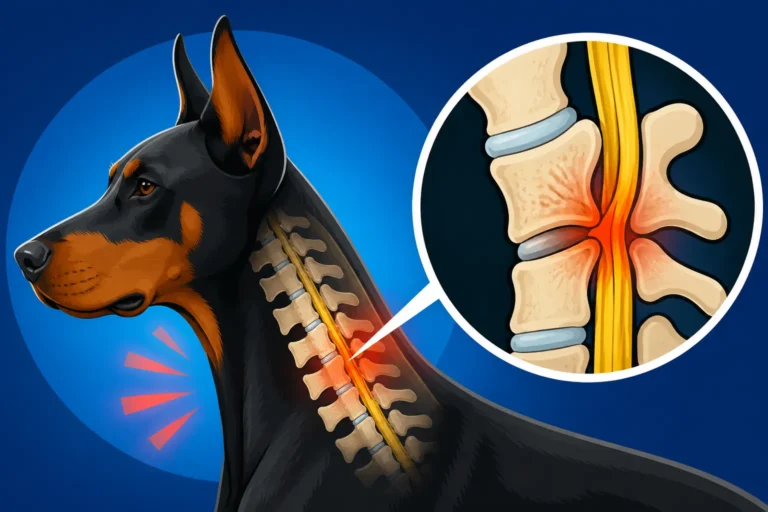
Cervical vertebrae compression in Dobermans causes Wobbler Syndrome, explaining anatomical instability and spinal cord squeezing.
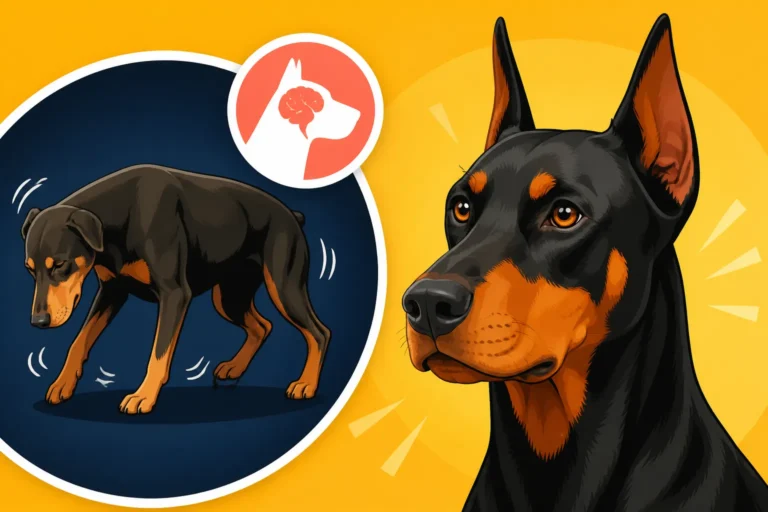
Doberman Wobbler Syndrome signs most frequently appear in middle-aged dogs between two and eight years of age, causing spinal cord compression.
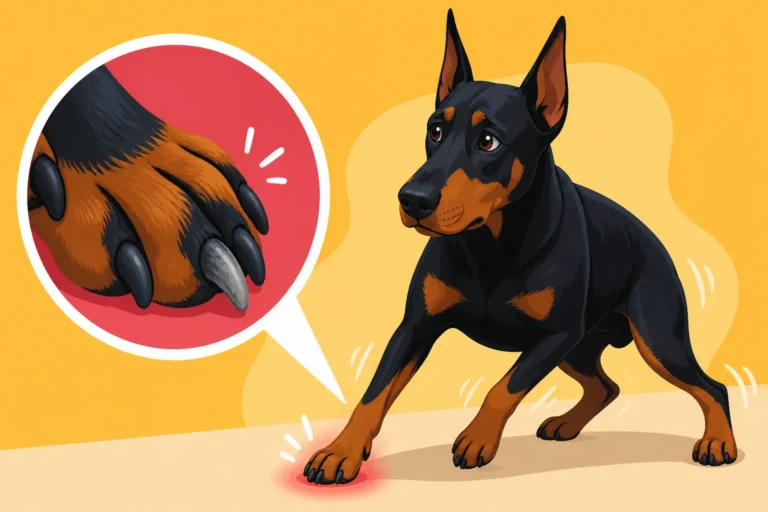
Scuffed nails in Dobermans indicate neurological impairment from Wobbler Syndrome, causing nerve damage and gait changes.
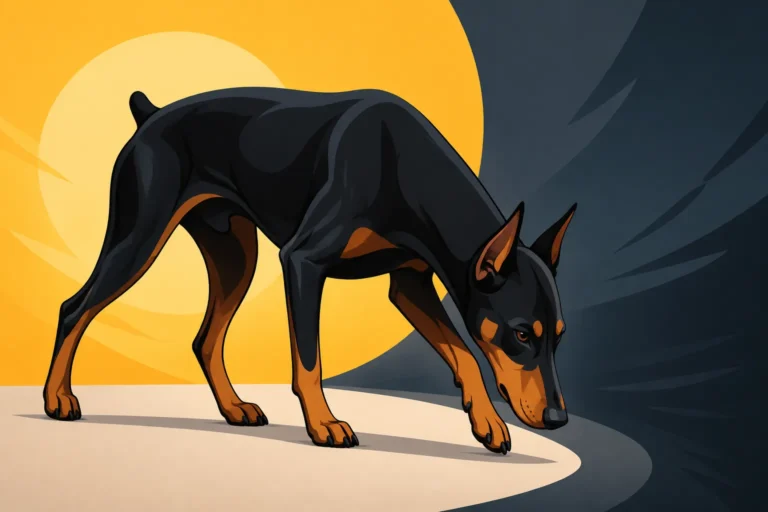
Doberman head down posture explains medical conditions, Wobbler Syndrome signs, and neck pain causes affecting the breed.
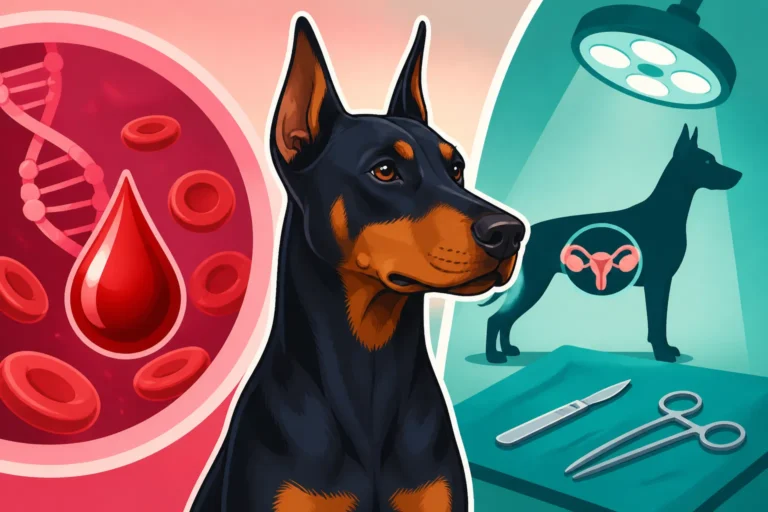
Spaying a Doberman carrying the Von Willebrand gene requires understanding specific surgical risks and vital pre-surgical screening.
Doberman medications that impair blood clotting must be avoided to prevent dangerous hemorrhages in dogs with Von Willebrand Disease.