How Rare a Red Doberman Is
Red Doberman genetics explained through recessive traits, showing why standard red coats are common compared to rare dilute blue and fawn dogs.

Red Doberman genetics explained through recessive traits, showing why standard red coats are common compared to rare dilute blue and fawn dogs.
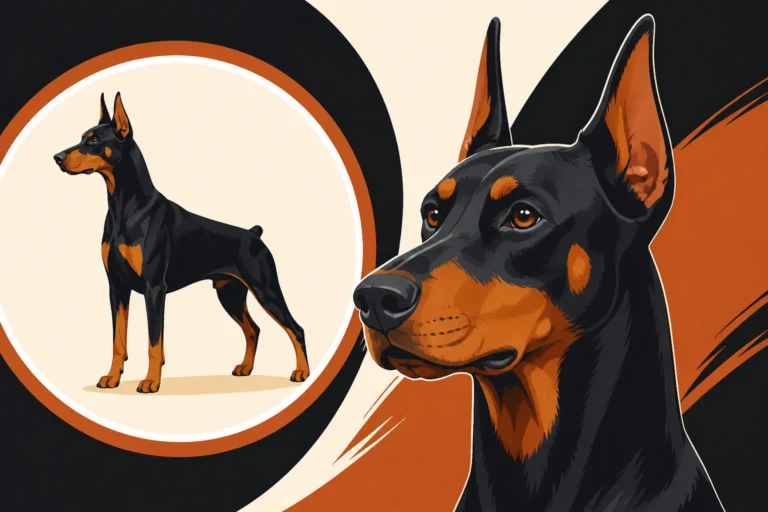
Canine genetics involving dominant B and D alleles explain why black and rust is the most frequent color combination in Dobermans.
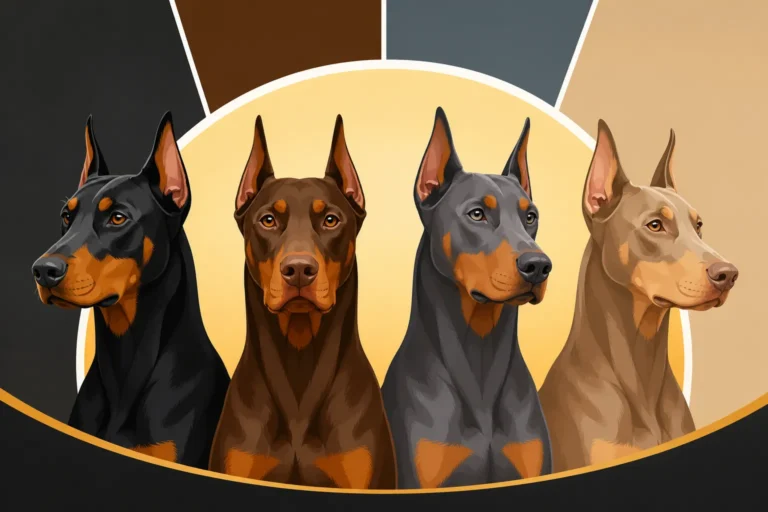
The four American Kennel Club recognized Doberman coat colors and their specific genetic traits are explained.

Doberman ear cropping and its actual impact on winning conformation dog show events across different countries and kennel club rules.

Doberman structural disqualifications and size deviations that end show careers based on official American Kennel Club breed standards.
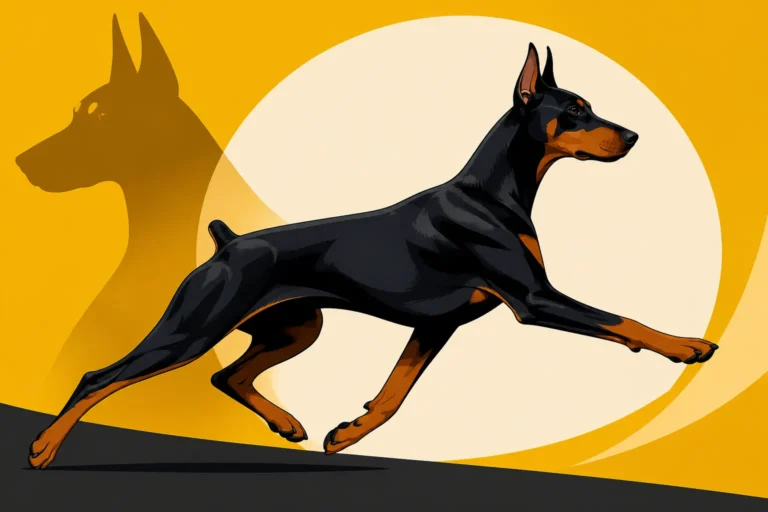
The Doberman reaching stride combines front leg extension and powerful rear drive for a balanced, efficient gait.
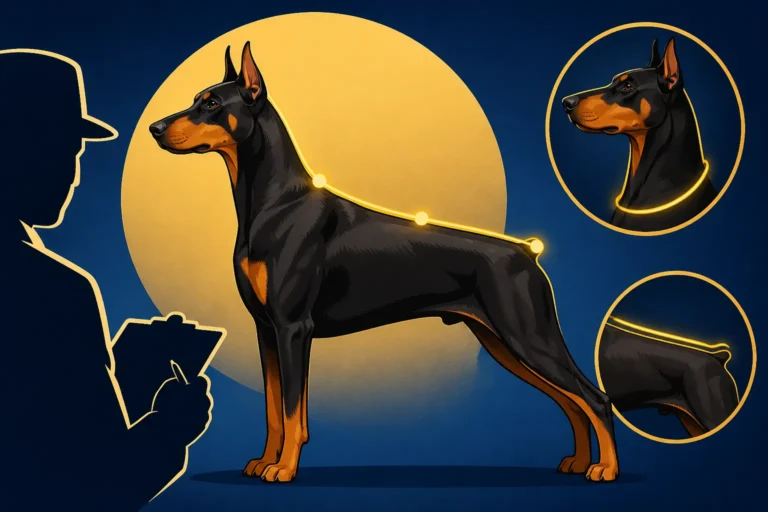
Doberman neck and topline conformation details explain what judges evaluate for correct structure and powerful movement in the ring.
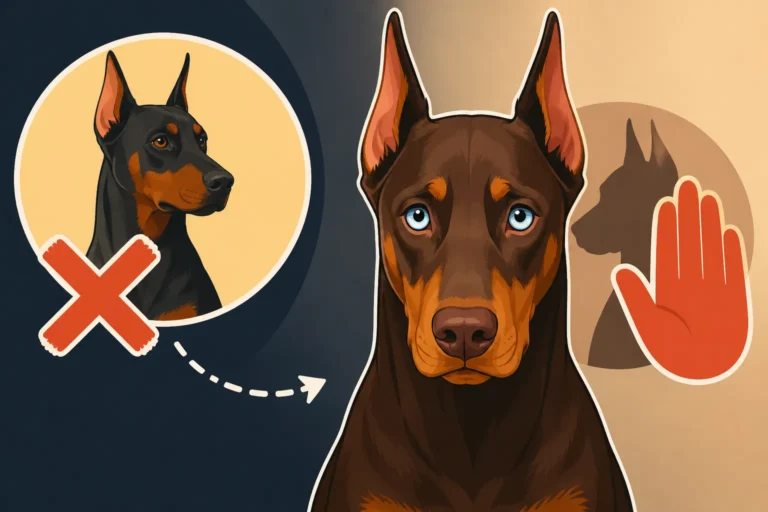
The Doberman standard describes the ideal eye as dark, medium-sized, almond-shaped and not protruding, so lighter eyes are marked down in breeding and showing.
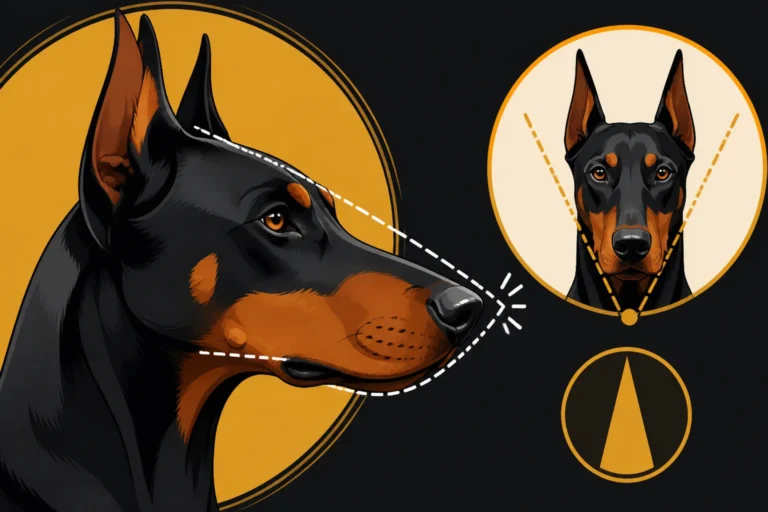
The wedge head of a Doberman tapers from the ears to the nose, forming a blunt wedge shape with parallel planes.
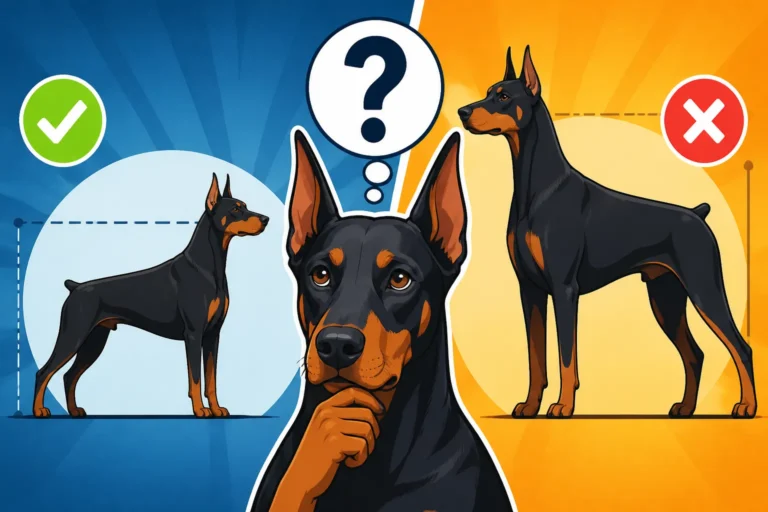
European Doberman size standards compared to American lines, explaining whether large dogs are considered over standard.