Why a Light-Eyed Doberman Is Marked Down
It can be quite disheartening when you're looking at a stunning Doberman puppy, perhaps with those captivating, lighter-colored eyes that really stand out, only to hear that such a trait is actually considered a "fault" in the breed. It leaves you wondering why something so striking could be seen as less than ideal, and what it truly means for the dog. This guide is here to unravel that mystery, explaining precisely why a Doberman with light eyes might be marked down in certain circles and what this distinction means for both breeders and everyday owners.
Understanding the Doberman Breed Standard and Eye Color
When we talk about Dobermans, especially in the context of breeding and showing, everything revolves around the "breed standard." This isn't just a suggestion; it's a meticulously written blueprint of what the ideal Doberman should look like, how it should move, and even aspects of its temperament. For many purebred dogs, these standards are set by parent clubs, like the Doberman Pinscher Club of America, and recognized by organizations such as the American Kennel Club (AKC). And when it comes to eye color, the Doberman standard is quite specific.
The Ideal Doberman Eye According to the AKC
The AKC Doberman Pinscher breed standard, like many others around the world, describes the ideal Doberman eye as "dark, of medium size, almond-shaped, and not protruding." The emphasis on "dark" is crucial. For black and rust Dobermans, the darkest possible brown is desired—almost black, blending seamlessly with the surrounding facial pigmentation. For red Dobermans, a medium brown that complements the coat is expected, but still on the darker side. The underlying reason for this preference isn't purely aesthetic; it contributes to the overall intense, watchful, and intelligent expression that is characteristic of the breed.
Think about it: a Doberman's expression is a huge part of its presence. Dark, keen eyes give an impression of focus, seriousness, and undeniable strength—qualities historically valued in a guardian breed. Lighter eyes, to some, can soften that intense look, making the dog appear less formidable or less "typical" of the breed's intended demeanor. It's not about being aggressive; it's about projecting confidence and purpose. This isn't to say a Doberman with light eyes is less confident, but rather how its appearance is perceived against the established ideal.
What Constitutes a "Light Eye" in a Doberman
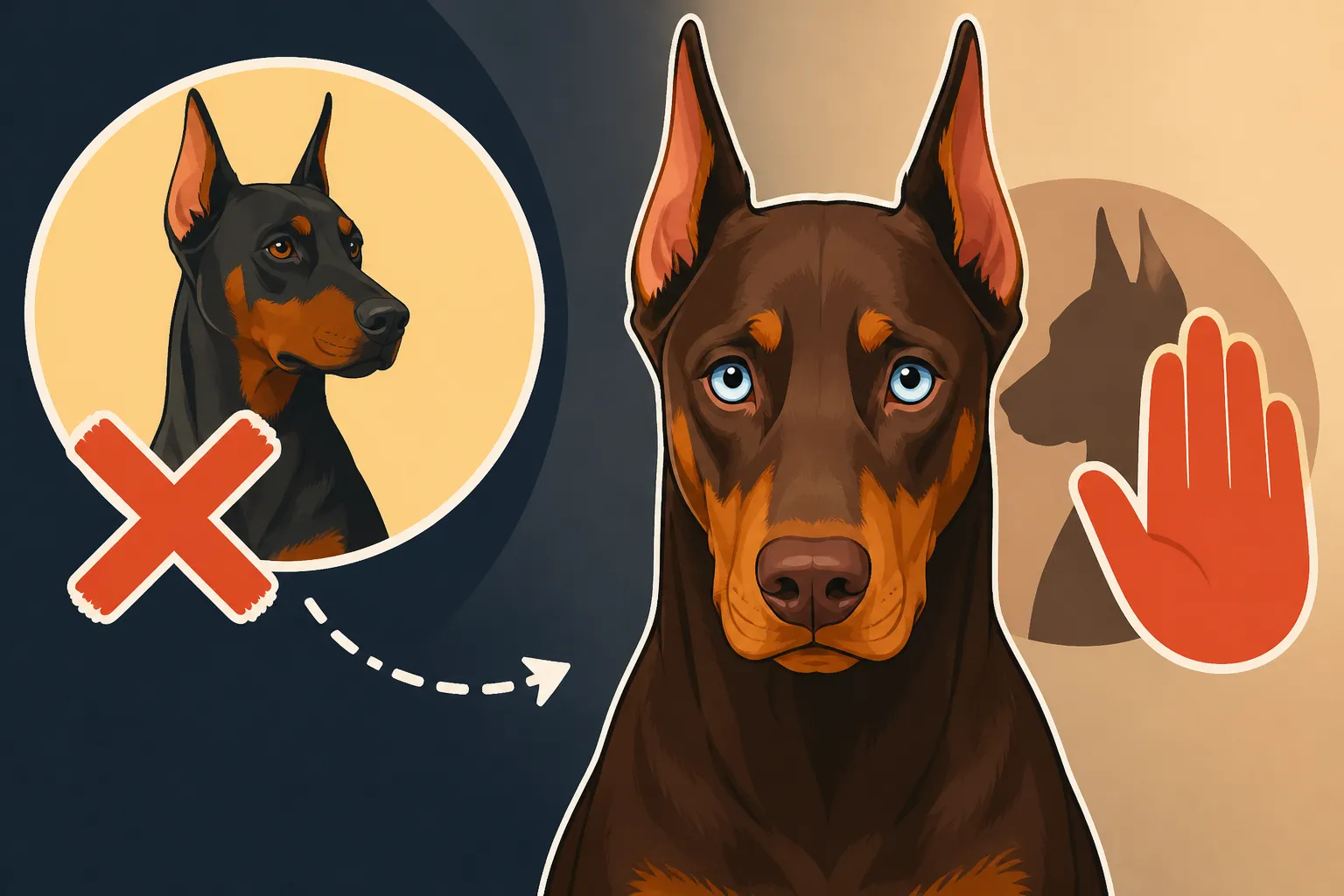
So, what exactly counts as a "light eye" when a judge or an experienced Doberman enthusiast looks at a dog? Generally, it refers to eyes that are amber, yellowish, or have a distinct greenish cast, rather than the desired rich brown shades. On a black and rust Doberman, these lighter tones can be particularly noticeable, creating a stark contrast with the dark coat and points. You might see eyes that are a clear golden-brown, or even a pale hazel.
While it might be more visually jarring on a black dog, lighter eyes are also considered a fault on red Dobermans if they are too pale for their coat color. For instance, a very light, almost yellow eye on a deep mahogany red Doberman would be considered a fault. It's often most pronounced in puppies, though the eye color typically darkens slightly as they mature. However, if a puppy's eyes are clearly amber or yellow at a few months old, they are unlikely to develop into the rich, dark brown specified by the standard. It's a subtle but significant distinction, and judges are highly trained to spot these nuances, often under varying lighting conditions, to ensure fair evaluation against the precise wording of The Doberman the AKC Standard Describes.
The Impact of Coat Color on Eye Pigmentation
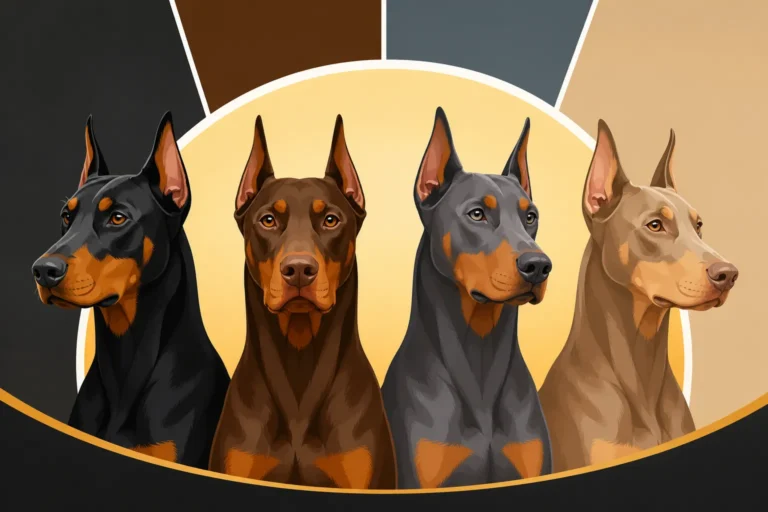
Here's where it gets a little more complex and sometimes frustrating for owners who adore the less common Doberman colors. The Doberman breed officially recognizes four coat colors: black, red, blue, and fawn (Isabella). Both blue and fawn Dobermans carry a dilution gene. This gene not only dilutes the black pigment to blue and the red pigment to fawn but also affects other pigmented areas of the dog, including the nose, paw pads, and, yes, the eyes.
It's a biological reality that blue and fawn Dobermans naturally tend to have lighter eye colors than their black or red counterparts. You'll often see them with amber or hazel eyes that, while genetically normal for their dilute coats, are still technically considered a fault according to the universal "dark eye" requirement of the breed standard. This puts breeders of blue and fawn Dobermans in a difficult position. They strive to produce the darkest possible eye color within that diluted range, but achieving the deep brown of a black Doberman is simply not genetically possible. This means that even a perfectly healthy, well-tempered blue or fawn Doberman may inherently carry a "fault" in its eye color when evaluated against the strict show standard. It highlights a tension within the breed community regarding how Doberman Colors and the Two That Cause Trouble are viewed in the show ring.
The Show Ring and Breeding Implications
The breed standard isn't just an interesting document; it's the rulebook for conformation showing. When a Doberman steps into a show ring, it's being evaluated feature by feature against this ideal. Any deviation, no matter how minor, is considered a fault, and a collection of faults can mean the difference between winning and losing.
Why Judges "Mark Down" Light-Eyed Dobermans
For a conformation judge, their primary responsibility is to assess how closely each dog aligns with the breed standard. A light eye in a Doberman is a clear deviation from the "dark" eye specified. It's not a health issue, nor does it typically affect the dog's vision or overall well-being. Instead, it's a matter of aesthetics and breed type. Judges are looking for the quintessential Doberman look, and dark eyes are an integral part of that.
Depending on the severity of the lightness, it can range from a minor fault to a serious one. A very pale, yellow eye could easily prevent a Doberman from winning its class, earning points towards a championship, or even competing at higher levels. It's a concrete, easily identifiable trait that directly contradicts the written standard. This isn't about personal preference on the judge's part; it's about adhering to the guidelines established to preserve the breed's distinct characteristics. A dog with excellent structure, gait, and temperament might still fall short if its eyes are noticeably lighter than desired, simply because that particular trait doesn't conform to the blueprint.
Breeding Decisions and Light Eyes
Breeders who are serious about producing Dobermans that excel in the conformation ring must consider eye color very carefully in their breeding programs. It's a constant balancing act of desirable traits. While they want strong working drives and excellent health, they also aim for physical conformation that meets the standard as closely as possible.
When selecting breeding pairs, a responsible breeder will evaluate both prospective parents for eye color. They'll look at the depth of pigment and how it compares to the standard, especially considering the dog's coat color. For black and red Dobermans, the goal is to breed for the darkest possible eyes. For blue and fawn Dobermans, the challenge is greater. Breeders will select for the least dilute eye color within that range, trying to find individuals whose eyes are as rich as possible given their genetics. They understand that while blue and fawn colors are accepted, the associated lighter eyes will always be a challenge in the show ring. This is why you'll often see breeders emphasize "good pigmentation" even in their dilute-colored lines. It’s a testament to the dedication required in ethical breeding practices, where a dog's overall health and well-being are paramount, but conformation to the standard also guides selective breeding.
Beyond the Show Ring: What Light Eyes Mean for a Pet Doberman
It's easy to get caught up in the language of "faults" and "mark downs," especially when you hear it from breeders or within the show community. But for the vast majority of Doberman owners, those terms really don't hold much weight in their daily lives with their beloved companions.
Health and Temperament: No Correlation
Let's be absolutely clear: a Doberman having lighter-colored eyes has no bearing whatsoever on its health, intelligence, or temperament. Absolutely none. A Doberman with amber eyes is just as likely to be a brilliant, loving, loyal, and healthy dog as one with dark brown eyes. The breed standard's preference for dark eyes is purely an aesthetic one, focusing on a traditional "look" for the Doberman. It doesn't mean a dog with lighter eyes is "defective" or somehow less of a Doberman.
Any notion that lighter eyes signify a "softer" or less protective temperament is a complete myth. A Doberman's disposition is primarily shaped by genetics (the right kind of genetics, focused on stable nerves and sound temperament, not superficial traits) and, crucially, by its upbringing, training, and socialization. A Doberman needs consistent, fair training and exposure to the world to develop into a confident and well-adjusted companion, regardless of its eye color. For an in-depth look at what makes a Doberman tick, check out Doberman Temperament as the Standard Describes It.
Living with a Light-Eyed Doberman
If you're bringing a Doberman into your home as a family pet, whether its eyes are light or dark should be the least of your concerns. Your focus should be on finding a healthy puppy from reputable parents with solid temperaments, ensuring proper socialization, and providing consistent training and care. Eye color is a cosmetic trait, and frankly, many owners find lighter eyes incredibly beautiful and unique. They can give a Doberman a striking, almost wolf-like appearance that sets them apart.
Your bond with your Doberman will be built on mutual respect, trust, and companionship, not on how closely it conforms to a show ring ideal. Whether you get your Doberman's favorite treats from Chewy or a local pet store, or what kind of durable toys it destroys, those are the things that matter in your day-to-day life, not the exact shade of its iris. The Owner a Doberman Actually Needs is someone who values the dog for its spirit and companionship, not its conformity to a judge's score sheet.
The Broader Discussion: Breed Standards vs. Pet Ownership
The discussion around traits like eye color in Dobermans really highlights the difference between the world of dog shows and the reality of pet ownership. Both are valid and important, but they serve different purposes.
The Purpose of Breed Standards
Breed standards were created for a very important reason: to preserve the unique characteristics and original function of a breed. For the Doberman, the standard aims to maintain the qualities that made it an exceptional personal protector and companion. These standards ensure that Dobermans continue to look like Dobermans, move like Dobermans, and largely possess the temperament associated with the breed. They are a historical document, a guide for preserving type. Without them, breeds could quickly diverge and lose their distinct identities.
However, it's also true that sometimes these standards can seem overly rigid or focus on details that feel disconnected from the practical realities of owning a pet. The nuances of eye pigmentation or the precise angle of a shoulder can be incredibly important in the show ring, but they are often irrelevant to a dog's ability to be a wonderful family member.
How Owners Can Appreciate Their Doberman Regardless of "Faults"
As a Doberman owner, your job is to provide a loving, healthy, and stimulating environment for your dog. That means prioritizing its health, temperament, training, and overall well-being far above any cosmetic "faults" it might have. A Doberman that has been health tested, well-socialized, and lovingly raised is a treasure, regardless of whether its eyes are the exact shade specified in a book.
Focus your energy on important aspects like finding a reputable breeder who prioritizes health and temperament (and who transparently shows The Health Testing a Doberman Breeder Must Show), ensuring your Doberman gets adequate mental and physical stimulation, and providing appropriate nutrition. A high-quality diet, perhaps sourced from a reliable vendor like Chewy, coupled with consistent Training a Doberman That Is Smarter Than You Expect, will contribute far more to your dog's quality of life than the exact hue of its eyes. Embrace your Doberman for the individual it is, knowing that its true value lies in the loyal bond you share.
Doberman Eye Color: Show Standard vs. Pet Reality
| Feature | Breed Standard (Show Ring Ideal) | Pet Ownership Reality |
|---|---|---|
| Eye Color | Dark (darkest brown for black, medium brown for red), almond-shaped, not protruding. | Any shade of brown, amber, or hazel is fine and beautiful. |
| Impact on Dog | Deviations (light eyes) are faults, can prevent winning titles. | No impact on health, temperament, intelligence, or lifespan. |
| Breeding Focus | Selectively breed for dark eyes to conform to standard. | Focus on health, temperament, and genetic diversity. |
| Owner Concern | Crucial for conformation, judges will mark down. | Personal aesthetic preference; often admired for uniqueness. |
Disclaimer
This article is for general informational purposes only and does not constitute professional advice. Laws, prices and regulations vary by location and change over time. Consult a qualified professional for guidance on your specific situation.