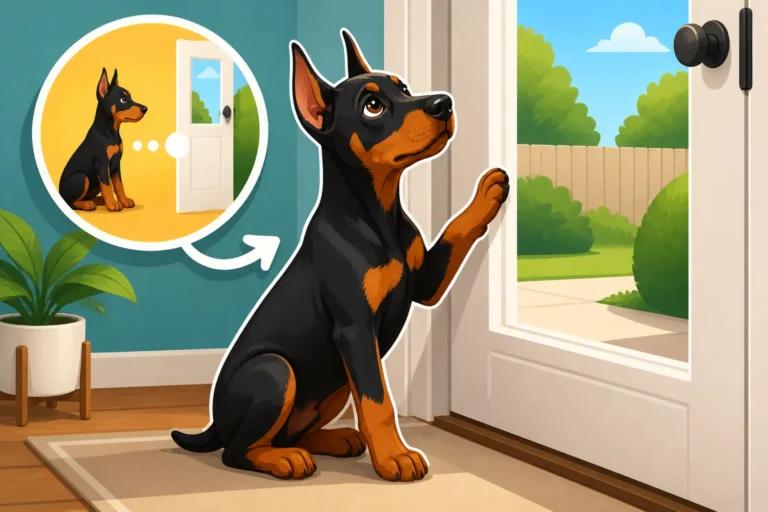
Building a Doberman Puppy That Is Confident, Not Sharp
One of the biggest concerns I hear from new Doberman owners, or those considering bringing one of these magnificent dogs into their lives, is the worry about them becoming "sharp" or overly aggressive. There's a persistent myth that Dobermans are inherently mean, but the truth is, a confident, well-adjusted Doberman is a joy to live with. This guide is all about helping you nurture a Doberman puppy that is bold and self-assured, rather than fearful or reactive, laying the groundwork for a truly balanced companion.
Understanding the Doberman Temperament Foundation
Before we even talk about training techniques, it's crucial to understand the unique psychological makeup of a Doberman puppy. They aren't like every other breed, and what works for a Golden Retriever might not be the best approach for a Dobe. Their intelligence and innate protective instincts, combined with a surprising sensitivity, mean we need to be thoughtful and deliberate in our approach from day one.
The Doberman's Natural Instincts and Sensitivity
Dobermans were originally bred by Karl Dobermann for protection, and those instincts are still very much present in the breed today. They possess a natural wariness towards strangers and a strong desire to guard their family and home. This isn't aggression; it's a deeply ingrained protective drive. Think of it less as a switch to be turned off, and more like a river whose banks you need to carefully guide. If you don't provide proper direction, that river can overflow or carve its own, less desirable, path.
What often surprises new owners is just how sensitive Dobermans can be. Beneath that powerful, sleek exterior is often a soft, emotionally intelligent dog who thrives on connection and clear communication. They soak up your emotions, your tone of voice, and your body language. A harsh word or an unfair correction can cut much deeper with a Doberman than it might with a less sensitive breed, potentially eroding trust and leading to a fearful, rather than confident, response. We want to empower them, not break their spirit. This sensitivity is why positive reinforcement is so critical for this breed.
Dispelling Myths: Confidence Versus Aggression
Let's clear the air: confidence is not aggression. A confident Doberman is one who is secure in its environment and its relationship with you. It can calmly assess new situations, greet appropriate strangers with polite indifference or a wagging tail, and isn't easily rattled by unexpected noises or movements. This dog trusts your leadership and knows its place within the family structure. It doesn't feel the need to be constantly on high alert or to take matters into its own paws.
Conversely, aggression in Dobermans often stems from fear, insecurity, or a lack of proper guidance. A Doberman that lunges, snarls, or bites is typically one that feels overwhelmed, threatened, or believes it needs to fend for itself. It might be reacting out of a deep-seated anxiety, or it might be a dog that has learned aggressive behaviors are effective because no one taught it appropriate coping mechanisms. Our goal is to build a dog that feels so safe and secure with us that it never feels the need to resort to such extreme measures. It's about proactive prevention through thoughtful rearing.
The Importance of Early Temperament Assessment
When choosing your Doberman puppy, or even if you've already brought one home, understanding its individual temperament is key. Even within the same litter, puppies will have distinct personalities. Some might be bolder, others more reserved. A reputable breeder will have spent time observing these nuances, offering insights into each puppy's tendencies. Pay attention to how the puppies interact with their littermates, with the breeder, and with you. Are they curious or cautious? Do they recover quickly from startling noises?
Once your puppy is home, continue this assessment. Observe how it reacts to everyday stimuli. Does it startle easily? Does it shy away from new people or objects? Or is it overly boisterous and prone to nipping every interaction? These early observations aren't labels; they are clues that inform your socialization and training strategy. For instance, a more timid puppy will need extra gentle exposure, while an over-the-top confident puppy might need more structured impulse control work. Remember, a Doberman's temperament isn't fixed at birth; it's a dynamic combination of genetics and environment, and you play a massive role in shaping it.
The Critical Window: Early Socialization Strategies
The period between 8 and 16 weeks of age is often referred to as the "critical socialization window" for puppies. For a Doberman, this window is absolutely paramount. During this time, your puppy's brain is like a sponge, soaking up every experience and forming its understanding of the world. What it encounters now will heavily influence its reactions to similar situations for the rest of its life. Skipping or rushing this vital stage is a recipe for a Doberman that struggles with confidence and reactivity later on.
Exposure to People: Beyond Just "Meeting Strangers"
It's not enough for your Doberman puppy to just "meet" people; it needs quality exposure to a wide variety of individuals. Think about people of different ages, genders, ethnicities, and even varying gaits and voices. People in uniforms, people with hats, people with glasses, people with beards, people using wheelchairs, people pushing strollers – the more diverse, the better. Your goal isn't necessarily for your Doberman to love everyone, but to be neutral and confident in their presence.
Start with calm, positive interactions. Ask friends and family to visit, but instruct them to be gentle and avoid overwhelming the puppy. Have them offer a treat and then ignore the puppy, letting the puppy initiate contact. Short, positive encounters are far more valuable than long, stressful ones. Avoid forcing interactions; if your puppy seems nervous, create distance and let it observe from afar, rewarding calm behavior. This helps build a positive association, teaching your Doberman that new people are nothing to fear. Remember, this isn't about teaching them to be everyone's best friend, but rather to comfortably exist in a world full of different humans. Exposing a Doberman Puppy to Strangers is a great resource for more ideas on this.
Safe Encounters with Other Dogs and Animals
Socialization with other dogs is equally important, but it needs to be safe and positive. Not every dog is a good playmate for a Doberman puppy. Look for calm, well-mannering adult dogs that are known to be good with puppies. Avoid overly boisterous dogs, or those that might inadvertently bully your Doberman. A bad experience with another dog can leave a lasting negative impression and lead to dog reactivity later on.
Puppy classes are an excellent way to provide controlled, supervised play opportunities. Look for classes that prioritize small groups, separate puppies by size/play style, and have experienced instructors who can guide interactions. Beyond other dogs, think about safe, positive exposure to other species if appropriate for your lifestyle – perhaps a cat, if introduced carefully, or even observing horses or livestock from a distance. The goal is a broad, positive understanding of the animal kingdom, not just the canine one. Always ensure these interactions are stress-free and that your puppy can retreat if it feels overwhelmed.
Navigating New Environments and Sounds
The world is full of sights and sounds, and your Doberman puppy needs to learn that most of them are nothing to be afraid of. Take your puppy on short, frequent outings to various environments: a quiet park, a bustling sidewalk (from a safe distance initially), a pet-friendly store, or even just a friend's backyard. The key is exposure without overwhelm. Carry your puppy if necessary, especially if its vaccination series isn't complete, but let it experience the sensory input.
Expose your Doberman to a variety of sounds too. This can be as simple as playing a desensitization CD at home with noises like traffic, thunderstorms, or vacuum cleaners at a low volume. Introduce new household appliances, the doorbell, or even a dropped pan as opportunities for calm exposure, always paired with a treat and praise. The more varied and positive these early experiences are, the more resilient and confident your Doberman will become. A puppy that has experienced a wide range of normal life situations will be much less likely to develop fear-based behaviors as an adult. Remember the saying, The Sixteen Weeks That Set a Doberman Up are truly invaluable.
Positive Reinforcement: Building Trust and Cooperation
When it comes to training a Doberman, especially a puppy, positive reinforcement isn't just a method; it's a philosophy that underpins the entire relationship. These intelligent and sensitive dogs thrive on clear communication, fairness, and the understanding that good things happen when they make good choices. Resorting to harsh, fear-based methods will ultimately sabotage your goal of a confident, well-adjusted Doberman.
Why Harsh Corrections Harm a Doberman's Confidence
Dobermans are inherently sensitive. A sharp word, a physical correction, or even an angry tone of voice can deeply affect them. While some breeds might shrug off a correction, a Doberman often internalizes it, leading to a breakdown of trust between you and your dog. Instead of learning what to do, they learn to fear your reactions, leading to avoidance, anxiety, or even a "shut down" demeanor. This can manifest as a dog that is reluctant to try new things, or one that offers appeasement behaviors instead of confident engagement.
Think about it: if every time you tried something new, you were met with a harsh reprimand, you'd quickly become hesitant and insecure, wouldn't you? It's no different for a Doberman. This fear can suppress natural behaviors, making it difficult for the dog to express itself or communicate effectively. In the long run, harsh corrections can actually create the "sharp" or reactive behaviors you're trying to avoid, as the dog may eventually lash out of fear or learned helplessness. It’s far better to empower them than to suppress them. This is precisely Why Yelling Shuts a Doberman Down.
Effective Reward Systems and Motivation
So, if harsh corrections are out, what's in? Positive reinforcement! This means rewarding behaviors you want to see repeated. For Dobermans, who are often highly food-motivated and eager to please their handler, this method is incredibly powerful. Find out what truly motivates your puppy: high-value treats (small pieces of chicken, cheese, or hot dogs work wonders), favorite toys for a quick game of tug, or enthusiastic verbal praise and petting. Vary your rewards to keep things exciting and unpredictable.
Timing is everything. The reward must be delivered within 1-3 seconds of the desired behavior for your puppy to make the connection. Short, frequent training sessions (5-10 minutes) are much more effective than long, drawn-out ones, especially for a puppy with a short attention span. Remember, training isn't just about teaching commands; it's about building a language and a positive working relationship. A well-placed "yes!" followed by a delicious treat builds a Doberman who wants to work with you, not one who fears what will happen if it doesn't.
Incorporating Training into Daily Life
Training shouldn't be confined to specific sessions; it should be woven into the fabric of your Doberman puppy's daily life. Every interaction is an opportunity to reinforce good behavior and build confidence. Waiting patiently for food, sitting before going out the door, offering a calm "check-in" when you call its name – these are all chances to practice and reinforce. This approach teaches your Doberman that polite behavior is consistently rewarded, no matter the context.
For example, instead of just putting the food bowl down, ask your Doberman to sit and wait for a release cue. Before opening the door for a walk, ask for a sit or a "settle." Even a simple walk becomes a training opportunity for loose-leash walking and responding to cues amidst distractions. This consistency creates a predictable world for your puppy, reducing anxiety and increasing confidence. A structured routine, infused with positive reinforcement, helps a Doberman understand what is expected of them, fostering a sense of security and cooperation that lasts a lifetime. Teaching a Doberman to Wait for Permission is a fantastic concept to integrate daily.
| Behavior | Desired Outcome | Positive Reinforcement Example | What to Avoid |
|---|---|---|---|
| Greeting Guests | Calm sit, polite acknowledgement | Treat for sitting, guest ignores until calm | Puppy jumping, scolding for jumping |
| Coming When Called | Immediate return to owner | High-value treat and praise, exciting game | Chasing, yelling, punishing for slow response |
| Walking on Leash | Loose leash, walking beside owner | Treat for slack leash, verbal praise | Jerking leash, pulling dog forward |
| Crate Time | Calmly resting in crate | Kong with peanut butter, quiet praise, comfy bed | Forcing dog in, using crate as punishment |
| Dealing with New Sounds | Neutral observation | Treat when loud sound occurs, calm reassurance | Startling puppy, forcing closeness to sound |
Structured Training for a Well-Adjusted Puppy
Beyond general socialization, specific structured training plays a crucial role in building a confident Doberman. It gives them the tools to understand your expectations, navigate their world, and feel secure in their role as a beloved family member. Without clear communication and a foundation of obedience, a Doberman's natural instincts can become misdirected, leading to confusion and potential behavioral issues.
Foundation Obedience: Crucial Cues for Control and Clarity
Starting with basic obedience cues like "sit," "down," "stay," "come," and "leave it" is non-negotiable for a Doberman puppy. These aren't just parlor tricks; they are essential commands that provide you with control and give your dog clarity. A "sit" can prevent jumping on guests, a "stay" can keep them safe from an open door, and a solid "come" is literally a lifesaver. These cues create a common language that strengthens your bond and builds mutual respect.
Focus on making these initial training experiences positive and successful. Keep sessions short and fun, gradually increasing duration and distraction. For instance, start with "sit" in a quiet room, then move to the living room, then the backyard, always rewarding success enthusiastically. This progressive approach ensures your Doberman generalizes its learning and becomes reliable in various situations. A dog that understands what's being asked of it is a dog that feels more secure and confident in its environment. Why a Clever Doberman Is Harder to Train means they'll pick up cues quickly, but also means they need consistent, engaging practice to master them.
Crate Training: A Den, Not a Dungeon
Crate training is one of the best gifts you can give your Doberman puppy, and it's essential for building a well-adjusted dog. Done correctly, the crate becomes a safe, secure den—a private space where your puppy can relax, feel secure, and take a break from the stimulation of the house. It's not a punishment tool, and it should never be used as such. For a Doberman, who thrives on routine and having a designated place, a crate can significantly reduce anxiety and prevent destructive behaviors.
Introduce the crate gradually, making it a positive experience from the start. Feed meals in the crate, offer high-value chew toys or KONGs filled with frozen peanut butter or yogurt, and never force your puppy inside. Start with short periods and slowly extend the time, always ensuring your puppy is comfortable. A well-crate-trained Doberman is less likely to suffer from separation anxiety and more likely to be calm when left alone. This skill is invaluable for house-training, travel, and even vet visits. Think of it as teaching your Doberman how to Get a Doberman to Rest in a Crate and enjoy its own quiet space. We've had great success with spacious, heavy-duty crates from brands available on Amazon, ensuring they feel secure and have plenty of room to stretch.
Leash Manners: Setting the Stage for Public Confidence
A Doberman is a powerful, athletic breed, and a dog that pulls on the leash can quickly become unmanageable and frankly, dangerous for both of you. Starting early with loose-leash walking is crucial for public confidence, both yours and your Doberman's. A dog that walks politely on a leash is a dog that gets to go more places and have more positive experiences, further building its confidence and socialization.
Begin leash training in a low-distraction environment, rewarding every step your puppy takes with a slack leash. If your puppy pulls, stop walking immediately. Movement is the reward for a loose leash. Consistency is key here. Equip yourself with comfortable, sturdy gear. A front-clip harness can be incredibly helpful for managing pulling without causing discomfort to your Doberman's neck. Avoid retractable leashes, as they teach pulling and offer little control. Learning Leash Manners for an Eighty-Pound Doberman from a young age ensures that walks are enjoyable and stress-free, fostering a confident companion who can politely navigate the world by your side.
Managing Common Doberman Puppy Challenges
No puppyhood is without its bumps in the road, and Doberman puppies, with their intelligence and intensity, can present some unique challenges. The key to building a confident dog is to approach these hurdles with patience, understanding, and consistent positive methods, rather than frustration or punishment.
Overcoming Fear Periods with Patience
Doberman puppies, like all dogs, go through various developmental stages, including "fear periods." These are times when they might suddenly become afraid of something they previously ignored – a trash can, a shadow, a particular sound, or even a person. These periods are normal, but how you handle them is critical. Reacting with force or dismissiveness can solidify the fear, making it a permanent phobia.
Instead, when your Doberman puppy encounters something scary, remain calm and reassuring. Don't force them to approach the scary object or person. Instead, create distance, let them observe, and offer high-value treats to create a positive association with the presence of the "scary" thing. If your puppy starts to recover and show curiosity, reward that curiosity generously. Sometimes, simply ignoring the trigger and moving on can be effective, showing your puppy that you aren't worried. The goal is to teach them that the world is generally safe and that you are a reliable source of security, helping them to work through their fears rather than become overwhelmed by them.
Addressing Nipping and Mouthing Appropriately
Doberman puppies, like all puppies, explore the world with their mouths. They nip and mouth their littermates, and they will try to do the same to you. While this is normal puppy behavior, it needs to be managed carefully with a Doberman because of their powerful jaws and potential for serious bites as adults if not taught bite inhibition. The goal isn't to stop them from ever using their mouth, but to teach them to use it softly.
When your Doberman puppy nips too hard, immediately let out a high-pitched yelp, withdraw attention (stand up, turn away, or leave the room for a few seconds), and then return to resume play after a brief pause. This mimics how littermates teach each other bite inhibition. If mouthing persists, redirect them to appropriate chew toys. Ensure they have a variety of sturdy toys that they are allowed to chew. Avoid wrestling games that encourage biting or using your hands as toys. Consistent application of this "ouch and ignore" method, combined with redirection, will teach your Doberman excellent bite inhibition. For more detail, check out Doberman Puppy Biting and Adolescent Mouthing.
Preventing Resource Guarding Before It Starts
Resource guarding, where a dog becomes defensive over food, toys, beds, or even people, can develop into a serious problem if not addressed early. With a breed like the Doberman, who has strong protective instincts, it's vital to teach them that humans approaching their "stuff" is a good thing, not a threat.
Start by practicing simple "give" and "trade" exercises from a young age. While your Doberman puppy is eating, gently approach and drop an even higher-value treat into their bowl, then walk away. This teaches them that your approach means more good things, not taking things away. Practice trading a toy for a treat, then returning the original toy. When you pick up their food bowl to refill it, always return it with something extra special inside. Ensure that family members, especially children, understand the importance of not disturbing a dog when it's eating or resting with a prized possession. By consistently associating your presence with positive additions, you'll build a Doberman who trusts you implicitly with their resources.
Enrichment and Mental Stimulation for a Smart Breed
Dobermans are highly intelligent dogs, and physical exercise alone isn't enough to satisfy their keen minds. A bored Doberman is often a destructive Doberman, or one that invents its own "jobs," which might not align with your household rules. Providing ample mental stimulation is crucial for building a confident, calm, and well-adjusted companion. It challenges them in healthy ways, preventing frustration and undesirable behaviors that often stem from under-stimulation.
Puzzle Toys and Interactive Games
Investing in a variety of puzzle toys is a fantastic way to engage your Doberman's brain. These toys require your dog to figure out how to access treats, mimicking natural foraging and problem-solving behaviors. Look for different types of puzzles that offer varying levels of difficulty. Brands available on Amazon often have a great selection, from simple treat-dispensing balls to more complex sniff puzzles. Rotate them to keep things fresh and exciting.
Beyond physical toys, interactive games with you are incredibly valuable. Games like "find it" (hiding treats around the house for your dog to sniff out) or teaching them to pick up specific toys by name provide mental exercise and reinforce your bond. Even a simple game of fetch, if played with rules (like "sit" before throwing, "drop" on command), becomes a mentally stimulating activity. These activities tap into their innate drives and give them a productive outlet for their intelligence. They love to work for you, and these games make learning fun.
Beginner Scent Work and Tracking
Dobermans have surprisingly good noses, and engaging them in scent work is a wonderful way to provide mental enrichment. It's also a low-impact activity that can be done almost anywhere, making it accessible even for puppies or older dogs. You don't need fancy equipment to start; just some high-value treats and a willingness to get a little creative.
Begin with a simple "shell game" where you hide a treat under one of three cups and encourage your Doberman to find it. Progress to hiding treats in different rooms, making them increasingly harder to find. You can even lay a short "track" in your yard by dragging a treat along the ground for a few feet before leaving it at the end for your puppy to follow. The act of sniffing and solving these "puzzles" is incredibly fulfilling for a Doberman, building confidence as they succeed. It’s truly remarkable how much Puzzle Work That Actually Tires a Doberman can be achieved through engaging their sense of smell.
The Role of Exercise in Mental Well-being
While mental stimulation is critical, we can't forget physical exercise. A Doberman is an active breed that needs daily opportunities to run, play, and burn off energy. A dog that is physically pent-up will struggle to focus on mental tasks and may become restless or destructive. However, for a Doberman puppy, it’s important to balance exercise with caution to protect their developing joints.
Avoid forced, repetitive exercise like long-distance running or intense agility jumps until their growth plates have closed (typically around 18-24 months). Instead, focus on free play in a securely fenced yard, short walks, and supervised play with appropriate dog friends. Mental activities, like training sessions or puzzle toys, can also help tire out a Doberman more effectively than physical exercise alone. A tired Doberman is a happy Doberman, both mentally and physically, leading to a calmer and more receptive companion in the home.
Finding the Right Support: Professionals and Resources
Even the most dedicated Doberman owner will encounter situations where they need guidance or support. Recognizing when to seek professional help and knowing where to find reliable resources is a sign of a responsible owner committed to their Doberman's well-being. Don't ever feel ashamed to ask for help; it's a testament to your desire to provide the best life possible for your canine companion.
Choosing a Doberman-Savvy Trainer or Behaviorist
Not all dog trainers are created equal, and for a Doberman, finding a trainer with specific breed experience is invaluable. Dobermans respond best to positive reinforcement, clear communication, and a balanced approach that understands their unique sensitivities and drives. A trainer who relies on heavy-handed, outdated methods will likely do more harm than good, potentially eroding trust and creating fear-based aggression.
When looking for a trainer, ask about their philosophy and methods. Inquire if they have experience working with Dobermans or similar guardian breeds. Look for certifications and professional affiliations. A good trainer will be happy to answer your questions, allow you to observe a class, and provide references. Online courses, like those from BAXTER & Bella, can also be a fantastic starting point for basic obedience and puppy manners, offering flexible learning from home. However, for specific behavioral challenges or advanced work, a local, hands-on professional is often the best choice. Finding a knowledgeable trainer is crucial, so spend time researching Finding a Trainer Who Has Worked With Dobermans.
Community and Online Resources for Doberman Owners
You are not alone in your Doberman journey! There's a vibrant community of Doberman enthusiasts who are eager to share their experiences and advice. Joining breed-specific online forums, Facebook groups, or local Doberman clubs can provide a wealth of information and support. These communities often have seasoned owners who have navigated every stage of Doberman ownership and can offer practical tips, recommendations for local services, and simply a sympathetic ear.
However, always exercise discernment with online advice. While much of it is well-intentioned, not all methods or information will be appropriate for your specific dog or situation. Cross-reference information, and if something sounds too good to be true, or relies on harsh methods, proceed with caution. The best resources will encourage you to understand your individual dog and seek professional help when needed, rather than offering one-size-fits-all solutions. Look for groups that promote positive training and responsible Doberman ownership.
When to Seek Veterinary Advice for Behavioral Concerns
Sometimes, a sudden change in behavior – increased fear, aggression, lethargy, or anxiety – can have an underlying medical cause. Pain, thyroid issues, or other health problems can significantly impact a Doberman's temperament and behavior. If you notice an abrupt or unexplained shift in your Doberman's demeanor, the first stop should always be your veterinarian.
Your vet can perform a thorough physical examination, run diagnostic tests, and rule out any medical conditions that might be contributing to the behavioral issue. If no medical cause is found, your vet can often refer you to a veterinary behaviorist, who is a specialist with advanced training in both veterinary medicine and animal behavior. These professionals can prescribe medication if necessary (in conjunction with a behavior modification plan) and offer a comprehensive approach to addressing complex behavioral problems. Addressing both physical and mental well-being is key to a truly confident and happy Doberman.
Disclaimer
This article is for general informational purposes only and does not constitute professional advice. Laws, prices and regulations vary by location and change over time. Consult a qualified professional for guidance on your specific situation.