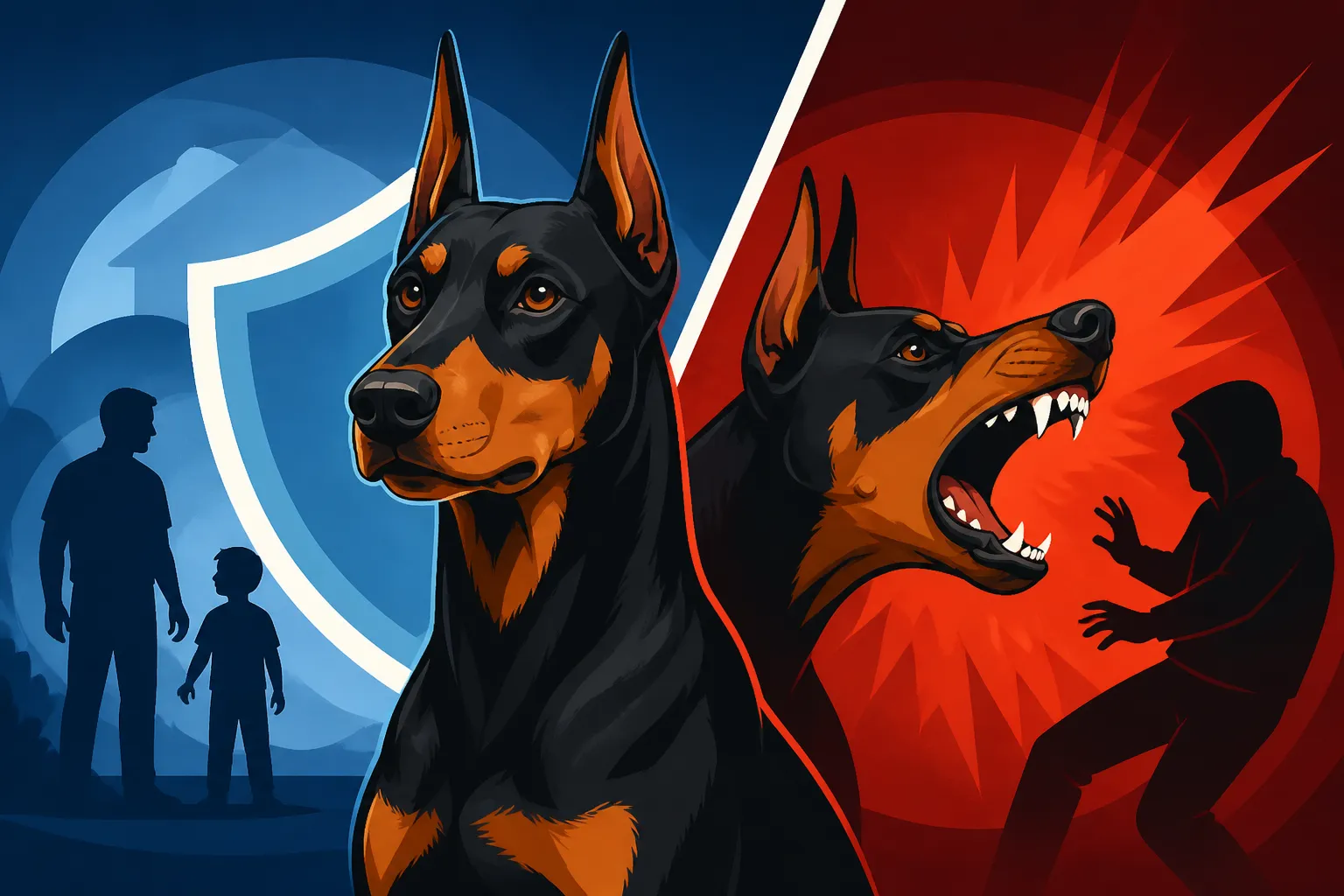
Doberman Guarding Instinct and Where It Tips Over
Oh, the Doberman. If you’ve ever lived with one, you know that incredible, unwavering loyalty that melts your heart. But sometimes, that deep-seated instinct to protect their loved ones and territory can feel like it’s tipping over into something more challenging, leaving you wondering if your vigilant protector is becoming a bit too much. This guide is here to help you navigate the powerful guarding instincts inherent in the Doberman breed, understand when they're healthy and when they're veering into problematic territory, and provide actionable strategies to manage and redirect these behaviors for a harmonious home.
Understanding the Doberman's Natural Guarding Instincts
It's truly fascinating, isn't it? Our Dobermans, with their sleek coats and piercing gaze, carry a deep history within their very being. Understanding where their guarding instincts come from is the first step to truly appreciating and managing them. They aren't just "being difficult" when they seem overly alert; they're often acting on centuries of carefully curated purpose.
A Legacy of Protection: Where It Comes From
Imagine a world without streetlights, where a tax collector named Karl Dobermann needed a steadfast, fearless companion to protect him on his rounds. This isn't just a romantic story; it's the very foundation of our breed. Dobermann himself, working in the late 19th century, specifically sought to create a dog that was intelligent, powerful, and utterly devoted to its owner, with an unparalleled guarding aptitude. He combined various breeds, each contributing to the Doberman's ultimate purpose: an intimidating presence and an unwavering protective drive.
This historical context explains why your Doberman isn't just a friendly pet; they were quite literally bred to be guardians. That natural alertness to unfamiliar sounds, the way they stiffen and watch an approaching stranger, isn't a flaw – it's a feature. It's that genetic coding kicking in, reminding them of their original job. They often perceive threats before you even do, picking up on subtle cues that we humans might miss.
For instance, think about the mail carrier. To you, it's just another person delivering letters. To your Doberman, it might be an unknown individual approaching the perimeter, perhaps even with unusual body language or sounds (like a rattling mail slot). Their instinct is to observe, assess, and, if necessary, deter. A healthy guarding instinct means they're aware, maybe give a low growl or a couple of barks, then look to you for guidance, rather than escalating into a frenzy. They're telling you, "Hey, something's happening. I've got this, but what do you want me to do?"
The "Velcro Dog" Phenomenon and Its Connection to Guarding
If you own a Doberman, you know exactly what I mean by "Velcro dog." They follow you from room to room, often settling on your feet or leaning against your legs. Personal space? What's that? This intense bond, while incredibly endearing, is deeply intertwined with their guarding instincts. It’s not just about affection; it’s about proximity for protection.
Your Doberman sees you as the center of their world, their pack leader, and their most precious resource. Their constant presence isn't just a desire to be near you; it's a strategic positioning to ensure your safety. If you're always within their sight, they can more effectively monitor for threats that might affect you. They want to be ready to act, to step in, should the need arise.
This unwavering closeness means they are hyper-aware of your movements, your emotional state, and any changes in your environment that might impact you. When you're their whole world, protecting you becomes their primary mission. This makes them exceptional personal guardians, but it also means that if they feel you are threatened or uncomfortable, their guarding instinct will kick in quickly and powerfully. They're not just guarding the house; they're guarding you. Imagine you're walking in a park, and someone approaches you a little too quickly. Your Doberman might subtly shift, placing themselves between you and the stranger, giving a low, rumbling warning. This isn't aggression; it's a profound, instinctual desire to shield their beloved person.
Recognizing Natural Alertness vs. Excessive Reactivity
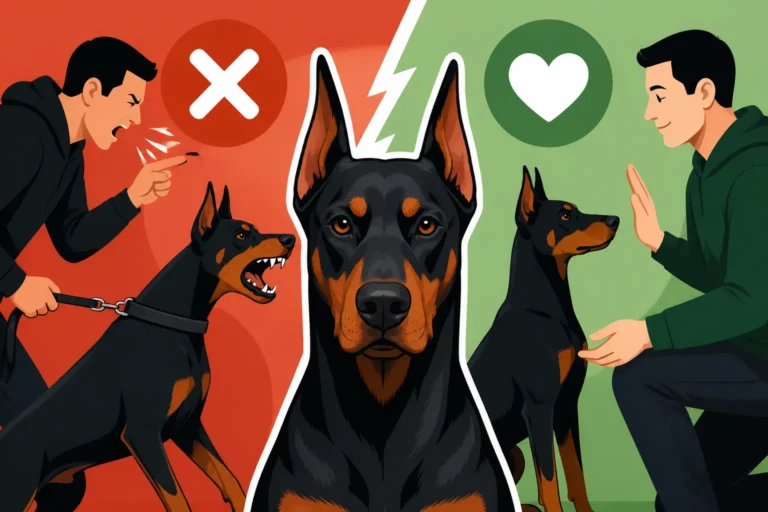
So, how do you tell the difference between a Doberman that's simply doing its job and one that's gone a bit overboard? A naturally alert Doberman will observe its surroundings with keen interest. Its ears might perk up, its tail might be held in a neutral or slightly raised position, and its body language will be focused but not tense or aggressive. They might let out a single, deep bark to signal an arrival, then quiet down, looking to you for direction. This is a dog communicating information to you, seeking your lead.
Excessive reactivity, on the other hand, is a different beast entirely. This is when the barking becomes incessant, shrill, or frantic. The dog might lunge, snarl, or even snap at perceived threats without clear provocation. Their body language will often be stiff, hackles raised, and they may seem unable to calm down even after the "threat" has passed. This is a Doberman operating in a state of high anxiety or overstimulation, not calm vigilance. Consider the difference between your Doberman giving a soft "woof" when a new car pulls into the driveway, then quietly watching it park (alertness), versus them launching themselves at the window, barking uncontrollably, drooling, and scratching the glass every time a leaf blows past (reactivity). The latter indicates a dog that is overwhelmed and unable to process the stimulus appropriately, often stemming from fear or a lack of self-control.
The Line Between Vigilance and Overprotection
It's a fine line, isn't it? The very qualities we adore in a Doberman—their courage, their protectiveness, their devotion—can, without careful guidance, tip into behaviors that are not only inconvenient but potentially dangerous. Understanding where that line is, and recognizing the signs, is crucial for responsible ownership.
When Guarding Becomes Problematic: Signs to Watch For
Problematic guarding isn't just annoying; it can disrupt your daily life and even put people at risk. What does it look like? It's when your Doberman decides for you who is allowed near you, your family, or your home. This might manifest as excessive barking or lunging at visitors, even those who are known and welcomed. They might growl or snap at a repair person simply walking through your house, or display aggressive body language towards children who get too close to "their" person (you!).
The key differentiator here is appropriateness and control. A Doberman acting as a guard dog in a dangerous situation is one thing; a pet Doberman preventing your friends from entering your living room is another. These behaviors indicate that the dog is making executive decisions about protection without your input, or that they are operating from a place of fear or over-arousal. For example, if your Doberman constantly positions itself between you and a guest on the couch, or growls if someone reaches for you while you're sitting, that’s a clear sign of overprotection. They are claiming you as a resource and dictating who can interact with you, which is a significant boundary issue that needs immediate attention.
Resource Guarding: A Common Pitfall
Beyond guarding territory or people, Dobermans can also develop resource guarding behaviors. This is when they become protective of specific items – their food bowl, a favorite toy, a cozy bed, or even a particular spot on the couch. While it’s a natural instinct for many dogs, in a powerful breed like a Doberman, it can escalate quickly and pose a real risk.
Resource guarding might start subtly: a quick glare when another pet or person approaches their chew toy. But it can rapidly progress to growling, stiffening, air snapping, or even a bite if the perceived threat doesn't retreat. It's often rooted in a dog's deep-seated fear of losing something valuable. If you have multiple pets, you might notice your Doberman becoming tense or aggressive during mealtimes, standing over their bowl and refusing to let other dogs near. Or perhaps, when your child reaches for a toy that the Doberman is currently "owning," the dog responds with a low rumble or a sharp stare. These are critical moments to address, as an unmanaged resource guarder can lead to household tension and potentially serious altercations.
Fear-Based Aggression Masking as Guarding
Sometimes, what looks like guarding or aggression is actually rooted in fear. A fearful Doberman might lash out because it feels trapped, overwhelmed, or threatened, rather than intentionally trying to guard. This can be particularly confusing for owners because the outward display might seem aggressive, but the underlying emotion is quite different.
Look for subtle signs of fear: a tucked tail, ears pulled back, lip licking, yawning (out of context), a "whale eye" (where the whites of the eyes are visible), trembling, or trying to retreat. If these signs precede a growl or snap, your Doberman is likely reacting out of fear. For example, a Doberman might snap at a stranger who quickly reaches out to pet its head, not because it's guarding you, but because it's afraid of the sudden, intrusive gesture. Or, if a child cornered your Doberman near its bed, the dog might growl or even nip to create space, not out of malice, but because it feels its personal safety is compromised. It’s crucial to distinguish this from true confidence-based guarding, as the approach to management and training will be vastly different. Ignoring these fear signals can lead to a dog that feels it has no other option but to use aggression to cope.
Common Triggers for Over-the-Top Guarding Behavior
Understanding why your Doberman might be pushing past healthy vigilance into overprotection is just as important as recognizing the behavior itself. Often, these triggers are not inherent flaws in the dog, but rather gaps in their upbringing or current environment.
Lack of Early Socialization and Exposure
This is probably one of the biggest culprits. The period between 8 and 16 weeks is absolutely critical for a Doberman puppy's development. During this time, they are like little sponges, soaking up every experience and forming associations that will last a lifetime. If a Doberman puppy isn't properly exposed to a wide variety of people (different ages, genders, ethnicities, with hats, glasses, beards), other friendly dogs, different environments (busy streets, quiet parks, vet clinics), and various sounds, they can grow up to be fearful or uncertain.
A Doberman who hasn't had these positive, controlled exposures might perceive anything new or unfamiliar as a threat. This uncertainty can quickly morph into a defensive, guarding posture. They might feel that they have to protect you from the "unknowns" of the world because they haven't learned that most new things are actually benign. Imagine a Doberman puppy raised in a quiet home, rarely meeting anyone outside the immediate family. When it's older, a simple walk in a bustling downtown area, filled with strangers and novel sounds, might overwhelm it, leading to lunging and barking at passersby – not because it's inherently aggressive, but because it's scared and has no coping mechanisms. For more on this vital stage, check out The Sixteen Weeks That Set a Doberman Up and Exposing a Doberman Puppy to Strangers.
Inconsistent Training and Leadership
Dobermans are highly intelligent and thrive on consistency and clear communication. They need to know who's in charge, and they need to trust that their human leader will make good decisions and keep everyone safe. If there's inconsistency in training—if rules change, or if certain behaviors are sometimes allowed and sometimes punished—a Doberman can become confused. This confusion can lead them to believe they need to step into the leadership role, especially regarding protection.
If you inadvertently reinforce guarding behaviors, even with subtle cues, your Doberman will learn that it's their job. For example, if your Doberman barks at the doorbell and you immediately rush to the door, or if you comfort them when they growl at a stranger, you might be sending the message that their guarding is effective and appreciated. A Doberman needs a confident, calm leader who can clearly communicate expectations. Without this, they might feel the burden of protecting the "pack" falls squarely on their shoulders, leading to an overprotective mindset. This is especially true given how clever they are, as explored in Why a Clever Doberman Is Harder to Train.
Environmental Factors and Stressors
A Doberman's environment plays a massive role in shaping its behavior. A constantly chaotic or high-stress home can exacerbate any latent guarding instincts. If your Doberman doesn't have a safe, quiet retreat, or if they're constantly exposed to loud noises, frequent visitors, or perceived threats, their stress levels will remain high. Chronic stress makes any dog more prone to reactivity and over-guarding.
Consider a Doberman living in a small apartment with thin walls in a busy complex. They might be constantly bombarded with sounds from neighbors, foot traffic, and outside noises. Without a way to filter or escape these stimuli, they might develop an extreme sensitivity to every sound and movement, feeling perpetually on guard. A Doberman needs a predictable environment where they can relax and feel secure, knowing that you, their leader, are handling the threats. If they are always feeling on edge due to their surroundings, their protective drives will be constantly engaged, making it very difficult for them to relax and behave appropriately.
Strategies for Managing and Redirecting Guarding Instincts
The good news is that Doberman guarding instincts, even when they've tipped into problematic territory, can be managed and redirected. It takes patience, consistency, and a deep understanding of your dog, but it is absolutely achievable.
Building a Strong Foundation Through Socialization
It cannot be overstated: ongoing, positive socialization is the cornerstone of a well-adjusted Doberman. This isn't just about puppy classes (though those are great!); it's about making sure your Doberman continues to have positive, controlled interactions with a wide variety of people, places, and other animals throughout their life. The goal is to teach them that the world is a safe and interesting place, not a source of constant threats.
Think about structured "field trips" to different locations. Go to a pet-friendly hardware store where they can meet calm strangers, or sit on a bench in a park (at a distance) and simply observe people and dogs passing by. Always keep these experiences positive, using high-value treats and praise to reward calm behavior. If your Doberman shows any signs of stress or fear, move further away from the trigger until they are comfortable again. Never force an interaction, and always advocate for your dog if someone tries to rush them. Remember, the goal is quality over quantity. Even an adult Doberman can benefit from deliberate, positive exposure to new things to help them build confidence and trust in your judgment.
Establishing Clear Boundaries and Consistent Training
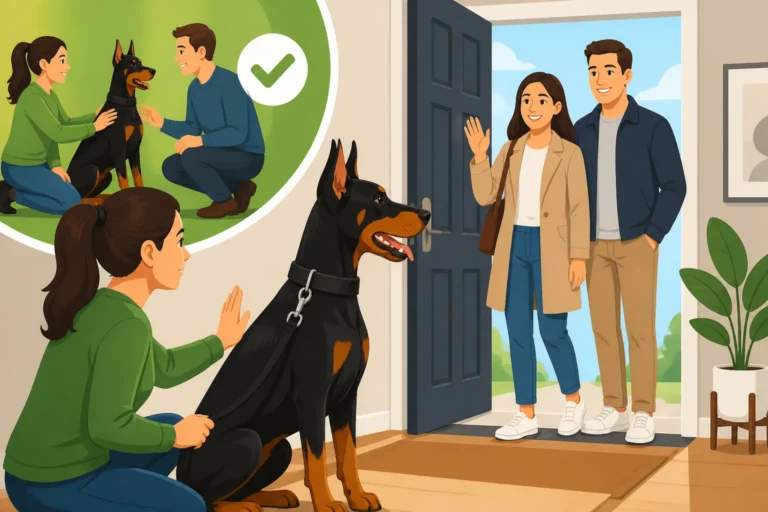
Dobermans thrive on structure. They need to understand what their job is (being a beloved family companion) and what it isn't (being the primary protector of the household). This starts with clear boundaries and consistent training. One of the most effective tools is the "place" command. Teach your Doberman to go to a designated mat or bed when guests arrive, or when there's commotion at the door. Reward them generously for staying there calmly, even if it's just for short periods initially.
This gives your Doberman a job during potentially stressful situations – to "guard their place" – which satisfies their intrinsic need to be useful, but in a controlled and appropriate way. You're communicating that you are handling the situation, and they can relax and trust your leadership. Companies like BAXTER & Bella offer comprehensive online training programs that are excellent for establishing these kinds of foundational behaviors, providing step-by-step guidance for owners. Consistency is key: everyone in the household must enforce the same rules every single time. If one person allows the Doberman to rush the door and another makes them go to their place, your dog will become confused and more likely to revert to old habits. For more on managing greetings, consider Teaching a Doberman to Go to a Mat for Guests. Also, remember that a mentally stimulated Doberman is often a calmer Doberman; explore ideas in Keeping a Doberman Mentally Tired.
Desensitization and Counter-Conditioning
These are powerful techniques for changing your Doberman's emotional response to triggers that cause over-guarding. Desensitization means gradually exposing your dog to the trigger at such a low intensity that they don't react, slowly increasing the intensity over time. Counter-conditioning means changing their feeling about the trigger from negative to positive.
Let's say your Doberman barks hysterically at anyone walking past the front window. You'd start by finding a distance from the window where they notice people but don't react. Every time someone walks by, you immediately give them a high-value treat. The moment the person passes, the treats stop. The dog begins to associate "person walking by window" with "yummy treat" instead of "threat." Over days or weeks, you slowly decrease the distance from the window, always staying below their reaction threshold. If they react, you've gone too fast; back up and go slower. This process requires immense patience and keen observation of your dog's body language. It's about changing their emotional state, not just suppressing a behavior. This is a journey, not a quick fix, but it's incredibly effective at retraining their underlying instincts.
Professional Help and Advanced Training Considerations
Sometimes, despite our best efforts, a Doberman's guarding instincts can become overwhelming. This is where professional help becomes not just advisable, but essential. Don't feel like a failure if you need to call in an expert; it's a sign of responsible ownership.
When to Seek Expert Intervention
You should absolutely seek expert intervention if your Doberman's guarding behavior escalates to aggression – if they're snapping, biting, or showing consistent, intense displays of hostility towards people or other animals. If you feel unsafe in your own home, or if you're constantly stressed about how your dog will react, it's time to call in the cavalry. Similarly, if your attempts at training and management aren't making a noticeable difference, or if you're feeling overwhelmed and unsure how to proceed, a professional can provide invaluable guidance.
Look for a certified professional dog trainer (CPDT-KA or KPA-CTP) or, for more severe cases, a veterinary behaviorist (DACVB). These professionals have specialized knowledge and experience, particularly with guardian breeds like Dobermans. They can assess the root cause of the behavior (is it fear, genuine aggression, learned behavior?) and develop a tailored behavior modification plan. Trying to "fix" severe guarding issues on your own can be risky, potentially making the problem worse or even putting yourself or others in danger. An expert can guide you safely and effectively. For help finding the right person, see Finding a Trainer Who Has Worked With Dobermans.
Avoiding Guard Training for Pet Dobermans
This is a critical point that often gets misunderstood. While Dobermans have an innate guarding instinct, engaging in formal "guard training" or "bite work" (like Schutzhund, IPO, or IGP for protection phases) is generally not recommended for the average pet Doberman. These specialized sports are designed for dogs with specific temperaments and drives, and they require highly skilled handlers and trainers.
For a pet Doberman, formal protection training can actually exacerbate their natural instincts, turning a well-meaning but overzealous guardian into a truly dangerous dog that cannot differentiate between a real threat and an innocent interaction. It can teach them to be suspicious and aggressive on cue, which is simply not compatible with a family pet's role. A Doberman is already naturally protective; you don't need to "train" them to be so. Instead, focus on channeling their intelligence and drive into constructive outlets like obedience, agility, or nose work. As highlighted in Why Bite Work Is Wrong for a Pet Doberman, the risks far outweigh any perceived benefits for a companion dog.
Behavior Modification Programs and Tools
Working with a professional, or even on your own with solid resources, will involve behavior modification. This typically centers around positive reinforcement, desensitization, and counter-conditioning. Tools like secure harnesses (many great options are available on Amazon, check reviews for Doberman-specific fits) can give you better control on walks, helping to manage reactivity. For example, a front-clip harness can help redirect a strong-pulling Doberman, making it easier to manage their attention when a trigger appears. Harnesses That Hold a Strong Doberman offers more insight.
Management strategies are also key: using crates (like those found on Amazon) to provide a safe space, baby gates to control access to certain areas, or even muzzles (properly fitted and conditioned) for safety during training or when your Doberman is around triggers they struggle with. The goal is always to set your Doberman up for success, minimizing opportunities for problematic guarding behavior while you're actively working to change their underlying responses. Never rely on punishment-based methods, as these can increase fear and anxiety, often worsening guarding behaviors in the long run.
Living Harmoniously with a Doberman's Protective Nature
The ultimate goal isn't to erase your Doberman's guarding instincts – that's impossible and undesirable. It's about channeling them, managing them, and ensuring they operate within acceptable boundaries, allowing you to enjoy all the incredible loyalty and devotion this breed offers.
Creating a Secure and Predictable Environment
Dobermans thrive on routine and predictability. A secure, calm home environment helps reduce their anxiety and, consequently, their need to be constantly on guard. Ensure your Doberman has a designated "safe space" – a crate, a comfortable bed in a quiet corner – where they can retreat when they feel overwhelmed. This is their sanctuary, and it should be respected by everyone in the household.
Managing visitor interactions is also crucial. Instead of allowing your Doberman to rush the door, use your "place" command. Have a plan for deliveries: perhaps have the Doberman in another room or on a leash with you, rewarding calm behavior as the delivery person approaches. Consistency here helps your Doberman learn that you've got things handled, and they don't need to be the designated greeter or gatekeeper. Remember, a Doberman that feels constantly on edge about what's coming next is more likely to exhibit problematic guarding behaviors. Giving them a predictable structure helps them relax into their role as a cherished family member. This is especially important if you have a Doberman that struggles with being alone, as discussed in A Doberman That Cannot Cope When You Go Out.
The Role of Exercise and Mental Stimulation
A tired Doberman is often a happy, well-behaved Doberman. These dogs were bred for endurance and intelligence, and they need significant physical and mental exercise to truly thrive. An under-exercised or under-stimulated Doberman will have excess energy and anxiety, which can often manifest as heightened guarding behaviors, simply because they're bored, restless, and looking for a "job."
Beyond brisk walks and runs, engage your Doberman's brilliant mind. Puzzle toys (many interactive options are available on Amazon), obedience training, nose work, or even just teaching new tricks can provide valuable mental enrichment. Regular training sessions, even short ones, help reinforce your bond and your leadership. A Doberman that is physically and mentally satisfied is less likely to feel the need to invent its own "jobs" – like over-guarding. If you're looking for ideas to keep their clever minds busy, Puzzle Work That Actually Tires a Doberman has some excellent suggestions.
Advocating for Your Doberman in Public Spaces
Unfortunately, Dobermans still carry a reputation that can make public outings challenging. It’s vital to be your Doberman's advocate and educator. Manage interactions proactively. If you see someone approaching who looks hesitant or fearful, simply state, "Please give us some space, we're in training," or "He's friendly, but he prefers not to be petted by strangers." This helps manage public perception and prevents awkward or potentially reactive situations for your dog.
Always walk your Doberman on a secure leash and harness, ensuring you have control, especially in busy areas. Continue to use positive reinforcement when they encounter new people or dogs calmly. By being a responsible and proactive owner, you not only set your Doberman up for success but also help to change the narrative around this incredible breed. Your calm, confident leadership in public will help your Doberman feel secure and less compelled to take on the guardian role themselves. You'll find more tips on navigating public outings in Handling a Doberman in Public Without Alarming People.
| Behavior Trait | Healthy Vigilance (Desirable) | Problematic Over-Guarding (Needs Intervention) |
|---|---|---|
| Response to Stranger | Alert, watchful, maybe a bark, then looks to owner for cue. | Incessant barking, lunging, growling, snapping without clear threat. |
| Body Language | Focused, ears up, tail neutral/slightly raised, relaxed muscles. | Stiff, hackles raised, tucked tail (fear-based), whale eye, tense. |
| Resource Guarding | Tolerates others near food/toys, may move away if approached. | Growls, snarls, snaps if anyone approaches food, toys, or favored spot. |
| Owner Interaction | Follows closely, leans, enjoys affection. | Prevents others from approaching owner, dictates who can interact. |
| Recovery Time | Calms quickly once trigger passes or owner intervenes. | Stays agitated, takes a long time to settle after a trigger. |
| Decision-Making | Waits for owner's cues, defers to owner's judgment. | Acts independently to "protect," makes own decisions about threats. |
Ultimately, living with a Doberman is an incredibly rewarding experience, largely because of their unparalleled loyalty and protective nature. It’s a privilege to have such a devoted companion. By understanding their history, recognizing the difference between healthy vigilance and problematic over-guarding, and consistently applying positive training methods, you can guide your Doberman to be the confident, well-adjusted family member they are meant to be. This journey of understanding and partnership will solidify your bond and ensure many happy, harmonious years together.
Disclaimer
This article is for general informational purposes only and does not constitute professional advice. Laws, prices and regulations vary by location and change over time. Consult a qualified professional for guidance on your specific situation.