Correcting a Doberman Without Breaking It
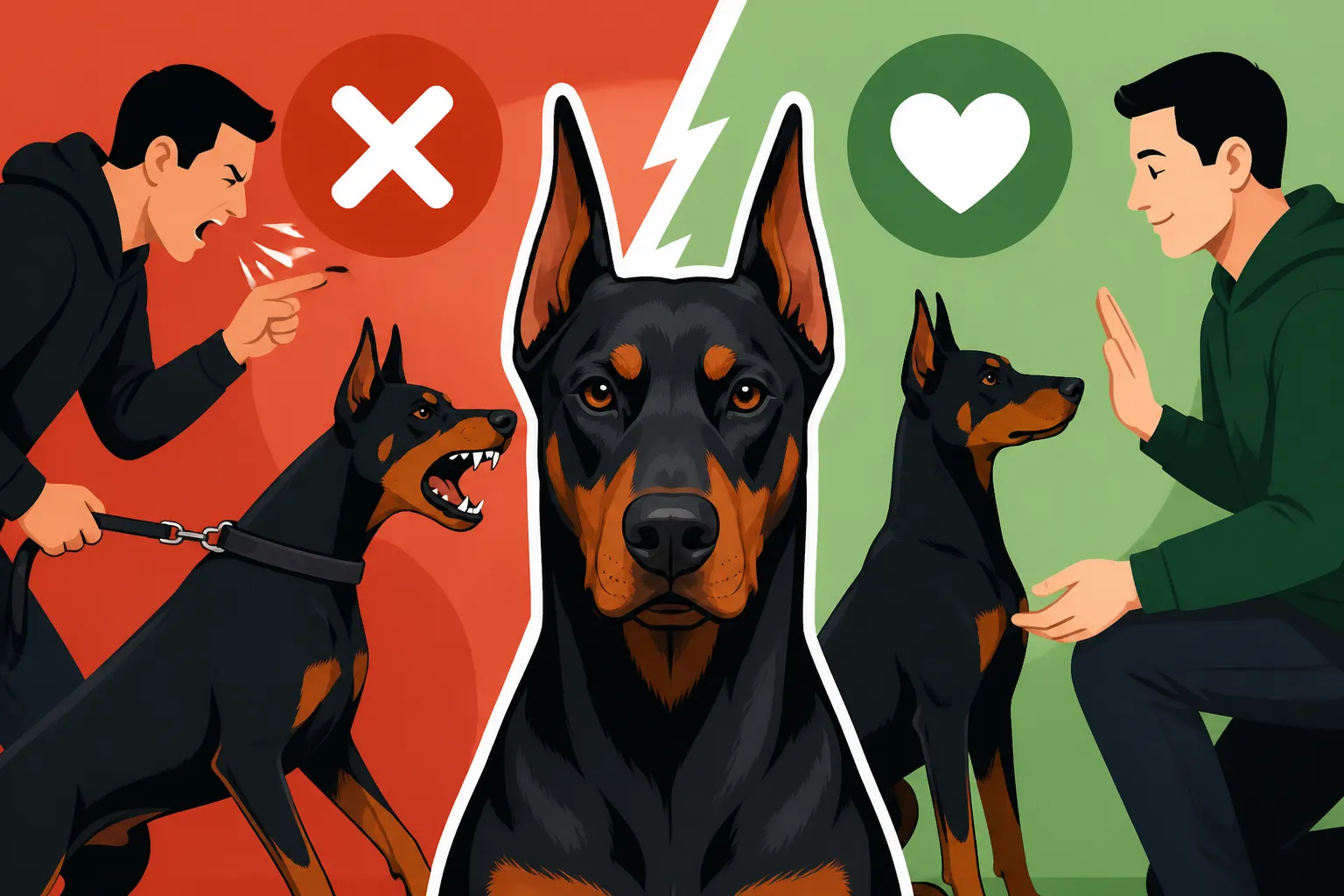
One of the most heartbreaking things you can encounter as a Doberman owner is realizing that your attempts to correct your dog's behavior are actually causing more harm than good. These intelligent, sensitive dogs are often misunderstood, and many well-intentioned owners unknowingly apply correction methods that, instead of teaching, can "break" their Doberman's spirit, leading to fear, anxiety, and a loss of their naturally confident demeanor. This guide is here to walk you through how to guide your Doberman with a firm yet gentle hand, ensuring you build a strong, trusting relationship without ever diminishing their incredible spirit.
Understanding the Doberman Temperament: Why "Breaking" is a Real Risk
Dobermans are truly magnificent dogs, but their powerful presence can sometimes overshadow their inherently sensitive nature. They aren't like some other breeds that might bounce back from a harsh correction with a shake and a shrug. A Doberman takes things deeply to heart, and this is crucial to understand when we talk about correction.
The Doberman's Sensitive Nature and Deep Bond
If you live with a Doberman, you know they are often called "Velcro dogs" for a reason. They bond incredibly closely with their families, often forming a particularly strong attachment to one primary handler. This deep connection means they are highly attuned to your emotions, your tone of voice, and even your body language. When a Doberman experiences a harsh correction, whether it's a loud yell, a strong physical reprimand, or even consistent frustration from their beloved human, it can be genuinely distressing for them. It’s not just about the discomfort of the correction itself; it’s about the perceived disapproval from the person they trust most. Imagine your closest friend suddenly yelling at you in anger for something you didn't fully understand – it would sting, wouldn't it? For a Doberman, this can be even more impactful, leading to confusion, fear, and a breakdown of that precious bond. We want our Dobermans to feel safe and confident, not anxious and worried about our next reaction.
They thrive on clear communication and consistency within the framework of a loving relationship. When that framework is shaken by unpredictable or overly harsh corrections, their natural inclination to please can be replaced by a desire to simply avoid punishment, which is a very different and far less desirable motivational state. This is especially true for A Doberman That Shadows One Family Member, where the bond is exceptionally strong and vulnerability to perceived rejection is higher.
How a Doberman Learns: Intelligence and Responsiveness
Dobermans consistently rank among the most intelligent dog breeds, capable of learning complex commands and routines with astonishing speed. This high intelligence means they are constantly observing, processing, and making connections. They don't just react; they think. This is a double-edged sword when it comes to training. On one hand, it means they can pick up new behaviors quickly when taught correctly. On the other hand, it also means they can just as quickly learn to avoid situations or actions that lead to unpleasant outcomes, even if those outcomes weren't intended to be harsh.
Because they are so smart, they can learn cues in just a few repetitions, as highlighted in Why a Doberman Learns a Cue in Three Repetitions. However, this intelligence also means they can interpret inconsistent or harsh corrections as confusing and unfair, rather than as teaching moments. They might shut down, refusing to offer any behavior for fear of doing the wrong thing. Or worse, they might become sneaky, performing unwanted behaviors when you're not around because they haven't learned why the behavior is undesirable, only that it leads to punishment when you are present. Our goal is to teach them what to do, not just what not to do, and intelligence plays a huge role in their capacity for positive learning.
The Pitfalls of Harsh Corrections: Beyond Physical Pain
When we talk about "breaking" a Doberman, it's often more about psychological damage than physical injury. While physical punishment is, of course, absolutely out of the question and harmful, even overly harsh verbal corrections or constant reprimands can have detrimental long-term effects. A Doberman who is frequently corrected harshly can become fearful, anxious, and lose confidence. This might manifest as cowering, submissive urination, or an unwillingness to engage in training. They might start to anticipate punishment, becoming tense and stressed in your presence.
A common issue we see is Why Yelling Shuts a Doberman Down. For a Doberman, a raised voice isn't just noise; it’s a direct assault on their sense of security with you. This isn't just anecdotal; it’s widely observed by trainers. Moreover, harsh corrections can suppress behaviors rather than truly changing them. A dog might stop jumping on guests because they fear your reaction, not because they’ve learned a polite alternative like "sit." This suppressed behavior can then resurface later, or even manifest as aggression or reactivity, as the underlying emotional state (fear, frustration) hasn't been addressed. It creates a dog who is constantly walking on eggshells, rather than a confident, happy companion.
The Foundation of Trust: Building a Relationship, Not Just Obedience
At the heart of successful Doberman training lies a solid foundation of trust and mutual respect. Without this, any "correction" will be viewed as an arbitrary punishment rather than guidance from a trusted leader. Building this relationship is a continuous process that begins the moment your Doberman comes into your life.
Positive Reinforcement: The Cornerstone of Doberman Training
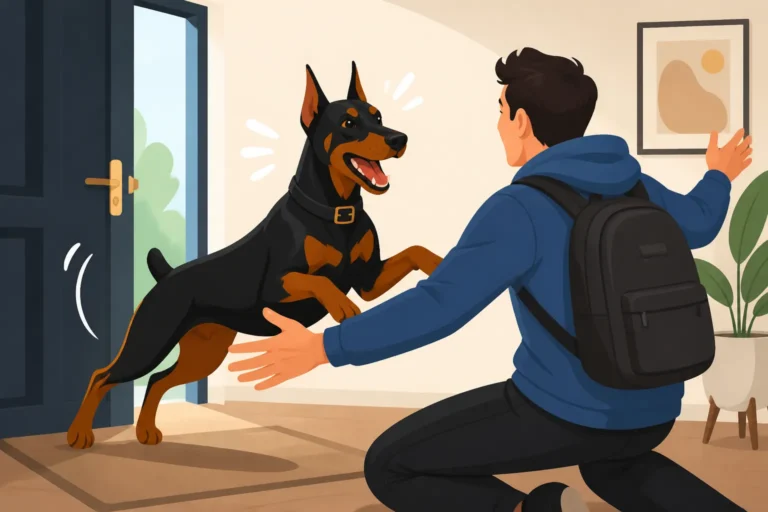
For a Doberman, positive reinforcement isn't just a training method; it's a language of love and understanding. These dogs thrive on praise, high-value treats, and engaging play with their people. Instead of focusing on punishing unwanted behaviors, positive reinforcement centers on rewarding desirable ones. For example, if your Doberman sits calmly instead of jumping when a guest arrives, you immediately reward that calm sit. This teaches them that calm greetings get them what they want – your attention, a treat, or a favorite toy.
Think about it: wouldn't you rather work hard for a bonus than simply try to avoid getting fired? Dobermans are the same. They want to work with you, and showing them that good choices lead to good things makes them enthusiastic learners. This approach builds confidence, fosters a joyful attitude towards training, and strengthens your bond. Brands like BAXTER & Bella, known for their online puppy training programs, heavily emphasize positive reinforcement, offering comprehensive guidance for owners to build these crucial foundations right from the start. They understand that a happy, motivated Doberman is a Doberman that wants to learn and cooperate.
Establishing Clear Communication and Boundaries
While positive reinforcement is key, it doesn't mean you let your Doberman run wild. Clear boundaries and consistent communication are vital. Your Doberman needs to understand what is expected of them in every situation. This comes from teaching specific cues for desired behaviors and then consistently reinforcing those cues. For instance, teaching a solid "stay" or "place" command is invaluable. When the doorbell rings, instead of letting your Doberman rush the door, you can calmly tell them "place" and reward them when they go to their mat.
This isn't about being bossy; it's about being a clear, fair leader. Dobermans respect authority that is earned through clear, consistent, and kind guidance. When you establish these boundaries early and reinforce them reliably, your Doberman learns to trust your judgment and understands their role within the household. It removes the guesswork for them, which reduces anxiety and creates a more harmonious home environment. This applies whether you're teaching basic manners or addressing more complex issues like A Doberman That Pushes Between People – clear communication about personal space is paramount.
Consistency and Predictability: Your Doberman's World
Dobermans thrive on routine and predictability. They are highly intelligent, and they quickly learn patterns. Inconsistent training or a lack of clear rules can be incredibly confusing and frustrating for them, sometimes leading to behaviors we interpret as stubbornness, but which are actually just the dog trying to figure out what you want. If "sit" means one thing today and something slightly different tomorrow, or if one family member allows a behavior that another forbids, your Doberman will struggle to understand.
Every member of the household needs to be on the same page regarding rules and training cues. This might require a family meeting or two! For instance, if jumping on the couch is sometimes allowed but sometimes not, your Doberman won't learn not to jump. They'll just learn to try their luck, or to only obey when a certain person is present. Consistency builds confidence in your Doberman because they know what to expect from you and what is expected of them. This predictability reduces stress and makes learning much more efficient, contributing to a calm and well-adjusted dog. This consistency even extends to how you teach them to relax, as seen in advice for Teaching a Doberman to Settle in Another Room.
Effective Correction Strategies: Gentle Yet Firm Guidance
When your Doberman makes a less-than-ideal choice, true "correction" isn't about punishment. It's about providing information: "That's not what I want; here's what I do want." This approach relies on preventing rehearsals of unwanted behaviors and clearly communicating alternatives.
Interruption and Redirection: Stopping Unwanted Behavior in Its Tracks
This is perhaps the most powerful tool in your gentle correction arsenal. When your Doberman starts to engage in an unwanted behavior, your first instinct should be to interrupt it before it gains momentum, and then immediately redirect them to a desirable, alternative behavior. For example, if your Doberman puppy starts to mouth your hand, instead of yelping or pulling away sharply (which can sometimes be perceived as play), you might calmly say "nope" or "leave it," then immediately present them with an appropriate chew toy. As soon as they take the toy, you praise them lavishly.
The interruption should be neutral and clear, not alarming. A sharp "ah-ah!" or a clap of your hands can often be enough. The key is the redirection. Don't just stop the bad behavior; give them something good to do instead. This proactive approach teaches them what is acceptable and provides an outlet for their natural drives. It helps to prevent the frustration that can arise from constantly being told "no" without being shown a "yes." This method is particularly useful for behaviors like jumping up on people; a quick "off" followed by a "sit" and a reward for the sit works wonders.
Time-Outs and Withdrawing Attention: When Behavior Needs a Consequence
Sometimes, an unwanted behavior is motivated by a desire for attention. In these cases, withdrawing your attention can be a highly effective, non-punitive form of correction. This is where a "time-out" comes into play. It's not about putting your Doberman in a scary place; it's about removing them from the rewarding situation. For instance, if your Doberman is nipping at your clothes for attention, immediately stand up, turn your back, and calmly walk away for 10-20 seconds. Return only when they are calm. If the nipping resumes, repeat the process.
The "time-out" should be short, unemotional, and consistent. The goal is for your Doberman to connect their unwanted action with the immediate loss of something they value (your attention or access to a fun activity). It's crucial that this isn't done out of anger; it's a calm, logical consequence. For a Doberman who thrives on human interaction, the absence of your attention is a powerful motivator to change their behavior. This approach prevents you from inadvertently reinforcing unwanted behaviors with your frustration or attempts to physically deter them, which can sometimes be interpreted as a form of attention.
Using Environmental Management: Preventing Problems Before They Start
An often-overlooked but incredibly powerful correction strategy is environmental management. Simply put, this means arranging your Doberman's environment to prevent them from practicing unwanted behaviors in the first place. This isn't just about training; it's about smart living with a Doberman. If your Doberman is prone to counter surfing, don't leave tempting food on the counter. If they chew on furniture, keep them in a safe, dog-proofed area or crate when unsupervised, especially a growing Doberman puppy who is still exploring the world with their mouth.
| Behavior Challenge | Environmental Management Strategy |
|---|---|
| Counter Surfing | Keep counters clear of food and tempting items; use baby gates. |
| Chewing Furniture | Crate or supervise in a dog-proofed room; provide appropriate chew toys. |
| Jumping on Guests | Leash Doberman when guests arrive; use a baby gate or "place" command. |
| Digging in Yard | Supervise outdoor time; create a designated digging area. |
| Stealing Items | Store valuables out of reach; teach "leave it" and "drop it". |
Environmental management sets your Doberman up for success. It removes the opportunity for them to "self-reinforce" unwanted behaviors (e.g., getting a tasty snack from the counter). This means less need for direct correction from you, which reduces potential conflict and keeps your relationship positive. As your Doberman learns appropriate behaviors through positive reinforcement, you can gradually loosen some of the management strategies. For a clever dog like a Doberman, preventing them from learning bad habits is far easier than trying to un-learn them later.
Tools for Thoughtful Correction: Beyond the Leash Pop
When we talk about tools in Doberman training, it's not about devices designed for punishment. Instead, these are aids that help us communicate more clearly, manage physical strength safely, and enhance our positive reinforcement efforts. They support thoughtful correction by allowing for precise feedback without harshness.
Harnesses and Head Halters: Gentle Control for Strong Dogs
A Doberman is a powerful dog, and trying to control an eighty-pound Doberman with a flat collar alone, especially one that pulls, can lead to frustration for both of you and potentially harm their neck. This is where tools like front-clip harnesses or head halters become invaluable. A front-clip harness, such as those often found on Amazon, redirects the dog's forward momentum when they pull, gently turning them to the side instead of allowing them to drag you forward. This offers control without putting pressure on their throat.
Head halters, like a Gentle Leader, work similarly to a horse's halter, giving you control over the dog's head, and where the head goes, the body follows. They are fantastic for teaching loose-leash walking and can be a game-changer for a Doberman that lunges at other dogs or pulls excessively. While some Dobermans might initially object to a head halter, careful, positive introduction with treats and praise can help them accept it readily. These tools are about leverage and communication, not pain or force. They enable you to guide your Doberman physically in a way that is clear and gentle, preventing situations where you might feel the need for a harsh leash correction. For more on this, check out Harnesses That Hold a Strong Doberman.
Verbal Cues and Marker Training: Precision in Communication
Your voice is one of your most powerful training tools. Clear, consistent verbal cues are essential. A simple "no" or "leave it" spoken calmly but firmly can often be enough to interrupt an unwanted behavior. However, the true magic happens when you pair these with marker training. Marker training involves using a distinct, consistent sound (a clicker or a verbal marker like "yes!") to pinpoint the exact moment your Doberman performs the correct behavior, followed immediately by a reward.
For example, if you're teaching "leave it" for a dropped treat, the moment your Doberman averts their gaze from the treat, you click/say "yes!" and then reward them with an even better treat from your other hand. This precision helps your Doberman understand exactly what behavior earned the reward. It makes your feedback incredibly clear and reduces confusion, preventing the need for frustrating, ineffective corrections. Learning Marker Training a Doberman From Scratch can revolutionize how quickly and happily your Doberman learns. This method reinforces good choices rather than punishing bad ones, which is ideal for a sensitive breed.
The Role of Physical Touch: When and How to Use It
Physical touch in training should almost always be positive and reinforcing, not punitive. Patting, scratching, and gentle strokes are powerful ways to connect and reward your Doberman. However, there are times when a minimal, guiding physical touch can be part of a gentle correction strategy, especially when teaching new behaviors. For instance, a light touch on their rear to encourage a "sit" or gently guiding their nose away from something they shouldn't sniff can be effective.
The key is that the touch should be brief, gentle, and immediately followed by the opportunity to perform the desired behavior and receive a positive reward. It should never be harsh, painful, or prolonged. Avoid pushing, pulling roughly, or hitting. If your Doberman tenses up or tries to move away from your touch, it's a sign that your physical intervention is perceived as a threat or discomfort, and you need to reassess your approach. The goal is to facilitate, not to force. Always aim for your Doberman to choose the correct action with minimal physical prompting, eventually fading out the need for touch altogether.
Common Doberman Behavior Challenges and How to Address Them Gently
Dobermans, like all dogs, will present behavior challenges as they grow and learn about the world. The key is to address these challenges with understanding, patience, and gentle, effective strategies that reinforce good choices.
Nipping, Mouthing, and Jumping: Teaching Polite Greetings
These are classic puppy behaviors that, left unaddressed, can become problematic in an eighty-pound adult Doberman. Nipping and mouthing are natural ways for puppies to explore their world and interact with littermates. Jumping often stems from an excited desire for attention.
For nipping and mouthing, the "no mouth" rule is crucial. When your Doberman's teeth touch your skin, immediately make a sharp "ouch!" or "yip" sound, then withdraw your attention for a few seconds. If they persist, a short time-out (as discussed earlier) can be very effective. Immediately redirect them to an appropriate chew toy. Consistency is key here. For jumping, the principle is similar: ignore the jump, reward the four-on-the-floor. When your Doberman jumps, turn your back and don't make eye contact or speak. The moment their feet are on the ground, turn around, praise them warmly, and reward them. Repeat this with everyone who interacts with your dog. You can also proactively ask for a "sit" when greeting, rewarding generously for the polite posture. A Doberman who is learning Doberman Puppy Biting and Adolescent Mouthing needs constant, gentle guidance to understand boundaries.
Counter Surfing and Stealing: Managing Resourcefulness
Dobermans are smart, and their intelligence can sometimes lead to mischievous behaviors like counter surfing or "stealing" items they shouldn't have. They quickly learn that if something is within reach, it might be for them, especially if they've successfully snagged a forbidden snack or toy in the past.
The best defense against counter surfing is a good offense: environmental management. Keep your counters clear. Put away food, dirty dishes, and anything else tempting. If you can't keep something off the counter, consider using baby gates to block access to the kitchen when you're not supervising directly. When you are present, teach a solid "leave it" command. Practice this with progressively more tempting items, rewarding heavily when they comply. For stealing items, teach "drop it." This involves trading a less desirable item for a high-value treat. Over time, your Doberman learns that dropping an item for you leads to a reward, making them more likely to relinquish things willingly. This method replaces conflict with cooperation, which is far more beneficial for your Doberman's confidence and your relationship.
Excessive Barking or Demand Barking: Addressing the Root Cause
Dobermans are alert dogs by nature, and some barking is normal. However, excessive barking, especially demand barking (barking to get your attention or specific items), can be annoying and a sign of underlying issues. Yelling at a barking Doberman often just makes them bark more, as they interpret it as you joining in the "chorus."
The first step is to identify why your Doberman is barking. Are they bored? Anxious? Protecting their territory? Once you understand the root cause, you can address it appropriately. For boredom, increase mental and physical exercise. For demand barking, ignore it completely. This means no eye contact, no speaking, no touching, until the barking stops. The moment there is silence, even for a second, immediately reward with praise or the desired item. This teaches them that silence, not barking, gets results. If the barking is triggered by outside stimuli (like people walking past the window), manage the environment by closing blinds or using a privacy film. You can also teach a "quiet" cue, rewarding them for ceasing to bark on command. Consistency and patience are vital here, as barking can be a deeply ingrained habit.
When to Seek Professional Guidance: Recognizing Your Limits
As dedicated Doberman owners, we often want to handle everything ourselves. However, there are times when seeking professional guidance isn't a failure, but rather the smartest and most loving choice you can make for your Doberman. Recognizing when to call in an expert is crucial for complex or escalating behaviors.
Identifying Escalating or Dangerous Behaviors
While many common behavior challenges can be addressed with consistent positive training at home, certain behaviors warrant immediate professional attention. These include:
- Aggression: Any growling, snapping, lunging, or biting directed towards people or other animals. This is especially concerning in a powerful breed like a Doberman.
- Severe Anxiety or Fear: If your Doberman is exhibiting extreme fear (e.g., panic attacks, persistent trembling, phobias) or separation anxiety so severe that they are destructive or harming themselves when left alone.
- Sudden, Unexplained Changes in Behavior: A Doberman who suddenly becomes withdrawn, aggressive, fearful, or disoriented might be experiencing pain or a medical issue. Always rule out physical causes with your veterinarian first.
- Resource Guarding: If your Doberman guards food, toys, their bed, or even you, with growling or snapping.
- Uncontrollable Reactivity: While a Doberman can be dog-reactive, if it's becoming unmanageable despite your best efforts, professional help is needed. This is particularly relevant when dealing with A Doberman That Lunges at Passing Dogs.
These behaviors are not just inconvenient; they can be dangerous or indicative of significant underlying stress and require a qualified professional's assessment and intervention. Attempting to "correct" these with harsh methods can exacerbate the problem, making them more fearful or aggressive.
Finding a Doberman-Savvy Trainer or Behaviorist
Not all dog trainers are created equal, and finding the right professional is incredibly important, especially for a Doberman. You need someone who understands the breed's unique temperament, intelligence, and potential sensitivities. Look for:
- Positive Reinforcement Focus: Prioritize trainers who use modern, science-based, positive reinforcement methods. Avoid anyone who relies on force, intimidation, shock collars, prong collars (for corrections), or alpha-dominance theories. For more on this, consider Whether an E-Collar Belongs on a Doberman and Whether Anyone Should Put a Prong on a Doberman.
- Breed Experience: Ask if they have specific experience working with Dobermans or similar guardian breeds. They should understand their guarding instincts and sensitivity.
- Certifications and Education: Look for certifications from reputable organizations (e.g., CPDT-KA, KPA-CTP for trainers; DACVB for veterinary behaviorists).
- Client Testimonials and References: Ask for references or check online reviews. Speak to former clients if possible.
- Observation Policy: A good trainer will allow you to observe a class or a session without your dog before you commit.
- Veterinary Relationship: A certified veterinary behaviorist is a veterinarian with specialized training in behavior, often the best choice for severe aggression or anxiety, as they can prescribe medication if necessary.
Don't be afraid to interview several trainers to find the best fit for you and your Doberman. A good trainer will empower you to work with your dog, teaching you the skills and understanding needed. You want someone who aligns with the philosophy of building trust and confidence, not breaking it. Finding a Trainer Who Has Worked With Dobermans is an investment, but a worthwhile one.
The Importance of Ongoing Education and Support
Even with professional help, your journey with your Doberman is an ongoing learning process. Behavior is fluid and can change over time due to age, environment, or health issues. Stay curious, continue to learn, and seek support when needed. This might involve:
- Reading Books and Articles: Continue educating yourself on Doberman behavior, training techniques, and canine body language.
- Joining Doberman-Specific Online Communities: Many active online groups offer a wealth of shared experience and support. Just be mindful of the advice given and always cross-reference it with reputable sources.
- Attending Workshops or Seminars: Many trainers and behaviorists offer continuing education for owners.
- Regular Vet Check-ups: Ensure any behavioral changes aren't rooted in medical problems.
- Staying in Touch with Your Trainer/Behaviorist: Don't hesitate to schedule follow-up sessions if new challenges arise or if you need a refresher.
The relationship with your Doberman is a partnership. By committing to ongoing education and seeking support when necessary, you ensure you're always equipped to provide the best possible guidance and care for your beloved companion, reinforcing that bond of trust throughout their life.
Avoiding the "Broken" Dog: Signs of Stress and Fear
The ultimate goal of thoughtful correction is to guide your Doberman without ever making them feel "broken." A broken Doberman is one whose spirit has been crushed, whose confidence has eroded, and whose joy in interaction has been replaced by anxiety or fear. Recognizing the signs of stress and fear is paramount to ensure your training methods are truly effective and humane.
Subtle Indicators of Emotional Distress
Dobermans, like all dogs, communicate their emotional state through subtle body language. Learning to "read" your Doberman is essential to catching distress signals early, before they escalate. A "broken" dog often displays a consistent pattern of these behaviors:
- Lowered Body Posture: Cowering, hunching, or making themselves appear smaller.
- Tail Tucked: The tail is held low, often between the legs, indicating fear or submission.
- Avoidance or Retreat: Actively trying to get away from you, a situation, or a person.
- "Whale Eye": Showing the whites of their eyes, often accompanied by a stiff posture. This indicates extreme discomfort or stress. More on this can be found in Whether a Doberman Whale Eye Means Trouble.
- Yawning or Lip Licking: Often out of context (i.e., not tired or after eating), these can be stress signals.
- Repeated, Obsessive Grooming: Licking paws or other body parts excessively.
- Shaking or Trembling: Beyond cold or excitement.
- Excessive Drooling: More than normal for their activity level.
- Shut Down or Apathetic Behavior: A lack of engagement, no longer interested in things they once enjoyed, appearing "blank." This is a profoundly concerning sign in an intelligent, active breed.
- Freezing: Becoming completely still in response to a correction or stressful situation, as described in A Doberman That Freezes When Corrected.
If you observe these signs, particularly after a correction attempt, it's a clear signal that your method is not working as intended and is causing distress. It's time to pause, re-evaluate, and seek guidance.
The Long-Term Impact of Fear-Based Training
While fear-based or punitive training methods might appear to "work" in the short term by suppressing unwanted behaviors, the long-term consequences can be devastating for a Doberman. A dog trained through fear learns to avoid punishment rather than learning to make good choices. This distinction is critical.
A Doberman exposed to consistent harshness may develop:
- Learned Helplessness: A state where the dog gives up trying to influence its environment because its actions have repeatedly yielded no positive results or have led to unpredictable punishment. This is the definition of a "broken" spirit.
- Aggression: Fear is a leading cause of aggression. A Doberman who feels threatened or consistently punished may eventually resort to aggression as a defensive mechanism.
- Anxiety and Phobias: Constant stress can lead to generalized anxiety, noise phobias, or fear of specific people or situations associated with past negative experiences.
- Damaged Bond: The trusting relationship between dog and owner is severely compromised, replaced by apprehension and wariness. Your Doberman will stop seeing you as a safe haven and start seeing you as an unpredictable source of discomfort.
- Lack of Initiative: A fear-trained Doberman may become hesitant to offer new behaviors, fearing that any action might lead to punishment. This stifles their natural intelligence and desire to engage.
It's vital to remember that true training builds confidence and cooperation, not just compliance. We want our Dobermans to be enthusiastic partners, not robots operating out of fear.
Rebuilding Trust with a Shut-Down Doberman
If you realize your Doberman is exhibiting signs of being "broken" or shut down due to past harsh experiences (whether by your hand or a previous owner), the good news is that trust can often be rebuilt. It takes immense patience, consistency, and a complete commitment to positive reinforcement.
Here's how to begin the journey of rebuilding trust:
- Stop All Aversive Methods Immediately: This is the non-negotiable first step. Remove any tools or techniques that cause fear or discomfort.
- Focus Solely on Positive Reinforcement: Shower your Doberman with praise, high-value treats, and gentle attention for any desirable behavior, no matter how small. Look for opportunities to reward.
- Create Predictability and Safety: Establish a clear routine. Your Doberman needs to feel safe and understand what to expect. Ensure their environment is free from unexpected loud noises or frightening situations.
- Engage in Fun, Low-Pressure Activities: Play gentle games, go for sniffy walks, or simply sit quietly together. Don't force interaction; let them come to you.
- Re-Socialize (Carefully): If fear is directed at people or other dogs, do this under the guidance of a qualified positive reinforcement trainer or veterinary behaviorist. These experiences must be positive and carefully controlled.
- Patience is Key: Rebuilding trust takes time, often months or even years. Celebrate small victories and understand that setbacks may occur.
- Consider Professional Help: A certified positive reinforcement trainer or veterinary behaviorist specializing in fear and aggression can provide a tailored plan to help Rebuilding Trust With a Harshly Handled Doberman. They can guide you through desensitization and counter-conditioning protocols.
The journey to heal a "broken" Doberman is challenging but incredibly rewarding. Seeing their confidence slowly return, their tail wag with genuine joy, and their eyes light up with trust is one of the most fulfilling experiences a Doberman owner can have.
Disclaimer
This article is for general informational purposes only and does not constitute professional advice. Laws, prices and regulations vary by location and change over time. Consult a qualified professional for guidance on your specific situation.