The Length of Doberman Crop Owners Choose
Deciding on the length and style of your Doberman's ear crop is one of the most significant and often debated choices new Doberman owners face. It's a deeply personal decision, but it's also one that comes with a lot of pressure, differing opinions, and a real commitment to aftercare. This guide will walk you through the various ear crop lengths available, exploring their aesthetic appeals, the dedication required for each, and the practical considerations you'll want to weigh before making this permanent choice for your beloved Doberman.
Understanding Doberman Ear Cropping Styles and Lengths
When you start looking into Doberman ear cropping, you'll quickly realize it's not a one-size-fits-all situation. There are distinct styles, each with its own look and requirements. The goal is always for the ears to stand erect, framing the head and complementing the Doberman's elegant profile, but the journey to get there and the final appearance can vary quite a bit.
The "Show" or "Long" Crop
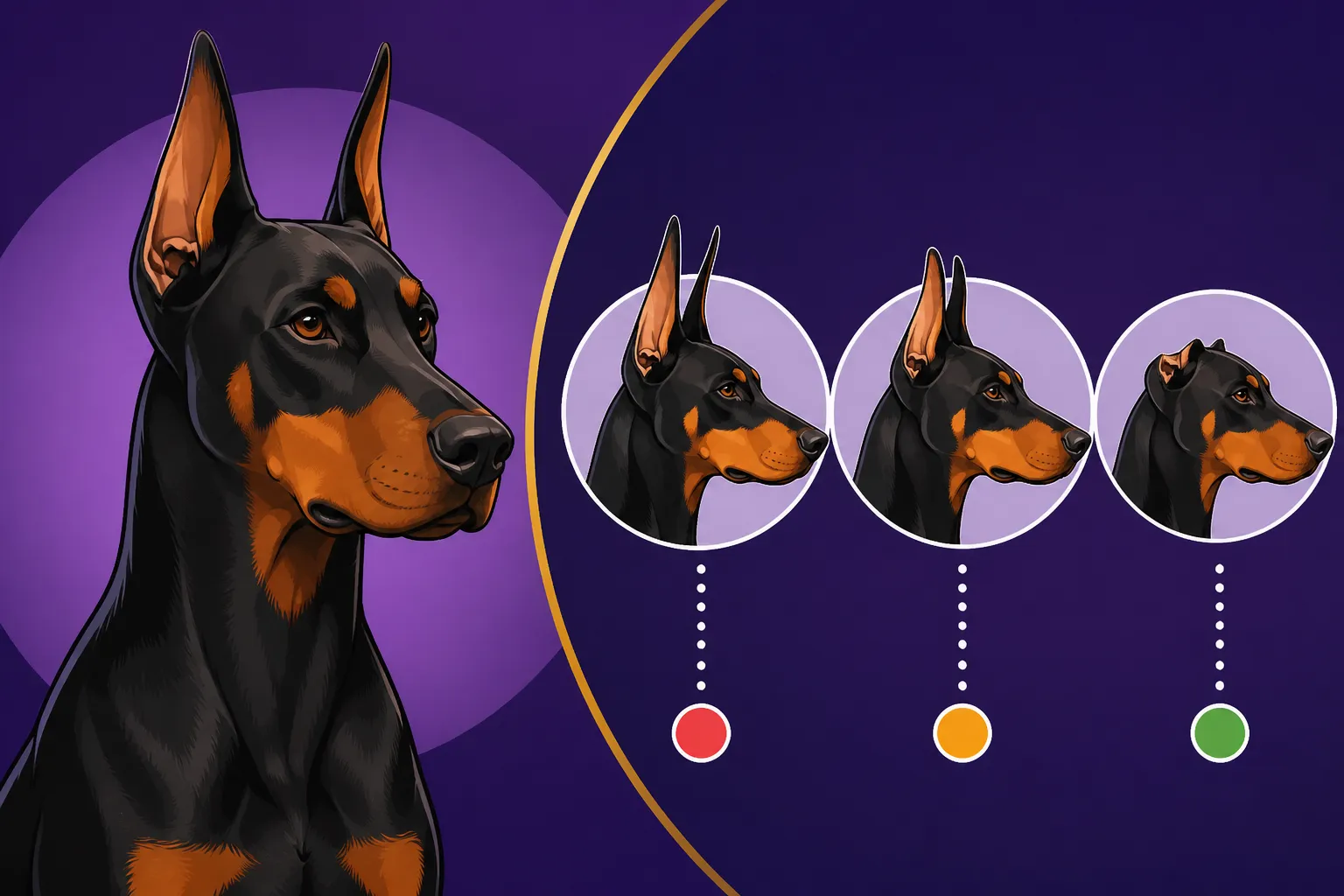
This is often considered the classic Doberman look, the one you typically see in conformation rings and on dogs representing the breed's ideal. The "show" or "long" crop is characterized by its tall, slender appearance, following the natural curve of the ear leather to create an elegant, almost pointed finish.
Aesthetically, this crop length is incredibly striking. It accentuates the Doberman's already regal head and neck, giving them that proud, alert, and undeniably commanding presence. Many owners are drawn to this style precisely because it embodies the powerful image often associated with the Doberman Pinscher. It's a look that truly turns heads, capturing the breed's iconic silhouette.
However, achieving this look is a significant commitment. The longer the crop, the more challenging and time-consuming the posting process becomes. You're looking at many months, sometimes even a year or more, of consistent and meticulous ear posting to encourage the cartilage to strengthen and stand erect. This isn't just a quick fix; it's a marathon of careful taping, cleaning, and re-taping, often weekly, and requires a dedicated owner willing to see it through.
The "Medium" or "Pet" Crop
Falling somewhere between the dramatic show crop and a very short cut, the "medium" or "pet" crop offers a balanced approach. It still provides a good length that allows the ears to stand proudly and frame the face, but it's typically a bit shorter and sometimes slightly wider at the base than a full show crop.
The aesthetic appeal here is that you still get that refined, alert Doberman look without the extreme length that can sometimes feel a bit much for a family pet. It's a popular choice for owners who appreciate the traditional Doberman appearance but might not be involved in the show ring or prefer a slightly softer overall impression. It retains much of the breed's characteristic profile while being a touch more understated.
From a maintenance perspective, the medium crop is generally easier to manage than a show crop. While it still demands consistent posting for several months, the shorter length means the cartilage has less work to do to stand firm. This can translate to a slightly reduced overall posting period compared to its longer counterpart, making it a good compromise for many busy families. You'll still need diligence, but it might feel a little less daunting.
The "Short" or "Utility" Crop
The "short" or "utility" crop is the most conservative option available. These ears are cut quite short, sometimes only leaving enough to give a slightly pointed tip above the head. The aim isn't elegance or extreme height, but rather a functional, tidy appearance that minimizes the posting process.
Aesthetically, this style gives the Doberman a more "natural" or less intimidating look to some observers. It moves away from the classic sharp lines, offering a softer silhouette. Historically, short crops were sometimes favored for working dogs, where extreme length wasn't a priority and a quicker healing/standing time was preferred. For owners who prefer a less dramatic look or who are concerned about the extensive aftercare of longer crops, this can be an appealing choice.
The biggest advantage of the short crop is the significantly reduced aftercare period. Because there's less ear leather to support, the ears tend to stand more quickly and with less intensive posting. This can be a huge relief for owners who find the posting process overwhelming or who have practical limitations on their time and resources. Healing time might also feel a bit faster given the smaller wound area.
Factors Influencing Your Doberman Ear Crop Decision
Choosing the right ear crop length isn't just about what looks good in a picture. There are several real-world factors that should weigh heavily on your decision, from your personal style preferences to your commitment level and even the skill of the professional performing the surgery.
Aesthetic Preferences and Desired Look
Ultimately, a significant part of this decision comes down to what you envision for your Doberman. Do you dream of that classic, powerful, almost majestic Doberman profile with long, erect ears that seem to add inches to their stature? Or do you prefer a softer, perhaps more approachable look that still honors the breed but doesn't lean into the dramatic?
Your personal taste plays a huge role here. Some people are absolutely set on the show crop, believing it’s the only way a Doberman truly looks like a Doberman. Others prefer the utility crop, finding it more practical and less imposing. It's worth spending time looking at pictures of adult Dobermans with various crop lengths to get a clear idea of what resonates with you. Remember, this is a permanent change, so you want to love the outcome. Consider how the crop will complement your individual Doberman's specific head shape, jawline, and neck length. What looks stunning on one Doberman might not have the same effect on another, which is why a skilled veterinarian's eye is so crucial.
Time, Dedication, and Aftercare Commitment
This is where the rubber truly meets the road. Ear cropping is not a "set it and forget it" procedure. The surgery itself is just the beginning. The success of the crop – meaning whether the ears will stand correctly – depends almost entirely on diligent, consistent, and patient aftercare, specifically the posting process. Longer crops require more time and dedication to achieve a proper stand. If you opt for a show crop, be prepared for many months, potentially up to a year or even more, of weekly ear changes, cleaning, and re-taping. This means regularly scheduling time to carefully remove old tape, clean the ears, check for irritation, and then expertly reapply new tape and supports.
If your lifestyle doesn't allow for this level of consistent dedication, or if you're not confident in your ability to learn and execute the posting technique properly, a shorter crop might be a more realistic and responsible choice. There are also financial implications, as regular visits to the vet for check-ups or professional posting assistance will add up. Be honest with yourself about the commitment you can realistically make before deciding on a length. This aftercare period is non-negotiable for a successful outcome. Doberman Ear Cropping From Surgery to Last Posting is a must-read for anyone considering this journey.
The Skill and Experience of Your Veterinarian
This factor cannot be stressed enough: the quality of the ear crop depends entirely on the skill and experience of the veterinarian performing the surgery. Ear cropping is as much an art as it is a surgical procedure. A good crop is expertly contoured to the individual dog's head and ear leather, taking into account their unique anatomy to ensure a natural, elegant, and proportionate result. A poor crop, on the other hand, can be uneven, too short, too long, or disproportionate, and it’s a permanent mistake.
You absolutely need to seek out a veterinarian who specializes in ear cropping, preferably one with extensive experience with Dobermans specifically. Don't just go to your regular family vet unless they have a proven track record and can show you many examples of their Doberman crops. Ask to see photos of their work, ideally of adult Dobermans with ears that have successfully stood. Discuss the different lengths and styles with them, and listen to their professional recommendation based on your puppy's ear leather quality and head structure. A truly skilled vet will be able to advise you on what length will best suit your Doberman and what is achievable given their ear anatomy. Don't be afraid to travel to find the right specialist. Vets Who Will and Will Not Crop a Doberman can help you find someone qualified.
Practical Considerations Beyond Aesthetics
While the visual outcome is a primary concern for many, there are other practical and ethical aspects to consider when choosing a Doberman ear crop length. These go beyond just how your Doberman looks and delve into their comfort, how they interact with the world, and even how the public perceives them.
Impact on Communication and Expression
One often-overlooked aspect of ear cropping is its effect on a Doberman's ability to express themselves through their ears. Dogs use their ears as a vital part of their body language, conveying everything from alertness and interest to fear and aggression. Natural, uncropped ears offer a wide range of motion and subtle cues that communicate a dog's mood and intentions to other dogs and to people.
When ears are cropped and stand erect, this subtle language can be somewhat diminished. While a Doberman can still move their cropped ears forward or back, the nuanced flattening, twitching, or drooping that natural ears provide is largely lost. This can sometimes make it harder for other dogs to "read" your Doberman's intentions, potentially leading to misunderstandings in dog-dog interactions. For owners, it might require a more conscious effort to observe other body language cues to understand their Doberman's mood fully. What Cropped Ears Hide About a Doberman's Mood delves deeper into this fascinating topic.
Potential Health and Comfort Aspects
The healing process for any ear crop requires meticulous care, but there are some nuances related to length. Longer crops, by their nature, involve more tissue and a longer incision line, which could theoretically lead to a slightly more involved healing process if not managed perfectly. However, regardless of length, proper wound care, pain management, and preventing infection are paramount. Any crop, if not cared for correctly, can lead to complications such as infection, scarring, or ears that simply refuse to stand.
It's a common misconception that cropped ears prevent ear infections. While a larger, open ear canal can allow for better airflow, cleanliness and regular checks are far more important than the presence of a crop. Some Dobermans, cropped or natural, are still prone to ear issues due to allergies or other underlying conditions. The comfort of the dog during the posting period is also a factor; improperly taped ears can cause irritation, pressure sores, or discomfort, leading to a miserable experience for your Doberman. Ensuring you have the right supplies, like gentle medical tape and appropriate backer rods (many pet parents find good quality supplies on Chewy's website), is essential.
Social Perception and Breed Stereotypes
It's an unfortunate reality that cropped and docked Dobermans can sometimes evoke a different reaction from the public compared to those with natural ears and tails. Despite being a beloved family companion, the Doberman still carries a strong "guard dog" image for many people, and cropped ears can accentuate this perception.
This isn't to say you shouldn't crop your Doberman's ears if that's your informed choice, but it's something to be aware of. You might encounter people who are fearful, judgmental, or even critical of your decision. While entirely unwarranted for a well-socialized Doberman, this can impact your dog's interactions in public spaces like dog parks or even just walking down the street. It’s important to remember that your Doberman's true temperament and training are what truly define them, regardless of their ears, but public perception can be a challenge you may need to navigate with patience and education.
Making an Informed Choice and What to Expect
The decision to crop your Doberman's ears, and what length to choose, isn't one to take lightly. It impacts their appearance, your wallet, and your time commitment for months after the surgery. Approaching this decision with thorough research and realistic expectations is key to a positive outcome.
Consulting with Experienced Doberman Owners and Breeders
Before you make a final decision, talk to as many experienced Doberman owners and reputable breeders as you can. These individuals have lived through the ear cropping and posting process, often multiple times, and can offer invaluable insights. Ask them about their experiences with different crop lengths, the challenges they faced during posting, and what they would do differently if they could. They can often provide recommendations for skilled veterinarians in your area who specialize in Doberman crops.
Many reputable breeders will have a preferred crop style or length that they feel best suits their lines. Some may even have a specific vet they work with and may offer the option for your puppy to be cropped by their vet before you take them home. This can be a huge advantage, as you're leveraging their expertise and established relationship with a trusted professional. Don't be shy about asking questions and seeking their guidance; their knowledge is a goldmine for new owners. Reading a breeder's paperwork carefully for details on any initial vet work, like in Reading a Doberman Puppy's Test Certificates, is always a good idea.
The Importance of Post-Surgical Care and Posting
Let me be absolutely clear: the ear crop surgery itself is only about 20% of the battle. The remaining 80% is the diligent, consistent, and often frustrating process of aftercare and posting. Without proper posting, even the most expertly performed crop will likely fail to stand correctly. The ears will flop, bend, or end up with an undesirable "crinkle."
This means you'll be dedicating significant time each week, typically for several months, to changing posts, cleaning the ears, and inspecting them for any signs of irritation or infection. You'll need supplies like medical tape, backer rods, cotton, and adhesive remover. Learning the proper technique is crucial, and your vet or an experienced mentor should guide you through it. Many owners source these essential supplies from online retailers like Chewy, ensuring they always have everything on hand for posting changes. How Many Posting Changes a Doberman Needs will give you an idea of the commitment. This is where the cost of aftercare visits can add up if you don't learn to do it yourself, as discussed in What a Doberman Cropping Aftercare Visit Costs.
Be prepared for setbacks. Sometimes an ear will decide to flop again after weeks of standing perfectly, requiring you to go back to posting. It takes patience, perseverance, and a firm but gentle hand. If you’re not prepared for this level of dedication, honestly consider if cropping is the right choice for you and your Doberman. The last thing you want is a poorly cropped ear that doesn’t stand, as it impacts the dog's appearance for its entire life.
Embracing Your Doberman's Unique Appearance
No matter which ear crop length you choose, or even if you decide against cropping altogether, remember that your Doberman is a magnificent and unique individual. The decision about ear cropping is deeply personal and often culturally influenced. What's considered traditional or ideal in one region might be controversial in another.
Ultimately, the most important thing is your Doberman's health, happiness, and well-being. A loving home, proper training, excellent nutrition (which you can find a great selection of on Chewy's site, by the way), and consistent care are far more important than the length of their ears. Whether your Doberman sports a dramatic show crop, a moderate pet crop, a subtle utility crop, or beautiful natural ears, they are still the loyal, intelligent, and protective companion you chose. Focus on nurturing their temperament and ensuring they are a well-adjusted member of your family, and their ears will simply be one aspect of their overall stunning presence.
| Crop Style | Aesthetic Appeal | Posting Duration (Estimate) | Difficulty of Posting | Common Purpose |
|---|---|---|---|---|
| Show/Long | Elegant, striking, regal; classic Doberman look | 8-12+ months (can be longer) | High | Conformation Show Ring |
| Medium/Pet | Refined, alert, balanced; slightly softer | 4-8 months | Medium | Family Pet, Active Companion |
| Short/Utility | Natural, tidy, less imposing; functional | 2-4 months (shortest) | Low | Working Dog, Minimalist Aesthetic |
Disclaimer
This article is for general informational purposes only and does not constitute professional advice. Laws, prices and regulations vary by location and change over time. Consult a qualified professional for guidance on your specific situation.