What Cropped Ears Hide About a Doberman’s Mood
It’s a common frustration for Doberman owners, and even for people simply encountering the breed: do cropped ears make it harder to read a Doberman's mood? Many folks worry that they're missing crucial cues when a dog's ears are no longer naturally expressive, leading to misunderstandings or anxiety. This guide will walk you through how Dobermans communicate without relying on ear signals, helping you become a more insightful companion.
The Missing Link: How Cropped Ears Impact Canine Communication
When a Doberman's ears are cropped, a significant part of their natural communication toolkit is altered. For breeds with natural ears, the way those ears swivel, flatten, or perk up provides a vivid, immediate window into their emotional state. A slight twitch can signal interest, ears pinned back tight against the head scream fear or aggression, and ears relaxed and slightly forward suggest a calm, attentive demeanor. This visual input is incredibly valuable for other dogs, humans, and even other species in understanding a dog's intentions and feelings.
Understanding the Visual Shift
Imagine trying to understand someone's subtle facial expressions if they wore sunglasses all the time; you’d miss the nuanced eye movements that tell you so much. Similarly, cropped ears remove a major, highly visible indicator of mood. This isn't just about human perception, either; other dogs rely on these signals too. A Doberman with cropped ears might be trying to communicate deference or anxiety by pinning its ears back, but the stark, upright posts may not convey the same clear message to an approaching dog as floppy ears would. This can sometimes lead to misinterpretations in dog-dog interactions, where a clear signal could have prevented tension.
We often default to looking at a dog's face, assuming that's where all the action is. But for canids, the entire head, including the ears, is a primary communication hub. Without that, owners might struggle to pick up on early signs of discomfort, excitement, or even playful intent. It means we have to work a little harder, paying closer attention to the whole picture, rather than relying on a single, prominent feature. This isn't to say a cropped Doberman can't communicate effectively, just that the method of interpretation shifts.
The Problem of Perception
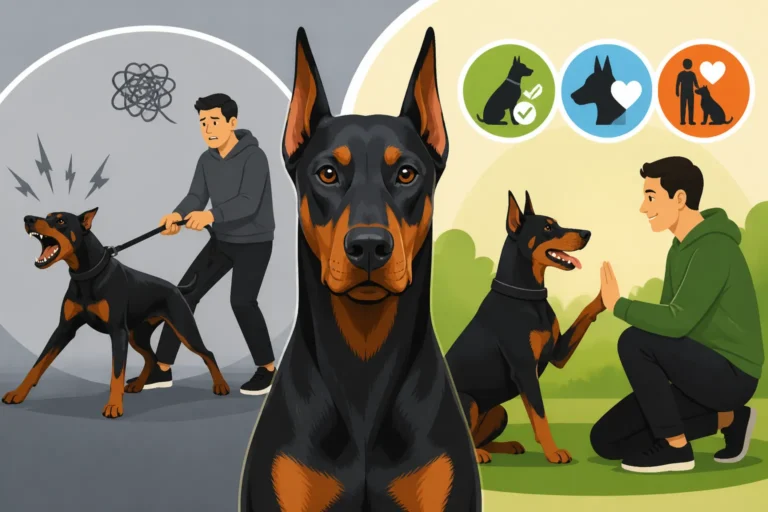
Beyond the actual biological communication, there's also the human perception aspect. Dobermans, with their sleek coats, athletic build, and often cropped and docked appearance, already carry a strong, sometimes intimidating, image. When their ears are cropped and stand erect, many people (and even some less experienced dog owners) perceive them as constantly alert, dominant, or even aggressive, regardless of the dog's true feelings. This can lead to unnecessary fear or avoidance from the public, making socialization or casual walks more challenging for owners who know their Doberman is a gentle giant.
This perception gap can be truly disheartening. You know your Doberman is a sweet, silly goofball at home, but when you're out and about, you see people cross the street or pull their children closer. This societal bias means we, as Doberman guardians, have an even greater responsibility to understand and advocate for our dogs. We need to actively demonstrate their good temperament and help others see past the physical appearance. It’s about being a superb ambassador for the breed, showing the world that A Doberman That Faints on a Walk is not an angry dog, but potentially a sick one, and that a Doberman that looks "fierce" is often just observing the world around it with keen interest.
Beyond the Ears: Reading Your Doberman's Full Body Language
While cropped ears remove one crucial piece of the communication puzzle, Dobermans still have an entire body to express themselves. The key is to learn to read these other signals, often much more subtle, to truly understand what your dog is feeling. Think of it as learning a new dialect of dog language.
Eye Contact and Facial Expressions
A Doberman's eyes are incredibly expressive. Direct, hard eye contact can be a sign of challenge or dominance, especially if combined with a tense body. However, soft, blinking eyes, or eyes that dart away quickly, often indicate appeasement or nervousness. The classic "Doberman side-eye" – where they look at you from the corner of their eye, showing the whites – is a clear sign of discomfort or suspicion. Meanwhile, a relaxed, almond-shaped eye with a soft gaze suggests contentment.
Beyond the eyes, pay attention to the muscles around the mouth and forehead. A tight mouth with corners pulled back can signal stress or a warning, while a relaxed mouth, perhaps slightly open with a "smile" or a soft pant, suggests ease. A furrowed brow might indicate concentration or concern, whereas a smooth, relaxed forehead is a sign of calm. You'll want to watch for a Doberman That Stiffens Before It Growls, as this full-body tension, starting with the facial muscles, is a vital pre-cursor to more obvious warnings. Understanding these subtle cues means you can intervene or reassure your Doberman long before a situation escalates.
Tail Wags and Body Posture
The tail is a powerful communicator, even if it's docked short. A high, rapid wag generally indicates excitement or high arousal, which isn't always positive. A slow, tentative wag, especially if the tail is held low, can signify uncertainty or fear. A tail tucked tightly between the legs is a clear sign of submission or extreme fear. A relaxed tail that swishes gently back and forth, held at a natural mid-level, usually shows a happy, comfortable dog. The speed and height are more important than the amplitude of the wag for a docked tail.
The Doberman's body posture speaks volumes too. A dog that stands tall and stiff, with its weight shifted forward, might be asserting dominance or preparing for action. Conversely, a dog that crouches, lowers its head, or shifts its weight backward is likely feeling submissive, fearful, or defensive. A relaxed, fluid posture with a slight curve in the spine usually means a comfortable and friendly dog. Pay attention to their weight distribution: are they leaning away, or are they A Doberman That Leans on You Constantly, which can be a sign of affection or need for reassurance? Every curve and shift tells a story.
Vocalizations and Movement Patterns
While not strictly body language, a Doberman's vocalizations and movement patterns are integral to understanding their mood. A low growl is an obvious warning, but don't forget whimpers, yips, or even a soft sigh. A What a Doberman Yawn Actually Means isn't always about tiredness; it can be a displacement behavior, a sign of stress, or an attempt to de-escalate tension. Barking can mean anything from excitement to alarm, and the pitch and intensity will help you distinguish between a playful "woof" and a serious "back off" bark.
Movement patterns also provide clues. A dog that moves smoothly and confidently, approaching people or objects with an open gait, is likely well-adjusted and comfortable. A dog that moves stiffly, hesitates, or tries to put distance between itself and something is expressing caution or fear. Pacing or repetitive movements can indicate anxiety or boredom. Owners might find resources on platforms like Amazon for books on canine body language that delve into these nuances, helping them decode their Doberman's silent conversations. Understanding these patterns is critical for fostering a confident Doberman, especially during those formative The Sixteen Weeks That Set a Doberman Up.
Common Misunderstandings and How to Overcome Them
Living with a Doberman, especially one with cropped ears, means navigating both their unique communication style and public perception. Many owners struggle with specific scenarios where their dog's intentions are easily misinterpreted.
When "Alert" Looks Like "Aggressive"
The Doberman is bred to be alert and protective, traits that the cropped ear naturally accentuates. A Doberman standing still, ears up, eyes focused, might simply be observing its environment, processing information, or waiting for a cue from you. To the uninitiated, however, this intense focus can be misconstrued as aggression or a threat. This misunderstanding can be particularly challenging in public spaces, where even a well-behaved, calm Doberman might elicit fear.
To counter this, it's vital to educate yourself and subtly educate others through your Doberman's behavior. Teach your Doberman a solid "relax" or "settle" cue. When they're in their alert posture, calmly ask them to lie down or sit, breaking the intense gaze and signaling to observers that your dog is under control and not a threat. Positive reinforcement training, perhaps through online programs like BAXTER & Bella, can instill confidence in your Doberman and provide you with the tools to manage their appearance in public. Over time, as people see your Doberman calmly obeying cues, their perception will begin to shift. Also, consider bright, friendly accessories like a colorful harness (always ensure it's comfortable for a Doberman's deep chest) to soften their appearance.
Decoding Subtle Stress Signals
Because the ears are less expressive, a Doberman's more subtle stress signals become even more critical to recognize. A Doberman might not pin its ears back in fear, but it might yawn, lick its lips, turn its head away, or show a "whale eye" (where the whites of their eyes are visible at the corners). Excessive panting when not hot or exercised, sniffing the ground intently, or even scratching themselves are all potential signs of stress or discomfort. Ignoring these early warnings can lead to a Doberman feeling overwhelmed, which could then result in more pronounced, potentially reactive, behaviors.
It's your job to be a detective, reading these small clues before they escalate. If you notice these signs, immediately try to remove your Doberman from the stressful situation. Sometimes this means turning around on a walk, moving away from an approaching person or dog, or simply creating more space. Understanding Whether a Muzzled Doberman Frightens the Public can also be important, as muzzle training can be a responsible step for a Doberman that struggles with stress in certain environments, providing safety while you work on behavior. Early and consistent socialization, exposing your Doberman puppy to Exposing a Doberman Puppy to Strangers in positive ways, is foundational to building a resilient adult dog less prone to these stress signals.
Overcoming the Cropped Ear Stereotype
The cropped ear stereotype isn't just a challenge for the public; it can subtly influence how owners interact with their own Dobermans. If you constantly worry that your Doberman looks intimidating, you might inadvertently project that anxiety, which your sensitive Doberman will pick up on. This can create a self-fulfilling prophecy, where your dog becomes more anxious or wary due to your own apprehension.
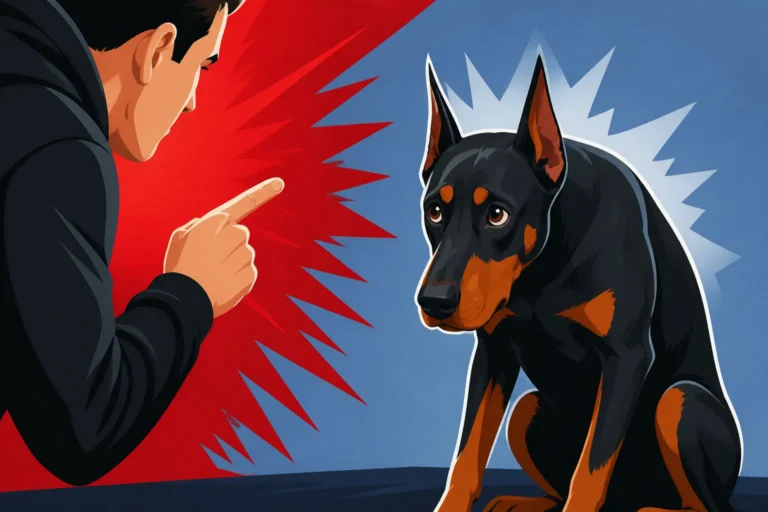
The best way to overcome this is through confidence and education. Be proud of your Doberman. Understand their breed history, their protective instincts, and their incredible intelligence. Focus on positive reinforcement training to build a strong, trusting relationship. When people ask questions, use it as an opportunity to share facts about the breed, its temperament, and your well-trained companion. Enroll in dog sports or advanced obedience classes; a Doberman performing in a focused, joyful manner often disarms misconceptions. The investment in understanding Training a Doberman That Is Smarter Than You Expect and directing that intelligence into constructive outlets will pay dividends not just for your dog, but for public perception too.
| Natural Ear Position | Cropped Ear Interpretation | Compensatory Body Cues to Watch For |
|---|---|---|
| Relaxed/Neutral | Upright/Neutral | Soft eyes, relaxed mouth, gentle tail wag, fluid body posture. |
| Alert/Interested | Upright/Forward | Intense, focused gaze (but not hard), still body, slight head tilt, tail held level or slightly up, often still. |
| Fearful/Submissive | Upright/Slightly back | Whale eye, lip licking, head turned away, tucked tail, lowered body, trembling, frequent yawning. |
| Aggressive/Threatened | Upright/Slightly back | Hard stare, tense facial muscles, curled lip, stiff body, weight forward, hackles raised, low growl, rigid tail. |
| Playful/Happy | Upright/Fluid motion | Loose, wiggly body, open mouth "smile," relaxed eyes, broad tail wag (often whole body wag), playful bows. |
Building a Deeper Bond Through Observation
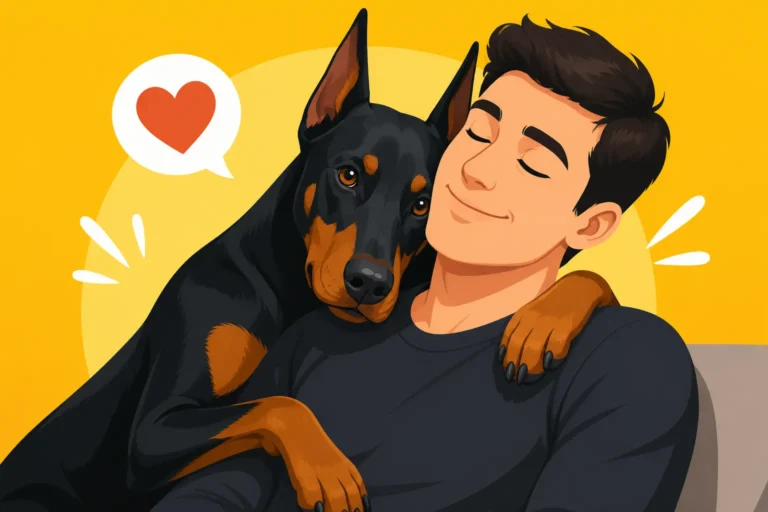
Ultimately, understanding your Doberman's mood, especially with cropped ears, boils down to attentive observation and a deep, trusting relationship. When you're truly connected to your dog, you'll start to notice the minutiae of their behavior that others might miss.
The Nuance of the Doberman Gaze
The Doberman gaze is a language in itself. These dogs are intensely connected to their humans, and their eyes often track your every move, searching for clues, comfort, or commands. A soft, prolonged gaze is a sign of deep affection and trust. When your Doberman looks at you with those deep, intelligent eyes, you're seeing into their soul. If that gaze is accompanied by a slight head tilt, it often means they’re trying to understand you, perhaps wondering what you’re about to ask or if you’re offering a treat!
Conversely, a quick darting of the eyes, or an unwillingness to make eye contact, particularly when you’re asking something of them, might indicate uncertainty or mild stress. It’s not necessarily defiance; it could be their way of saying, “I’m not sure about this,” or “I’m a bit uncomfortable.” Learning to read these subtle shifts in their gaze and adjusting your approach accordingly builds an incredible level of mutual respect and understanding. This eye contact is a foundational element in Whether a Doberman Bonds to One Person, showing the depth of their connection.
Trusting Your Gut Feeling
As you spend more time with your Doberman, you’ll develop an intuitive sense of their mood. You’ll start to recognize subtle changes in their breathing, the way they shift their weight, or even the slight tension in their muscles before any overt behavior occurs. This "gut feeling" is often a culmination of countless small observations that your subconscious has pieced together. Trust that feeling. If something feels "off" with your Doberman, even if you can't pinpoint exactly why, it's worth investigating.
This intuition is incredibly valuable, especially when you’re trying to decide if your Doberman is comfortable in a new situation or needs more space. It helps you advocate for them, telling a well-meaning stranger not to pet your dog because you sense they are overstimulated, even if your Doberman hasn't shown obvious signs of distress yet. This deep understanding means you can protect your Doberman from situations that might push them past their comfort zone. You’ll become attuned to A Doberman That Stiffens Before It Growls not just visually, but almost telepathically.
Consistent Training and Socialization
Beyond observation, consistent training and socialization are the bedrock of a well-adjusted Doberman who communicates clearly. A dog that is confident in its environment and understands what's expected of it is less likely to exhibit ambiguous or concerning behaviors. Regular training reinforces your bond and gives your Doberman a framework for understanding the world. This is where tools from a wide range of retailers like Amazon for quality training leads or clickers, and online programs like those from BAXTER & Bella, can be invaluable.
Early socialization is particularly crucial for Dobermans. Expose your puppy to a wide variety of sights, sounds, people, and appropriate canine interactions from a young age. This helps them develop confidence and learn appropriate responses, rather than resorting to fear or aggression. A well-socialized Doberman, even with cropped ears, will typically have a more relaxed and open demeanor, making their true intentions easier to read for everyone. Focusing on Building a Doberman Puppy That Is Confident, Not Sharp from day one is paramount for a harmonious life together.
Disclaimer
This article is for general informational purposes only and does not constitute professional advice. Laws, prices and regulations vary by location and change over time. Consult a qualified professional for guidance on your specific situation.