Trick Training an Adult Doberman
So, you've got this magnificent Doberman, probably lounging gracefully on your couch, looking all sophisticated and perhaps a little bored. Many of us fall into the trap of thinking that once our Dobermans are past the puppy stage and have mastered basic obedience, their training journey is largely over. But adult Dobermans, with their incredible intelligence and drive, absolutely thrive on continued mental engagement. This guide is all about diving into the wonderful world of trick training with your grown-up Doberman, proving that it's never too late to teach a smart dog new and exciting behaviors that deepen your bond and keep their brilliant minds sharp.
Beyond Basic Obedience: Why Trick Training Benefits Your Adult Doberman
It's easy to assume that "tricks" are just for novelty acts or fluffy little dogs on social media. But for an adult Doberman, trick training is so much more than just showing off. It's a powerful tool for enrichment, communication, and even behavior modification that many owners overlook.
The Mental Stimulation an Adult Doberman Craves
Let's be real, Dobermans are smart. Like, really smart. They're bred to work, to think, to analyze, and to be highly tuned into their handlers. If you've ever found yourself wondering why your Doberman seems restless, or perhaps even a bit mischievous, it's often a sign that their brilliant brain isn't getting enough of a workout. Basic obedience, while crucial, can become routine. Trick training introduces novel challenges, puzzles, and sequences that force them to engage their cognitive abilities in new ways.
Think about it: asking your Doberman to "sit" for the thousandth time isn't as stimulating as asking them to "spin" in a circle, then "bow," then "shake a paw" on cue. Each new trick requires problem-solving, coordination, and memory recall. This kind of mental exercise can be just as tiring, if not more so, than a physical walk, and it taps into that inherent working drive. It helps to keep your Doberman from getting bored, which, as we all know, can lead to less desirable behaviors around the house. When their minds are tired in a good way, they're generally happier and more content companions. This ties directly into Keeping a Doberman Mentally Tired, which is vital for their overall well-being.
Strengthening Your Bond Through Shared Learning
There's something incredibly special about the connection you forge when you're teaching your dog something new, especially an adult Doberman. It’s a partnership built on trust, communication, and mutual respect. When you're trick training, you're not just giving commands; you're observing, adjusting, encouraging, and celebrating small victories together. Your Doberman learns to pay closer attention to your body language and verbal cues, and you learn to better understand their learning style, their frustrations, and their triumphs.
This shared activity creates positive associations between you and your Doberman. Every successful trick, every treat given, every enthusiastic "Good dog!" reinforces that you are a source of fun, guidance, and reward. It's a fantastic way to spend quality time that's both productive and enjoyable for both of you. For Dobermans, who often form deep, singular bonds, this focused, positive interaction can strengthen that connection even further, making them even more tuned into you in everyday life. If you've ever had to Rebuilding Trust With a Harshly Handled Doberman, trick training can be an incredibly gentle and effective way to rebuild that bridge.
Building Confidence and Refining Communication
Adult Dobermans, while often appearing bold, can sometimes have underlying insecurities or reactiveness. Successfully learning new tricks, even small ones, can be a huge confidence booster for them. Each time they figure out a new behavior and earn a reward, it builds their self-assurance and makes them more willing to try new things. This confidence can spill over into other areas of their lives, making them more adaptable and less prone to anxiety in unfamiliar situations.
Furthermore, trick training refines your communication. You learn to be clearer with your cues, more precise with your timing, and more creative in how you motivate your dog. Your Doberman learns to be more responsive and engaged, understanding that paying attention to you leads to good things. This enhanced communication isn't just for tricks; it translates directly into better everyday obedience and responsiveness, especially in distracting environments. It truly highlights Why a Clever Doberman Is Harder to Train sometimes, because they need that constant engagement and clear direction.
Laying the Foundation: Essential Principles for Adult Doberman Trick Training
Before you jump into teaching your Doberman to "play dead" or "fetch a specific toy," it's crucial to ensure you have a solid foundation. This isn't just about what you teach, but how you teach it. With an adult Doberman, patience, positive reinforcement, and understanding their individual quirks are key.
Harnessing Positive Reinforcement and High-Value Rewards
This is the golden rule of trick training, especially with intelligent and sensitive breeds like Dobermans. Positive reinforcement means rewarding the behaviors you want to see, making it more likely your dog will repeat them. For Dobermans, this typically means using high-value treats (think tiny pieces of cooked chicken, cheese, or hot dogs), but it could also be a favorite squeaky toy or a quick game of tug. The key is to find what truly motivates your Doberman.
Avoid punishment or harsh corrections. Dobermans are incredibly perceptive and can shut down or become anxious if they feel confused or intimidated. Your goal is to make training a fun, rewarding game, not a chore or a stressful experience. If your Doberman already has a good foundation in Marker Training a Doberman From Scratch with a clicker, you're already ahead! A clicker, paired with a treat, marks the exact moment your Doberman performs the desired action, helping them understand what they're being rewarded for. You can easily find a good quality clicker and a treat pouch on Amazon, ready for your next session.
Keeping Sessions Short, Sweet, and Consistent
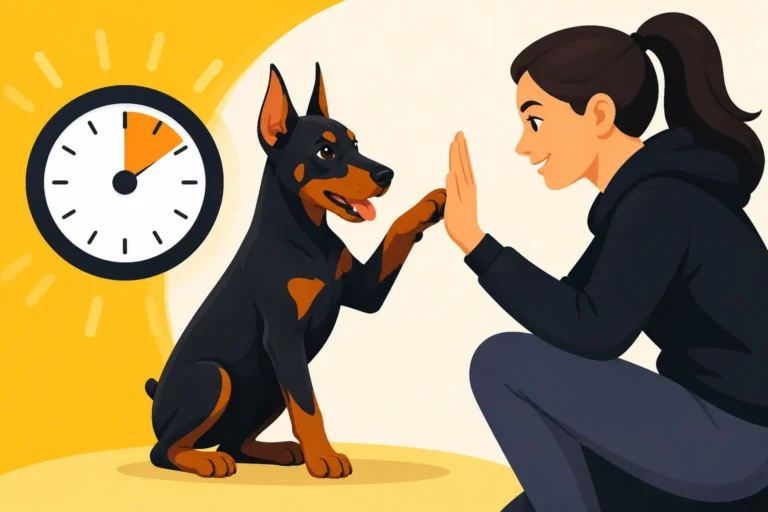
Adult Dobermans might be smart, but their attention spans, like ours, aren't endless. Long, drawn-out training sessions are counterproductive. Aim for short, frequent sessions—think 5 to 10 minutes, a few times a day. This keeps your Doberman engaged, prevents them from getting bored or frustrated, and ensures that training remains a positive experience. It mirrors the advice often given for Five-Minute Sessions With a Young Doberman, and it holds true for adults too.
Consistency is equally vital. Everyone in the household should use the same cues and methods for each trick. If one person uses "shake" and another uses "paw," your Doberman will get confused. Choose your cues (verbal and hand signals), stick to them, and practice regularly, even if it's just a quick run-through of a few tricks during commercial breaks or before meal times. This consistent repetition, especially in varied environments, solidifies the learning.
Understanding Your Doberman's Learning Style
Just like people, every Doberman is an individual. Some are visual learners and respond best to hand signals and body language. Others are more auditory and pick up verbal cues quickly. Some are natural "thinkers" who will try to figure things out, while others prefer to be lured into position. Pay attention to how your Doberman responds to different approaches.
If a trick isn't clicking, don't just keep repeating the same thing. Try breaking it down into smaller steps, changing your luring technique, or practicing in a quieter environment. Some Dobermans are incredibly keen to work for Rewards a Doberman Will Work For, whether that's food, toys, or praise. Observing their natural tendencies can give you clues. For example, if your Doberman naturally offers a paw when greeting, "shake a paw" might be an easy starting point. If they're a natural clown, something like "spin" might be right up their alley.
Unlocking Potential: Step-by-Step Guide to Teaching Classic Doberman Tricks
Now for the fun part! Once you have the foundational principles down, you can start teaching specific tricks. Remember to break each trick into tiny, manageable steps, reward liberally for effort, and celebrate every success.
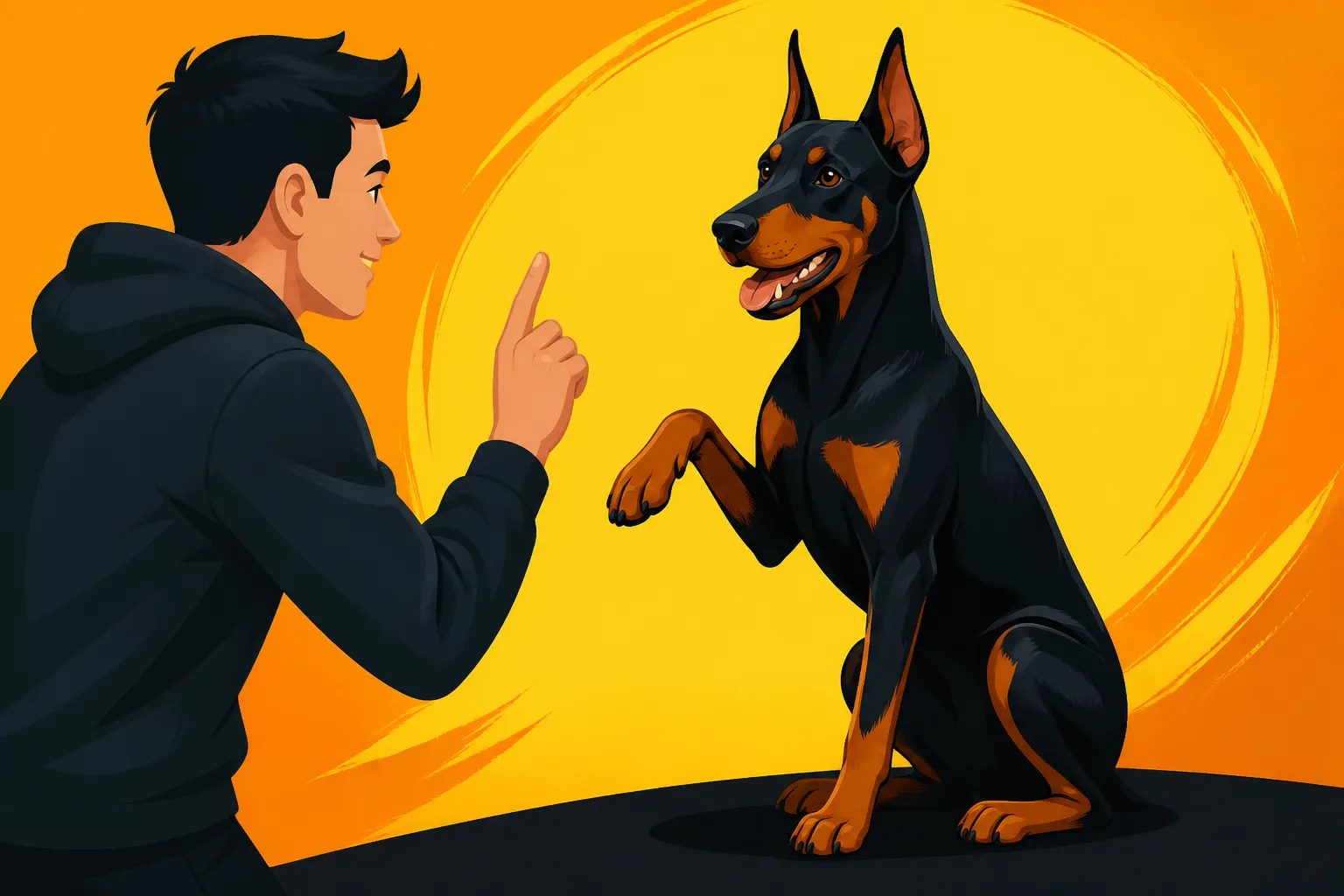
Shake a Paw: A Gentle Greeting
This is often one of the first tricks people teach, and it’s a wonderful way to introduce the concept of performing an action on cue.
- Start with a Sit: Ask your Doberman to sit in front of you. This provides a stable starting position. You're essentially teaching them Teaching a Doberman to Wait for Permission.
- Lure the Paw: Hold a treat in a closed fist. Present your fist near your Doberman's nose, then slowly move it slightly back and to the side, near one of their front paws, but not so far back they have to lie down. Most dogs will try to paw at your hand to get the treat.
- Mark and Reward: The instant their paw touches your hand, click (if using a clicker) or say "yes!" and open your hand to give them the treat.
- Add the Cue: Once they are consistently pawing your hand, start saying "Shake" or "Paw" just before they lift their paw.
- Refine: Gradually reduce your luring. You want them to eventually lift their paw just with the verbal cue and/or a hand signal (like holding out your open hand).
Spin and Twirl: Fun Movement Cues
These tricks are fantastic for building body awareness and are a blast to watch!
- Lure a Circle: Hold a high-value treat near your Doberman's nose. Move the treat in a complete circle, guiding their head and body to follow it around. As soon as they complete the circle, mark and reward.
- Add the Cue: As they consistently follow the lure in a circle, add your verbal cue ("Spin" for clockwise, "Twirl" for counter-clockwise) just before you start the movement.
- Fade the Lure: Gradually make your hand movement smaller until you're just using a subtle hand signal and the verbal cue.
- Directional Cues: It's often easier to teach one direction first (e.g., "Spin" clockwise) until it's solid, then teach the other direction ("Twirl" counter-clockwise) as a separate trick.
Bow: A Classic and Elegant Pose
This trick makes your Doberman look like they're taking a polite bow, with their front paws down and rear end up.
- Start from a Down: Ask your Doberman to lie down.
- Lure the Bow: Hold a treat and lure their nose down towards the floor, between their front paws, or slightly under their chest. The goal is for them to keep their rear end up while their front end goes down.
- Mark and Reward: The moment their front paws are down and their rear is up in the "bow" position, mark and reward.
- Add the Cue: Introduce your verbal cue, "Bow," just as you start the luring motion.
- Hold the Position: Once they're consistently doing the bow, start delaying the treat slightly to encourage them to hold the position for a second or two before releasing.
Play Dead: The Ultimate Showstopper
This trick requires a bit more coordination and impulse control but is incredibly impressive.
- Prerequisite: Your Doberman should have a solid "Down" and "Stay" cue, and ideally, they should be comfortable lying on their side.
- Lure the Roll: From a "down" position, hold a treat and slowly lure your Doberman's head around to their shoulder, encouraging them to roll onto their side. The moment they are fully on their side, mark and reward.
- Add "Bang!": Once they're reliably rolling onto their side, add your "Bang!" cue (or whatever word you choose) just before you lure them.
- "Stay" in Position: Gradually increase the amount of time they stay "dead" on their side before getting the treat.
- Remove the Lure: Work towards having them drop to the "dead" position from a stand or a sit, using only the verbal cue and a hand signal (like making a finger gun). This will take patience and many repetitions.
Here’s a quick overview of some popular tricks and what they can teach your Doberman:
| Trick Name | Difficulty | Core Skill Learned | Common Application/Benefit |
|---|---|---|---|
| Shake a Paw | Easy | Paw placement, handler focus | Greeting visitors politely, bonding |
| Spin / Twirl | Medium | Body awareness, luring | Physical agility, mental stimulation |
| Bow (Play Bow) | Medium | Core strength, rear end awareness | Fun party trick, stretching |
| Play Dead | Hard | Impulse control, sustained stay | Advanced obedience, impressive display |
| Weave Legs | Medium | Handler focus, body wrap | Engagement, coordinated movement, heel work prep |
| Fetch Named Toy | Hard | Object recognition, retrieve | Mental challenge, useful around the house |
| Take a Bow | Medium | Core strength, rear end awareness | Fun party trick, stretching |
Note: "Take a Bow" and "Bow (Play Bow)" are functionally very similar, aiming for that front-end dip. You can use either term or make subtle distinctions in the execution if you prefer.
Overcoming Hurdles and Keeping the Fun Alive
Even with the smartest Dobermans, you're bound to hit a few bumps in the road. Don't get discouraged! Trick training should always be a positive and engaging experience for both of you.
When Your Doberman Gets Stuck or Frustrated
It happens. Your Doberman might not understand what you're asking, or they might get frustrated if they're not getting it "right." This is where your patience and creativity come in.
- Break it Down Further: If a step is too big, make it smaller. Can you reward for just looking at your hand in the right direction, before asking for a paw lift?
- Change Your Environment: Too many distractions can make it hard for your Doberman to focus. Try practicing in a quiet room, then gradually introduce more distractions as they get better.
- Take a Break: If either of you is getting frustrated, stop! Go play a quick game of fetch, or just cuddle for a minute. Come back to the trick later with a fresh mind.
- Revisit Easier Tricks: Sometimes, going back to a trick they know well and succeeding can rebuild their confidence and enthusiasm.
- Adjust Rewards: Is that treat still high-value enough? Maybe they need a different kind of motivation. Remember Whether a Doberman Works Better for Food or Tug – some prefer a toy over treats for certain tasks.
- Seek Guidance: If you're truly stuck, consider reaching out to a positive reinforcement trainer who has experience with Dobermans. Sometimes an outside perspective can make all the difference. Many online training platforms, like those offered by BAXTER & Bella, have resources or even virtual coaching options that can help you troubleshoot.
Making it a Lifelong Hobby
Trick training isn't just about teaching a finite list of behaviors; it's about fostering a love for learning in your Doberman. Here are some ways to keep it fresh and exciting:
- Build on What You Know: Once your Doberman knows a few individual tricks, start chaining them together into a sequence. "Spin, then bow, then shake!" This adds a new layer of complexity and fun, turning simple tricks into a routine.
- Introduce New Props: Incorporate items like hoops, tunnels, or even a simple blanket for "hide your head." You can find many affordable and dog-safe props on Amazon that can open up a whole new world of tricks.
- Participate in Challenges: Many online communities and even some local clubs offer trick dog titles or challenges. This can be a fun way to set goals and show off your Doberman's skills.
- Puzzle Work That Actually Tires a Doberman: While not strictly "tricks," puzzle toys and interactive games often use similar problem-solving skills and can be a great complement to formal trick training, offering independent mental enrichment.
- Keep it Playful: The moment it stops being fun for your Doberman, you’ve lost the essence of trick training. Always end on a high note, even if it means doing an easy trick they already know perfectly, and praise them enthusiastically.
Remember, the journey of trick training with your adult Doberman is about connection, communication, and mutual enjoyment. You'll be amazed at what your Doberman can learn and how much closer you'll feel after countless hours of shared successes. It's a wonderful journey for both of you, and it certainly keeps that intelligent Doberman brain happily engaged. Who knows, perhaps your Doberman will even go on to earn some Obedience Titles a Doberman Can Earn in more formal settings!
Disclaimer
This article is for general informational purposes only and does not constitute professional advice. Laws, prices and regulations vary by location and change over time. Consult a qualified professional for guidance on your specific situation.