What a Doberman Does at the Front Door
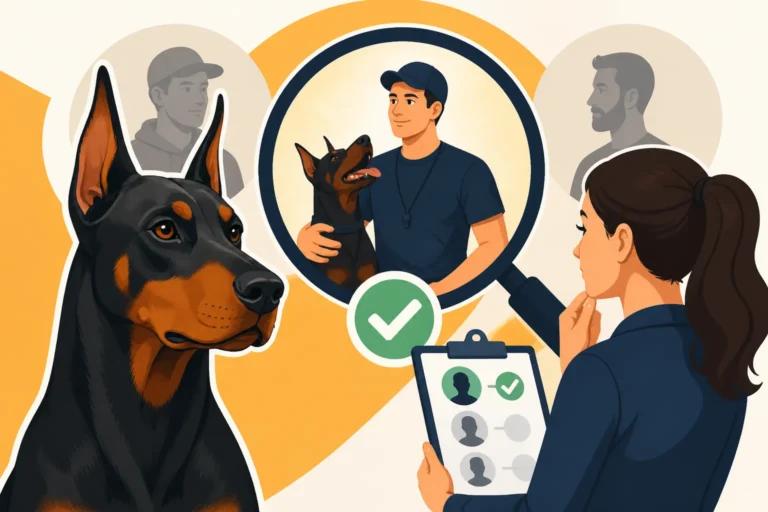
Oh, the front door! For many Doberman owners, it's not just an entryway; it's a battleground, a high-stakes arena where your usually calm, collected companion can transform into a barking, lunging, "who dares approach?!" sentinel. This guide is all about helping you understand why your Doberman acts the way they do when someone knocks or rings, and more importantly, how to teach them polite, calm greeting manners that won't send your guests (or the mail carrier) running for the hills.
Understanding the Doberman's Doorway Dynamics
Let's face it, Dobermans are built to be observant, protective, and keenly aware of their surroundings. This isn't a fault; it's a fundamental part of their genetic makeup, forged from their history as personal protectors. When that front door becomes a focal point, all those instincts kick into high gear, making it one of the most challenging areas to manage.
The Doberman's Instinctive Alert System
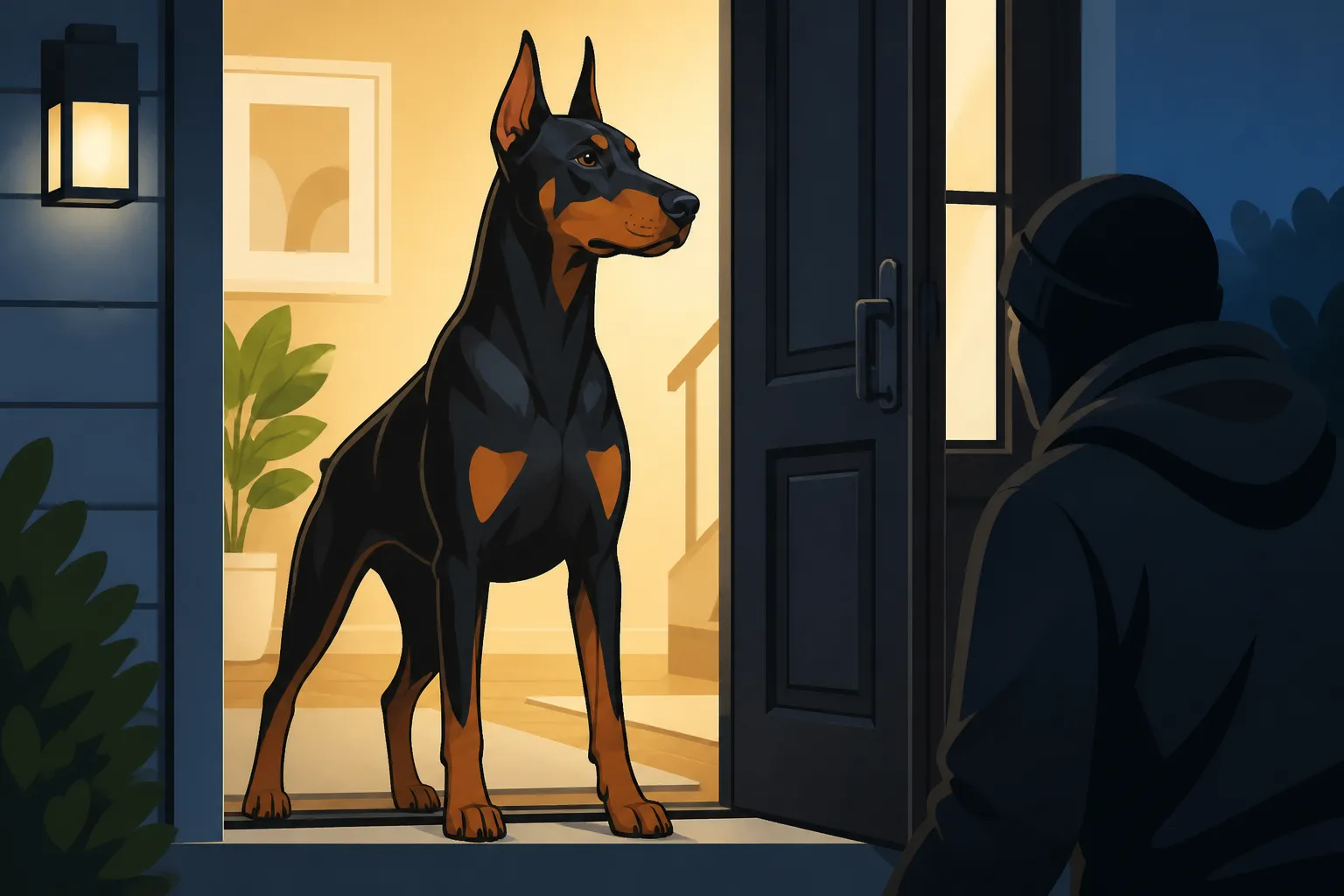
Your Doberman isn't trying to be rude; they're simply doing what comes naturally. Imagine being tasked with guarding your most treasured possessions and people. That's essentially your Doberman's mindset when someone approaches the house. Their alert system is finely tuned, and any sound or movement near the entrance is immediately flagged. This often manifests as intense barking, a deep rumble in their chest that seems to vibrate through the entire house, or even a sudden burst of energy as they race to the door.
Sometimes, they might pace anxiously, their gaze fixed on the door, anticipating the visitor. Other times, they might actually try to physically block the door, putting their body between the perceived "intruder" and their family. It's their way of saying, "I've got this. I'm on duty." While this drive is what makes them such incredible guardians, it also means we, as owners, have to work extra hard to channel that instinct into appropriate behavior. It's a testament to their unwavering loyalty, but it can certainly be overwhelming for anyone on the other side of the door.
Why the Front Door is a High-Stakes Zone
Think about it from your Doberman's perspective: the front door is the thin veil between their safe, predictable interior world and the vast, unpredictable exterior. Every person who steps across that threshold is an unknown quantity, potentially a threat. They don't just see Aunt Carol coming for tea; they see a stranger entering their territory, potentially jeopardizing their pack. This transition from safe interior to unknown exterior creates immense pressure and excitement.
The "intruder" mentality isn't reserved just for suspicious characters. To a Doberman, the mail carrier who drops off packages daily can be just as much a perceived threat as a stranger trying to force entry. The uniform, the quick movements, the sudden appearance and disappearance – all these cues can trigger their protective instincts. Guests, even familiar ones, represent a disruption to the established order. Your Doberman's strong bond to you and your family means they take their protective role very seriously, making the front door a critical point of interaction. It's not personal; it's prime real estate in their world, and they want to ensure everything is above board.
Common Doberman Doorway Behaviors and What They Mean
Decoding your Doberman's specific front-door antics is the first step to managing them. Are they genuinely aggressive, or just over-the-top enthusiastic? The nuances matter a great deal in how you approach training.
Barking, Lunging, and Barrier Frustration
One of the most common complaints from Doberman owners is the incessant barking and lunging at the door. It can be startling, intimidating, and frankly, embarrassing when guests arrive. It's crucial to distinguish between simple "alert barking" – a few barks to let you know someone is there – and "reactive barking" coupled with lunging, which suggests a deeper emotional response. Alert barking is natural and can even be useful; your Doberman is just doing their job. However, when it escalates into a prolonged, frantic display, or includes lunging at the door or window, it often stems from either overwhelming excitement, frustration, or sometimes, a touch of fear.
Lunging and jumping up communicate a powerful desire to engage with the stimulus, whether to ward it off or greet it intensely. When they're behind a door or window, they can't fully investigate or interact, leading to what trainers call "barrier frustration." This build-up of unreleased energy and emotion can make their reactions even more dramatic. It's like watching a movie where the hero is constantly thwarted from reaching their goal; the tension just keeps building! Understanding whether their behavior is rooted in over-excitement, where they desperately want to say hello (albeit rudely), or genuine aggression, where they truly want the person to leave, is paramount. A truly aggressive Doberman might show stiff body language, a low growl, or whale eye, while an over-excited one might have loose, wiggly body language despite the barking. For more on this, you might find A Doberman That Barks at Strangers helpful.
Blocking and Herding Guests
Ah, the classic "Velcro Doberman" behavior, often intensified at the front door. These dogs are notorious for their attachment to their people, and this can extend to their desire to control interactions within their home. When a guest enters, your Doberman might not just bark; they might physically block the doorway, herd the guest away from you, or even try to put themselves between you and the visitor. They might nudge, lean, or even body-check the guest, not necessarily out of aggression, but from a profound need to manage the situation and keep their "flock" (you!) together and safe.
This behavior, while protective in intent, can be incredibly unsettling for guests, who might misinterpret it as aggressive or dominant. It’s your Doberman’s way of asserting control over the social dynamics of the household. They're trying to communicate, "I'm in charge here, and I'm overseeing this interaction." They want to monitor every move, every conversation, ensuring that no one steps out of line, especially near their beloved owner. It's a prime example of their intense loyalty and protective instincts in action, but it requires careful management to ensure everyone, including your Doberman, feels comfortable and respected. You can learn more about this tendency in Why the Velcro Doberman Nickname Comes From.
Strategies for Managing Doorway Manners
Now that we understand why your Doberman acts up, let's talk about how to turn those wild greetings into polite welcomes. It takes patience, consistency, and a clear plan.
Proactive Training for a Calm Entry
The key to a peaceful front door experience isn't just reacting when the doorbell rings, but being proactive with training beforehand. One of the most effective tools in your arsenal is the "place" command. Teach your Doberman to go to a designated mat, bed, or crate a comfortable distance from the front door and stay there until released. Practice this command diligently without the doorbell ringing. Reward heavily for staying on their place, even when you walk by or move toward the door. This gives them a job and a clear expectation, redirecting their focus from the incoming stimulus. You'll find great guidance on teaching this in programs like BAXTER & Bella, which offers comprehensive online training resources, including modules on managing door greetings.
Next, tackle doorbell desensitization. Record your doorbell or have a friend ring it lightly from outside. Start playing the sound at a very low volume, far enough away that your Doberman barely reacts. As soon as they hear it and remain calm (or look to you for direction), reward them. Gradually increase the volume and proximity over many sessions. The goal is to change their emotional response to the doorbell from "alarm!" to "opportunity for a treat!" This process is slow but incredibly effective. Lastly, practice leash management. Even if your Doberman won't be on a leash for every visitor, having them calm and focused on a leash before you open the door gives you vital control. Work on loose-leash walking, sits, and stays right inside the door. Leash Manners for an Eighty-Pound Doberman offers further tips on handling a strong Doberman.
Setting Clear Boundaries with Guests
Let's be honest, we all have that well-meaning friend or relative who just can't resist rushing to greet your Doberman, even when you've asked them not to. This is where you, as the owner, need to be the strongest advocate for your dog's training. Before guests arrive, clearly instruct them on how to interact (or not interact) with your Doberman initially. Ask them to ignore your dog completely when they first enter. No eye contact, no petting, no talking. This helps your Doberman understand that the guest's arrival is not a cue for an immediate party.
Utilize management tools like baby gates or crates to create a physical boundary between your Doberman and the entry area. Having a sturdy, comfortable crate can be a game-changer, giving your Doberman a safe space to relax while still being part of the action. You can find a wide variety of reliable options on Amazon, from heavy-duty metal crates to attractive wooden dog kennels. The "no rush" rule is also critical: ensure your guests wait until your Doberman has settled down before any interaction occurs. It might mean a few minutes of ignoring the enthusiastic barks and wiggles, but it teaches your Doberman that calm behavior is what earns attention, not frantic excitement. For more specific training on this, consider resources like Teaching a Doberman to Go to a Mat for Guests.
Addressing Over-Excitement and Fear-Based Reactions
When your Doberman is wound up at the door, whether from excitement or nervousness, positive reinforcement is your most powerful tool. Catching those brief moments of calm – a pause in barking, a moment of four paws on the floor – and rewarding them instantly helps your Doberman understand what you do want. Use high-value treats that really grab their attention. For fear-based reactions, you'll need a different approach called counter-conditioning. This involves changing your Doberman's negative emotional association with the stimulus (the visitor) into a positive one. Every time the trigger appears, a good thing happens. For example, as soon as your Doberman notices someone at the door but before they react intensely, give them a super tasty treat. Repeat, repeat, repeat.
If you suspect fear is at play, or if the over-excitement is truly unmanageable and potentially leading to aggression, don't hesitate to seek professional help. A certified professional dog trainer, especially one experienced with Dobermans or guardian breeds, can assess the specific triggers and tailor a plan for you. They can help differentiate between a Doberman that's simply over-aroused and one with genuine behavioral concerns, providing the expertise to guide you through more complex scenarios. It's an investment in both your peace of mind and your Doberman's well-being. Thinking about how to build confidence in your puppy can help prevent some of these issues down the line; Building a Doberman Puppy That Is Confident, Not Sharp is a great read.
Tools and Resources for Success
Having the right tools and maintaining consistent effort are crucial for transforming your Doberman's front door behavior.
Essential Gear for Doorway Management
Outfitting your home and your Doberman with the right gear can make a world of difference in managing doorway chaos. First up, consider heavy-duty crates or ex-pens. Dobermans are strong and intelligent, and a flimsy barrier simply won't cut it. A robust crate gives them a secure, personal space to retreat to when guests arrive, reducing their need to "police" the entryway. Ex-pens can be great for creating a buffer zone in an open-concept living area, allowing them to see what's happening but preventing direct access to the door. You can find excellent quality options on Amazon that are designed for larger, more powerful breeds.
Long-lasting chews or puzzle toys are also invaluable. When you know a visitor is coming, having a stuffed Kong or a durable chew available can redirect your Doberman's focus and provide a calming outlet. This gives them something engaging and rewarding to do instead of fixating on the door. For actual door greetings, a well-fitting flat collar or martingale collar, coupled with a sturdy leash, offers better control than a flimsy harness if you need to guide them away from the door or manage their exuberance. These tools aren't a substitute for training, but they are incredibly helpful for managing situations while training is still in progress.
Consistency is Key: Building Lasting Habits
I cannot stress this enough: consistency is the absolute cornerstone of effective Doberman training, especially for ingrained behaviors like doorway greetings. Every single person in your household needs to be on the same page, enforcing the same rules and using the same commands every single time someone comes to the door. Even one instance of letting your Doberman jump all over a guest can set your training back significantly, as they'll quickly learn that sometimes, the old, exciting way works. Think of it as building a wall, brick by brick; every consistent action is a brick, and every inconsistent one chips away at your progress.
Short, frequent training sessions are far more effective than long, arduous ones. Aim for 5-10 minute bursts several times a day, focusing on the "place" command, doorbell desensitization, and calm entry practice. Integrate these lessons into your daily routine. Don't just wait for actual guests; create "mock" arrivals by having family members leave and re-enter, or knock on the door. This allows you to practice in a controlled environment. Remember, your Doberman is smart and observant; they thrive on routine and clear expectations. By being consistent, you're not just teaching them manners; you're building their confidence and trust in your leadership, helping them understand their role when someone arrives. For general training philosophy, consider Training a Doberman That Is Smarter Than You Expect.
Here's a quick overview of doorway behaviors and how to approach them:
| Behavior | Underlying Motivation | Immediate Management | Long-Term Training Focus |
|---|---|---|---|
| Excessive Barking | Excitement, Alert, Anxiety | Redirect with a chew, "Quiet" command, crate/gate | Doorbell desensitization, "Place" command |
| Lunging/Jumping | Over-excitement, Frustration | Step in front, turn away, leash control, crate/gate | "Place" command, rewarding calm greeting (4 paws on floor) |
| Blocking Doorway/Herding | Protection, Control, Guarding | Gentle guidance to "Place," physical barrier | "Place" command, teaching to relax away from entry |
| Growling/Stiff Body Language | Fear, True Aggression | Remove dog from situation, create distance | Counter-conditioning, professional trainer consultation |
| Nipping/Mouthiness | Over-arousal, Lack of impulse control | Offer appropriate chew, redirect to "Place" | Impulse control games, "Leave It" command |
Disclaimer
This article is for general informational purposes only and does not constitute professional advice. Laws, prices and regulations vary by location and change over time. Consult a qualified professional for guidance on your specific situation.