Twenty-Four Hours of Holter on a Doberman
It’s a heartbreaking reality for many Doberman owners: the silent worry about their beloved companion's heart. We all know how prone Dobermans are to serious cardiac conditions, and the scariest part is that signs can be hidden for so long. This guide is dedicated to helping you understand one of the most powerful tools in early detection and management: the 24-hour Holter monitor, demystifying what it involves and how it provides crucial insight into your Doberman's heart health.
Understanding the 24-Hour Holter Monitor for Dobermans
Living with a Doberman means living with the awareness of their unique health challenges, and dilated cardiomyopathy (DCM) is often at the top of that list. This isn't just a casual concern; it's a profound fear that touches nearly every Doberman household. DCM can progress silently for years, making early detection feel like a constant race against time. This is where a specialized diagnostic tool, the 24-hour Holter monitor, becomes not just useful, but absolutely vital for our Doberman companions.
What Exactly Is a Holter Monitor?
At its core, a Holter monitor is essentially a portable, wearable electrocardiogram (ECG) device. Now, you might have seen a traditional ECG performed at your vet's office – typically a quick, few-minute snapshot of your dog's heart rhythm. While that's great for spotting overt, constant arrhythmias, it often misses the subtle, intermittent electrical disturbances that characterize early Doberman DCM.
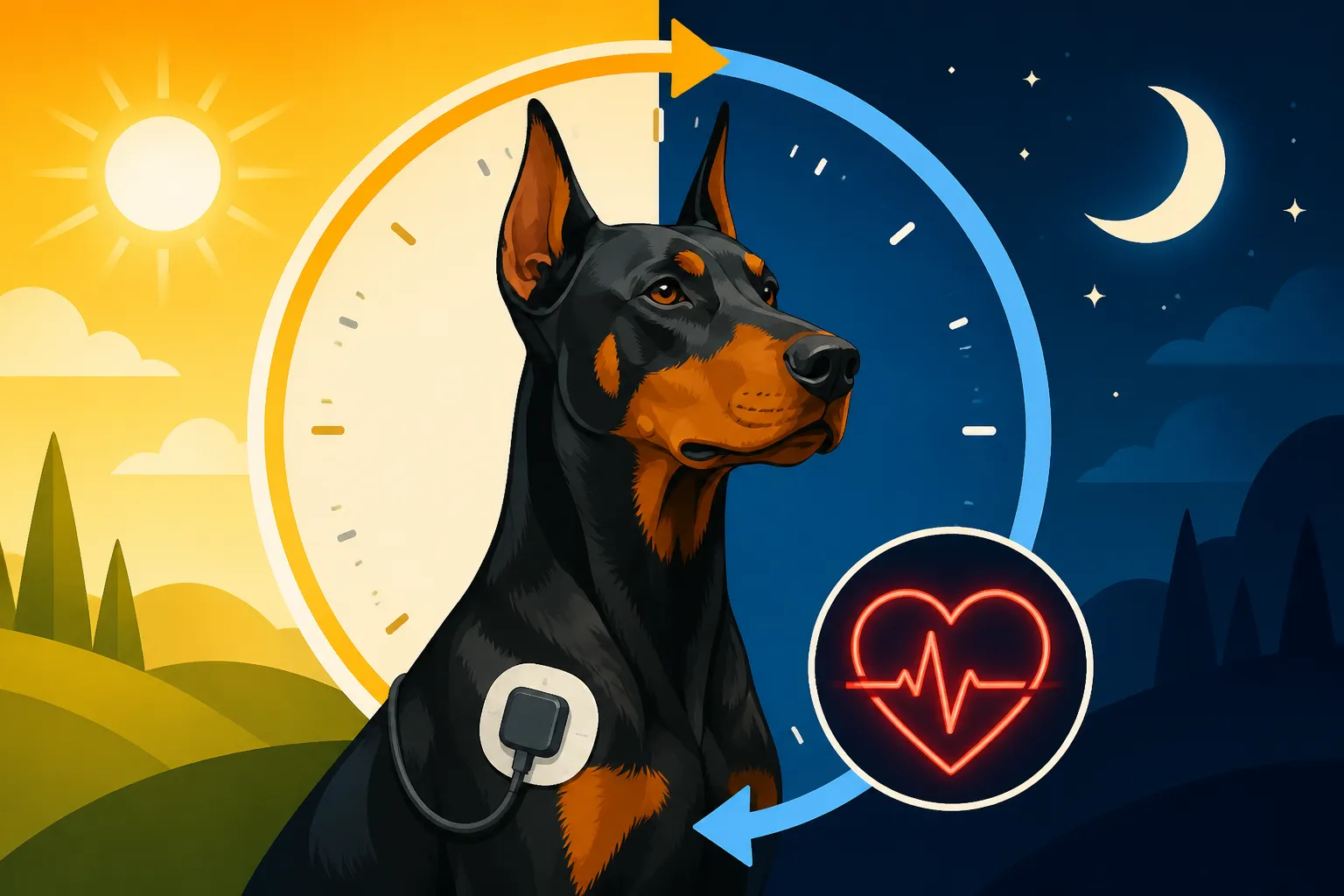
The Holter monitor takes this a giant leap further. Instead of a brief snapshot, it continuously records every single heartbeat over a full 24-hour period (or sometimes even longer, up to 48 or 72 hours, depending on the vet's recommendation). Your Doberman wears this small, lightweight device, usually secured in a special vest, as they go about their normal daily life. This means it captures heart activity during rest, sleep, play, excitement, and everything in between, giving a comprehensive picture of how their heart truly functions in different situations. For a breed so susceptible to The Heart Disease That Reaches Most Dobermans, this level of detailed monitoring is invaluable.
Why 24 Hours Is Critical for Dobermans
The "24 hours" isn't an arbitrary number; it's precisely what makes the Holter monitor so indispensable for Dobermans. The insidious nature of DCM in our breed is that it often begins with occult, or hidden, ventricular arrhythmias. These are abnormal electrical impulses originating in the heart's lower chambers, and they don't necessarily occur constantly. They can come and go, appearing sporadically throughout the day and night.
Imagine trying to catch these fleeting events with a standard, five-minute ECG. It’s truly like looking for a needle in a massive haystack. You could easily get a "clear" reading during a brief vet visit, only for your Doberman to experience hundreds of these abnormal beats later that night while sleeping peacefully at home. This is Why a Doberman Heart Fails Before Anyone Notices. The 24-hour duration allows the monitor to "wait" for these sporadic events, capturing them as they happen during typical activity cycles. This continuous vigilance is crucial because these electrical abnormalities are often the very first indicators of DCM, long before any structural changes to the heart (like enlargement) are visible on an echocardiogram, or before your Doberman shows any outward symptoms like coughing or lethargy. For a breed that often looks fine on the outside while a silent battle rages within, the Holter provides that early warning system, especially during The Doberman Years When Everything Shows Up.
The Holter Monitoring Process: What to Expect
When your veterinarian suggests a Holter monitor for your Doberman, it's completely natural to have a lot of questions and maybe even a little apprehension. You want to know what the process entails, how your dog will cope, and what you need to do to ensure the best possible results. Rest assured, while it sounds high-tech, the process is generally straightforward and well-tolerated by most Dobermans.
Preparing Your Doberman for Holter Placement
The journey begins with a brief visit to your veterinary clinic. Here, a trained vet technician or veterinarian will prepare your Doberman for the monitor's placement. This usually involves carefully shaving a few small patches of fur, typically on the chest area and sometimes behind the elbows. This isn't for aesthetics; it's crucial for ensuring good, reliable contact between your Doberman's skin and the electrodes. Poor contact can lead to unreliable readings, which is the last thing you want when trying to assess something as critical as heart health.
Once the fur is trimmed, the adhesive electrodes are applied to these areas. These electrodes are connected via wires to a small, lightweight recording device – the actual Holter monitor. The device itself is about the size of a small cell phone and is typically placed into a specially designed vest or wrap that your Doberman will wear. This vest serves a dual purpose: it keeps the electrodes securely in place and protects the monitor from bumps, scratches, or moisture. Most Dobermans are quite cooperative during this process, though some may be a little curious or fidgety, especially with the shaving. Your vet team will handle them gently to ensure a stress-free experience.
Living with the Holter for a Day
This is arguably the most important part of the entire process for you as the owner. Once your Doberman is fitted with the Holter monitor, they come home with you to continue their normal routine for the next 24 hours. The goal here is to capture a true representation of their heart's electrical activity during typical circumstances. This means maintaining their usual schedule of walks, feeding, playtime, rest, and sleep. Don't go out of your way to make them exceptionally active or keep them unusually sedate; routine is key.
You'll also be given a crucial task: keeping a detailed diary or log. This log should meticulously record your Doberman's activities throughout the 24 hours. Note down when they're eating, playing, going for a walk, sleeping, or experiencing moments of excitement (like a mail carrier coming to the door!). Crucially, if you notice any unusual behaviors, like a sudden cough, a moment of weakness, or even just acting "off," jot it down with the exact time. This diary is incredibly important because it allows the veterinary cardiologist to correlate any abnormal heart rhythms detected by the Holter with specific activities or events. For example, if a cluster of abnormal beats occurs during an exciting play session, that context is vital for interpretation. While wearing the device, you’ll need to make sure your Doberman avoids swimming or getting caught in heavy rain to protect the delicate electronics. Thankfully, the vast majority of Dobermans adapt quickly to the Holter vest and device and tolerate it without issue, hardly noticing it's there.
Device Removal and Data Analysis
After the full 24 hours have passed, you'll return to the vet clinic for the monitor's removal. This is a quick and painless process, simply involving unstrapping the vest and carefully peeling off the electrodes.
Once the device is removed, the data it collected is downloaded. This raw data, which can include hundreds of thousands of heartbeats, is then sent off to a board-certified veterinary cardiologist for expert analysis. It's important to understand that while your general practice veterinarian is highly skilled, interpreting Holter results requires specialized training. A cardiologist has the expertise to meticulously review every heartbeat, identify subtle arrhythmias, quantify them, and assess their significance. They're looking for things like the total number of abnormal beats, the type of arrhythmias, and patterns that might indicate the early stages of DCM or other cardiac issues. This is why having a specialist review the data is non-negotiable for accurate diagnosis and management. It's the critical step that transforms raw electrical signals into actionable insights for your Doberman's health.
Interpreting the Holter Results and Next Steps
The waiting period after your Doberman's Holter monitor is removed can feel like an eternity. You've done your part, and now you're eagerly awaiting the cardiologist's report to understand what's truly happening inside your Doberman's chest. This report will be dense with medical terminology, but understanding the key metrics will empower you to grasp the findings and make informed decisions with your vet.
Understanding the Numbers: PVCs and VT
When the cardiologist analyzes the Holter data, their primary focus, especially in Dobermans, is often on identifying and quantifying Premature Ventricular Contractions (PVCs) and any episodes of Ventricular Tachycardia (VT).
- Premature Ventricular Contractions (PVCs): These are essentially "extra" or "skipped" heartbeats that originate abnormally in the heart's ventricles (the lower pumping chambers) rather than following the normal electrical pathway. While a very occasional PVC can be benign in some breeds, in Dobermans, even a relatively small number can be a red flag.
- Ventricular Tachycardia (VT): This is a more concerning event, defined as a run of three or more consecutive PVCs. These rapid, abnormal beats can compromise the heart's ability to pump blood effectively, and sustained or frequent VT episodes are significant indicators of cardiac disease progression.
The cardiologist's report will typically provide a total count of PVCs over the 24-hour period, along with details about any VT episodes, including their duration and how frequently they occurred. What constitutes "worrying" numbers? For Dobermans, it's generally accepted that anything over 50 PVCs in a 24-hour period is abnormal and warrants close attention, while counts exceeding 100-300 can be highly indicative of occult (hidden) DCM. The presence of complex PVCs, such as couplets (two in a row), triplets (three in a row), or multifocal PVCs (originating from different sites in the ventricle), is also a serious concern regardless of the total number, as these often precede more severe arrhythmias.
Your cardiologist will carefully consider these numbers, alongside your activity log, to determine if the findings suggest occult DCM or another underlying cardiac arrhythmia. For a deeper dive into these numbers, you might find our article on How Many Abnormal Beats Worry a Doberman Cardiologist helpful.
| Feature | Standard ECG (Electrocardiogram) | 24-Hour Holter Monitor |
|---|---|---|
| Duration | Few minutes | 24 hours (or longer) |
| Environment | Clinic setting | Doberman's natural environment |
| Detection Scope | Detects constant or frequent arrhythmias occurring during the test | Detects intermittent, sporadic arrhythmias that may only occur during specific activities or rest |
| Patient Status | Often sedated or held still | Goes about normal daily life |
| Primary Use | Quick check, pre-surgical screening, immediate symptom investigation | Early detection of occult DCM in Dobermans, monitoring arrhythmia burden |
| Data Point | Snapshot of heart activity | Continuous, comprehensive recording over time |
When to Start Medication or Further Diagnostics
If the Holter monitor reveals significant arrhythmias, even if your Doberman is showing no outward symptoms, it's a critical moment for intervention. For Dobermans in the occult phase of DCM, meaning they have electrical abnormalities but no visible structural heart changes yet, medication can be a game-changer.
Thanks to landmark studies like the EPIC trial, we now know that starting certain medications before clinical signs appear can significantly delay the onset of overt heart failure and even extend a Doberman's lifespan. Pimobendan, for example, is often prescribed in this occult stage for Dobermans with evidence of DCM, as detailed in Pimobendan Before a Doberman Shows Signs. Other antiarrhythmic drugs, such as sotalol or mexiletine, might also be considered to control the abnormal beats and prevent more dangerous arrhythmias like sustained ventricular tachycardia.
Beyond medication, the Holter results will guide further diagnostics. An echocardiogram (a cardiac ultrasound) will almost certainly be recommended if significant arrhythmias are found. This allows the cardiologist to visualize the heart's structure, measure chamber sizes, assess wall thickness, and evaluate how effectively the heart is pumping. Together, the Holter and echo provide a comprehensive picture, allowing for an accurate diagnosis and a tailored treatment plan. This is often the point where pet insurance, like a policy from Healthy Paws, can become a true lifeline, helping to manage the ongoing costs of specialized diagnostics and medications.
The Importance of Consistent Screening
DCM is a progressive disease, and unfortunately, a "clear" Holter or echo one year doesn't guarantee your Doberman will remain clear forever. The disease often manifests between the ages of four and eight years, but it can appear younger or later. This is why consistent, annual screening with both a 24-hour Holter monitor and an echocardiogram is absolutely vital for every Doberman. It’s not a one-and-done test.
Think of it like this: your Doberman's heart health is a dynamic landscape. What looks healthy today might show subtle changes next year. Regular screening allows your veterinary cardiologist to establish a baseline, monitor for any changes, and intervene at the earliest possible stage. This proactive approach significantly improves the chances of managing the disease effectively, providing your Doberman with the best possible quality of life and potentially extending their time with you. Remember, The Age Doberman Heart Disease Usually Starts is a critical window for consistent monitoring. Planning ahead for these annual screenings, and considering a reputable pet insurance provider like Healthy Paws from an early age, can provide immense peace of mind.
Disclaimer
The information provided in this article is for educational and informational purposes only, and does not constitute veterinary advice. Always consult with a qualified veterinarian or veterinary cardiologist for any health concerns or before making any decisions about your Doberman's care.