What a Teething Doberman Can Safely Chew
Bringing home a Doberman puppy is an exciting time, but it often comes with a secret, destructive challenge: teething. Those adorable little shark teeth might seem innocent, but a Doberman puppy going through its teething phase can feel like a tiny wrecking ball determined to chew its way through your furniture, shoes, and anything else it can get its mouth on. It's a frustrating period, filled with puppy whines and chewed-up treasures, all while you worry about what's actually safe for their developing jaws and sensitive gums. This comprehensive guide is here to walk you through understanding your Doberman's chewing needs and, most importantly, provide a clear roadmap to safe and satisfying chew options that will save your belongings and keep your puppy happy and healthy.
Understanding Your Doberman Puppy's Teething Journey
Teething is a completely normal, albeit sometimes chaotic, part of every puppy's development. For a Doberman, a breed known for its intelligence and strong drive, this period can be particularly intense. They're not just being naughty; they're experiencing genuine discomfort and an innate need to explore and relieve pressure in their mouths.
The Timeline of Puppy Teeth
Your Doberman puppy will go through two distinct phases of dentition, much like human children. First come the deciduous, or "milk," teeth. These tiny, sharp teeth start erupting around two to three weeks of age, well before you bring your puppy home. By the time they're six to eight weeks old, they usually have a full set of 28 puppy teeth. These are incredibly sharp, and anyone who's played with a young Doberman puppy knows the nips can be painful!
The real teething begins when these baby teeth start to fall out and are replaced by adult teeth. This transition typically kicks off around three to four months of age and can continue until your Doberman is about six to seven months old. During this time, your puppy will lose all 28 baby teeth and gain 42 permanent adult teeth. It's a lot of dental action in a short period, and it's why their chewing drive becomes so intense. You might find tiny teeth around the house, or your puppy might simply swallow them – both are completely normal. Don't panic if you don't see any fallen teeth; they often just disappear during mealtime or play.
Why Puppies Need to Chew
Chewing isn't just a Doberman puppy's favorite pastime; it's a fundamental biological need. First and foremost, it helps relieve the discomfort of teething. Just imagine a baby cutting a new tooth; that constant pressure and soreness in their gums makes them want to put everything in their mouth. Puppies are no different. Chewing provides counter-pressure that can soothe their inflamed gums, acting like a natural pain reliever. If you’ve ever seen your Doberman puppy gnawing intently, it’s often because they’re trying to alleviate that ache.
Beyond pain relief, chewing is a crucial way for puppies to explore their world. Their mouths are their primary tool for discovery, much like human babies use their hands. They pick things up, taste them, and feel their texture with their teeth and gums. This exploration helps them learn about different objects and their properties. Moreover, chewing helps strengthen their developing jaw muscles. For a strong-jawed breed like a Doberman, building that muscle early is important, and providing appropriate outlets ensures they develop good habits, rather than turning their attention to your sofa cushions. If you haven't yet, you'll also want to look into Doberman Puppy Biting and Adolescent Mouthing to prepare for how to manage their sharp little chompers.
Safe Chew Options for Teething Doberman Puppies
Navigating the world of puppy chews can be overwhelming, with so many options available. The key is to select items that are durable enough to withstand a Doberman's strong bite, yet safe enough not to pose choking hazards or damage their developing teeth.
Durable Rubber and Nylon Toys
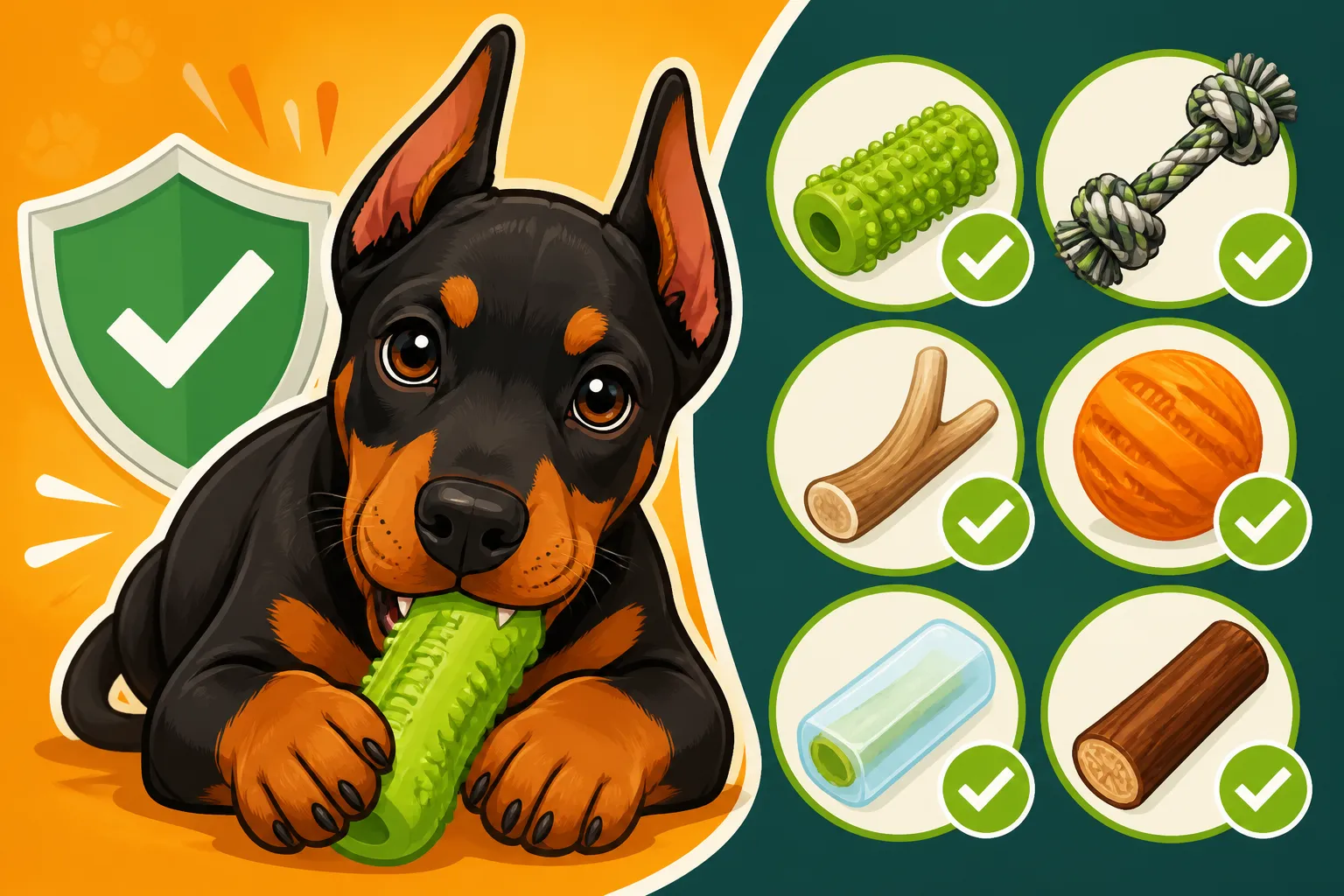
When it comes to durability and safety, certain rubber and nylon toys are absolute champions for a teething Doberman. Brands like KONG are staples for a reason. Their classic cone-shaped toy, for instance, is made of tough, natural rubber that can withstand intense chewing. What makes it even better is that it can be stuffed with soft treats, peanut butter, or even plain yogurt and then frozen. The frozen treat inside not only makes the chewing experience last longer but also provides a wonderfully soothing cold sensation for inflamed gums. This can be a godsend when your puppy is particularly fussy with teething pain.
Nylabone also offers a range of durable nylon chew toys specifically designed for strong chewers and teething puppies. These come in various shapes and textures, some with little nubs and ridges that help clean teeth and massage gums. It’s crucial to choose the appropriate size for your Doberman puppy – something too small can become a choking hazard, while something too large might be difficult for them to get a good grip on. Always look for chew toys labeled for "puppies" or "strong chewers" and consider the eventual adult size of your Doberman. You can find a huge selection of these types of durable toys on retailers like Chewy, making it easy to compare different brands and materials to see what your specific puppy prefers. For general supplies, especially if you're kitting out for a Doberman that will hit eighty pounds, a good place to start shopping is Kitting Out for a Doberman Puppy That Will Hit Eighty.
Edible Chews and Dental Sticks
Edible chews can be a great way to satisfy your Doberman puppy's chewing needs while also offering some nutritional benefits or aiding in dental hygiene. However, it’s vital to choose wisely. Look for digestible options that are appropriate for your puppy’s age and size. Bully sticks, for example, are a popular choice. Made from beef pizzle, they are fully digestible and generally softer than traditional bones, reducing the risk of broken teeth or splintering. They come in various thicknesses and lengths, so you can pick one that will last your Doberman puppy a reasonable amount of time without being consumed too quickly.
Dental sticks and chews, often fortified with enzymes to help reduce plaque and tartar, are another excellent option. Brands like Greenies or similar veterinarian-recommended dental chews can offer a dual benefit: satisfying the urge to chew and contributing to oral health. Always check the ingredients list to ensure there are no artificial additives or common allergens that might upset your Doberman's stomach. Some premium pet food brands, such as Ollie, also offer natural, limited-ingredient dental chews that focus on high-quality components. Remember that even edible chews should be given under supervision, especially when first introducing them, to ensure your puppy handles them safely and doesn't try to swallow large chunks.
Frozen Options for Soothing Gums
When your Doberman puppy is really struggling with sore gums, cold relief can be incredibly effective. There are several simple, safe, and inexpensive frozen options you can offer to help soothe their discomfort. Freezing a KONG toy stuffed with puppy-safe pureed pumpkin or plain yogurt, as mentioned before, is fantastic. The coldness numbs their gums, while the solid treat provides a satisfying challenge.
Another popular and easy option is a frozen carrot. Carrots are firm enough to provide good chewing resistance, and the cold temperature offers relief. Just make sure the carrot is a suitable size – a whole large carrot for a Doberman puppy is usually fine, but smaller pieces could be a choking hazard if they break off. Some owners also freeze wet washcloths or towels that have been soaked in plain water or a low-sodium chicken broth. These offer a novel texture and a lot of cold relief. The fabric feels satisfying to chew and the cold further numbs the gums. Always ensure these items are clean and free of any laundry detergents or fabric softeners before freezing and offering them to your puppy. It's a simple trick that can make a huge difference on a tough teething day.
What to Avoid Giving Your Teething Doberman
Just as important as knowing what to give your Doberman puppy to chew is knowing what not to give them. Some items, while seemingly harmless, can pose significant risks to their health and safety.
Real Bones and Antlers
It might seem natural to give a dog a bone, but real bones – especially cooked bones from dinner – are incredibly dangerous for Doberman puppies and adult dogs alike. Cooked bones become brittle and can splinter easily, leading to internal punctures, blockages, or severe constipation. Raw bones also carry risks, including the potential for bacterial contamination, chipped teeth, and gastrointestinal upset, especially if your Doberman is not accustomed to them. The risk of a fractured tooth from a hard bone is significant and can lead to painful dental issues and expensive vet bills down the line.
Antlers are often marketed as natural, long-lasting chews, and while they are durable, they are also extremely hard. For a Doberman puppy with still-developing teeth, or even an adult Doberman, chewing on antlers can easily lead to slab fractures, where a piece of the tooth breaks off, exposing the sensitive pulp. These injuries are very painful and almost always require veterinary intervention, often a root canal or extraction. It's simply not worth the risk, especially when there are so many safer alternatives available that provide similar chewing satisfaction without the severe dental consequences.
Household Items and Old Shoes
One of the biggest struggles during Doberman puppyhood is preventing them from chewing on your things. The problem is, to a puppy, there's often no distinction between their designated chew toy and your expensive leather shoe or the leg of your coffee table. Giving your puppy old shoes or socks to chew on, even if you deem them "retired," is a huge mistake. This teaches them that shoes and fabric items are acceptable chew targets, which will inevitably lead to them destroying your current wardrobe or other textiles around the house. They can't differentiate between your old, worn-out slipper and your brand-new designer pair.
Beyond the destruction, household items pose significant health hazards. Many materials, like plastics, treated wood, fabrics, or even certain types of carpet, can splinter, break off, or be ingested in large quantities. This can lead to choking, internal blockages, or toxic exposure, all of which are medical emergencies. It's far better to keep all non-dog-specific items out of reach and only offer safe, appropriate chews. Consistency in this approach will save you heartache and vet visits. You'll also want to read up on Toilet Training a Doberman Puppy in Two Weeks and Choosing a Crate for a Doberman to establish good habits early.
Chews That Are Too Small or Too Hard
Choosing the right size and hardness for your Doberman puppy's chews is critical. A chew that is too small can easily become a choking hazard. As your Doberman puppy grows rapidly, a toy that was once appropriate might quickly become too small. Always ensure that any chew toy is too large for your puppy to swallow whole, and regularly check toys for wear and tear. If a toy starts to break into smaller pieces, it’s time to replace it.
Similarly, chews that are excessively hard can be detrimental to your Doberman's dental health. A general rule of thumb is that if you can't indent it with your thumbnail, or if it would hurt to hit your kneecap with it, it's probably too hard for your dog's teeth. This includes many types of natural bones, antlers, and even some very dense synthetic chews. While Dobermans have powerful jaws, their teeth are still susceptible to fractures, especially during the teething phase when their adult teeth are still settling in. Opt for chews that have some give or are designed to be slowly worn down rather than those that are rock-hard. Finding a good retailer like Amazon can help you check reviews and ratings for durability and safety before purchasing, ensuring you're getting suitable products.
Here's a quick comparison of safe versus unsafe chew items:
| Chew Category | Safe Options for Teething Dobermans | Unsafe Options to Avoid | Risks Associated with Unsafe Options |
|---|---|---|---|
| Durable Toys | KONG Classic (rubber), Nylabone Puppy Chews (flexible nylon), Benebone (durable nylon) | Cheap plastic toys, Plush toys (without supervision), Hard plastic bones | Choking, ingestion of small parts, intestinal blockage, no dental benefit |
| Edible Chews | Bully sticks (digestible), Dental chews (veterinarian-approved), Soft chew treats | Cooked bones (chicken, pork, beef), Rawhide (choking risk), Antlers, Hooves, Very hard natural bones | Splintering, choking, broken teeth, intestinal punctures/blockage, bacterial contamination |
| Frozen Items | Frozen KONGs (stuffed), Frozen carrots, Frozen wet washcloths | Ice cubes (can be too hard and cause tooth fractures) | Tooth fractures |
| Household Items | None – all household items should be considered off-limits | Old shoes, socks, furniture legs, plastic containers | Teaching bad habits, ingestion of toxic/indigestible materials, choking, internal damage |
Best Practices for Managing Doberman Teething
Managing a teething Doberman puppy is about more than just providing chew toys; it’s about establishing good habits, consistent training, and active supervision.
Rotation and Supervision
One of the best ways to keep your Doberman puppy engaged with their appropriate chew toys is to rotate them. Just like children, puppies can get bored with the same few toys day in and day out. Having a stash of five or six different safe chew toys and rotating two or three of them into their play area at a time can significantly increase their appeal. When you bring out a "new" toy they haven't seen in a few days, it often feels exciting and fresh to them, encouraging them to focus their chewing energy where it's supposed to be.
More importantly, especially with a Doberman puppy's strong jaws and determination, supervision is absolutely non-negotiable. No chew toy, no matter how durable or "safe," is 100% indestructible or risk-free without your watchful eye. Always supervise your puppy when they are chewing, especially when they are introduced to a new type of chew or when a toy starts to show significant wear. Look for signs of the toy breaking into smaller pieces, or if they seem to be trying to swallow chunks that are too large. Being present allows you to intervene immediately if a problem arises, preventing potential choking hazards or the ingestion of harmful fragments. This vigilance is a cornerstone of responsible Doberman ownership.
The Power of Redirection
Despite your best efforts, your Doberman puppy will inevitably try to chew on something they shouldn't – whether it's the edge of a rug, a table leg, or your hand. This is where the power of redirection comes into play. It’s not about punishing them for their natural chewing instinct, but about guiding that instinct toward appropriate outlets. If you catch your puppy chewing on an inappropriate item, calmly and gently interrupt them. Don't yell or scare them, as this can create negative associations or make them hide their chewing behavior.
Instead, immediately offer them a suitable chew toy, making it enticing. Wiggle it, offer praise when they take it, and then lavish them with positive reinforcement, like gentle verbal praise or a soft stroke, as they begin to chew on the correct item. The key is consistency. Every single time your Doberman puppy attempts to chew something forbidden, you must redirect them. Over time, they will learn the difference between what is theirs to chew and what is not. This consistent redirection teaches them good habits and reinforces the idea that satisfying chewing comes from their designated toys, not your possessions. This is a foundational element to Training a Doberman That Is Smarter Than You Expect.
Creating a Designated Chew Area
Just as critical as providing safe chews and redirecting inappropriate behavior is creating a clear, designated "chew area" or safe space for your Doberman puppy. This helps them understand the boundaries of acceptable chewing. For many Doberman owners, this means their puppy's crate, especially when you can't actively supervise them. A crate, when properly introduced and made comfortable, becomes a safe haven where your puppy can relax with their approved chew toys without the temptation of forbidden household items. Consider reading Whether a Doberman Should Be Crated at Work Hours for more insights on crate training.
Alternatively, a puppy-proofed playpen or a specific room in your house that has been cleared of anything they shouldn't chew can serve this purpose. The idea is to limit their access to "forbidden" items, especially when you're busy or away. Stock this area with a variety of safe, engaging chew toys. By consistently offering appropriate chews in this designated space, you're teaching your Doberman puppy where and what they are allowed to chew. This structured approach not only protects your belongings but also fosters a sense of security and understanding for your puppy, reducing anxiety and encouraging independent, constructive chewing habits. This will significantly help as your Doberman puppy learns What a Doberman Puppy Needs at Each Age.
Disclaimer
This article is for general informational purposes only and does not constitute professional advice. Laws, prices and regulations vary by location and change over time. Consult a qualified professional for guidance on your specific situation.