Whether a Doberman Puppy Should Take Calcium
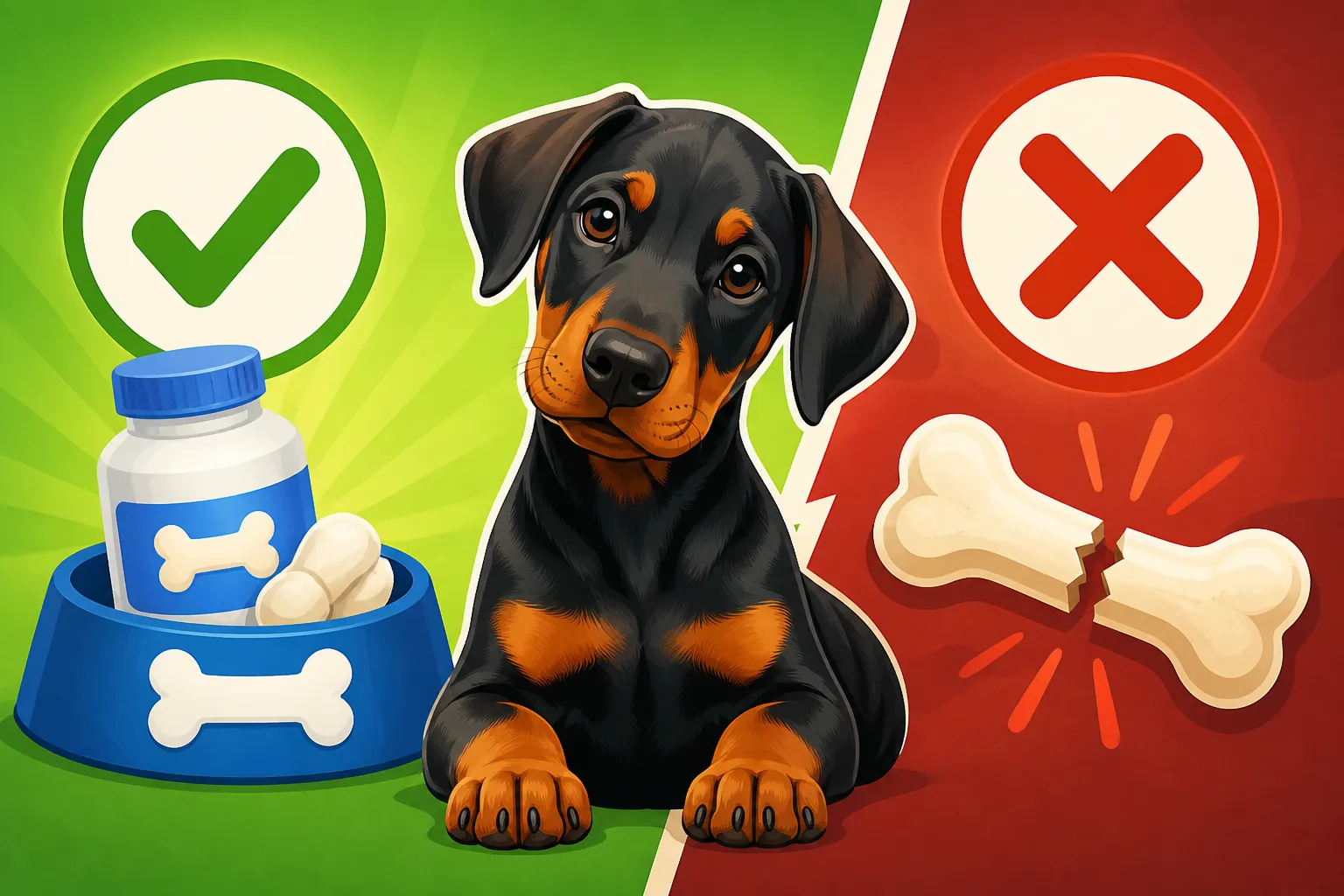
It's completely understandable to want to give your Doberman puppy the absolute best start in life, especially when you see them growing so quickly and you just want to ensure those magnificent bones develop strong and true. You might even hear whispers, or read online, about giving calcium supplements to "boost" bone development in large breeds. However, for a Doberman puppy, adding extra calcium to their diet without specific veterinary guidance isn't just unnecessary; it can actually be incredibly dangerous, leading to severe and painful orthopedic problems that can affect them for a lifetime. This guide will walk you through why this is the case and how to truly support your Doberman's healthy growth.
The Unique Growth Journey of Your Doberman Puppy
Why Rapid Growth Can Be a Double-Edged Sword for Dobermans
You bring home that adorable Doberman puppy, and it seems to grow before your very eyes! One day they're a tiny bundle, the next they're almost tripping over their own colossal paws. Dobermans are a large, fast-growing breed, and this rapid development is a defining characteristic. While it's incredibly exciting to watch them transform from clumsy pups into sleek, powerful adolescents, this accelerated growth phase, typically from about 3 to 8 months of age, is also a critical and somewhat precarious time for their skeletal development.
Unlike smaller breeds, whose bones mature more slowly and steadily, a Doberman's bones, joints, and ligaments are under immense pressure to keep pace with their increasing size and weight. It's like building a skyscraper at lightning speed – every component needs to be perfectly placed and strong enough to support the rapidly increasing load. If not managed carefully through proper nutrition and activity, this speedy growth can lead to serious orthopedic problems that can plague them for life. It’s easy to think "bigger and faster is better" when it comes to growth, but with Dobermans, it's actually about controlled, steady development. This period is when their adult structure is laid down, and any missteps here can have lasting consequences, far beyond just a temporary limp. For more details on their development, you might find our article The Age a Doberman Reaches Full Height interesting.
The Role of Calcium and the Peril of Imbalance
Calcium is undeniably vital. No one disputes its necessity. It's the primary mineral responsible for strong bones and teeth, and it plays crucial roles in nerve function, muscle contraction, and blood clotting. Your Doberman puppy absolutely needs calcium to grow. However, when we talk about Doberman puppies, the crucial factor isn't just getting calcium, but getting the right amount and, equally important, the right balance with other minerals, particularly phosphorus. Nature has a finely tuned, intricate system for this.
If you introduce too much calcium, especially on top of an already perfectly balanced diet, you disrupt this delicate ratio. The body, sensing an excess, might try to absorb less, or it might attempt to store it in places it shouldn't. Even worse, an overload can interfere with the proper development of cartilage into healthy, strong bone. This isn't about supplementing for a deficiency in most healthy Doberman puppies; it's about accidentally creating an excess that the puppy's rapidly developing skeletal system simply isn't equipped to handle without repercussions. The sophisticated biological processes involved in bone growth are sensitive to these ratios, and disrupting them can have a cascade of negative effects.
The Real Risks of Excessive Calcium in Growing Dobermans
It might sound completely counterintuitive, but for a large, fast-growing breed like a Doberman, too much calcium is often far more damaging and common than a slight deficiency (which is exceedingly rare when feeding modern, reputable puppy foods). Over-supplementation, particularly during that critical rapid growth phase from 3 to 8 months, can lead to several severe orthopedic conditions. These aren't minor inconveniences; they are painful, debilitating, and often expensive to treat.
One of the most common and dreaded conditions is Osteochondritis Dissecans (OCD). This occurs when the cartilage in the joints doesn't develop correctly, leading to painful flaps or fragments that break off into the joint, causing lameness and chronic pain. Another severe condition is Hypertrophic Osteodystrophy (HOD), often referred to as "puppy carpal tunnel syndrome," characterized by inflamed growth plates. This causes intense lameness, pain, swelling in the limbs, and sometimes fever. These conditions aren't just uncomfortable for your Doberman; they can require costly surgeries, ongoing pain management, and can significantly impact your Doberman's quality of life and athletic potential for the rest of their life. The long-term impact on their joints can contribute to conditions like Doberman Hip Dysplasia down the road. It's a heavy price to pay for what seems like a well-intentioned effort to help them grow stronger.
Commercial Puppy Foods: The Calcium Solution You Already Have
Why "Large Breed" Formulas Are Specifically Designed for Your Doberman
When you walk down the dog food aisle at a pet store or browse online at places like Chewy or Amazon, the sheer number of options can be utterly overwhelming. But for Doberman puppies, there's a reason those bags proudly labeled "Large Breed Puppy" exist, and why you should pay attention to them. These formulas aren't just about bigger kibble pieces to suit a larger mouth; they are specifically engineered and meticulously balanced to provide a controlled growth rate for puppies of giant and large breeds.
This means they often have slightly lower calorie densities compared to regular puppy foods or adult formulas, which helps prevent excessively rapid weight gain. Crucially, they also contain carefully calibrated calcium and phosphorus levels. The goal is to promote a slower, more even, and healthier skeletal development, significantly reducing the risk of those dreaded growth-related orthopedic diseases we just discussed. Reputable brands understand the science behind large breed growth, adhering to strict nutritional guidelines set by organizations like AAFCO (Association of American Feed Control Officials) in the United States. This isn't just marketing fluff; it's a critical dietary intervention. You'll find excellent options from trusted brands that cater to this specific need on platforms like Chewy or Amazon, making it easier than ever to get the right food delivered straight to your door. The article Whether Growth Formula Slows a Doberman Down Enough provides more context on this specialized nutrition.
Decoding the Labels: What Calcium and Phosphorus Ratios Mean
Understanding a dog food label can feel like reading a foreign language, filled with percentages and ingredients you can barely pronounce. But for Doberman owners, paying close attention to the calcium and phosphorus content, and especially their ratio, is a simple yet powerful way to ensure your puppy is getting exactly what they need. Ideally, for large breed puppies, you want to look for a calcium level that is generally between 1.0% and 1.5% on a dry matter basis. This isn't the "as fed" percentage you often see first; sometimes you need to dig a little deeper or contact the manufacturer for the dry matter basis calculation.
More importantly, you need to check the calcium-to-phosphorus ratio. This ratio should typically fall between 1.1:1 and 1.4:1, with many experts considering 1.2:1 to be a near-perfect sweet spot for large breed puppies. A higher ratio, indicating too much calcium relative to phosphorus, can be just as problematic as an overall high calcium content. Many premium large breed puppy foods, like those sometimes offered by fresh food companies such as Ollie, are transparent about these figures, and often state that they are formulated for "growth of large breed dogs." If a bag doesn't specify these crucial ratios, or if you're unsure how to interpret them, don't hesitate to reach out to the manufacturer's customer service or, better yet, consult your veterinarian. Remember, the goal for a Doberman puppy is controlled growth, not accelerated growth, and the right food provides this.
| Nutrient | Recommended Range (Dry Matter Basis) | Why it matters for Dobermans |
|---|---|---|
| Calcium | 1.0% – 1.5% | Essential for bone formation, but excess can lead to growth disorders. |
| Phosphorus | 0.8% – 1.2% | Works synergistically with calcium; proper balance is crucial. |
| Ca:P Ratio | 1.1:1 – 1.4:1 | Critical for preventing orthopedic diseases and ensuring correct bone mineralization. |
| Calories | Moderate | Prevents excessively rapid growth which can stress developing joints. |
| Protein | 25% – 30% | Supports healthy muscle development without encouraging unnatural bone growth. |
The Grave Mistake of Supplementing a Balanced Puppy Diet
This is where many well-meaning owners, desperate to do right by their Doberman puppy, inadvertently cause harm. If you are already feeding a high-quality, commercially prepared large breed puppy food from a reputable brand, it already contains the optimal levels of calcium, phosphorus, and all other essential nutrients your Doberman puppy needs for healthy, controlled growth. These foods have been scientifically formulated to prevent both deficiencies and, crucially, dangerous excesses.
Adding any additional calcium supplement – whether it's a calcium powder, a chewable tablet, extra dairy products like cottage cheese, or even certain bone broths – directly disrupts this carefully balanced nutritional profile. It's like trying to "improve" a perfectly tuned, high-performance engine by simply pouring in an extra quart of oil when it's already full – you're far more likely to do damage than good. Your puppy's body is designed to absorb and utilize the nutrients provided in its food efficiently. Overloading the system with additional calcium forces its body to work overtime to try and excrete the excess, or, worse, leads to abnormal and painful skeletal development issues. Trust the science behind the feed; it’s designed to provide everything your growing Doberman needs. Trying to outsmart it with extra calcium is a risk not worth taking, and one that can lead to lifelong consequences for your beloved companion.
When Calcium Supplementation Might (Rarely) Be Considered
Specific Veterinary Guidance Is Non-Negotiable
Let’s be absolutely crystal clear on this point: the only time you should ever, ever consider giving your Doberman puppy a calcium supplement is if your veterinarian, after a thorough examination and possibly diagnostic testing, specifically recommends it. This is not a decision to be made based on internet forums, advice from a well-meaning friend, or a gut feeling. There are indeed extremely rare medical conditions where a puppy might have a diagnosed calcium deficiency or an absorption issue. For example, some puppies might have a rare metabolic bone disease, or a lactating mother might experience eclampsia and require emergency calcium.
In such very specific and rare cases, your vet will prescribe the exact type of calcium supplement, the precise dosage, and the specific duration of supplementation. They will also implement ongoing monitoring to ensure it's having the desired effect without inadvertently causing new problems. Without this professional guidance, specific diagnosis, and detailed monitoring, you are playing a dangerous guessing game with your Doberman’s rapidly developing skeleton, and the odds are overwhelmingly stacked against a positive outcome. Always consult a professional for your Doberman's health, especially when it comes to diet and supplements.
The Exception: Professionally Formulated Home-Prepared Diets
Now, if you've made the conscious decision to feed your Doberman puppy a home-cooked or raw diet – which, to be frank, is a whole different discussion entirely and comes with its own complex set of challenges and responsibilities – then, yes, calcium supplementation often becomes absolutely necessary. However, this is emphatically not a do-it-yourself project for a casual owner. Crafting a nutritionally complete and balanced home-prepared diet, especially for a large breed puppy with such specific calcium and phosphorus needs for proper skeletal development, requires the expertise of a board-certified veterinary nutritionist.
These specialists will meticulously analyze every ingredient you plan to use, calculate the precise nutrient levels, and then recommend appropriate supplements, including calcium and phosphorus, to ensure your puppy receives everything it needs without dangerous excesses or deficiencies. Simply throwing together some meat and vegetables, or relying on generic, unverified recipes found online, is a recipe for nutritional disaster. Such an approach will almost certainly lead to severe nutritional imbalances that will profoundly impact your Doberman’s health and development. While some commercial brands like Ollie offer fresh food options, even these should be specifically formulated for large breed puppies by veterinary nutritionists, alleviating the need for you to guess at supplementation. For more information on complex dietary needs, consider exploring Raw Diets and a Doberman's Copper Load or Home Cooking for a Doberman With Liver Disease, though these are for specific conditions.
Monitoring Your Doberman's Growth Without Guesswork
Instead of fixating on unnecessary calcium supplements, channel your energy and good intentions into monitoring your Doberman puppy’s growth in a healthy, evidence-based way. Regular veterinary check-ups are absolutely essential, not just for routine vaccinations but also for your vet to assess their growth rate, body condition score, and overall health. They can spot subtle signs of orthopedic issues long before you might. Keep a close eye on their weight and actively learn to perform a body condition score. You should be able to easily feel your Doberman's ribs with minimal padding, without seeing them protrude excessively, and they should have a discernible waist when viewed from above. Remember, for a Doberman puppy, lean is mean (in a good way!) when it comes to healthy development.
If you ever feel your Doberman is growing too fast or too slowly, or if you notice any limping, stiffness, reluctance to play, or changes in their gait, these are the immediate cues that your vet needs to investigate. These are symptoms that require professional medical attention, not an excuse to grab a calcium pill. Proper growth isn't about speed or achieving maximum size; it's about a steady, healthy trajectory that supports long-term skeletal integrity and overall well-being. Your vet is your best partner in this journey, ensuring your puppy is on the right path. For guidance on appropriate feeding amounts to maintain a lean body, you might find Weighing a Doberman's Ration Daily helpful.
Beyond Calcium: Holistic Approaches to Doberman Bone Health
Controlled Exercise: Nurturing Joints, Not Stressing Them
While Dobermans are energetic, athletic, and full of boundless puppy enthusiasm, their rapidly growing joints are incredibly vulnerable. It's crucial to resist the urge to over-exercise them, no matter how much they seem to enjoy it. Strenuous, repetitive, high-impact exercise, such as long-distance running, intense agility work, or repeated jumping from heights, can put undue and damaging stress on their soft, developing growth plates and ligaments. These delicate structures are still forming and are not yet robust enough to handle the kind of impact an adult Doberman might endure.
Instead of intense workouts, focus on controlled, moderate exercise. Think shorter, more frequent walks on soft surfaces like grass, supervised play sessions with appropriate toys, and plenty of mental enrichment activities. Let your puppy dictate the pace and duration of their play; if they start to slow down or lie down, it’s time to rest. Avoid pushing them past their natural limits. Over-exercising a young Doberman is another common mistake that can lead to orthopedic problems, regardless of how perfectly balanced their diet is. As they mature, typically after 12-18 months, you can gradually increase activity levels, but patience is absolutely key during the puppy phase. Consider this period an investment in their long-term soundness, protecting them from unnecessary strain that can lead to issues like Cruciate Injury in an Athletic Doberman or Stiffness in a Doberman That Used to Sprint later in life. Additionally, consider reading Whether Stairs Hurt a Doberman Growing Fast for more practical advice.
Maintaining a Lean Body Condition: The Unsung Hero of Joint Health
One of the most impactful, yet often overlooked, things you can do for your Doberman puppy's skeletal and joint health is to keep them lean, even a little on the skinny side. While it's incredibly tempting to want a big, robust, chunky puppy, excess weight puts enormous and unnecessary strain on developing joints, exacerbating any predisposition to orthopedic issues. Imagine carrying a heavy backpack all day, every day – that's what extra weight feels like to a growing puppy's skeleton. A lean puppy will grow at a more appropriate, controlled pace, putting less stress on their growth plates and ligaments.
You should be able to easily feel their ribs with minimal padding, without having to press hard, and they should have a clearly defined waist when viewed from above. When seen from the side, you should notice a definite "tuck-up" where their abdomen narrows towards their hind legs. If you're struggling to maintain this lean physique, you might need to adjust their food intake, potentially consulting with your vet about the precise calorie requirements for a growing Doberman. Portion control is vital; simply scooping without measuring can lead to overfeeding. Don't worry if strangers occasionally comment that your Doberman looks thin; for a large, rapidly growing breed like the Doberman, lean is unequivocally healthy! The article Reading Ribs and Hip Points on a Doberman offers more visual guidance on body condition.
The Foundation of Health: Responsible Breeding and Early Screening
Ultimately, the health of your Doberman puppy, including their skeletal integrity, begins long before they even come home to you. Choosing a truly responsible breeder who prioritizes comprehensive health testing and sound breeding practices is absolutely paramount. A reputable breeder will screen their breeding stock for genetic predispositions to orthopedic issues, such as hip and elbow dysplasia, as well as critical heart conditions like DCM and other breed-specific ailments. They should be transparent and willing to show you verifiable health clearances and pedigrees for both parent dogs.
Starting with a puppy from genetically sound parents significantly reduces the risk of many inherited conditions. While diet and exercise play a crucial role in nurturing that potential, they can't fully compensate for poor genetics. Doing your homework on a breeder and understanding The Health Testing a Doberman Breeder Must Show is the first and arguably most important step in ensuring your Doberman puppy has the best possible start to a long, healthy life. This foundational health also extends to understanding specific genetic predispositions like The Von Willebrand DNA Test for Dobermans and ensuring you're prepared for any unique care needs. A well-bred Doberman is the best insurance policy you can have for their future health.
The Long-Term Perspective: A Lifetime of Optimal Care
Raising a Doberman is a journey, a commitment, and definitely not a sprint. While the puppy phase can feel intense with its rapid changes and growth spurts, the informed decisions you make now will echo throughout their entire life. Instead of fixating on quick fixes or perceived shortcuts like calcium supplements, embrace a holistic approach that prioritizes a high-quality, large-breed-specific diet tailored to controlled growth, appropriate and controlled exercise, maintaining a lean body condition, and consistent, proactive veterinary care.
These fundamentals are the true building blocks of a robust and healthy Doberman. They will help prevent painful and costly orthopedic issues, ensuring your Doberman enjoys a full, active life without unnecessary discomfort or limitations. Remember, your ultimate goal is a strong, healthy adult Doberman who is sound in body and mind, not simply the biggest or fastest-growing puppy on the block. Patience, diligence, and informed choices are your best and most effective tools in this endeavor, setting your Doberman up for a lifetime of wellness.
Disclaimer
This article is for general informational purposes only and does not constitute professional advice. Laws, prices and regulations vary by location and change over time. Consult a qualified professional for guidance on your specific situation.