Whether a Muzzled Doberman Frightens the Public
As Doberman owners, we often walk a tightrope, navigating public perceptions that can range from admiration to outright fear. Adding a muzzle to our beloved companion, even for the most responsible and loving reasons, can instantly amplify these anxieties, making us worry about frightening others or reinforcing negative stereotypes. This guide aims to tackle that very real concern head-on, exploring why muzzling a Doberman can sometimes draw negative reactions and, more importantly, how we can confidently and positively manage these interactions for the sake of our dogs and ourselves.
The Public Perception of Muzzled Dogs – Especially Dobermans
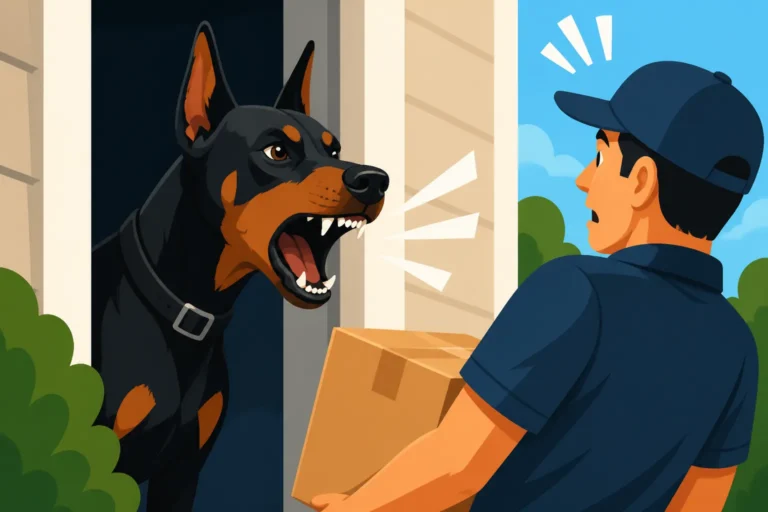
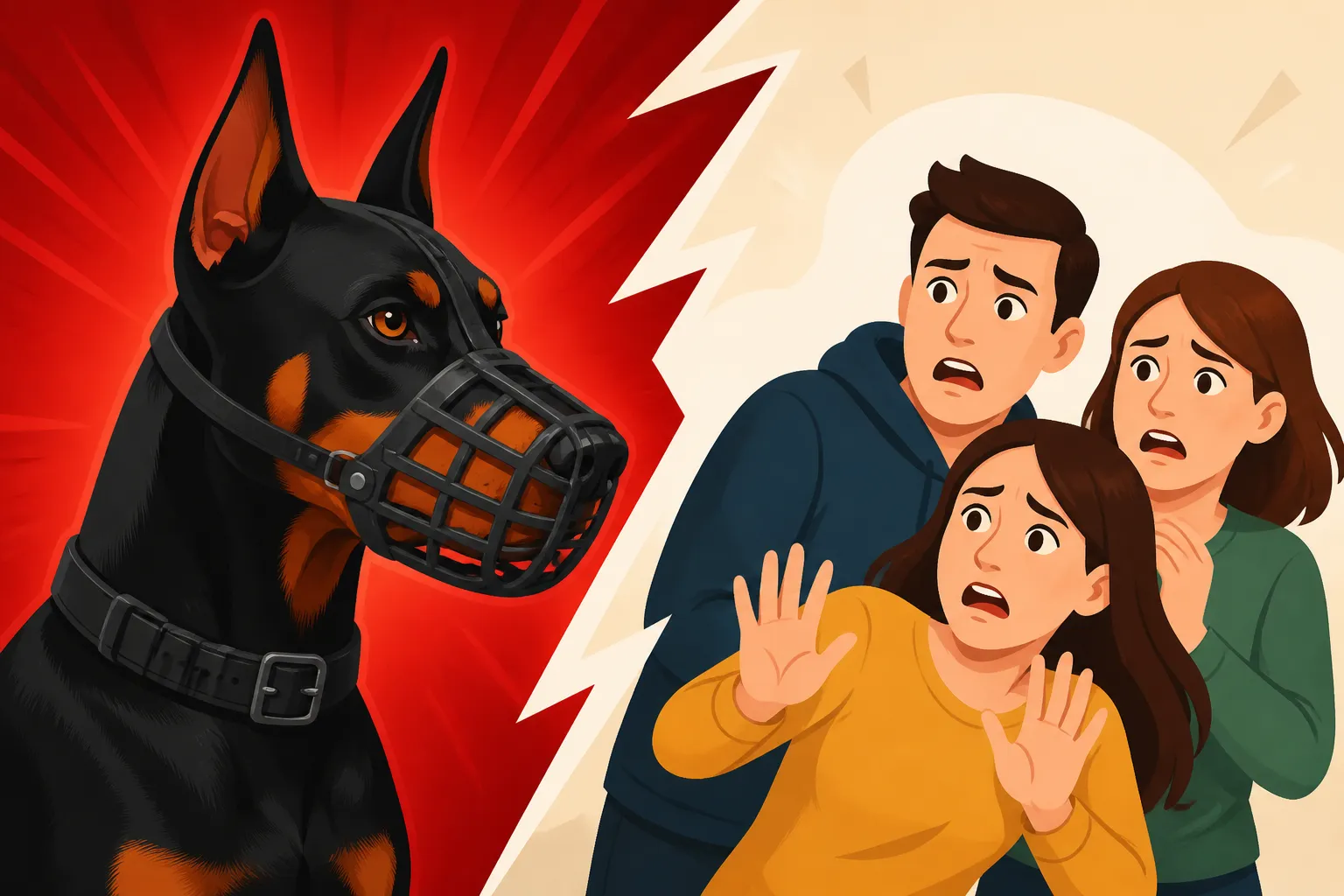
Let's be honest: the Doberman already comes with a built-in reputation. For decades, they've been typecast in media as fierce guard dogs or intimidating villains, a far cry from the affectionate, loyal, and often goofy companions we know them to be at home. When you combine this pre-existing image with the visual cue of a muzzle, it's completely understandable why public reactions can sometimes be less than ideal.
Why Dobermans Already Face Scrutiny
Dobermans, with their sleek, powerful build, alert demeanor, and often cropped ears and docked tails (especially in America), can project an image of intensity. It's a look that commands respect, but unfortunately, for some, it also triggers apprehension. People who aren't familiar with the breed's true temperament, or who have only seen them portrayed in movies, tend to project their fears onto these dogs. They might not realize that the "guard dog" image is often a carefully cultivated facade, and that beneath it lies a sensitive, devoted family member. This breed-specific scrutiny means that any tool, like a muzzle, intended for safety can easily be misinterpreted as confirmation of a dog's inherent danger. You can read more about Why Dobermans Have a Frightening Reputation if you're curious about the history behind this public image.
The Automatic Assumptions When a Dog Wears a Muzzle
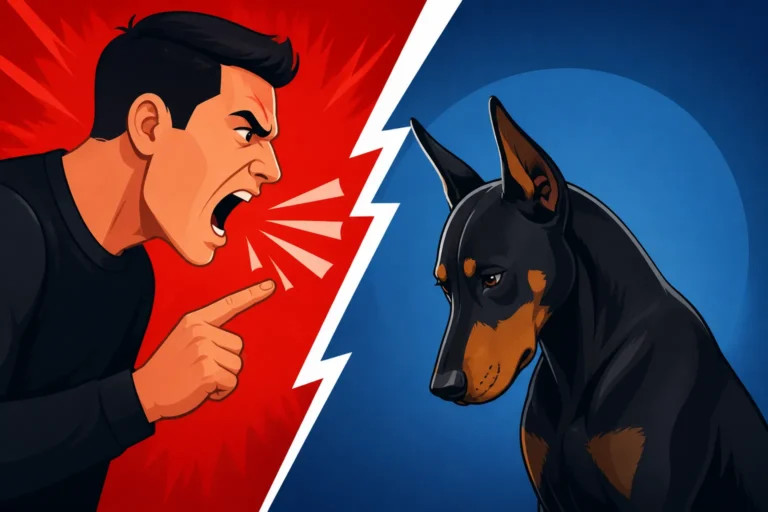
It's a frustrating truth: when people see a dog in a muzzle, their minds often jump straight to "aggression." They assume the dog has bitten someone, is prone to biting, or is inherently dangerous. This knee-jerk reaction ignores the myriad of valid, responsible reasons an owner might choose to muzzle their dog. Perhaps your Doberman has a habit of scavenging dangerous items on walks, or maybe they get overwhelmed at the vet and a muzzle offers everyone peace of mind. The muzzle becomes a visual shorthand for "problem," regardless of the actual situation. This can be incredibly disheartening for owners who are doing their absolute best to be responsible and proactive, only to be met with judgment or fear.
Overcoming the Stigma
The good news is that public perception isn't entirely set in stone, and proactive owners can play a huge role in changing minds, one polite interaction at a time. The stigma around muzzles is rooted in misinformation and fear, and understanding this allows us to approach interactions with patience and education. Instead of seeing a muzzle as a sign of danger, we can learn to view it as a responsible tool, much like a leash or a fence, that enables a dog to live a fuller, safer life. It demonstrates an owner's commitment to safety, both for their dog and the public, which is truly admirable.
Practical Reasons and Benefits for Muzzling Your Doberman
Choosing to muzzle your Doberman isn't a decision made lightly, but it's often a testament to responsible ownership. There are so many legitimate, non-aggressive reasons why a muzzle can be an invaluable tool in managing your Doberman's health, safety, and training.
Safety First: Muzzle Training for Prevention
One of the primary reasons to muzzle train your Doberman is for pure, unadulterated safety, often long before a problem ever arises. Think about those routine vet visits. Even the most docile Doberman can become anxious or react unexpectedly when in pain, scared, or being handled in uncomfortable ways. A muzzle provides a layer of protection for the veterinary staff and for your dog, allowing procedures to be carried out more smoothly. It can also be invaluable in emergency situations. Imagine your Doberman gets injured – a broken leg, a deep cut. Pain can make any dog snap, even at their loving owner, out of instinct. Having your Doberman comfortably accustomed to a muzzle means you can safely handle them, transport them, and get them the care they need without fear of an accidental bite. Proactive training, like discussed in Muzzle Training a Doberman Before It Is Needed, makes all the difference here.
Managing Specific Behavioral Challenges
Beyond emergency prevention, muzzles are fantastic tools for addressing specific behavioral quirks or challenges.
- Scavenging: Dobermans, especially young ones, can be quite adept at hoovering up anything and everything off the ground. From discarded food that could make them sick to dangerous objects like chicken bones or chemicals, scavenging is a serious health risk. A well-fitted basket muzzle allows your Doberman to pant, drink, and even take treats, but prevents them from ingesting harmful items found on walks. It's a management tool that keeps them safe while you work on "leave it" commands.
- Reactivity/Fear: Sometimes, a Doberman might be reactive to other dogs, people, or specific stimuli due to fear, over-excitement, or past negative experiences. A muzzle can provide a critical safety net during desensitization and counter-conditioning training. It allows you to expose your dog to triggers at a safe distance, rewarding calm behavior, without the underlying worry that a misstep could lead to a bite. This significantly reduces stress for both you and your dog, making training more effective. It shows you're committed to managing the situation responsibly.
- Mouthing/Nipping: While Doberman puppies might mouth or nip as part of play, an older Doberman might do so out of over-arousal or frustration. While training addresses the root cause, a muzzle can be used as a temporary management tool during structured, supervised sessions to prevent unintentional nips, especially when introducing them to new people or in high-stimulus environments.
Essential for Medical and Grooming Procedures
Beyond vet visits, think about grooming. Some Dobermans are particular about having their nails trimmed, or certain areas brushed. A muzzle ensures that groomers can work safely and efficiently, reducing the risk of nips if your Doberman gets uncomfortable. If your Doberman requires wound care, stitches, or has a skin irritation that they are constantly licking or chewing at, a muzzle can prevent them from interfering with healing, sometimes being a more humane option than a restrictive cone. In these cases, it's not about aggression at all, but about practical care.
Legal Requirements and Breed Restrictions
It's also important to acknowledge that in some areas, breed-specific legislation or general public safety ordinances might mandate muzzling certain breeds, including Dobermans, in public spaces. This can be a frustrating reality for responsible owners, but complying with these rules is essential. Sometimes, a muzzle simply allows your Doberman to legally accompany you to places they otherwise couldn't. Staying informed about local regulations, like those sometimes touched upon in Whether Dobermans Appear on US Breed Restriction Lists, is a key part of responsible dog ownership.
| Reason for Muzzling | Common Public Assumption | Actual Intent/Benefit for Owner & Dog |
|---|---|---|
| Vet Visits/Medical | "This dog must be aggressive." | Safety for staff, less stress for anxious dog during exams. |
| Scavenging Prevention | "This dog eats everything harmful." | Prevents ingestion of dangerous items, protects dog's health. |
| Reactivity/Training | "This dog is out of control." | Safe management tool for desensitization, reduces owner stress. |
| Grooming/Handling | "This dog will bite the groomer." | Ensures safe handling for necessary care, prevents accidental nips. |
| Legal Requirement | "This breed is inherently dangerous." | Compliance with local laws, allows dog in public spaces. |
| Injury/Pain Management | "This dog is mean." | Prevents pain-induced bites during emergency care or recovery. |
Strategies for a Positive Public Impression When Muzzling Your Doberman
It's natural to feel defensive when your muzzled Doberman draws stares or whispers. But there are powerful ways you can proactively shape public perception, making your outings more relaxed and positive for everyone involved.
Choosing the Right Muzzle and Proper Fit
This is perhaps the single most important step. A muzzle should never be a punishment or cause discomfort. It needs to be the right type and fit perfectly. For Dobermans, who need to pant vigorously to regulate their body temperature, especially during exercise, a basket muzzle is almost always the best choice. Brands like Baskerville or Bumas are often recommended by trainers and veterinarians because they allow the dog to fully open their mouth to pant, drink water, and even take treats through the grid. A Doberman's long snout and powerful jaw mean you need a muzzle that's deep enough and long enough to prevent rubbing, but secure enough not to be dislodged.
- Avoid cloth/grooming muzzles for anything but very short-term use. These prevent panting and drinking, making them dangerous for walks or extended wear.
- Measure carefully. The length from the tip of the nose to just below the eyes, and the circumference of the snout at its widest point, are crucial. Look for size guides, often found on online retailers like Amazon, to ensure you're getting the correct fit. A poorly fitting muzzle is not only uncomfortable but also ineffective.
When your Doberman is wearing a comfortable, well-fitting basket muzzle, it immediately signals to onlookers that this isn't a punitive measure, but a practical safety device that still allows your dog to be a dog.
Conditioning Your Doberman to Love the Muzzle
Just like leash training or crate training, muzzle training should be a positive experience. You want your Doberman to associate the muzzle with good things, not fear or discomfort.
- Introduce it gradually: Let them sniff it, reward them.
- Treats inside: Put high-value treats inside the muzzle, so they willingly push their nose in to get them.
- Short durations: Start with seconds, then minutes, building up slowly.
- Pair with fun activities: Once they're comfortable, put the muzzle on just before a walk, a play session, or a car ride to a fun destination.
The goal is for your Doberman to see the muzzle come out and think, "Yay! Something good is about to happen!" This positive association is key. Many online resources and dog training platforms, such as those offered by BAXTER & Bella, include modules on positive muzzle conditioning, which can be incredibly helpful for guided, step-by-step training. A relaxed, happy dog in a muzzle is far less likely to provoke fear than a dog struggling against one.
Your Body Language and Communication
Your attitude profoundly influences how the public perceives your muzzled Doberman. If you walk around tense, avoiding eye contact, and constantly worried about what people are thinking, that energy will radiate. Instead, strive for calm confidence.
- Walk Tall and Proud: You're being a responsible owner. Own it.
- Keep Your Doberman Engaged: Focus on your dog. Practice simple commands like "sit," "stay," or "heel." A dog that is calmly working with its handler looks far less threatening.
- Be Approachable (if safe): A friendly smile, a nod, or a brief "hello" can disarm many people. If someone asks about the muzzle, be ready with a concise, positive explanation. "Oh, my Doberman loves to eat everything off the ground, so this keeps him safe!" or "He's in training, and this helps us stay safe."
Your confidence communicates that there's nothing inherently wrong or dangerous with your dog, and that the muzzle is simply a tool you're using responsibly.
Proactive Communication and Education
Sometimes, a brief, polite interaction can completely change someone's perspective. You don't need to give a lecture, but a few well-chosen words can make a huge difference.
- "He's a scavenger, so the muzzle protects him from eating anything dangerous." This explains a clear, health-related reason.
- "We're working on his leash manners around other dogs, and this helps keep everyone safe while we learn." This highlights training and responsibility.
- "He's a bit anxious at the vet, so this makes his visits less stressful for everyone." This focuses on his emotional state and the practical solution.
By offering a simple, factual explanation, you demystify the muzzle and show that you're a caring, responsible Doberman owner. You're not just dismissing their concern; you're educating them. This willingness to engage often shifts the dynamic from suspicion to understanding, and sometimes even admiration for your proactive approach.
Educating Yourself and Others About Responsible Muzzle Use
Embracing muzzle use for your Doberman is a mark of a truly dedicated owner. It's about being prepared, being proactive, and understanding that a muzzle is a tool for more freedom and more safety, not less.
Understanding Different Muzzle Types
We touched on this, but it bears repeating: not all muzzles are created equal, and misusing one can be detrimental.
- Basket Muzzles (e.g., Baskerville Ultra, Bumas): These are the gold standard for long-term wear, walks, and training. They allow dogs to pant, drink, and even vomit comfortably. They prevent bites but don't restrict normal dog behaviors that are essential for health and comfort. These are what you should generally be looking for when considering a muzzle for your Doberman.
- Soft/Grooming Muzzles (e.g., nylon, fabric): These hold the dog's mouth shut, preventing panting. They are only suitable for very short durations (a few minutes) under direct supervision, such as for a quick nail trim if absolutely necessary. They should never be used for walks, exercise, or extended periods, as they can cause overheating and severe distress.
- Custom-Fit Muzzles: For Dobermans with unique facial structures or for advanced working dog applications, custom-fit muzzles (often leather or biothane) can offer the ultimate comfort and security. They are an investment but provide unparalleled fit.
Educating yourself on these distinctions is crucial, not just for your Doberman's welfare but also for confidently explaining your choice to others. When you can articulate why you chose a particular muzzle, it strengthens your position as a knowledgeable and responsible owner.
Resources for Muzzle Education
You are not alone in this journey. The dog training community is increasingly advocating for positive muzzle training and normalizing its use.
- Online Forums and Social Media Groups: Many dedicated groups exist for "muzzle up!" initiatives, where owners share tips, success stories, and support. These communities can be invaluable for finding advice on specific brands, training techniques, and handling public interactions.
- Certified Professional Dog Trainers (CPDT-KA, CDBC): Seek out trainers who use positive reinforcement methods and have experience with working breeds like Dobermans. They can guide you through the conditioning process and help address any underlying behavioral issues that might necessitate muzzle use. They can also offer strategies for public management.
- Veterinary Behaviorists (DACVB): For more complex cases of fear, anxiety, or aggression, a veterinary behaviorist can provide a comprehensive diagnosis and treatment plan, often incorporating muzzle training as a safe management tool.
- Muzzle-Specific Websites and Blogs: Several excellent resources are dedicated solely to muzzle training, offering step-by-step guides, video tutorials, and product reviews. A quick search on Amazon will also reveal many muzzle options with reviews that often mention fit for Dobermans or similar breeds, and sometimes user-submitted photos can help you visualize the fit.
Leveraging these resources not only makes you a more informed owner but also gives you a network of support to lean on when facing challenges or discouragement.
The Goal: Safety, Not Suppression
Ultimately, the goal of muzzling your Doberman is never to suppress their personality or punish them. It's about enabling them to live the fullest, safest life possible. A muzzle can be the difference between a Doberman being confined to the yard and one that can safely enjoy walks in the park, vet visits, or even participate in certain training classes. It's a tool that allows for responsible management and continued training, demonstrating your commitment to preventing harm while still enriching your Doberman's life.
By being informed, confident, and prepared to politely educate, you can transform a potentially frightening sight into an example of exceptional Doberman ownership. You are advocating for your Doberman, showing the world that responsible dog owners prioritize safety and welfare, even if it means challenging outdated perceptions.
Disclaimer
This article is for general informational purposes only and does not constitute professional advice. Laws, prices and regulations vary by location and change over time. Consult a qualified professional for guidance on your specific situation.