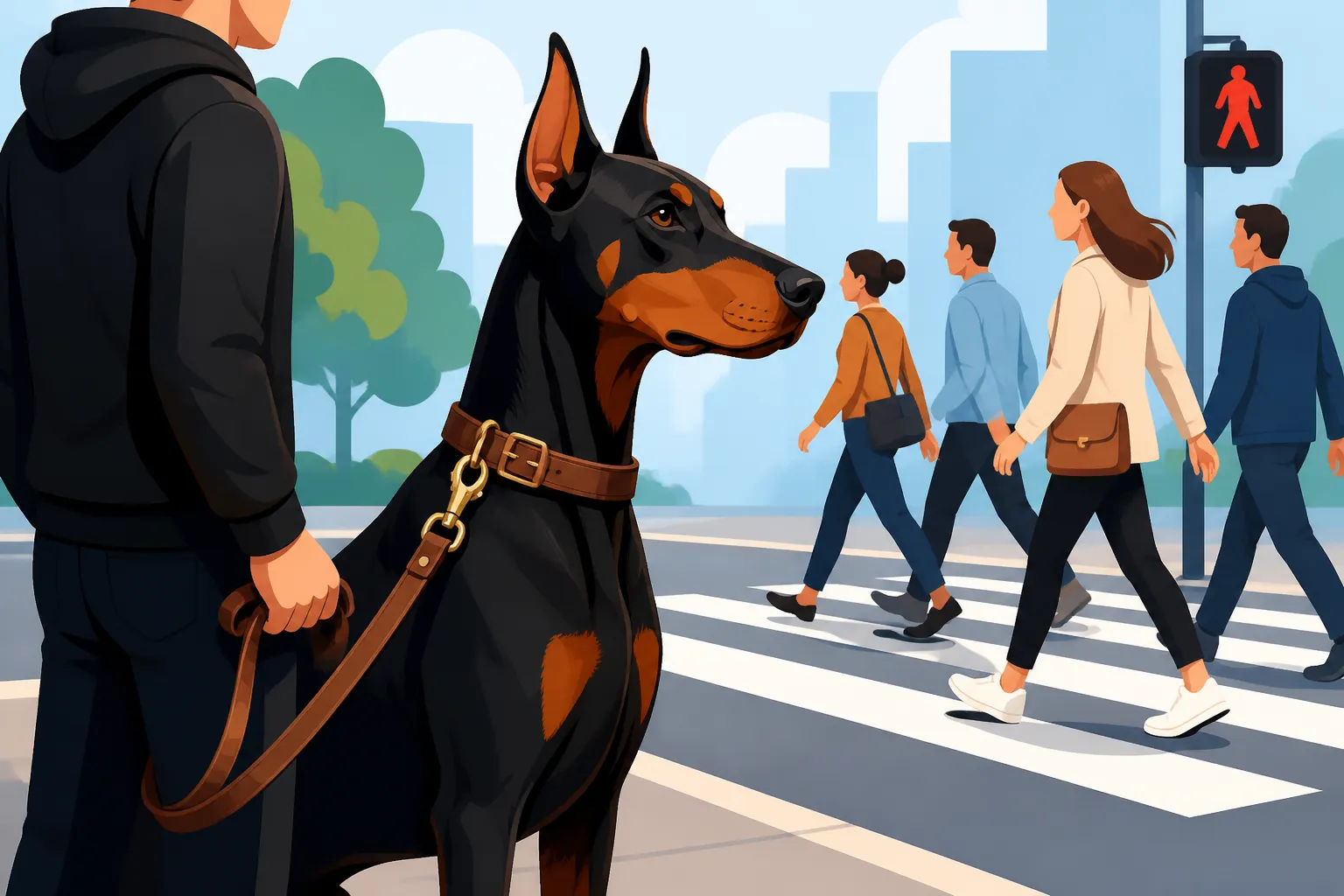
Walking a Doberman Where People Cross the Street
Walking a Doberman in bustling areas, where people and other dogs are constantly crossing paths, can feel like navigating a minefield. The fear of an unwanted incident, or simply the stress of managing such a powerful, alert dog in close quarters, is a reality many Doberman owners face. This guide offers practical strategies and training approaches to make these public outings enjoyable and stress-free for both you and your Doberman.
Understanding the Unique Challenge of Public Doberman Walks
Let's be honest, walking a Doberman isn't like walking a fluffy lapdog. They're magnificent, powerful creatures with an intelligence and intensity that can sometimes feel like a double-edged sword in a busy environment. We love their loyalty and alertness, but these very traits can make navigating crowded sidewalks or parks a real challenge. It's not just their physical strength, which is considerable, but also their inherent nature as guardians that can lead to misinterpretations or unwanted reactions when faced with the unpredictable chaos of public spaces.
The truth is, even the most well-behaved Doberman can be pushed to its limits by a sudden skateboard, a screaming child, or another dog lunging from around a corner. Our job as responsible owners isn't just to control them, but to understand their predispositions and set them up for success. Ignoring these breed-specific traits is a recipe for stress, both for you and your dog. We want to enjoy our walks, not dread them, and that starts with acknowledging the unique blend of power, perception, and protective instinct our Dobermans bring to the leash.
The Doberman's Natural Drive in Public
Dobermans were bred for a purpose, and that purpose involved alertness, courage, and a strong sense of territory and protection. These instincts don't magically disappear when you step out your front door. When you're walking in an area where people are crossing the street, cars are whizzing by, and other dogs are on their own walks, your Doberman's senses are on high alert. They might perceive a sudden movement as a threat, or a quick-moving cyclist as something to chase. This isn't naughtiness; it's often their natural drives kicking in.
Consider their history: they were companion guardians. This means they are inherently tuned into their surroundings and particularly to you, their person. If they sense unease from you, or if they perceive a stranger as encroaching on your personal space, their protective instincts can activate. This might manifest as a stiffening of the body, a low growl, or even a sudden lunge. It's crucial to differentiate between an actual threat and an overreaction, but in the heat of the moment, with a large, strong dog, it can be terrifying for everyone involved. Understanding these drives helps us anticipate and mitigate potential issues rather than just reacting to them. Doberman Guarding Instinct and Where It Tips Over delves deeper into these predispositions.
Public Perception and Your Responsibility
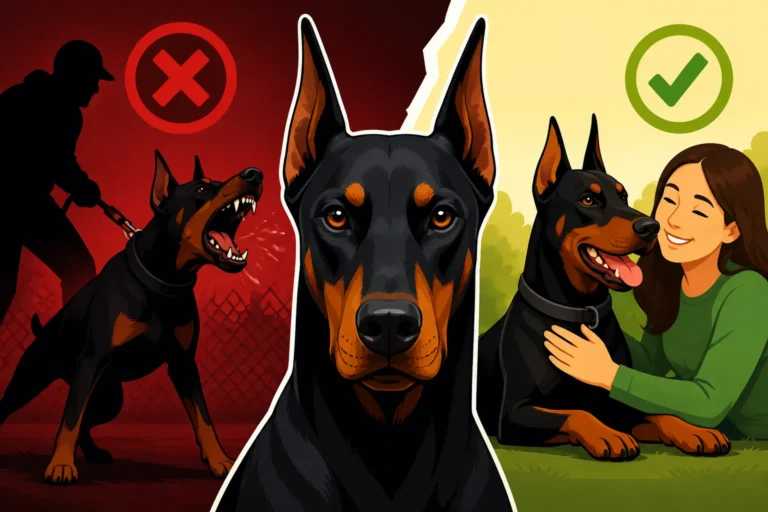
Let's face it, Dobermans have a formidable reputation. While we know our own dogs as loving, goofy companions at home, the general public often sees them through the lens of media portrayals or outdated stereotypes. A Doberman is often the first breed people point to when they're nervous, and that puts an extra layer of responsibility on us as owners. When you're walking your Doberman where people cross the street, every interaction, every reaction, is under scrutiny. A simple bark can be seen as aggression, a playful bounce as an attack.
This public perception means our margin for error is much smaller. We can't afford a loose leash that lets our Doberman jump up to greet a stranger, or a sudden lunge towards another dog. It’s not fair to our dogs, and it’s certainly not fair to the public who might be genuinely afraid. Our goal is to present a calm, controlled Doberman, not just for safety, but to help reshape that perception, one positive interaction at a time. This involves not only managing their behavior but also being mindful of how we present ourselves and our dogs. Think about how you are Handling a Doberman in Public Without Alarming People.
Essential Equipment and Training Foundations for Busy Walks
Before you even step out the door into a bustling area, having the right equipment and a strong training foundation is non-negotiable. Relying solely on your Doberman's good nature is a gamble, and it's one we simply can't afford to take when public safety is involved. The tools we choose and the consistency of our training directly impact our ability to communicate effectively and maintain control, especially when distractions are high.
It's about creating a system where both you and your Doberman understand the expectations and have the physical and mental support to meet them. This isn't about brute force; it's about smart choices and consistent, positive reinforcement that builds a confident, responsive dog. Without these fundamentals in place, every walk in a populated area becomes a stressful test of wills, rather than a shared, enjoyable experience.
Harnesses, Head Halters, and Leash Choices
Choosing the right walking equipment can make a world of difference when you're dealing with a powerful Doberman. A standard collar, while fine for a calm dog in a quiet area, can be ineffective and even dangerous if your Doberman decides to lunge or pull when people cross the street. You need something that gives you better control without causing pain or discomfort.
Here's a breakdown of common options and why they might be suitable:
- Front-Clip Harnesses: These harnesses clip at your Doberman's chest. When your dog pulls, the leash redirects them to the side, turning their body and making it harder for them to pull forward with full force. They don't put pressure on the neck or throat, which is great for a breed prone to neck issues. Many owners find these a significant improvement over back-clip harnesses for managing strong pullers. You can find a wide variety of these on platforms like Amazon.
- Head Halters (Halti, Gentle Leader): These resemble horse halters, fitting over your Doberman's muzzle and behind their ears. They give you steering control over your dog's head, and where the head goes, the body often follows. If your Doberman tries to pull, it gently turns their head, making it difficult for them to move forward. They can take some getting used to for both you and your dog, as some Dobermans might initially try to paw them off, but with patience and positive association (treats!), they can be incredibly effective. Make sure it's properly fitted to prevent rubbing or discomfort. Harnesses That Hold a Strong Doberman offers more details on choosing the right fit.
- Longer, Sturdy Leashes: While a short leash is great for keeping your dog close in tight spots, a sturdy six-foot leash offers a good balance of control and a little room for your Doberman to explore safely. Avoid retractable leashes entirely in busy areas; they offer little control and can be dangerous if your Doberman suddenly bolts. A strong, comfortable grip is important for you, too.
| Equipment Type | Best For | Pros | Cons |
|---|---|---|---|
| Flat Collar | Very calm dogs, ID tags only | Simple, lightweight | Minimal control for pulling, pressure on neck |
| Martingale Collar | Dogs that slip out of collars, moderate pull | Prevents escape, gentle tightening without choking | Still relies on neck pressure, not ideal for strong pullers |
| Back-Clip Harness | Dogs that don't pull, good for comfort | Comfortable, no neck pressure | Can encourage pulling, less control for strong dogs |
| Front-Clip Harness | Strong pullers, dogs with neck issues | Redirects pulling, no neck pressure, better control | Can twist on dog, requires proper fit |
| Head Halter | Very strong pullers, reactivity, excellent control | Directs head (and therefore body), gentle, highly effective | Dogs may dislike initially, requires conditioning, looks "muzzle-like" |
Building a Solid "Heel" and "Watch Me"
Equipment is just a tool; the real magic happens with consistent training. Two commands are absolutely vital for walking your Doberman in areas where people cross the street: "Heel" and "Watch Me." These aren't just parlor tricks; they are lifelines for communication and control in distracting environments.
The "Heel" command means your Doberman walks calmly by your side, ideally with their shoulder aligned with your leg, without pulling on the leash. Start practicing this in quiet areas. Use high-value treats to lure them into position and reward them heavily for staying there, even for a few steps. Gradually increase the duration and introduce mild distractions. When someone is crossing the street, you want your Doberman to default to a tight, focused heel, giving you absolute control of their movement and attention. Many online training platforms, such as BAXTER & Bella, offer comprehensive courses that break down these fundamental commands into easy-to-follow steps.
"Watch Me" is equally, if not more, important. This command teaches your Doberman to make eye contact with you on cue, redirecting their attention away from whatever distraction might be catching their eye. Hold a treat near your nose, say "Watch Me," and when your Doberman looks at you, immediately mark the behavior (with a clicker or a verbal "Yes!") and reward them. Practice this frequently in various environments, starting quietly and building up to noisier, more distracting places. If your Doberman is staring intently at an approaching jogger or another dog, a solid "Watch Me" can interrupt that focus and bring them back to you, preventing a potential lunge or bark. This direct communication is invaluable for navigating busy areas safely and calmly. Remember, Leash Manners for an Eighty-Pound Doberman are built on these foundational skills.
Strategies for Navigating Busy Public Areas
Once you've got the right gear and your Doberman has a good grasp of basic obedience, it's time to put those skills to the test in the real world. Navigating busy areas isn't just about command execution; it's about being a proactive and thoughtful handler. We can't eliminate all distractions, but we can certainly manage our dog's exposure, teach them how to cope, and build their confidence through careful, intentional outings. This proactive approach minimizes stress for everyone and reinforces the positive behaviors you've been working so hard to establish.
Remember, every walk is a training opportunity, especially in challenging environments. Our goal isn't just to get through the walk unscathed, but to help our Doberman learn to exist calmly and confidently in a bustling world. This takes patience, consistency, and a keen eye for reading your dog's body language.
Creating Space and Managing Encounters
One of the most effective strategies for walking your Doberman in areas where people cross the street is proactive management: creating space. Dobermans, especially those with strong guarding instincts or who are prone to A Doberman That Reacts to Every Dog It Sees, often do better when they have ample personal space. This means being constantly aware of your surroundings and taking evasive action before a potential trigger gets too close.
If you see someone approaching with another dog, or a group of boisterous children, don't wait for your Doberman to react. Cross the street yourself, turn down a side street, or step far off the path into the grass, offering your Doberman a treat as they calmly observe the passing distraction from a distance. The goal is to keep them under threshold – that point where they can still think and respond to you, rather than being overwhelmed and reacting instinctively. It’s okay to communicate with people, too. A polite "Excuse me, we're training" or "My dog needs space" can go a long way in ensuring cooperation from others. Never feel bad for advocating for your dog's comfort and safety.
Desensitization and Counter-Conditioning
For Dobermans who find busy streets overwhelming, desensitization and counter-conditioning are powerful tools. Desensitization means gradually exposing your dog to a trigger at a low intensity, slowly increasing the intensity as they become comfortable. Counter-conditioning means changing your dog's emotional response to that trigger from negative (fear, anxiety, over-excitement) to positive.
Here's how it might look:
- Start Small: Begin by sitting with your Doberman at a distance from a busy street, where they can see and hear the activity, but aren't reacting. Reward them with high-value treats (like cooked chicken or cheese) for simply being calm. Don't push them too close too fast.
- Associate Positively: Every time a person crosses the street, a car drives by, or another dog passes at a safe distance, immediately give your Doberman a delicious treat. The goal is for them to associate these common occurrences with something wonderful happening to them. Their brain will start to think, "Oh, look! A person crossing the street! That means delicious treats are coming!" This can dramatically change their emotional state.
- Gradual Approach: Over many sessions, slowly decrease the distance to the busy area, always staying at a point where your Doberman remains calm and takes treats. If they start to get stiff, bark, or refuse treats, you've gone too far; increase the distance again.
- Practice "Look at That" (LAT): This is a specific counter-conditioning game. When your Doberman spots a distraction (e.g., another person crossing), wait for them to look at it, then immediately mark (click or "Yes!") and reward them. The reward comes after they notice the trigger, not as a distraction from it. This teaches them to look at the trigger and then immediately re-engage with you for a reward.
Consistency is key here. These methods take time and patience, but they build a Doberman who is more relaxed and less reactive in public spaces. This type of training is often supported by resources like BAXTER & Bella, which emphasize positive reinforcement methods for real-world scenarios. It also helps you learn to recognize Spotting the Moment a Doberman Is Uncomfortable so you can intervene effectively.
Handling Unexpected Situations and Maintaining Focus
Even with the best preparation, life with a Doberman often throws curveballs. You can't control every element of a busy street – unexpected off-leash dogs, sudden loud noises, or overly enthusiastic strangers who don't understand boundaries. What you can control is your reaction and how effectively you guide your Doberman through these unforeseen challenges. The key is to remain calm, communicate clearly, and lean on the strong bond and training you've built together.
Being prepared for the unexpected is part of being a Doberman owner. It means having a mental toolkit of responses and the confidence to use them. Your Doberman looks to you for guidance, and if you appear flustered or anxious, they will pick up on that and may become more reactive themselves.
When the Unexpected Happens
So, you're walking along, doing everything right, and suddenly an off-leash dog charges out from a yard, or a child runs up shrieking, or a car backfires loudly. These moments are where your training truly pays off, but also where quick thinking is paramount.
- Stay Calm: Your Doberman will feed off your energy. If you panic, they will too. Take a deep breath.
- Tight Leash, Short Commands: If an off-leash dog approaches, shorten your leash immediately. Get your Doberman into a tight heel if possible, or position yourself between your dog and the approaching animal. Use firm, calm commands like "Leave it!" or "Stay!" If the dog is aggressive, pick up your Doberman's leash and hold it high, ready to pull them close or even lift them if they are smaller (though this is less likely with a full-grown Doberman).
- Use Your Body: Physically block your Doberman if a person or dog is getting too close and making them uncomfortable. Dobermans are highly intelligent and will learn from your actions. This is especially important for Training a Doberman That Is Smarter Than You Expect.
- Create Space (Again): If possible, quickly move away from the trigger. Cross the street, step behind a parked car, or duck into a doorway if necessary. The fastest way to de-escalate is often to remove your Doberman from the situation.
- Acknowledge and Redirect: For sudden loud noises, simply acknowledge it ("That was just a bang!") in a calm voice, then immediately ask for a "Watch Me" or a simple "Sit" and reward heavily. You're showing them that you're in control and that unexpected sounds don't need to be feared.
- Polite but Firm with Strangers: If someone approaches without asking, especially if they reach for your Doberman, step in front and say, "Please don't touch, he's in training." Most people will understand. It's not about being rude; it's about protecting your dog's space and maintaining your training.
Always remember that recovery is as important as prevention. After a stressful encounter, take a moment to settle your Doberman. Walk them to a quieter spot, engage in some simple, familiar commands, and offer praise and calm reassurance. This helps them process the event and rebuild confidence.
Disclaimer
This article is for general informational purposes only and does not constitute professional advice. Laws, prices and regulations vary by location and change over time. Consult a qualified professional for guidance on your specific situation.