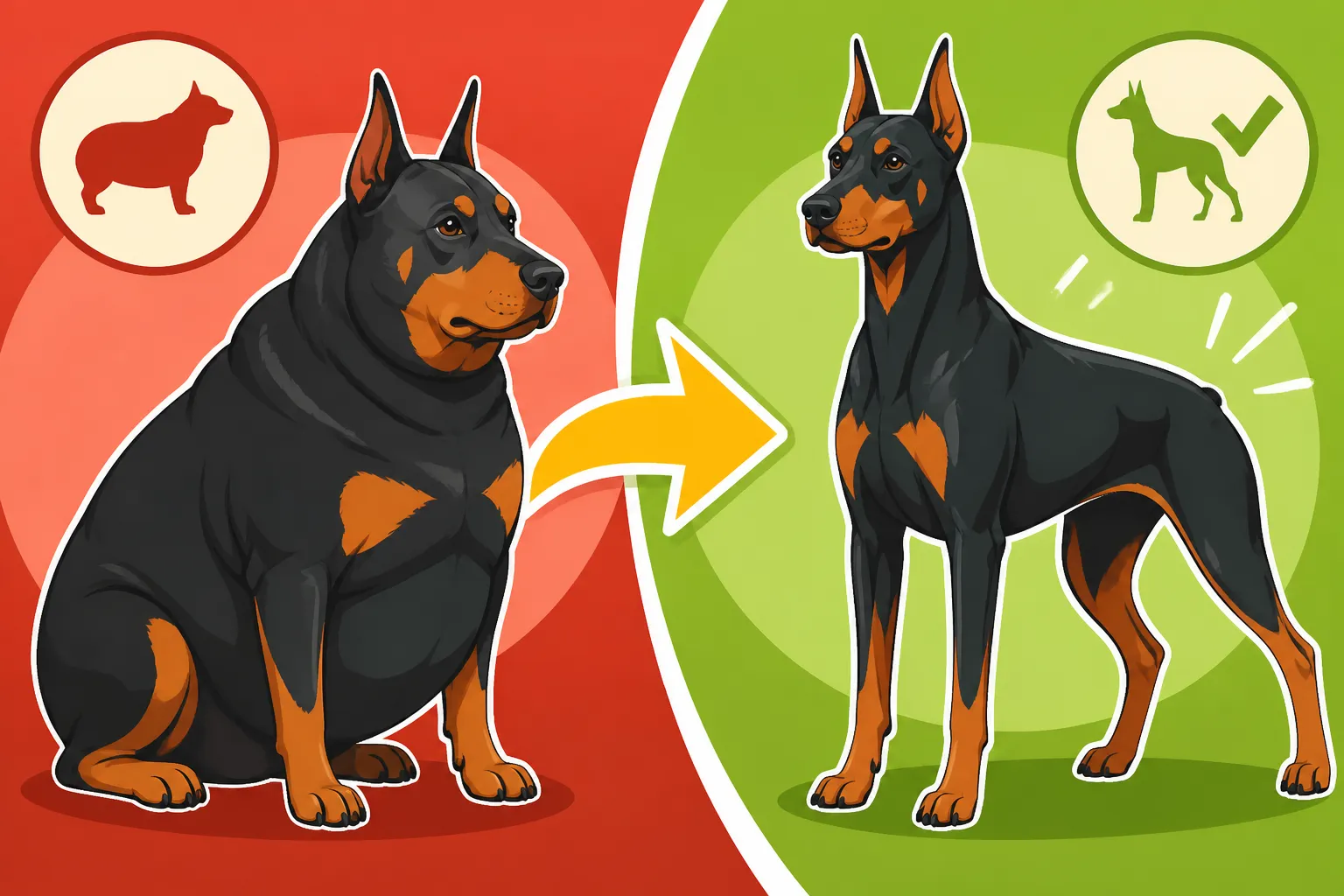
Slimming a Doberman That Has Thickened
It's incredibly frustrating when you notice your sleek, athletic Doberman starting to carry a little extra weight. One day they're a lean, muscular machine, and the next, you're wondering where their waistline went. It's not just about aesthetics; those extra pounds can quietly chip away at their health and lifespan. This guide will walk you through understanding why your Doberman might have thickened, how to safely adjust their diet, increase their activity, and set them up for a healthier, leaner future.
Recognizing the "Thickened" Doberman
Sometimes, it can be hard to tell if your Doberman has genuinely gained too much weight or if they're simply not as "lean" as some show dogs. The breed is known for its elegant, athletic build, but what exactly does "healthy lean" look like versus "chubby"? It's not always as obvious as a bulging belly, especially with their deep chests. Often, it's a subtle rounding, a less defined waist, or simply that their ribs are harder to feel.
Understanding the Ideal Doberman Body Condition
A healthy Doberman should be noticeably sleek. When you look at them from above, you should see a distinct "waist" where their body tucks in behind their rib cage. From the side, their abdomen should tuck up, not hang low or be parallel to the ground. And when you gently run your hands along their sides, you should be able to easily feel their ribs without having to press hard, almost like feeling knuckles under a thin blanket. You shouldn't see individual ribs protruding prominently, but they should certainly be palpable. Their hip bones should also be easily felt, though not sharply angular.
Many owners fall into the trap of thinking a Doberman looks too thin if their ribs are visible or easily felt. However, for an active, well-muscled Doberman, this is often exactly what you want to see. Compare it to a human athlete – they tend to have a lower body fat percentage than the average person. Dobermans are built for speed and agility, and excess fat hinders that. A Doberman carrying too much weight will often lose that distinct waistline, develop a thicker neck, or have more padding over their hips and tail base. This can happen quite subtly, and before you know it, you're looking at a dog that's gone from a healthy 80 pounds to 90 or more, adding unnecessary strain on their joints and organs. For more on what to look for, check out The Weight Range a Doberman Should Hold.
Common Reasons Dobermans Gain Weight
There are several culprits behind a Doberman's thickening waistline, and it's usually a combination of factors. One of the most common, especially as they get older, is a decrease in activity combined with a consistent diet. A young, energetic Doberman might burn off calories effortlessly, but as they mature or if their routine changes, those calories can quickly accumulate.
Neutering or spaying is another huge factor. While crucial for population control and health, altered dogs often have a slower metabolism. This means the same amount of food that kept them lean before their surgery can lead to weight gain afterward. It's a frustrating reality many owners face, feeling like they're feeding less but still seeing their dog get rounder. Why a Neutered Doberman Starts Gaining dives deeper into this specific challenge. Medical conditions like an underactive thyroid can also lead to weight gain and lethargy, so it's always wise to rule out underlying health issues with your vet, especially if the weight gain is sudden or accompanied by other symptoms like a dull coat or lack of energy. Finally, plain old overfeeding – whether it's too many treats, too large portions, or unknowingly calorie-dense food – is a significant contributor. Those seemingly small "extras" add up fast for a dog.
Calorie Control: The Foundation of Weight Management
When it comes to shedding those extra pounds, diet is king. You can exercise your Doberman all day long, but if their calorie intake isn't right, you'll be fighting an uphill battle. It's not about starvation; it's about smart, controlled nutrition that still provides all the essential nutrients without the excess.
Re-evaluating Your Doberman's Current Diet
The first step is a brutally honest assessment of what your Doberman is actually eating. This means everything: their regular kibble, wet food, treats, dental chews, table scraps (even tiny ones!), and any supplements that might contain calories. Write it all down for a few days to get a realistic picture. You might be surprised by how many hidden calories are creeping into their daily intake. Many owners, with the best intentions, underestimate the caloric density of treats or think a few pieces of cheese won't hurt. For an 80-pound Doberman, even small additions can push them over their daily calorie needs.
Once you have this baseline, you can start making informed adjustments. If your Doberman is eating a "maintenance" formula, it might be too rich for a dog needing to lose weight. Look for dog food specifically formulated for "weight control," "light," or "senior" dogs, as these typically have lower calorie counts and often higher fiber to help them feel full. Companies like Purina Pro Plan or Royal Canin offer excellent veterinary-approved weight management diets that you can often find on retailers like Chewy. These diets are carefully balanced to ensure your Doberman still gets all their vitamins and minerals even with fewer calories.
Portion Control and Measuring Accurately
This is where many well-meaning owners go wrong. Scoops provided with dog food are often inaccurate, and "eyeballing" portions is a recipe for overfeeding. Invest in a proper kitchen scale and measure your Doberman's food by weight, not volume. This is the most accurate way to ensure they are getting precisely the right amount of food. Your veterinarian can help you calculate an ideal daily caloric intake based on your Doberman's target weight and activity level. Start by reducing their current intake by about 10-20% and monitor their progress.
| Item | Common Misconception | Reality for Weight Loss |
|---|---|---|
| Kibble Portion | "A cup is a cup" or "Just fill the bowl" | Scoops vary; weight is key. Measure precisely. |
| Treats | "They're so small, they don't count" | Treats are calorie bombs! Account for every one. |
| Table Scraps | "Just a little bite won't hurt" | High in fat, salt, and unknown calories. AVOID them. |
| Dental Chews | "Good for teeth, so it's healthy" | Many are high in calories. Choose low-cal options. |
| Food Bowls | "The bigger the bowl, the more they eat" | Bowl size doesn't matter; portion size does. |
For a Doberman, meal timing is also incredibly important. Due to their deep, narrow chests, they are prone to bloat (gastric dilatation-volvulus), a life-threatening condition. Feeding two or even three smaller meals a day, rather than one large one, can reduce the risk. This also helps keep their metabolism ticking over and prevents them from feeling overly hungry between meals. Meal Timing on a Deep-Narrow Doberman Chest has excellent advice on this topic.
Smart Snacking and High-Value, Low-Calorie Treats
Cutting out treats entirely can feel harsh, especially when your Doberman gives you those soulful eyes. The good news is, you don't have to! You just need to be smarter about it. Instead of high-calorie biscuits, switch to low-calorie, high-fiber options. Think small pieces of plain cooked chicken breast, green beans, baby carrots, apple slices (without seeds), or cucumber. Many Dobermans adore these healthy alternatives. You can find pre-packaged low-calorie training treats on platforms like Amazon or Chewy, but always check the caloric content.
Remember, every treat, no matter how small, counts towards their daily calorie allowance. If you give a treat, take a tiny bit of their meal portion away to compensate. Puzzle feeders are also fantastic tools. They make your Doberman work for their kibble, slowing down their eating and providing mental stimulation, which is crucial for a smart breed like the Doberman. This way, they're not just gobbling down their food in seconds, but engaging their brain to earn their meal.
Boosting Activity Safely and Effectively
Diet is paramount, but exercise plays a vital supporting role in weight loss and maintaining overall health and muscle tone. For a Doberman, who is naturally an active and intelligent breed, regular physical activity is non-negotiable, but it needs to be tailored to their current condition. You can't just expect an overweight dog to suddenly become a marathon runner.
Gradual Increase in Exercise
If your Doberman has packed on pounds, they're likely not as fit as they once were. Jumping straight into intense exercise can lead to injury, joint strain, or even heatstroke, especially if they’re not used to it. The key is a gradual, consistent increase. Start with longer, more frequent walks. If you're doing one 30-minute walk, try two 20-minute walks, or extend that single walk to 45 minutes at a steady pace. Focus on brisk walks where their heart rate gets up but they're not panting excessively or struggling to keep up.
As they build stamina, you can gradually introduce more challenging activities. Instead of flat pavement, find a park with gentle hills. The varied terrain will work different muscle groups and burn more calories. If they enjoy swimming, that's an excellent low-impact exercise for overweight dogs, taking pressure off their joints. Just be mindful of their short coat in colder water; Why a Doberman Feels the Cold Before Other Dogs explains this well. Remember, consistency beats intensity when starting out. Aim for daily activity, even if it's just a long walk around the neighborhood.
Engaging Activities Beyond Walks
Dobermans thrive on mental and physical challenges. While walks are great, incorporating more engaging activities can make exercise more enjoyable and effective. Fetch, for instance, is a classic for a reason. But instead of just standing there throwing the ball, incorporate some obedience cues: "sit" before each throw, "stay" until released, or "come" with a quick recall. This turns a simple game into a training session, working their brain as well as their body.
Consider enrolling in a beginner's scent work class or trying it at home. Hiding treats (the low-calorie ones!) or toys and having your Doberman sniff them out is incredibly mentally tiring and uses their natural instincts. This is also a fantastic option for days when the weather isn't cooperating for a long outdoor session. Agility or competitive obedience classes, if appropriate for their fitness level, can also be great for both physical conditioning and mental stimulation. Even simple games of hide-and-seek indoors can add to their daily activity and strengthen your bond. Remember to keep it fun; a Doberman that enjoys their exercise is more likely to stay engaged and consistent.
Sustaining Success: Patience, Monitoring, and Support
Weight loss is rarely a straight line, and it requires dedication and patience. There will be weeks where the scale doesn't budge, or you might find yourself needing to tweak your approach. But with consistent monitoring and knowing when to ask for help, you can guide your Doberman to a healthier weight.
Tracking Progress and Adjusting as Needed
Regularly monitoring your Doberman's weight is crucial. Weigh them once a week at the same time, using the same scale. Many vet offices are happy to let you pop in for a quick weigh-in. Keep a log of their weight and any changes you've made to their diet or exercise. This will help you identify what's working and what might need adjusting. Don't get discouraged if the scale doesn't move every single week; plateaus are normal. Look for trends over a few weeks or a month.
Beyond the scale, pay attention to their body condition. Are their ribs becoming easier to feel? Is their waistline more defined? Are they moving with more energy and less stiffness? These are all positive signs. If after a few weeks you're not seeing any progress, it might be time to slightly reduce their food portion further or add another 10-15 minutes to their daily activity. Remember, every dog's metabolism is different. What works for one Doberman might need tweaking for another. It’s a process of observation and adjustment.
The Role of Your Veterinarian and Nutritional Advice
Your veterinarian is your most important partner in your Doberman's weight loss journey. Before starting any significant diet or exercise program, consult with them. They can rule out underlying medical conditions that might be contributing to weight gain, such as hypothyroidism or joint pain that makes exercise difficult. They can also provide a precise target weight and calorie recommendation based on your Doberman's individual needs, age, and activity level.
They might recommend specific prescription weight-loss diets that are highly effective because they're formulated to be filling with fewer calories. For example, some Dobermans may require a diet with specific protein and fat ratios to maintain muscle while losing fat, which a vet can advise on. Protein and Fat for a Lean Working Doberman offers more insight into these nutritional considerations. Your vet can also offer advice on safe exercise protocols if your Doberman has any orthopedic issues, or suggest a canine nutritionist for more detailed dietary planning, especially if you're considering a home-cooked diet or a different food format like those offered by Ollie, which allow for precise portioning of fresh ingredients. Don't hesitate to lean on their expertise; they want your Doberman to be healthy and happy as much as you do.
Disclaimer
This article is for general informational purposes only and does not constitute professional advice. Laws, prices and regulations vary by location and change over time. Consult a qualified professional for guidance on your specific situation.