The Weight Range a Doberman Should Hold
One of the most common worries I hear from Doberman owners is about their dog's weight. These dogs are naturally lean, muscular, and incredibly athletic, and it’s easy to look at those sharp angles and wonder if they’re getting enough to eat, or conversely, if a slight softness means they're getting too much. It’s a constant tightrope walk to ensure our beloved companions are at their optimal health, and figuring out that perfect weight range can feel like a puzzle. This guide will help you understand what a healthy Doberman looks like, how to assess their condition, and what factors truly influence their ideal weight, so you can stop second-guessing yourself.
Understanding the Doberman Build: Lean and Athletic
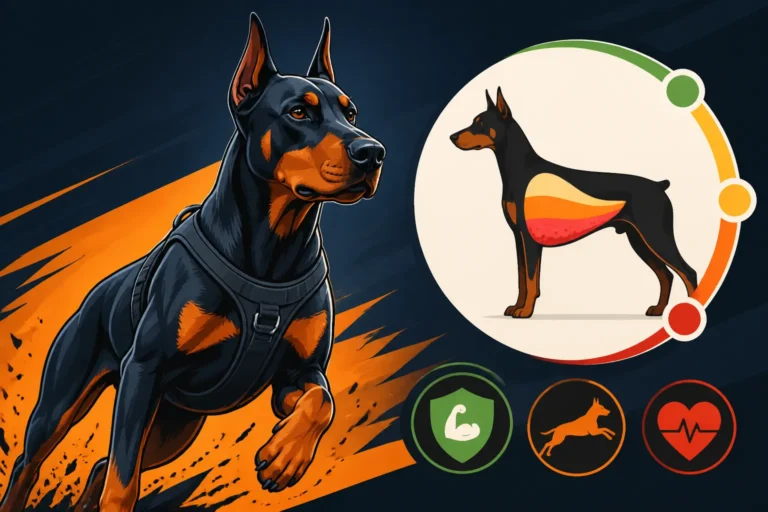
Dobermans aren't built like many other breeds. They're not meant to be stocky or heavily muscled in a bulky way. Their physique is designed for speed, agility, and endurance, which means they naturally carry less body fat and display a more defined musculature. This lean, almost rangy appearance can often trick new Doberman owners, and even seasoned dog people who are used to breeds with more padding, into thinking their Doberman is underweight.
Why Dobermans Aren't Meant to Be Chunky
The Doberman Pinscher breed standard, whether you're looking at the American Kennel Club (AKC) or a European standard, consistently describes a dog of medium size, compact and powerful, with an elegant outline. The emphasis is on a muscular, athletic build, not a heavy one. They need to be able to move quickly and gracefully, with great reach and drive. Extra weight hinders this natural athleticism, puts undue stress on their joints, and can exacerbate health issues they are already prone to, such as heart conditions. Imagine an elite athlete. You wouldn't expect them to carry extra fat, would you? Your Doberman is an athlete in their own right, even if their main sport is chasing squirrels in the backyard.
Furthermore, a Doberman's deep, narrow chest, which is a hallmark of the breed, is also predisposed to Why a Doberman's Narrow Deep Chest Twists, a life-threatening condition often linked to overfeeding or specific meal timing. Maintaining a lean body condition can indirectly help manage the risks associated with such breed-specific anatomical quirks, as excess abdominal fat can also play a role.
Reading Ribs and Hip Points on a Doberman
This is where a lot of owners get nervous. With a Doberman, it's absolutely normal, and even desirable, to see the last two or three ribs faintly when they're standing or moving. You should definitely be able to feel their ribs easily with light pressure, without having to press hard. The hip points should also be discernible, and you might see a subtle outline of the pelvic bone, especially when they stretch or turn.
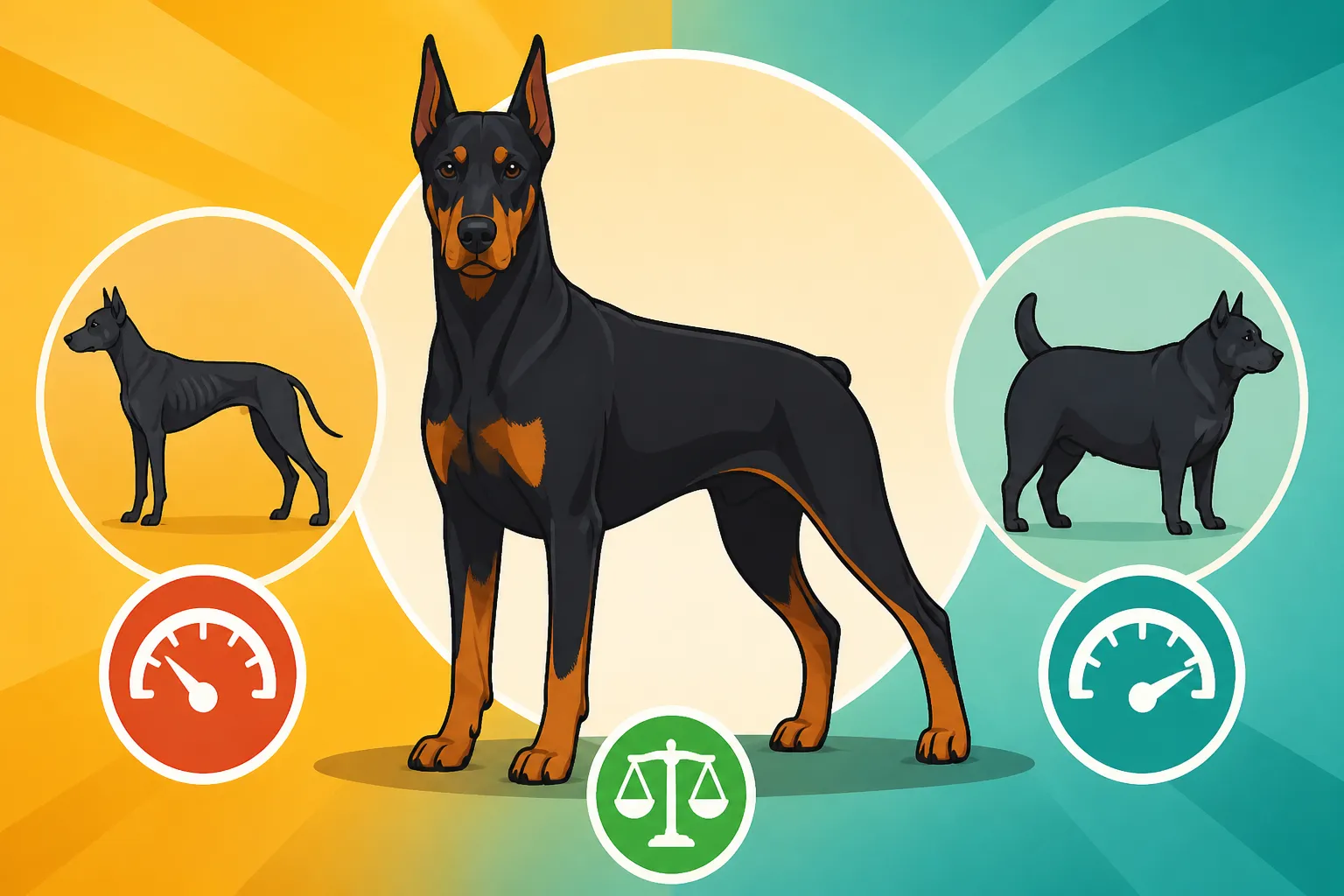
This isn't to say your Doberman should look like a skeleton! There's a fine line between lean and emaciated. If the ribs, spine, and hip bones are sharply protruding and easily visible without any fat covering, almost like they're just skin draped over bone, then yes, that's a sign of being too thin. But a healthy Doberman will have that athletic definition, a distinct waist when viewed from above, and a noticeable abdominal tuck when viewed from the side. Don't let well-meaning comments from strangers, who might not understand the breed's ideal body type, make you doubt your care.
The Ideal Weight Range for Your Doberman
Pinpointing an exact number on a scale can be tricky because Dobermans, like people, come in a range of sizes and builds. The breed standard gives a height range (26-28 inches for males, 24-26 inches for females at the highest point of the shoulder blades), but weight is often listed as "proportionate to height and sex." This means a taller Doberman will naturally weigh more than a shorter one, even if both are at a healthy body condition.
Average Weight for Males and Females
Generally speaking, a healthy adult male Doberman will typically weigh anywhere from 75 to 100 pounds (approximately 34 to 45 kg). Females tend to be a bit lighter, usually falling in the 60 to 90-pound (approximately 27 to 41 kg) range. These are broad averages, though. I've known perfectly healthy, lean males at 70 pounds and some with a heavier bone structure closer to 105, all within a healthy body condition for their individual frame.
It's less about hitting a specific number and more about how that weight looks and feels on your particular dog. A Doberman with a very fine bone structure will naturally weigh less than one with a heavier, more substantial frame, even if they're both the same height. This is why a regular vet visit, where a professional can assess their body condition score, is so incredibly valuable.
Factors Influencing a Doberman's Healthy Weight
Many elements play a role in where your Doberman's healthy weight falls within that general range.
- Genetics and Lineage: Is your Doberman from working lines or show lines? European Dobermans often have a heavier bone structure and broader chests than their American counterparts, leading to naturally higher healthy weights. How a European Doberman Is Built Differently This doesn't mean they should be fat, just that their lean weight might be higher. Your dog's parents' build and their overall genetics will strongly influence their mature size and shape.
- Age: Doberman puppies grow incredibly fast, but their weight needs to be carefully monitored to avoid stressing their developing joints. Protecting a Growing Doberman's Joints. As they mature, their metabolism stabilizes. Senior Dobermans might also experience muscle loss and a slower metabolism, requiring adjustments to their diet and exercise to prevent weight gain or unhealthy weight loss. Feeding and Grooming a Doberman Past Eight
- Activity Level: An active Doberman involved in sports like agility, obedience, or protection work will naturally burn more calories and maintain a leaner physique than a Doberman who is primarily a couch potato with occasional walks. Their caloric needs will differ significantly, influencing how much food they need to maintain their ideal weight.
- Health Status: Underlying health conditions can drastically impact weight. A Doberman dealing with The Heart Disease That Reaches Most Dobermans might struggle to maintain weight due to increased metabolic demands, or ironically, might gain weight if activity is restricted. Digestive issues, thyroid problems (The Thyroid Numbers That Slow a Doberman Down), or even dental pain can affect appetite and nutrient absorption. Regular veterinary check-ups are crucial for catching these issues early.
How to Assess Your Doberman's Body Condition
Forget the number on the scale for a moment. The most reliable way to know if your Doberman is at a healthy weight is through a combination of visual assessment and hands-on examination, often referred to as Body Condition Scoring (BCS). This method is widely used by veterinarians and gives a much better picture than just a number.
The Visual Check: What to Look For
Start by observing your Doberman from the side and from above.
- From the Side: You want to see a distinct abdominal tuck. This means their belly should slope upwards from their ribcage to their hind legs, not hang low or be straight across. They should look athletic and streamlined. If they appear barrel-chested without that upward curve, they might be carrying too much weight.
- From Above: Look for an hourglass shape. There should be a noticeable waist, narrower than their rib cage and hips. If your Doberman looks like a cylinder or their waist is as wide as or wider than their rib cage, they're likely overweight. Conversely, if their waist is severely pinched, resembling an extreme hourglass, they might be too thin. The Waist a Doberman Should Show From Above
When your Doberman is standing relaxed, you should be able to faintly see the last two or three ribs. When they're in motion or stretching, you might see a few more. This is normal! What you don't want to see are ribs, hip bones, and spine sharply protruding, like a washboard, without any soft tissue covering them.
The Hands-On Palpation Test
This is where you get tactile. Gently run your hands over your Doberman's body, paying close attention to these areas:
- Ribs: Place both hands flat on their sides, just behind their shoulder blades. You should be able to easily feel each individual rib bone beneath a thin layer of muscle and skin, almost like feeling the knuckles on your hand. If you have to press firmly to feel them, your Doberman is likely carrying too much fat. If you can see the ribs clearly and they feel sharp or like they have no padding at all, your Doberman is too thin.
- Spine: Run your hand along their backbone. You should be able to feel the individual bumps of the vertebrae without them feeling overly prominent or sharp. There should be some muscle covering them. If the spine feels like a row of sharp knobs with no cushioning, that's a sign of being underweight. If you can't feel the spine at all, or it feels completely smooth, your dog is probably overweight.
- Hip Bones: Gently feel their hips at the base of their tail. Like the spine, you should be able to feel the hip bones without them protruding sharply or being completely hidden under fat.
The key is a balance: feeling the bones easily but with a thin, supple layer of muscle and skin over them, not feeling them stick out or being unable to feel them at all.
Using a Body Condition Score (BCS) Chart
Veterinarians often use a Body Condition Score (BCS) chart, typically on a 5-point or 9-point scale. A score of 3/5 or 4-5/9 is generally considered ideal for a Doberman. This gives a more objective way to assess your dog. You can often find these charts online (Chewy, for example, often has educational resources like this), which feature diagrams and descriptions for different scores. It helps to have a visual aid to compare your Doberman to.
Here’s a simplified breakdown:
| BCS Score (5-point) | Visual Appearance | Palpation Feel | Implications for Doberman |
|---|---|---|---|
| 1 (Emaciated) | Ribs, spine, hip bones extremely prominent; severe abdominal tuck. No body fat. | Bones easily visible and sharp; no muscle mass. | Critically underweight, health risk. |
| 2 (Underweight) | Ribs, spine, hip bones easily visible; pronounced abdominal tuck. Minimal body fat. | Bones easily felt, minimal tissue cover; some muscle wasting. | Needs to gain weight, potential health issue. |
| 3 (Ideal) | Ribs faintly visible (last 2-3); distinct waist and abdominal tuck. | Ribs easily felt with slight fat cover; muscles defined. | Optimal Doberman Condition |
| 4 (Overweight) | Ribs difficult to feel; waist less apparent; slight abdominal tuck. | Ribs palpable with moderate pressure; fat deposits over hips/tail base. | Needs to lose weight to prevent health problems. |
| 5 (Obese) | Ribs not palpable; no waist or abdominal tuck; heavy fat deposits. | Cannot feel ribs; thick fat layer everywhere; heavy jowls. | Significant health risks, urgent weight loss needed. |
Remember, your vet is your best resource for determining your Doberman's ideal BCS. They can provide an unbiased assessment and guide you on any necessary adjustments.
Common Weight Concerns and When to Worry
It's natural to have concerns about your Doberman's weight, especially given their unique build. Knowing when to simply adjust their diet versus when to call the vet is important for their well-being.
When a Doberman Appears Too Thin
If you've done the visual and hands-on assessment and your Doberman consistently scores a 1 or 2 on the BCS chart, it's definitely time to consult your veterinarian. Beyond just the visible bones, look for other signs:
- Muscle Wasting: Are their muscles visibly shrinking, especially over their hips and shoulders?
- Lethargy: Are they less energetic than usual, tiring faster on walks? A Doberman That Tires Faster Than It Used To
- Poor Coat Condition: A dull, dry, or flaky coat can sometimes indicate poor nutrition or underlying health issues.
- Changes in Appetite: Are they eating less, or have they suddenly A Doberman That Suddenly Stops Eating?
- Diarrhea or Vomiting: These can prevent nutrient absorption.
Being too thin can be a sign of various underlying health problems, from parasites to more serious conditions like exocrine pancreatic insufficiency, inflammatory bowel disease, or even advanced stages of diseases such as cancer. Cancer Types That Reach Dobermans Your vet will perform a thorough examination, possibly blood tests, and recommend the best course of action, which might include dietary changes, deworming, or further diagnostic tests.
When trying to put weight on a Doberman, focus on nutrient-dense, high-quality foods rather than just increasing volume with filler. Sometimes, a diet formulated for highly active dogs or specific prescription diets can help. Brands like Ollie offer fresh, human-grade food options that can be very palatable and nutrient-rich, potentially helping an underweight dog without excessive bulk.
When a Doberman Is Overweight
Just as being too thin is a concern, so is being overweight. Even a few extra pounds can have a significant impact on a Doberman's health, particularly because of their predisposition to certain conditions.
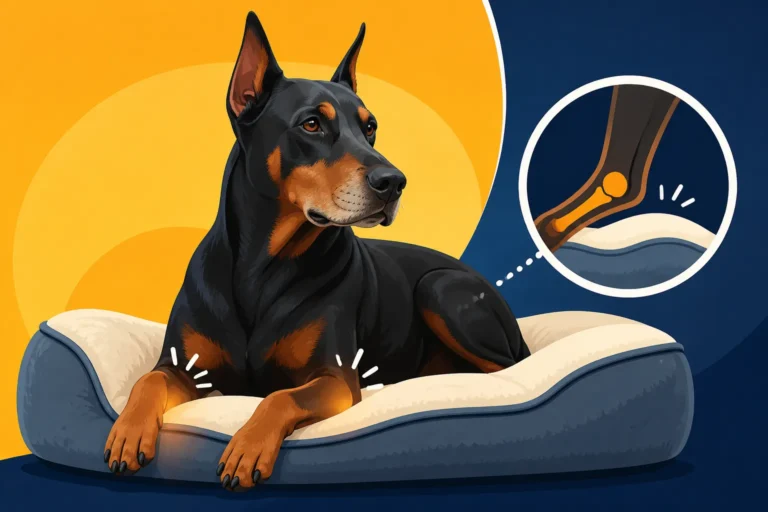
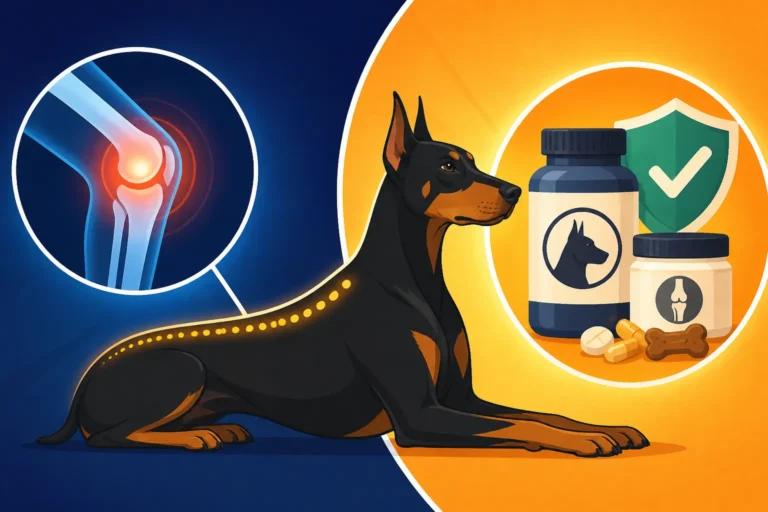
- Joint Issues: Excess weight puts incredible strain on joints, exacerbating conditions like Doberman Hip Dysplasia or increasing the risk of cruciate ligament injuries, especially in an athletic breed.
- Heart Health: While DCM is genetically predisposed, obesity can certainly put additional strain on the cardiovascular system.
- Diabetes and Other Metabolic Disorders: Overweight dogs are at a higher risk for insulin resistance and diabetes.
- Reduced Quality of Life: An overweight Doberman will have less stamina, be less enthusiastic about exercise, and may even struggle with grooming.
If your Doberman is scoring a 4 or 5 on the BCS, it's time for a weight management plan. This usually involves:
- Calorie Reduction: Your vet can help calculate the appropriate daily calorie intake for weight loss. Daily Calories for an Adult Doberman
- Increased Exercise: Gradual and consistent increase in activity, ensuring it's appropriate for their current condition and any underlying health issues.
- Dietary Changes: Switching to a high-fiber, lower-calorie dog food designed for weight management, or carefully portioning their current food. Brands found on platforms like Chewy or Amazon often include a variety of "light" or "weight control" formulas.
- Eliminating Extra Treats: This is often the biggest culprit! Those little extras add up quickly. Consider healthy, low-calorie alternatives like plain green beans or small pieces of carrot, or use their regular kibble as training rewards. Treats That Fit a Doberman's Daily Ration
Remember, a Doberman at a healthy weight will have better energy, enjoy a more active life, and likely face fewer health complications in the long run.
Maintaining a Healthy Weight for Life
Achieving and maintaining your Doberman's ideal weight is an ongoing commitment, but it's one of the most impactful things you can do for their long-term health and happiness.
Tailoring Diet and Exercise
Every Doberman is an individual, and their needs will change throughout their life. What worked for your Doberman puppy might not work for your senior dog.
- Diet: Start with a high-quality, balanced dog food appropriate for their life stage and activity level. Avoid the temptation to free-feed; Dobermans do best with measured meals, usually split into two or three servings per day to help prevent bloat. Why a Doberman Is Never Fed One Big Meal. If your Doberman is struggling with copper storage liver disease, they'll need a Low-Copper Feeding for a Doberman. Regularly reassess their food intake. If they're gaining weight, slightly reduce their portions. If they're too lean, gradually increase. For specific dietary needs or if you're exploring fresh food options, brands like Ollie can offer tailored plans, and you can easily find a huge variety of specialized diets on platforms like Chewy or Amazon.
- Exercise: Dobermans are energetic and intelligent. They need consistent, challenging exercise to stay physically and mentally fit. This isn't just about walks; think about activities like fetch, jogging, hiking, and training sessions that engage their minds. Putting a Doberman's Nose to Work Aim for at least 60-90 minutes of vigorous activity daily, broken into sessions. Monitor their stamina and adjust as they age.
Regular Vet Check-ups and Monitoring
Your veterinarian is your most valuable partner in maintaining your Doberman's health. Annual check-ups, even if your dog seems perfectly fine, are critical. During these visits, your vet will:
- Perform a Physical Exam: This includes a thorough body condition assessment.
- Weigh Your Doberman: Keeping track of their weight over time helps identify trends.
- Discuss Diet and Exercise: They can help you fine-tune your feeding plan and recommend appropriate activity levels.
- Screen for Health Issues: Dobermans are prone to several genetic conditions, and early detection is key. This might include discussions about Annual Echo and Holter Screening for a Doberman or genetic testing like The Von Willebrand DNA Test for Dobermans.
Don't hesitate to schedule an extra vet visit if you notice significant, unexplained weight changes (gain or loss) or other concerning symptoms. Being proactive is always better than waiting. By paying close attention to your Doberman's body condition, providing appropriate nutrition, and ensuring they get enough exercise, you're setting them up for a long, healthy, and happy life by your side.
Disclaimer
This article is for general informational purposes only and does not constitute professional advice. Laws, prices and regulations vary by location and change over time. Consult a qualified professional for guidance on your specific situation.