Whether Stairs Hurt a Doberman Growing Fast
It’s a joy watching a Doberman puppy grow, full of boundless energy and that gangly, awkward grace. But with their rapid growth rate and predisposed structural vulnerabilities, many new Doberman owners find themselves constantly worried about every jump, every hard landing, and especially every flight of stairs. This guide aims to ease some of that anxiety by explaining the specific concerns around stairs and fast-growing Dobermans, offering practical advice to protect your beloved companion's developing joints.
The Rapid Growth Curve of a Doberman Puppy
Dobermans aren't like some smaller breeds that mature slowly. They rocket through their growth phases, often reaching near full height by their first birthday, and then filling out over the next year. This incredibly fast growth, while impressive, puts unique stress on their developing bodies, particularly their bones and joints. Unlike humans, whose growth plates fuse much later relative to their overall development, a Doberman puppy's growth plates are open and vulnerable for a significant portion of their intense growth period.
Imagine a young tree growing tall very quickly. Its trunk and branches are still relatively soft and pliable before they harden into sturdy wood. That's a bit like your Doberman's skeletal system. Their bones are lengthening at an astonishing pace, and the soft cartilage at the ends of these long bones—the growth plates—are particularly susceptible to injury. Any undue stress, repeated impact, or awkward twisting can cause damage to these delicate areas, potentially leading to orthopedic issues later in life. This is why you'll often hear experienced Doberman owners stressing the importance of Protecting a Growing Doberman's Joints puppy during this crucial time. They are, quite literally, growing pains that can have long-lasting consequences if not managed carefully.
Why Stairs Pose a Risk to Developing Joints
When we talk about stairs and Doberman puppies, it's not just about a simple climb. It's about the mechanics of how a Doberman navigates them, and the cumulative impact that can have on their still-forming skeletal structure. Stairs require a complex series of movements: jumping up, reaching, pushing off with hindquarters, absorbing impact with front limbs, and then, perhaps most dangerously, descending.
The Impact of Ascent and Descent
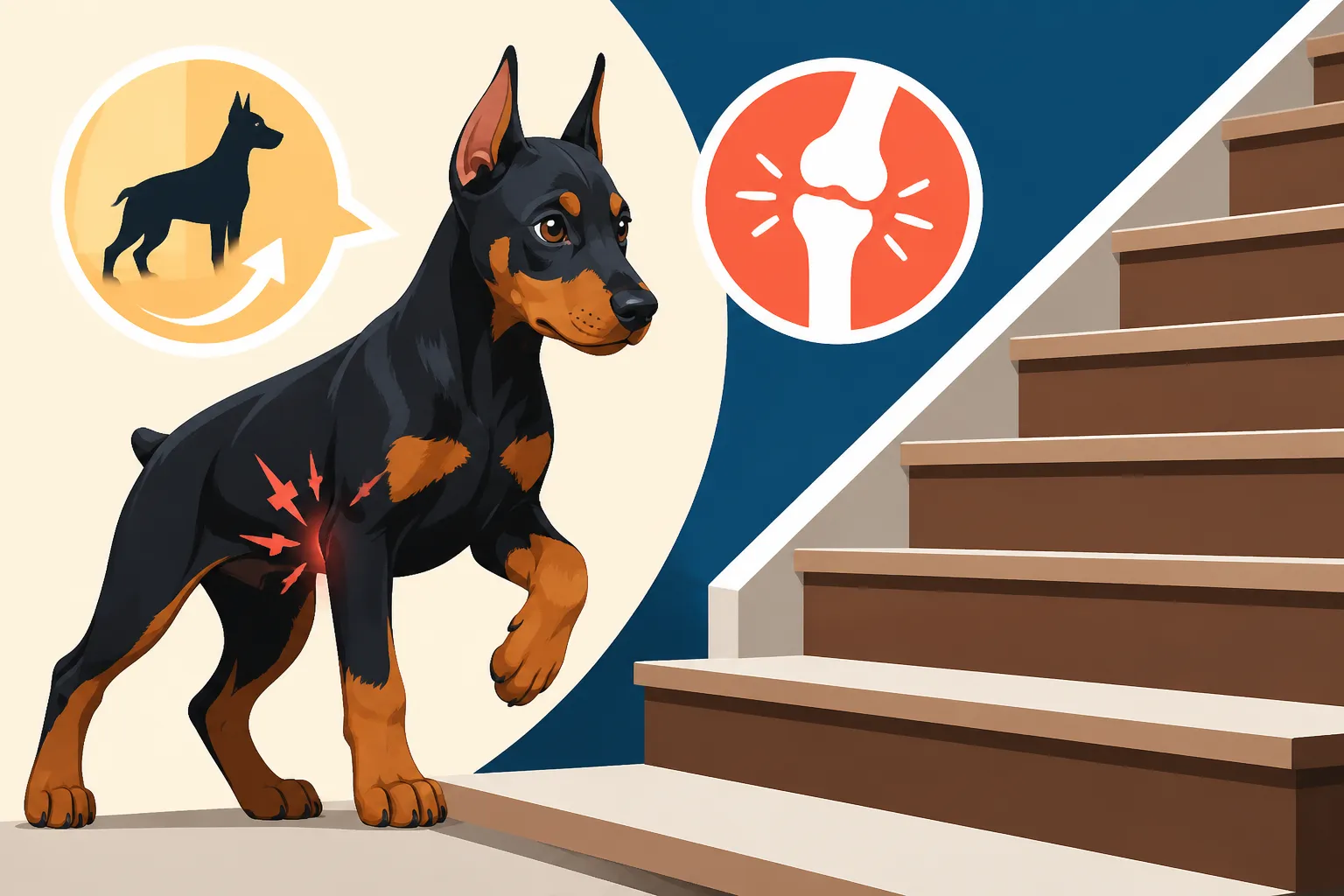
Going up stairs involves a significant push-off with the hind limbs, placing strain on the hips, knees, and lower back. While it builds muscle, excessive or uncontrolled climbing can stress the growth plates in the hips and stifles (knees). But the real villain here is often the descent. When a Doberman goes down stairs, especially quickly or without careful foot placement, their front legs bear the brunt of their body weight, often impacting forcefully with each step. This jarring force can be significant, especially for a large, rapidly growing breed. Think about the impact on their elbows, shoulders, and wrists – all areas where growth plates are active and can be damaged by repetitive trauma. This kind of repetitive, high-impact stress can contribute to conditions like elbow dysplasia or shoulder issues, which nobody wants for their active Doberman.
Cumulative Stress and Long-Term Consequences
A single trip up or down the stairs might not be a disaster, but the issue lies in the repetition. If your Doberman puppy has free access to stairs multiple times a day, every day, over several months, that cumulative stress adds up. It's like a tiny crack forming in a foundation – over time, with enough pressure, it can become a major structural problem. This repeated micro-trauma can interfere with the proper development and closure of growth plates, leading to malformations or pain. In some cases, it can exacerbate a genetic predisposition to conditions like Doberman Hip Dysplasia, even if your puppy comes from health-tested parents. The general consensus among breeders and veterinary orthopedists is that limiting stair access is a crucial step in ensuring your Doberman's long-term joint health, particularly during the period before The Age a Doberman Reaches Full Height.
Safeguarding Your Doberman's Growth: Practical Solutions
So, what’s a concerned Doberman owner to do when stairs are an unavoidable part of their home? The good news is that there are many practical steps you can take to minimize risk without turning your home into an obstacle course for yourself. The goal is careful management, not complete elimination of all movement.
Managing Stair Access in Your Home
The most effective strategy is to limit your Doberman puppy's independent access to stairs, especially during their most vulnerable growth stages. This usually means from when you bring them home until they are at least 12-18 months old, or even longer for larger males.
- Baby Gates: Invest in sturdy baby gates. Not the flimsy pressure-mounted ones that a determined Doberman can easily knock down once they hit their adolescent growth spurt, but solid, hardware-mounted gates. Place them at the top and bottom of any staircases. You can find excellent, tall, durable options on platforms like Amazon or Chewy that are designed for large breeds. This simple physical barrier prevents unsupervised excursions.
- Carrying Your Puppy: For very young puppies (up to about 3-4 months, or as long as you can safely carry them), picking them up and carrying them up and down the stairs is the ideal solution. It completely removes the impact and strain from their tiny, developing joints. This might sound like a lot of work, but it’s a small investment in their future health.
- Leashed Training: Once your puppy is too big to carry, and only when they are a bit older (around 6 months or more, and cleared by your vet), you can start introducing stairs on a leash. The key here is slow, controlled movement. Walk them up and down one step at a time, making sure they aren't rushing or jumping. This is less about exercise and more about teaching them proper body awareness and careful navigation. Always supervise them, and if they show any hesitation or discomfort, stop and re-evaluate. Remember, this isn't a race; it's about building good habits and protecting those precious joints.
Alternatives to Stairs for Multi-Level Access
For areas where stairs are a constant, unavoidable feature, consider alternatives that remove the impact entirely.
- Ramps: Pet ramps are a fantastic solution, especially for outdoor steps or accessing elevated platforms like a bed or car. A good quality, non-slip ramp can allow your Doberman to ascend and descend smoothly, distributing their weight evenly and eliminating high-impact jumps. You can find many options on sites like Chewy or Amazon, ranging from foldable travel ramps to more permanent wooden structures. Just ensure the ramp is wide enough and has good traction for a Doberman's paws.
- Restricted Areas: Sometimes, the easiest solution is to simply restrict your Doberman puppy to a single level of your home during their growth phase. If your living space allows for it, setting up their primary den, food, and water on one floor eliminates the need for stairs altogether. This might mean temporarily reconfiguring some aspects of your home life, but it’s a small price to pay for preventing potential orthopedic problems. You'll want to ensure their Crate Sizing for a Doberman at Full Height is ample and comfortable on their chosen floor.
Beyond Stairs: Holistic Joint Health for Your Doberman
While stair management is crucial, it's just one piece of the puzzle when it comes to fostering robust joint health in a rapidly growing Doberman. A holistic approach encompasses proper nutrition, appropriate exercise, and regular veterinary check-ups.
Nutrition for Optimal Bone and Joint Development
What you put in your Doberman's bowl plays a huge role in how their bones and joints develop. Overfeeding, especially with high-calorie puppy foods designed for smaller, slower-growing breeds, can lead to excessively rapid weight gain. This extra weight puts immense strain on still-forming joints and growth plates.
- Large Breed Puppy Food: Always feed a high-quality, large-breed specific puppy food. These formulas are specifically designed with a balanced calcium-to-phosphorus ratio and controlled calorie content to support steady, healthy growth, rather than excessively fast growth. Brands like Royal Canin or Eukanuba often offer excellent large-breed puppy formulas. Don't fall for the trap of thinking more protein or calories equals bigger and better; slow and steady wins the race for Doberman growth. You might even consider discussing Whether Growth Formula Slows a Doberman Down Enough with your vet.
- Weight Management: Monitor your puppy's weight and body condition closely. You should be able to feel their ribs easily without seeing them sharply. A Doberman puppy should look lean and athletic, not chunky. If you're ever unsure about their ideal weight or feeding guidelines, consult your veterinarian. They can help you determine the right daily calories for an How Many Cups an Adult Doberman Eats puppy.
- Supplements (with caution): While certain joint supplements like glucosamine and chondroitin can be beneficial for older dogs or those with existing issues, always discuss their use with your vet for a growing puppy. Whether Joint Supplements Help a Long-Backed Doberman is a question best answered by a professional, as improper supplementation can sometimes do more harm than good in young, developing dogs. For most healthy, well-fed Doberman puppies on a quality large-breed formula, additional supplements aren't necessary.
Appropriate Exercise and Play
The temptation to play hard with a Doberman puppy is strong – they have so much energy! However, uncontrolled, high-impact exercise can be just as detrimental as stairs.
- Structured Exercise vs. Free Play: Prioritize structured, low-impact exercise over frantic, uncontrolled play sessions. Think short, controlled walks on a leash on soft surfaces like grass, rather than long runs on pavement. Allow for free play in a safely enclosed, flat yard, but monitor them to prevent excessive jumping, twisting, or rough-housing with much larger or smaller dogs that could lead to injury.
- Avoid High-Impact Activities: Until their growth plates have closed (typically around 18-24 months for Dobermans, but varies by individual), avoid activities like intense agility training, long-distance running, jumping off high surfaces (like couches or beds), or excessive fetch sessions where they slam into the ground. These activities put immense strain on immature joints.
- Listen to Your Puppy: Pay close attention to your Doberman puppy's cues. If they seem tired, sore, or show any lameness after exercise, it’s a sign they've done too much. Rest is just as important as activity for proper development. Early signs of discomfort might be subtle, like a slight hesitation or a change in gait, which could escalate to something more serious like A Doberman That Walks With Its Head Down.
Recognizing Potential Issues and When to Seek Veterinary Advice
Even with the best preventative care, it's vital to be vigilant for any signs of discomfort or orthopedic issues in your growing Doberman. Early detection often leads to better outcomes.
Subtle Signs of Joint Pain
Dobermans are stoic and often hide pain, so you need to be observant. Look for subtle changes in behavior or movement.
- Reluctance to Play or Move: Is your normally energetic puppy suddenly less enthusiastic about walks or play? Do they hesitate before jumping or getting up?
- Lameness or Limping: This can range from a very subtle, intermittent limp to obvious lameness. Pay attention after periods of rest or strenuous activity.
- Stiffness: Do they seem stiff, especially in the mornings or after naps?
- Changes in Gait: Are they walking differently, perhaps dragging a paw, or moving with a restricted range of motion? Scuffed Nails on a Wobbler Doberman can sometimes be an early sign of neurological issues that affect gait, but can also indicate an orthopedic problem.
- Vocalization or Sensitivity: Do they whimper or cry when touched in certain areas, or react negatively to handling their legs or paws?
- Swelling: Any visible swelling around a joint is a red flag.
When to Consult Your Veterinarian
Don't wait if you notice any persistent or worsening signs of discomfort. Your veterinarian is your best resource.
- Regular Check-ups: Ensure your Doberman puppy has all their scheduled veterinary check-ups. These are opportunities for your vet to assess their growth, gait, and overall health. They can also discuss a typical Doberman Puppy's Test Certificates if you're curious about their parentage's health history.
- Immediate Concerns: If you observe persistent lameness, swelling, extreme pain, or a sudden change in mobility, contact your vet immediately. They may recommend diagnostic imaging like X-rays to assess growth plates, bones, and joints.
- Specialist Referrals: If your vet suspects a significant orthopedic issue, they may refer you to a board-certified veterinary orthopedic surgeon. These specialists have advanced training and equipment to diagnose and treat complex joint problems.
Taking a proactive and informed approach to managing your Doberman puppy's growth is one of the most loving things you can do. It requires patience, diligence, and sometimes a bit of creative problem-solving, but the reward is a healthy, active Doberman who can enjoy a long and comfortable life by your side.
| Growth Stage | Typical Age Range (Approx.) | Joint Vulnerability | Recommended Stair Management | Exercise Guidelines | Nutritional Focus (Large Breed) |
|---|---|---|---|---|---|
| Puppy | 8 weeks – 4 months | Highest | Carry puppy; rigid baby gates; restrict to one level. | Very short, controlled walks; gentle, supervised play on soft ground. | Controlled growth formula; avoid overfeeding. |
| Adolescent | 4 months – 18 months | High | Continued gates; slow, leashed stair training (only if vet approved). | Moderate walks; avoid high-impact jumps/runs; monitor play intensity. | Lean body condition; maintain large-breed formula. |
| Young Adult | 18 months – 24 months | Moderate | Can navigate stairs independently if trained and no underlying issues. | Gradually introduce more varied exercise; continue monitoring. | Transition to adult large-breed formula; maintain ideal weight. |
Disclaimer
This article is for general informational purposes only and does not constitute professional advice. Laws, prices and regulations vary by location and change over time. Consult a qualified professional for guidance on your specific situation.