Bowls That Stop a Doberman Swallowing Its Dinner
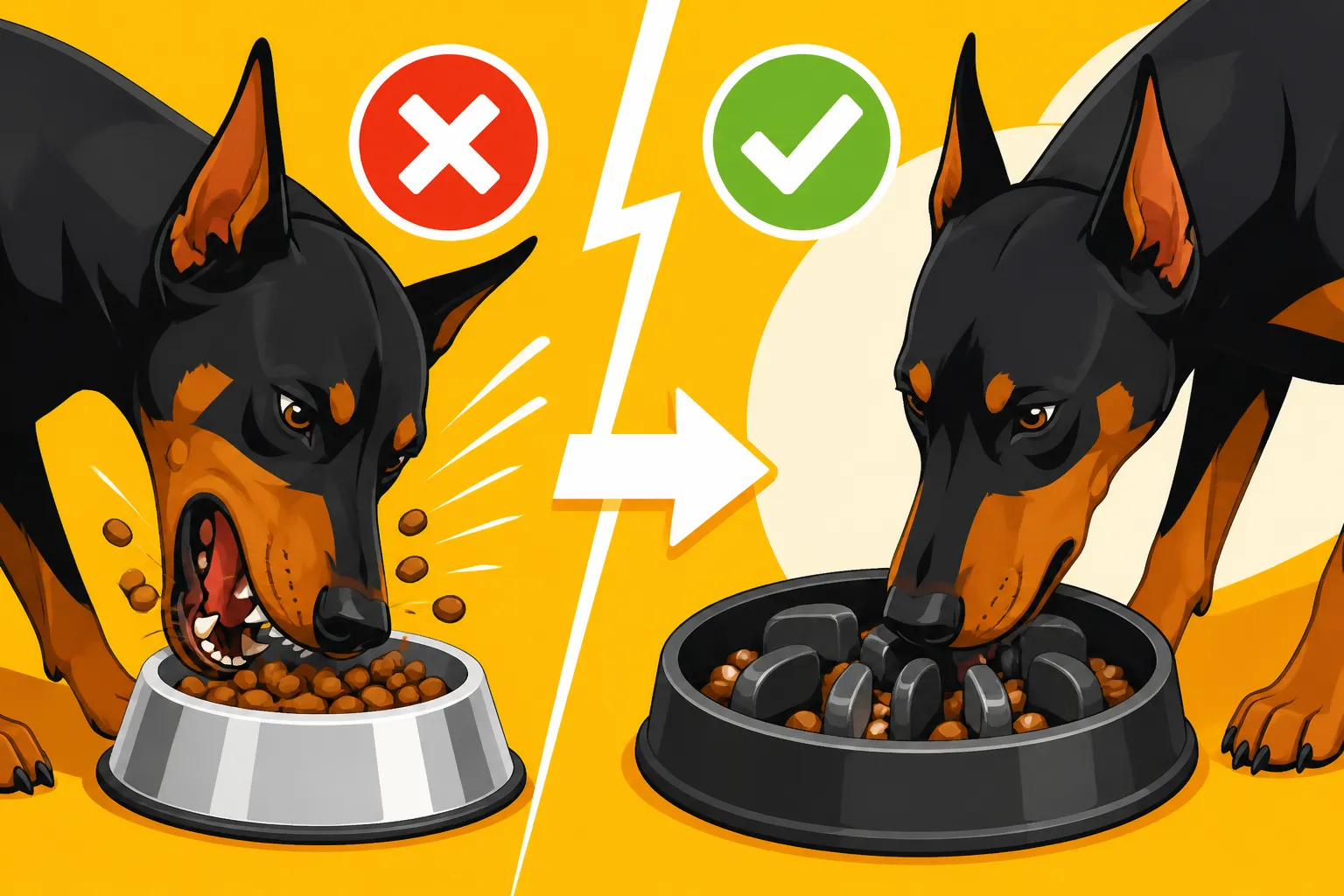
It's a scene many Doberman owners know all too well: you put down a bowl of food, and before you can even turn around, your beloved Doberman has inhaled their entire meal, leaving nothing but a spotless ceramic. While it might seem like just an enthusiastic appetite, this rapid eating isn't just messy; it can be downright dangerous for our deep-chested companions, potentially leading to serious health issues like bloat. This guide will walk you through understanding why your Doberman eats so fast and, more importantly, how specially designed bowls can help slow them down for their safety and well-being.
The Alarming Risks of Rapid Eating in Dobermans
When your Doberman scarfs down their dinner in mere seconds, it's not just a race against the clock; it's an act that carries significant health risks. Their enthusiasm, while endearing, can inadvertently set the stage for severe gastrointestinal problems. Understanding these dangers is the first step in addressing the problem effectively.
The Ever-Present Threat of Bloat (Gastric Dilatation-Volvulus)
For Doberman owners, the word "bloat" is often whispered with a shiver, and for good reason. Gastric Dilatation-Volvulus, or GDV, is an acute, life-threatening condition where the stomach fills with gas, food, or fluid (dilatation) and then twists (volvulus). This twisting cuts off blood supply to the stomach and can lead to organ damage, shock, and death if not treated immediately. Rapid eating is a well-known contributing factor to bloat in deep-chested breeds like Dobermans. When dogs eat too quickly, they gulp down excessive amounts of air along with their food. This air can become trapped in the stomach, causing it to distend.
Imagine your Doberman, excited for dinner, hoovering up their kibble in what seems like two breaths. Each gulp isn't just food; it's a significant volume of air being swallowed. This rapid ingestion of air, combined with the churning of a full stomach during or shortly after a meal, can create the perfect storm for a stomach twist. It’s a terrifying prospect, and something every Doberman owner tries to prevent. The cost and complexity of dealing with this emergency are immense, both emotionally and financially, highlighting why preventative measures are so crucial. You can learn more about Recognizing a Doberman Stomach Twist in Time and What Bloat Surgery Costs a Doberman Owner.
Indigestion, Vomiting, and Choking Hazards
Beyond the life-threatening risk of bloat, fast eating also leads to a host of other unpleasant, though less severe, issues. When food is swallowed whole or barely chewed, it puts a greater strain on the digestive system. This can result in indigestion, gas, and an upset stomach, leaving your Doberman feeling uncomfortable. It's not uncommon for a fast-eater to regurgitate their meal almost as quickly as they ate it, which is not only messy but also means they aren't properly absorbing nutrients.
Think about a time you ate too fast yourself – that feeling of being overly full, gassy, or even a bit queasy. Our Dobermans experience similar discomfort, but their bodies are even more susceptible to the physical act of swallowing too much, too quickly. Pieces of kibble or larger food items, not properly chewed, can also present a choking hazard, especially if they get lodged in the throat. Even if they don't choke, the sheer volume of quickly ingested food can sometimes lead to your Doberman throwing up their entire meal shortly after eating, indicating their system simply couldn't handle the speed. For dogs prone to this, it’s a constant concern. If your Doberman frequently struggles with this, you might be wondering, A Doberman That Cannot Hold Down Kibble.
Understanding Slow Feeder Bowls: How They Work
Slow feeder bowls are specifically designed with ridges, mazes, or other obstacles that make it challenging for a dog to gobble down their food. Instead of having a wide-open surface, these bowls force your Doberman to navigate around barriers, picking up smaller portions with each lick or bite. This simple yet ingenious design encourages a more natural, slower pace of eating.
The Mechanics of Obstacles and Mazes
The core principle behind a slow feeder bowl is interruption. Imagine a flat plate of kibble versus a plate with several bumps and valleys. On the flat plate, your Doberman can sweep up large mouthfuls with ease. In a slow feeder, their tongue or muzzle has to work around the contours. This means they can only get a few pieces of kibble at a time, forcing them to slow down and really think about how they're accessing their food. These bowls turn mealtime into a mini-puzzle, engaging their brains as well as their stomachs.
The shapes and patterns vary widely, from simple raised bumps to intricate labyrinths. Some designs mimic natural foraging behavior, encouraging your Doberman to "hunt" for their meal by pushing food through channels. This not only extends mealtime but also provides mental stimulation, which is a huge bonus for intelligent breeds like Dobermans. Instead of just devouring food, they're engaging their problem-solving skills, which can be surprisingly tiring for them! You’ll often find these innovative designs available from a wide range of retailers, including online pet supply giants like Chewy.
Encouraging Chewing and Better Digestion
By slowing down the eating process, these bowls naturally encourage your Doberman to chew their food more thoroughly. When food is properly chewed, it mixes with saliva, beginning the digestive process right in the mouth. This isn't just about reducing bloat risk; it's about optimizing nutrient absorption and overall gut health. Food that is well-chewed is easier for the stomach and intestines to break down, leading to more efficient digestion and fewer instances of gas or indigestion.
It's amazing how a simple bowl change can have such a profound impact. When your Doberman chews their food, enzymes in their saliva get a chance to start working on carbohydrates, and the mechanical breakdown of food reduces the burden on their stomach. This leads to less digestive upset, more comfortable post-meal periods, and better absorption of all those vital nutrients you're feeding them. This can be especially important when you’re focused on Feeding an Eighty-Pound Doberman Well to ensure they maintain The Weight Range a Doberman Should Hold.
Choosing the Right Slow Feeder for Your Doberman
With so many options on the market, selecting the perfect slow feeder for your Doberman can feel a little overwhelming. But don't worry, there are a few key factors to consider that will help you narrow down the choices and find a bowl that truly makes a difference.
Material and Durability: Built Doberman-Tough
Dobermans are strong dogs, and their feeding accessories need to withstand their power and enthusiasm. When it comes to slow feeders, you'll primarily find options made from plastic, ceramic, or stainless steel.
- Plastic bowls are often the most affordable and come in a vast array of designs. However, it's crucial to choose food-grade, BPA-free plastic. Dobermans can be vigorous eaters, and a thin, flimsy plastic bowl might not hold up to their chewing or get knocked around easily. Look for thick, sturdy plastic that won't easily tip or crack. Some plastics can also develop small scratches over time, which can harbor bacteria if not cleaned meticulously.
- Ceramic bowls are heavier and more difficult to tip, which is a big plus for a large dog. They are also easy to clean and generally don't harbor bacteria. However, they are brittle and can break if dropped or if your Doberman is particularly rambunctious and pushes it off a counter. A chipped or cracked ceramic bowl can have sharp edges, posing a safety risk.
- Stainless steel bowls are often considered the gold standard for pet dishes. They are incredibly durable, hygienic, rust-resistant, and virtually indestructible. While less common in complex slow-feeder designs, some brands do offer stainless steel inserts for existing bowls or simple raised-bump designs. They might be a bit pricier up front, but their longevity often makes them a cost-effective choice in the long run. When browsing sites like Amazon, you'll see a good selection of all these materials, so take your time to compare.
Design and Difficulty Level
The effectiveness of a slow feeder bowl largely depends on its design and how well it challenges your particular Doberman. Some Dobermans are more determined than others, and what slows one dog down might be a breeze for another.
- Simple Obstacles: These bowls have a few raised bumps, spirals, or ridges. They're great for Dobermans who just need a slight nudge to slow down, or as an introduction to slow feeding. They prevent the "shovel" action but might not be challenging enough for a truly voracious eater.
- Maze Designs: These feature more intricate patterns, often resembling labyrinths. Your Doberman will have to use their tongue and nose to navigate the pathways, picking up kibble along the way. These are excellent for dogs that need a moderate to significant slowdown.
- Puzzle Feeders: While sometimes considered separate, many advanced slow feeders border on puzzle toys. They might require your Doberman to push levers, move covers, or engage in more complex actions to get their food. These are fantastic for providing maximum mental stimulation and slowing down the fastest eaters.
Consider your Doberman's personality. Is he a master problem-solver who enjoys a challenge, or does he get frustrated easily? Start with a moderately challenging design and adjust if needed. Sometimes, even a deep bowl with a raised central cone can do wonders. Don't forget that brands like Ollie offer specialized feeding mats or portioned trays that achieve a similar goal by spreading out the food, even if they're not traditional "bowls."
Size and Stability
This might seem obvious, but selecting the correct size bowl is crucial, especially for a large breed like a Doberman. A bowl that's too small for their daily ration will be overfilled, negating the slow-feeder effect. Conversely, one that's too large might not present enough of a challenge, as the obstacles become less effective when spread out too far.
Look for bowls specifically advertised for large breeds or those with a capacity appropriate for your Doberman's meal size. Also, consider the base of the bowl. A wide, heavy base with non-slip feet is essential to prevent your Doberman from pushing the bowl around the kitchen floor, potentially spilling food or, worse, injuring themselves. Nobody wants to see their Doberman chasing their dinner across the room! Investing in a good quality, stable bowl will save you headaches and keep mealtime safe.
Here's a quick comparison of typical slow feeder bowl features:
| Feature | Plastic Slow Feeder | Ceramic Slow Feeder | Stainless Steel Slow Feeder |
|---|---|---|---|
| Durability | Varies (look for thick, BPA-free), can scratch | Heavy, but can chip/break | Extremely durable, rust-resistant |
| Stability | Can be lighter, may slide without non-slip base | Heavy, usually very stable | Varies, look for non-slip rubber ring |
| Hygiene | Easy to clean, but scratches can harbor bacteria | Very easy to clean, non-porous | Very easy to clean, non-porous |
| Design Variety | Widest range of intricate maze patterns | Good range of stylish, functional designs | Often simpler designs or inserts, fewer intricate mazes |
| Cost | Generally most affordable | Mid-range | Can be higher, especially for quality designs |
| Pros | Lightweight, many fun designs, accessible | Aesthetic, stable, hygienic | Indestructible, hygienic, long-lasting |
| Cons | Can be chewed, scratches, less eco-friendly | Breakable, can be heavy to lift for some | Can be less visually exciting, fewer complex designs |
Beyond the Bowl: Other Strategies for Slower Mealtimes
While slow feeder bowls are an excellent tool, they aren't the only solution for a fast-eating Doberman. Combining different strategies can provide an even more effective approach, ensuring your dog's safety and improving their digestive health.
Meal Timing and Frequency
How and when you feed your Doberman can play a significant role in their eating habits. Instead of one large meal, consider breaking their daily ration into two or even three smaller meals throughout the day. This reduces the sheer volume of food they need to consume at one sitting, making it less likely they'll gulp down huge amounts of air. Many Doberman owners find that spreading out meals helps manage their dog's hunger and reduces their urgency at feeding time. This practice is often recommended for deep-chested breeds to mitigate bloat risk. You might find our discussions on Meal Timing on a Deep-Narrow Doberman Chest and Why a Doberman Is Never Fed One Big Meal particularly insightful here. It's truly a game-changer for many. If you're serious about slowing things down and reducing bloat risk, consider Splitting a Doberman's Ration Into Three.
For example, if your Doberman typically gets two cups of kibble in the morning and two in the evening, try offering one cup four times a day instead, or even just three times a day. This ensures they are never starving at mealtime, which can be a huge trigger for fast eating. If they are less frantically hungry, they are more likely to take their time, even if just a little more, at each meal.
Incorporating Puzzle Toys and Snuffle Mats
Another fantastic way to slow down mealtime and provide mental enrichment is to use puzzle toys or snuffle mats. Instead of a bowl, you can load a portion of your Doberman's kibble into a toy that dispenses food slowly as they roll it, nudge it, or manipulate it. This forces them to work for their food, turning dinner into an engaging activity. It simulates foraging behavior, which is natural and satisfying for dogs.
Snuffle mats, on the other hand, are fabric mats with many strips or pockets where you can hide kibble. Your Doberman has to use their nose to "snuffle" around and find each piece, greatly extending mealtime and providing wonderful scent work. Both puzzle toys and snuffle mats are readily available from pet supply stores and online retailers like Chewy and Amazon, and they come in various difficulty levels. It's a fantastic way to tire out your smart Doberman mentally while ensuring they eat at a healthier pace.
Spreading Food on a Baking Sheet or Large Surface
Sometimes, the simplest solutions are the most effective. If you don't have a slow feeder bowl or a puzzle toy, simply spreading your Doberman's kibble out on a large, flat surface like a baking sheet or a clean floor can do the trick. By spreading the food thinly, your Doberman can't get a huge mouthful at once; they have to take smaller bites from different spots.
This method effectively increases the "surface area" of their meal, making it physically impossible for them to gulp down massive quantities. While it might require a bit more cleanup on your part, it's a zero-cost solution that can be implemented immediately if you're waiting for a slow feeder to arrive from Chewy or just want to try a temporary solution. It's especially useful if you have a Doberman who gets particularly anxious around meal times and needs an immediate, simple intervention.
Disclaimer
This article is for general informational purposes only and does not constitute professional advice. Laws, prices and regulations vary by location and change over time. Consult a qualified professional for guidance on your specific situation.