Whether a Doberman Wound Needs Stitching
There's nothing quite like the heart-stopping moment you notice a cut or tear on your Doberman's sleek, short coat. Their skin, while tough in spirit, can often be surprisingly delicate and thin, leading to wounds that look far worse than they might be, or sometimes, deceptively simple ones that are much deeper than they appear. This guide is here to walk you through how to assess those scary moments, understand when a Doberman wound genuinely needs professional stitching, and what to do until you can get veterinary help.
The Immediate Panic: Assessing Your Doberman's Wound
It’s completely natural to feel a surge of panic when you see blood on your Doberman, especially with their dramatic, dark coats. The contrast can make any injury seem catastrophic. But before you rush into full emergency mode, take a deep breath. Your Doberman will pick up on your anxiety, and a stressed dog is harder to examine and treat. Many Dobermans are incredibly stoic, too; they might be bleeding quite a bit from a decent cut and still look at you with mild curiosity, which can be deceiving.
The first step is always to get a good, clear look at the wound, even if it means gently parting the short fur. Their short, single coat means there’s no thick undercoat to hide the extent of an injury, but it also means smaller nicks can bleed impressively. Don't be afraid to gently touch around the area (not in the wound itself) to understand its location and whether it's causing your Doberman significant pain. You'll want to quickly gauge the amount of blood, the wound's size, and its general appearance. Remember that the goal right now is assessment, not immediate surgery in your living room! This initial calm inspection is crucial for making smart decisions.
Understanding Doberman Skin Vulnerabilities
Dobermans, with their fine, short coats and generally lean musculature, often have surprisingly thin skin. This isn't necessarily a fault, but it's a characteristic that makes them prone to certain types of injuries. A simple brush against a sharp edge, a rough play session with another dog, or a misstep during a run can result in a tear or laceration that might just be a superficial scrape on a thicker-skinned breed. Because their skin is less forgiving, it can gape open more readily, exposing underlying tissue even with seemingly minor trauma. This is especially true over bony prominences like hips, elbows, or joints, where there's less cushioning fat or muscle underneath.
You might find yourself dealing with what feels like an endless stream of nicks and scrapes, a testament to their active lifestyle combined with this skin characteristic. It’s part of living with a Doberman, and understanding this predisposition helps you react appropriately. For more on this, you might find Thin Doberman Skin and Everyday Cuts a helpful read.
Controlling Bleeding and Initial Cleaning
Once you've managed to calm yourself and get a decent look, your priority is controlling any active bleeding and preventing further contamination. For most cuts, direct pressure is your best friend. Grab a clean cloth, a gauze pad, or even a clean paper towel and apply firm, continuous pressure directly over the wound. Don't peek every few seconds; hold that pressure for at least 5-10 minutes. If the cloth becomes saturated, don't remove it; simply place another clean cloth on top and continue pressing.
After the bleeding has subsided or significantly slowed, you can gently clean the wound. Use warm water and a mild, unperfumed soap, or ideally, a saline solution. Avoid harsh antiseptics like hydrogen peroxide or rubbing alcohol, as these can damage delicate tissues and delay healing. The goal is to flush out any visible dirt, debris, or loose hair. Trim hair around the wound if necessary, being extremely careful not to cut the skin. A good flush can often reveal the true depth and nature of the wound. If you have a pet-specific antiseptic wipe or spray, that's often a better choice, but plain water is usually sufficient for an initial cleanse. Keep a close eye on any persistent oozing or bright red blood, as this is a red flag. Wound Healing in a Doberman With Thin Skin explains more about the unique needs of their skin.
Key Indicators a Doberman Wound Needs Stitching
Deciding whether a wound needs stitches can feel like a high-stakes guessing game. For a Doberman, with their often-lean build and propensity for certain types of injuries, knowing what to look for is crucial. It's not always about the amount of blood; sometimes a seemingly small, deep puncture is far more concerning than a long, superficial scrape.
How Deep and Wide Is the Wound?
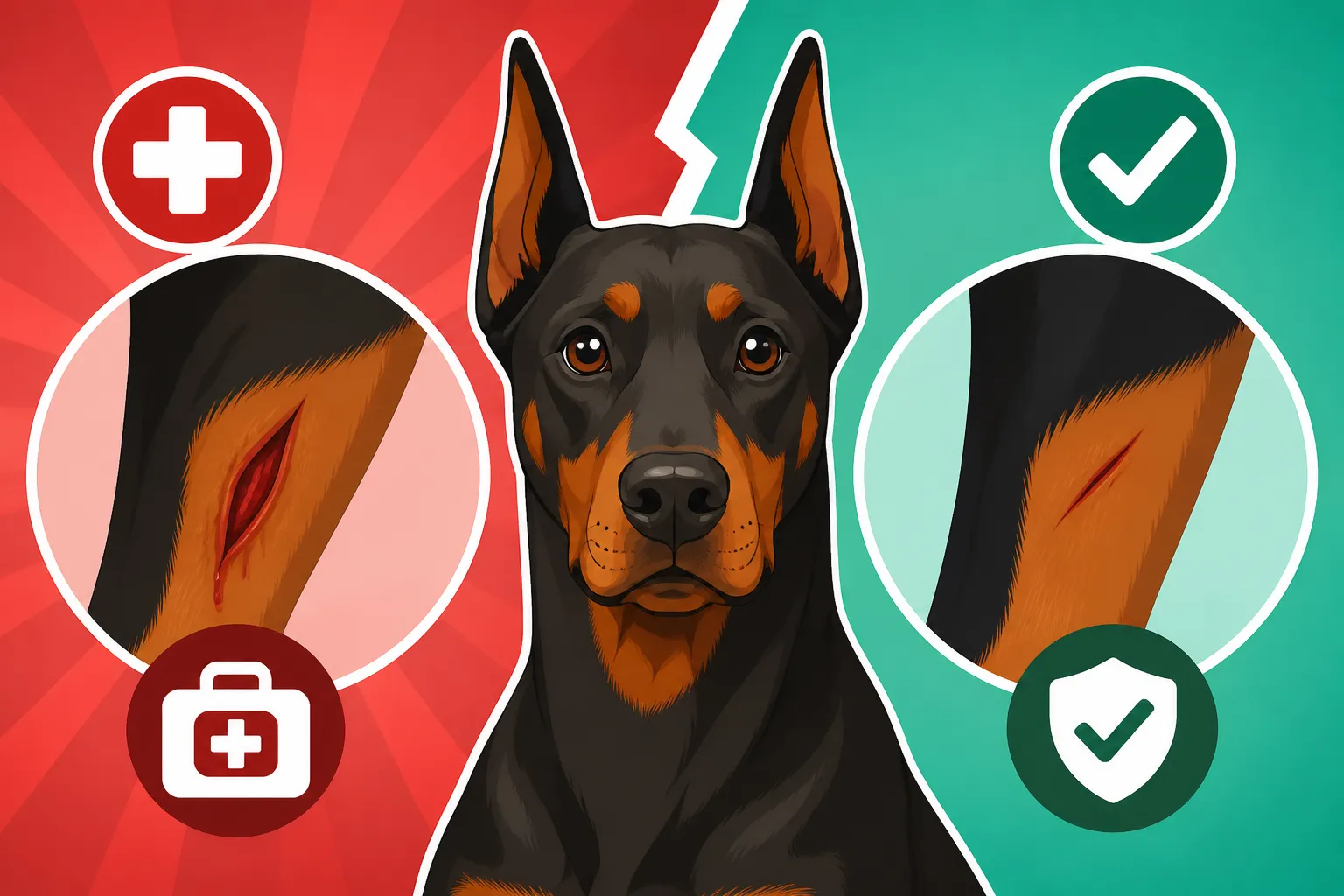
This is perhaps the most critical factor. If the wound is deep enough to expose underlying layers of tissue – you can see fat (which looks yellowish and bumpy), muscle (red and fibrous), or even bone – it almost certainly needs veterinary attention and likely stitches. Even if it’s not bleeding profusely, an exposed wound carries a high risk of infection and won't heal properly on its own.
Similarly, the width of the gape matters. If the edges of the wound pull apart significantly, leaving a wide gap that you can't easily push together, it's a candidate for sutures. Dobermans are athletic dogs, and wounds over joints or areas of high movement (like the flank or chest) tend to gape more widely, preventing natural closure. Trying to let a widely gaping wound heal by itself can lead to prolonged healing, excessive scarring, and sometimes even functional impairment if it's in a critical area.
Location, Location, Location: Critical Areas
The anatomical location of the wound plays a huge role in determining if stitches are necessary. Some areas are simply higher risk:
- Over Joints: Wounds over elbows, hocks, knees, or hips are problematic because the constant movement prevents the skin from knitting together. They also stretch the wound, making it harder to heal and potentially exposing the joint itself to infection.
- Paws and Pads: These areas are constantly in contact with the ground, making them prone to contamination. Cuts on paw pads are notoriously slow and difficult to heal due to pressure, movement, and dirt. A deep cut between the toes or on a pad often requires stitches.
- Face and Head (especially around eyes, ears, mouth): These areas are delicate, and stitches might be needed not just for healing but for cosmetic reasons and to ensure proper function. A torn ear flap, for example, often needs prompt veterinary attention to heal correctly and prevent future issues. Treating a Torn Doberman Ear Flap dives into specific concerns for ear injuries.
- Genital or Anal Area: Wounds here are very susceptible to infection due to their proximity to bodily waste.
- Neck or Chest: Deep wounds in these areas can sometimes affect underlying vital structures, requiring immediate evaluation.
Any wound in these high-movement or sensitive areas should be examined by a veterinarian, even if it seems minor initially.
Other Warning Signs: Bleeding and Contamination
While initial bleeding can be dramatic, persistent or unusually heavy bleeding that doesn't slow down after applying pressure is a definite red flag. This could indicate a larger blood vessel has been severed, or in breeds like Dobermans, it might even point to an underlying clotting disorder such as Von Willebrand Disease. If your Doberman tends to bleed more than seems normal, or if you notice unexplained bruising or nosebleeds, it's worth discussing with your vet. A Doberman That Bleeds Too Long From a Cut explains why this is a particular concern for the breed. In such cases, the vet might also consider Drugs a Doberman With Von Willebrand Should Avoid if any medication is prescribed.
Furthermore, the nature of the wound's cause can indicate a need for stitches and intensive cleaning.
- Puncture wounds: Caused by sharp objects (nails, sticks, teeth). These often look small on the surface but can be very deep, trapping bacteria and leading to abscesses. They rarely bleed much externally but are highly prone to infection and often require exploration and thorough flushing, if not stitching.
- Bite wounds: These are essentially dirty puncture wounds and carry a high risk of bacterial infection. Even if the skin isn't widely torn, the crushing force can cause significant internal damage. They almost always require veterinary attention, usually involving cleaning, antibiotics, and sometimes drains or loose stitching.
- Dirty or contaminated wounds: If the wound occurred in a dirty environment, or if foreign material (gravel, splinters, glass) is embedded, professional cleaning and assessment for infection risk are vital.
Here's a quick reference table to help you decide:
| Wound Characteristic | Likely Needs Stitches/Vet Care | Potentially Manageable at Home (Monitor Closely) |
|---|---|---|
| Depth | Exposes fat, muscle, or bone; deep puncture wounds | Superficial scrape or abrasion, only top layer of skin affected |
| Gape | Edges pull apart widely (>0.5 cm), cannot be easily pushed together | Edges lie close together naturally |
| Location | Over joints, paw pads, face (especially eyes/mouth), genitals, neck/chest | On fleshy areas of the body, away from joints or sensitive zones |
| Bleeding | Heavy, persistent, doesn't stop after 5-10 min direct pressure | Minor oozing, stops quickly with light pressure |
| Cause/Contamination | Puncture wounds, bite wounds, deep lacerations from dirty objects | Minor scrapes from clean surfaces, superficial friction burns |
| Signs of Infection (later) | Redness, swelling, heat, pus, foul odor, pain, lethargy | None (wound is clean, dry, and improving) |
What to Expect at the Vet and Beyond
Once you’ve determined that your Doberman’s wound likely needs professional attention, getting them to the vet promptly is crucial. For some severe injuries, it's an emergency, warranting an immediate trip to the nearest veterinary hospital. For others, it might be urgent but can wait until your regular vet opens. If you're ever unsure, always err on the side of caution and call your vet or an emergency clinic for advice. They can help you determine the urgency over the phone. You can expect costs to vary significantly, so be prepared for The Vet Bills a Doberman Runs Up Outside Screening. For very sudden, severe situations, the Emergency Vet Fees for a Collapsing Doberman can be substantial.
The Veterinary Examination and Treatment Options
Upon arrival, the vet will perform a thorough examination. This usually starts with stabilizing your Doberman if they are in pain or shock. They'll likely shave the area around the wound to get a clear view, as even a short Doberman coat can hide debris and the true extent of the injury. Next comes a meticulous cleaning, often under light sedation if your Doberman is anxious or the wound is particularly painful. Getting a Doberman Used to Vet Handling can make these visits much smoother. The vet will probe the wound to assess its depth, check for foreign objects, and determine if any vital structures (nerves, tendons, blood vessels) are affected.
Depending on the wound's age, size, depth, and contamination level, the vet might opt for different closure methods:
- Sutures (Stitches): This is the most common method, using sterile thread to carefully sew the skin layers back together. Some stitches are absorbable (dissolve internally), while others need to be removed in 10-14 days.
- Staples: Less common for intricate wounds but sometimes used for straightforward skin closures, especially in areas with good skin elasticity.
- Tissue Adhesive (Veterinary Glue): For very small, superficial cuts that are clean and not under tension, a special veterinary-grade skin glue can be used. This is generally not suitable for deep or wide wounds.
- Delayed Primary Closure: If the wound is heavily contaminated or very old, the vet might clean it thoroughly and leave it open for a day or two, perhaps with a drain, before closing it. This helps ensure no infection is trapped.
- Wound Management: For very large, complex, or infected wounds, extensive stitching might not be the first step. The vet might focus on cleaning, debridement (removing damaged tissue), and open wound management with bandages and regular changes, allowing it to heal by "second intention" (from the inside out).
Often, deep or contaminated wounds will also warrant antibiotics to prevent infection and pain medication to keep your Doberman comfortable during recovery. Sedating a Doberman for a Dental and What It Costs can give you an idea of anesthesia expenses, which might be similar for wound closure.
Home Care and Monitoring After Stitches
Bringing your Doberman home after stitches means commitment to their aftercare. The single most important rule is preventing your Doberman from licking or chewing the wound or stitches. This is where the dreaded "cone of shame" (an Elizabethan collar) becomes indispensable. Yes, they hate it, and you'll hate watching them bump into everything, but it's non-negotiable for proper healing. Ignoring this step is the fastest way to reopen a wound, introduce infection, and end up back at the vet. You can find various types of e-collars, including softer, inflatable ones, on platforms like Chewy or Amazon if the traditional hard plastic one proves too cumbersome.
Other crucial aspects of home care include:
- Medication: Administer all prescribed antibiotics and pain relief exactly as directed by your vet.
- Rest: Limit your Doberman's activity. No running, jumping, or rough play. Leash walks for potty breaks only. This might mean crating your Doberman more often, so ensure you have a comfortable, appropriately sized crate. Refer to Crate Sizing for a Doberman at Full Height for guidance.
- Wound Monitoring: Keep an eye on the wound daily. Look for signs of infection: increased redness, swelling, heat, pus, a foul odor, or if your Doberman seems more painful. If you notice any of these, contact your vet immediately.
- Keeping it Clean and Dry: Follow your vet's instructions regarding wound cleaning or bandage changes. Most stitches need to be kept dry. Avoid baths until the stitches are out and the wound is fully healed.
- Follow-Up Appointments: Attend all scheduled recheck appointments with your vet. This is typically when non-absorbable stitches will be removed, and the vet can assess the healing progress.
Caring for a Doberman recovering from a wound, especially a significant one, requires patience and diligence. Providing a soft, supportive resting area is also important for their overall comfort, especially for a lean breed. Consider Bedding a Doberman With No Body Fat to prevent pressure sores. Your consistent attention to these details will greatly improve your Doberman's chances of a swift and uneventful recovery.
Disclaimer
This article is for general informational purposes only and does not constitute professional advice. Laws, prices and regulations vary by location and change over time. Consult a qualified professional for guidance on your specific situation.