Where Rust Markings Belong on a Doberman
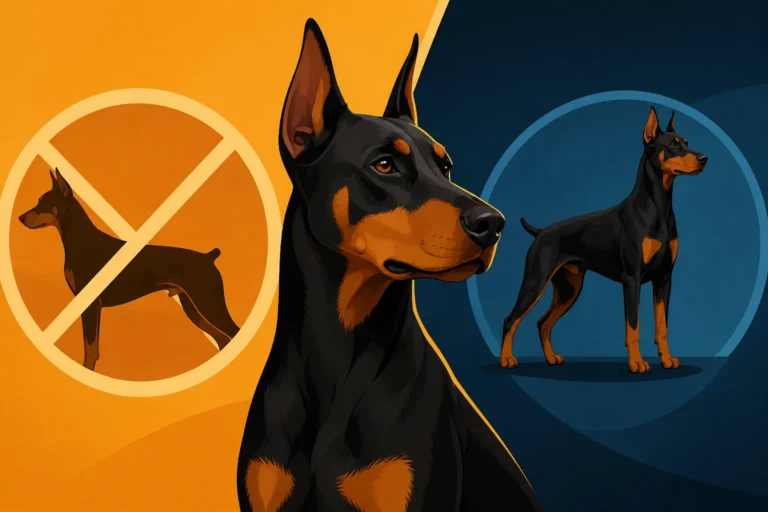
It can be incredibly confusing, especially for new Doberman owners or those just admiring the breed, to understand exactly where those distinctive rust markings are supposed to be. You see them on some dogs, perhaps more prominently on others, and sometimes even missing entirely. This guide will walk you through the Doberman's standard rust markings, helping you understand their placement, significance, and what it means when they deviate from the norm.
Understanding the Doberman's Classic Coat Pattern
The Doberman Pinscher is renowned for its sleek, powerful appearance, and a huge part of that iconic look comes from its coat and those striking rust markings. These aren't just random splashes of color; they're a hallmark of the breed, carefully defined by breed standards to maintain a consistent and recognizable aesthetic. It's a combination that speaks to the breed's history and its carefully curated development.
The Basics: Black and Rust, and Beyond
When we talk about a "Doberman color," most people immediately picture the classic black and rust. This is by far the most common and widely recognized color variation, and for good reason – it’s striking! However, the breed standard actually allows for a few other base colors: red, blue, and fawn (Isabella). In every one of these cases, it's those rust markings that provide the defining contrast. They don't just add beauty; they highlight the Doberman's elegant lines and powerful musculature, almost like an artist's brushstrokes defining form. Whether your Doberman is black, red, blue, or fawn, the pattern and placement of these rust markings should ideally remain consistent. It’s what makes a Doberman a Doberman, visually speaking. You can learn more about the accepted colors in Doberman Colors and the Two That Cause Trouble.
The Importance of the Standard for Markings
For serious breeders and those involved in conformation showing, the breed standard is like a bible. It’s a detailed blueprint that describes the ideal Doberman in every aspect, from temperament to tooth structure, and yes, to coat color and markings. For American Dobermans, this means adhering to the American Kennel Club (AKC) standard, which is quite specific about where rust markings should appear. This isn't just about aesthetics; it's about preserving the breed type that Karl Dobermann, and those who followed him, envisioned. Deviations from this standard can be considered faults in the show ring, but they don't necessarily diminish a dog's value as a beloved family companion. It’s crucial to remember that a "perfect" coat doesn't equate to a perfect dog, especially when health and temperament are far more important in your daily life with your Doberman.
Pinpointing the "Right" Places for Rust Markings
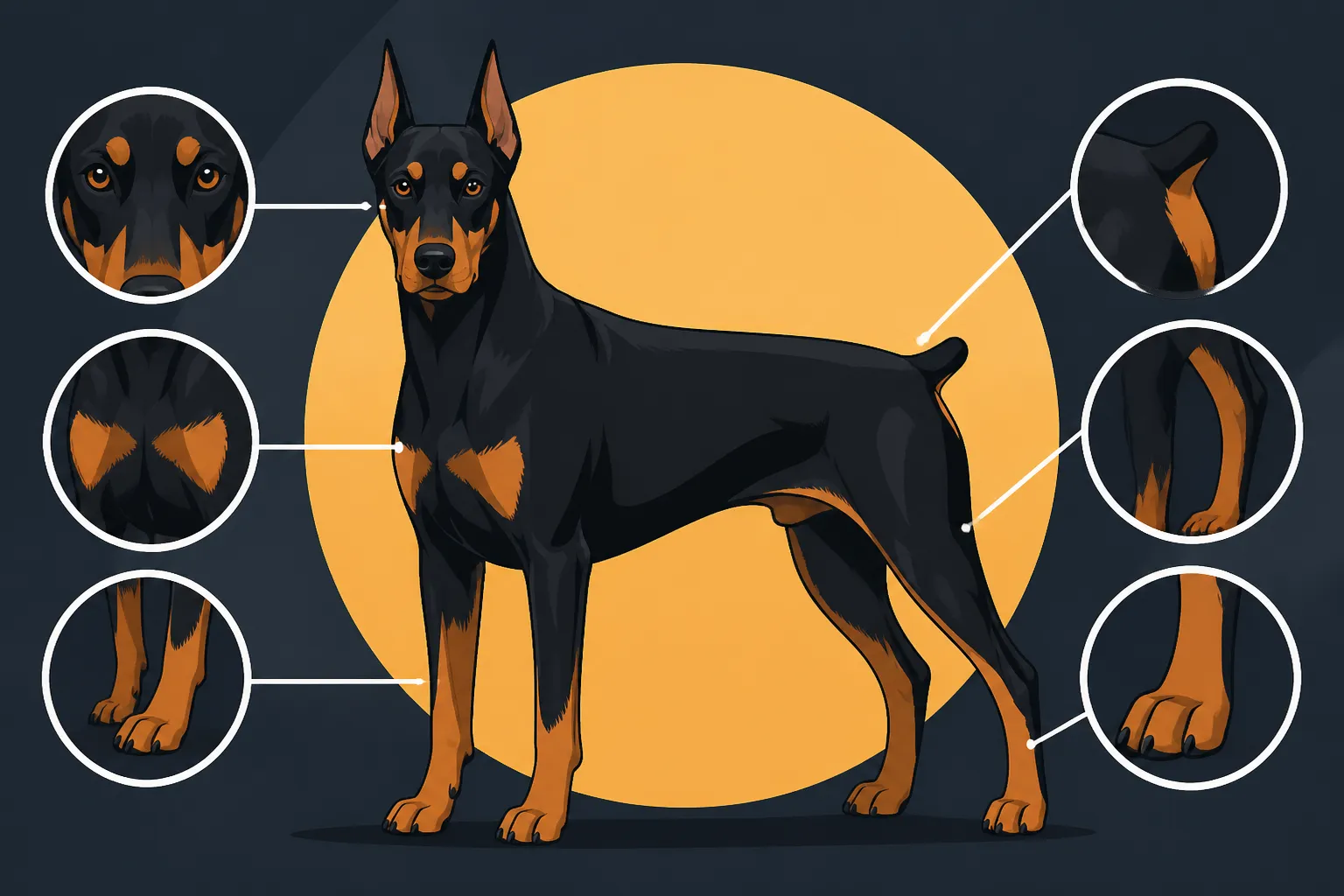
Let's get down to the nitty-gritty of where those beautiful rust markings are actually supposed to be. Imagine painting a Doberman from scratch – there are very specific areas that should be accented with that rich, warm rust color. These locations are consistent across all accepted base coat colors (black, red, blue, fawn) and are integral to the breed's distinctive look. It’s more than just "rust patches"; it’s a specific, symmetrical pattern.
Head and Muzzle: The Defining "Eyebrows" and Cheek Patches
The head is perhaps where the rust markings are most expressive and defining. When you look at a Doberman, you immediately notice the rust "eyebrows" – distinct spots above each eye that give the dog a soulful, intelligent expression. These aren't full circles, but clear, often somewhat triangular patches. Below the eyes, you'll find rust on the cheeks, running down towards the muzzle. The muzzle itself should have clear rust markings on both sides, typically encompassing the lips and extending upwards. Finally, a distinct rust patch should be present on the throat, just below the jawline. These head markings really frame the Doberman's face, making its alert and determined expression even more pronounced. Without them, a Doberman's face can look quite different, almost stark.
Chest and Throat: The Prominent Forefront
Moving down from the throat, the chest is another key area for rust markings. Here, you'll find a distinct rust patch, often described as a "forechest marking," which typically forms an inverted triangle or a bow tie shape. This marking helps to highlight the Doberman's broad and deep chest, a hallmark of the breed's athleticism and power. The size and exact shape can vary slightly, but a clear, well-defined patch is preferred. This chest marking often connects to the rust markings on the throat, creating a cohesive pattern across the front of the dog. It’s a bold statement that really draws attention to their impressive front assembly.
Legs and Feet: From Pastern to Toes
The rust markings extend down to the legs and feet, providing a symmetrical accent. On each leg, the rust typically begins on the pasterns (the "wrists" of the dog), covering the lower part of the leg and extending all the way down to the toes. On the forelegs, these are often quite clear and can sometimes extend a little higher up the leg, especially on the inside. For the hind legs, the rust markings usually cover the inside of the thighs, down the hocks, and again, all the way to the toes. There might also be a small, distinct rust spot visible on each front leg, just above the wrist, sometimes called a "pencil mark." These leg and foot markings contribute to the overall balanced appearance of the Doberman, making them look elegant and refined even in motion.
Tail and Vent: Finishing Touches
Finally, the rust markings complete their circuit at the rear of the dog. The underside of the docked tail (or the tail itself, if left natural) should feature clear rust markings. These markings often extend slightly onto the surrounding area, encompassing the vent (the area around the anus). While perhaps less immediately noticeable than the facial or chest markings, these rear markings are equally important for the overall balance and adherence to the breed standard. They ensure that the striking contrast of the rust color is present across the entire dog, from head to tail, truly defining the Doberman's sleek silhouette.
Here's a quick summary of the ideal rust marking placements:
| Body Part | Specific Location for Rust Markings |
|---|---|
| Head | Distinct spots above each eye (eyebrows) |
| On the cheeks | |
| On both sides of the muzzle, including lips | |
| On the throat, below the jawline | |
| Chest | A prominent inverted triangle or bow tie shape on the forechest |
| Legs | From the pasterns (front) or hocks (rear) down to the toes |
| Inside of thighs (rear) | |
| Small "pencil marks" on each front leg, above the wrist (optional but common) | |
| Tail & Vent | Underside of the tail |
| Around the vent area |
What Happens When Markings Deviate from the Standard?
It's easy to get caught up in the "perfect" ideal described by the breed standard, but the reality is that not every Doberman will have flawless markings. Sometimes there's a little too much rust, sometimes too little, and occasionally, a Doberman can present with markings that are distinctly outside the norm. Understanding these deviations is important, not just for show enthusiasts, but for any owner who wants to appreciate the unique qualities of their own dog. Remember, minor cosmetic deviations rarely impact a Doberman's health or its ability to be an incredible companion.
Minor Variations: Too Much or Too Little Rust
Occasionally, you might see a Doberman with rust markings that are either too extensive or not quite as rich and distinct as the standard prefers. A Doberman might have what's sometimes called "creeping rust," where the tan markings extend beyond the ideal boundaries, perhaps higher up the legs or spreading more broadly across the face. Conversely, some Dobermans might have very sparse or faded rust markings, making the contrast with their base coat less striking. While these variations would be considered faults in the conformation ring—meaning a judge might mark them down—they are purely aesthetic. For a pet Doberman, these differences are utterly charming and simply part of their individual character. They don't affect their ability to cuddle on the couch or be a vigilant protector of your home. If you're looking at puppies, a breeder focused on the show ring might steer you away from these, but for a family dog, it’s truly a non-issue.
Missing Rust Markings: Melanistic Dobermans
Now, this is an interesting deviation! A melanistic Doberman, often mistakenly referred to as a "black Doberman" without any rust, is a Doberman that completely lacks the characteristic tan or rust points. Genetically, these dogs still carry the genes for rust markings, but another gene causes the black pigment to "mask" or extend over these areas, resulting in a solid black dog. While they can be striking in their own right, this absence of rust markings is considered a disqualifying fault in the show ring for most kennel clubs. This means a melanistic Doberman cannot compete in conformation events under most breed standards. However, they are still purebred Dobermans, and their health and temperament are typically no different from their rust-marked counterparts. If you come across a breeder advertising "rare solid black Dobermans," it’s important to understand this genetic reality and that these dogs don't meet the visual breed standard. For more on this, check out Melanistic Dobermans and Missing Rust.
White Markings: More Than Just a "Flash"
Another common deviation, and one that often causes confusion, is the presence of white markings. The Doberman breed standard is very clear: white markings are considered a serious fault, with the exception of a small white patch on the chest that does not exceed half an inch square. Anything larger than that, or white markings appearing anywhere else on the body (like on the feet or muzzle), is generally considered a fault, and in some cases, a disqualification in the show ring. These white patches are sometimes called "flashes." While visually distinct, a small white chest patch doesn't typically indicate any health problems. However, if you see a Doberman with significant white areas, especially if they are bright white and scattered across the body, it might be an indication of an Albino Doberman, which is an entirely different genetic mutation with significant health implications. These are often referred to as "Z-factor" Dobermans and breeders typically avoid them due to health concerns like light sensitivity and skin issues. You can read more about this specific topic in A Doberman With a White Chest Patch and Why the Doberman Club Opposes White Dogs.
Why Are Markings So Important to Breeders and Judges?
It might seem like a lot of fuss over color patches, but for those dedicated to preserving the Doberman breed, these markings hold significant weight. They are more than just cosmetic; they're tied to the breed's history, genetic consistency, and the very definition of what an ideal Doberman should look like. It's about maintaining a legacy, not just picking pretty puppies.
Preserving Breed Type and History
The Doberman Pinscher was intentionally bred to be a formidable yet elegant companion and protector. Every aspect of its physical appearance, including the coat color and the precise placement of those rust markings, was part of a deliberate design. Early breeders like Otto Goeller, who took over from Karl Dobermann, worked tirelessly to standardize the breed, ensuring that Dobermans consistently looked a certain way. The specific pattern of rust markings became an integral part of this "breed type" – the characteristic look that sets a Doberman apart from all other breeds. When judges evaluate Dobermans in the show ring, they are essentially assessing how closely each dog conforms to this historical blueprint, ensuring that the breed's distinct visual identity is passed down through generations. Adherence to these standards, whether it's regarding markings or gait, is seen as respecting the breed's origins. For more on the breed's foundational standards, consider The 1900 German Doberman Standard.
The Role of Genetics in Markings
Understanding why markings are so consistent, or where deviations come from, really comes down to genetics. The genes that control base coat color (black, red, blue, fawn) are different from the genes that control the expression and placement of the rust markings. For the classic "black and rust" look, for example, a Doberman carries genes for black pigment and also genes that dictate where the tan or rust pigment will appear. Breeders carefully select breeding pairs to produce offspring that not only have excellent health and temperament but also conform to the physical standard, including correct markings. This requires a deep understanding of canine genetics and careful pedigree research. When a breeder sees a puppy with atypical markings, they can often trace it back through the lineage and understand the genetic factors at play. This knowledge helps them make informed breeding decisions, aiming to produce healthy, well-tempered dogs that also fit the visual ideal. Responsible breeders will often discuss the genetic background of their puppies, including any color variations, and provide transparency in their health testing, which is paramount. You can learn more about responsible breeding practices in The Health Testing a Doberman Breeder Must Show.
Living with a Doberman Whose Markings Aren't "Perfect"
While the breed standard is important for preserving the Doberman's distinct characteristics, it's crucial to remember that it primarily applies to Dobermans intended for the show ring. For the vast majority of us who bring a Doberman into our homes as a cherished family member, minor variations in rust markings are utterly insignificant. What truly matters is the dog's health, temperament, and how well they fit into your life.
Pet Dobermans vs. Show Dobermans: A Different Standard
Let's be real: unless you plan on entering your Doberman into conformation shows, whether its rust markings are a perfect inverted triangle on the chest or slightly too faded above the eyes simply does not matter one bit. A pet Doberman's job is to be a loving companion, a vigilant guardian, and a joy to live with. Its appearance, beyond general good health and cleanliness, is entirely secondary. If you adopt a Doberman from a rescue, for instance, you might find a dog with a unique "flash" of white on its chest that would disqualify it from the show ring. Does that make it any less of a Doberman? Absolutely not. It's still the same intelligent, loyal, and sometimes hilariously clingy creature that will shadow your every move. The only "standard" that truly matters for a pet Doberman is that it's a happy, well-adjusted member of your family. Many excellent, healthy Dobermans with minor marking faults find wonderful homes and live full, happy lives. Don't let the pursuit of "perfection" blind you to an otherwise fantastic dog. When choosing a dog bed for your Doberman, for example, focus on comfort and durability from a reliable retailer like Chewy, not whether its color perfectly matches its unique markings.
Health and Temperament Over Aesthetics
This point cannot be stressed enough: the health and temperament of your Doberman should always take precedence over its physical markings. A Doberman with perfectly placed rust markings but a nervous disposition or genetic health issues is not an ideal companion. Conversely, a Doberman with slightly imperfect markings but a rock-solid temperament, excellent health, and a loving personality is truly a gem. Responsible breeders prioritize breeding for health and temperament above all else. They screen their breeding dogs for common Doberman health problems like Dilated Cardiomyopathy (DCM), Von Willebrand Disease, and Wobbler Syndrome. A Doberman with a slight cosmetic fault in its markings but clear health checks and a balanced personality is infinitely more valuable than a "perfectly marked" dog from an irresponsible breeder who cuts corners on health testing. When you're considering a Doberman, always ask about the parents' health testing and temperament, as these factors will have a far greater impact on your life with the dog than any minor marking variations. You want a Doberman whose temperament matches its reputation for loyalty and bravery, which is discussed in Doberman Temperament as the Standard Describes It. Providing good nutrition from brands like Chewy, ensuring regular vet check-ups, and consistent training are far more crucial than worrying about aesthetic "flaws."
Disclaimer
This article is for general informational purposes only and does not constitute professional advice. Laws, prices and regulations vary by location and change over time. Consult a qualified professional for guidance on your specific situation.