Why the White Doberman Is Not a Color
It's a common sight these days to see photos circulating online or even hear whispers at the dog park about a "rare white Doberman." People are often drawn to their striking, almost ethereal appearance, thinking they’ve discovered a unique color variant. However, this isn't quite right, and understanding why is crucial for anyone considering adding one of these beautiful but challenged dogs to their family. This guide will delve deep into the truth behind the white Doberman, explaining their genetic reality and the significant health implications that come with it.
The Allure and Misconception of the "White" Doberman
There’s an undeniable appeal to something rare or unique, and when it comes to dog coat colors, this desire can sometimes lead to misunderstandings or even unfortunately, to unethical breeding practices. The sight of a Doberman with a pale, often creamy white coat and light eyes can certainly turn heads, but it’s important to look beyond the surface to understand what truly defines their appearance.
Understanding the Appeal of Unique Coat Colors
For many prospective dog owners, the idea of having a Doberman that stands out from the crowd is incredibly tempting. When you envision a Doberman, the classic sleek black and rust, or perhaps a rich red, usually comes to mind. So, when images of an almost ghost-like, pale Doberman appear, it naturally sparks curiosity. People might think they’ve found a special, rare coloration that makes the dog even more valuable or unique. It's human nature to be drawn to anomalies, and in the world of purebred dogs, "rare" can often be misinterpreted as "superior" or "desirable." This perception, however, can sometimes obscure the vital health information that needs to accompany such a distinctive look.
Sometimes, people stumble upon these dogs in advertisements or social media posts touting them as "rare white Dobermans" or "platinum Dobermans." The marketing can be very effective, appealing to that part of us that wants something truly special. The puppy in the picture looks adorable, different, and often comes with a higher price tag due to its perceived rarity. What isn't always immediately clear to an unsuspecting buyer is that this "rarity" isn't a badge of honor for the breed; rather, it signals a genetic condition with serious welfare implications that responsible breeders actively avoid. The initial attraction of a unique coat can, sadly, overshadow the potential for a lifetime of specialized care and health challenges.
Why "White" Isn't a Standard Doberman Color
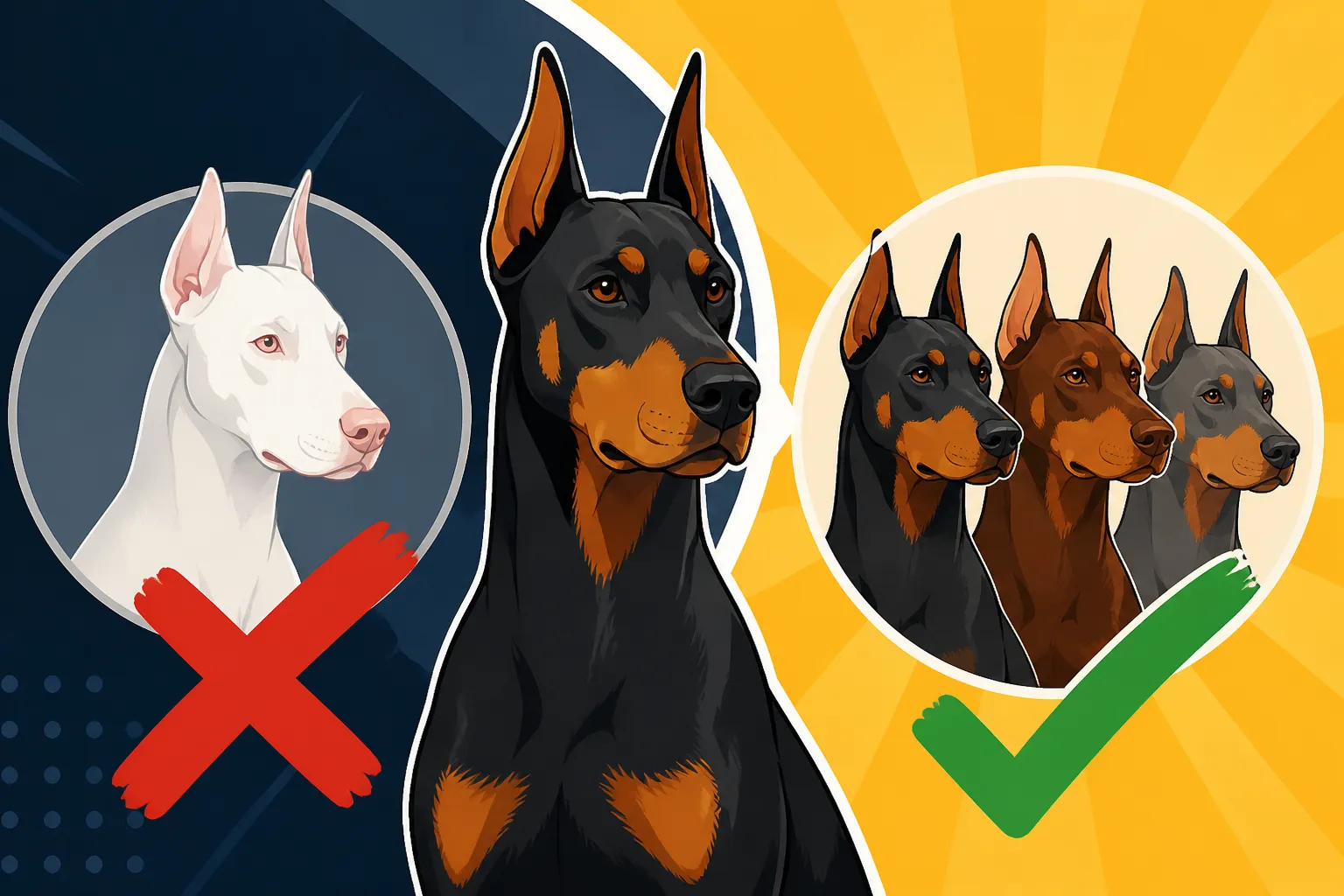
When we talk about Doberman colors, the recognized standards, like those set by the American Kennel Club (AKC) or the Doberman Pinscher Club of America (DPCA), are very specific. The accepted colors for a Doberman are black, red, blue, and fawn, all with clear, distinct rust markings. These are the colors that have been part of the breed's history and are considered true to The Doberman the AKC Standard Describes. Each of these standard colors is a result of specific genes that control pigment production in a healthy, predictable way. For example, a "blue" Doberman is a diluted black, and "fawn" is a diluted red; these are recognized variations of normal pigment. Doberman Colors and the Two That Cause Trouble delves into these colors further.
The "white" Doberman, on the other hand, doesn't fit into this framework at all. It's not just a lighter shade of fawn or blue; it's a completely different genetic phenomenon. True albinism means a complete or near-complete lack of melanin, the pigment that gives color to skin, hair, and eyes. This isn't just about a diluted color; it's about the absence of color due to a genetic mutation affecting the pigment production pathway itself. This distinction is crucial because the standard recognizes various colors, but it does not recognize a lack of color due to a genetic defect. Therefore, any Doberman advertised as "white" is, in fact, an albino, and this condition is explicitly considered a disqualifying fault within the breed standard due to its associated health problems.
The Genetics Behind the Albino Doberman
To truly understand why a "white" Doberman is so different, we need to talk a little bit about genetics. It's not just about what you see on the surface, but what's happening at a cellular level that prevents normal coloration from developing. This goes beyond simple color dilution and into the realm of a specific genetic condition.
The Tyrosinase Gene and Albinism
The scientific explanation for the "white" Doberman lies in a genetic mutation that causes albinism. This condition is specifically linked to a recessive gene, often designated as 'c' for canine albinism. Dogs inherit two copies of every gene, one from each parent. For a Doberman to be albino, it must inherit two copies of this specific recessive gene (c/c). Dogs with at least one dominant 'C' gene will have normal pigment production, even if they carry the recessive 'c' gene (C/c).
The gene responsible is usually associated with tyrosinase, an enzyme critical for the production of melanin. Melanin is the pigment that gives color to a dog's coat, skin, nose, and eyes. In albino Dobermans, this gene mutation either completely blocks the production of tyrosinase or results in a non-functional enzyme. The result is a profound lack of melanin throughout the body. This isn't merely a lighter shade, like a blue or fawn Doberman; it's a fundamental inability to produce pigment. Their skin is typically pink, their nose can be pink, and their eyes often appear pale blue, grey, or even pinkish-red due to the lack of pigment in the iris allowing blood vessels to show through. This stark absence of color is the key indicator of albinism, distinguishing them from dogs with simply very light, diluted coats. The White Doberman and Where It Came From explains more about the origin of this trait in the breed.
The 'Z' Registry and Its Significance
The emergence of albino Dobermans in the United States, tracing back to a single female born in the late 1970s, caused quite a stir within the Doberman community. As more of these albino dogs started appearing in litters, the Doberman Pinscher Club of America (DPCA), recognizing the associated health issues, took a proactive stance. They initiated what became known as the "Z-list" or the "Z-registration" program.
The American Kennel Club (AKC), while typically registering purebred dogs based on parentage, worked with the DPCA to implement a special registration designation for these albino Dobermans. Any Doberman identified as albino, or any Doberman known to be a carrier of the albinism gene, was assigned a 'Z' prefix in its registration number. This 'Z' prefix served as a warning label, essentially flagging these dogs as being part of the albino lineage. The purpose of this system was to help track the prevalence of the gene and discourage its propagation. Breeders who aimed to produce healthy, standard-compliant Dobermans would actively avoid dogs with a 'Z' in their pedigree. This registry was a significant effort to educate the public and protect the breed from a genetic defect that compromises the dogs' well-being. Understanding The Z in a Doberman Registration Number is crucial for anyone researching Doberman pedigrees.
Health Implications of Albinism in Dobermans
The most important reason why "white" Dobermans are not recognized as a standard color and why their breeding is actively discouraged by responsible clubs and individuals is the host of significant health problems directly associated with their albinism. These aren't minor inconveniences; they can severely impact a dog's quality of life and require lifelong, dedicated care.
Extreme Photosensitivity and Skin Problems
One of the most immediate and profound challenges for an albino Doberman is extreme photosensitivity. Melanin acts as a natural sunscreen, protecting the skin and eyes from harmful ultraviolet (UV) radiation. Without melanin, an albino Doberman's skin is completely vulnerable to the sun's rays. Even short periods of exposure can lead to severe sunburn, which isn't just uncomfortable but can cause blistering, peeling, and chronic skin irritation. Imagine living a life where simply stepping outside on a sunny day could be painful.
This constant vulnerability to UV damage means these dogs are at a dramatically increased risk for various skin cancers, including squamous cell carcinoma and melanoma. These cancers can be aggressive and difficult to treat, often leading to a shortened lifespan and a great deal of suffering. Owners must go to extreme lengths to protect their albino Dobermans, which includes applying specialized dog-safe sunscreens, dressing them in UV-protective clothing, and strictly limiting outdoor exposure to dawn, dusk, or heavily shaded areas. They essentially need an entirely indoor lifestyle, a significant consideration for an active breed like the Doberman. Why an Albino Doberman Burns and Blisters really illustrates the severity of this issue.
Vision and Hearing Challenges
Beyond the skin, the lack of melanin profoundly affects an albino Doberman's eyes. Melanin is vital for the proper development and function of the eyes, particularly the iris and retina. Without it, these dogs almost universally suffer from various ocular issues. Their eyes are incredibly sensitive to light, a condition known as photophobia, which means bright light can be painful and cause them to squint, shy away, or seek dark places. You might notice them struggling in sunny environments, much like a person with severe light sensitivity.
Their vision is often compromised as well. The lack of pigment in the iris can lead to poor visual acuity, and some albino Dobermans may also have nystagmus (involuntary eye movements) or strabismus (misalignment of the eyes). Their pupils may also appear red due to light reflecting off the blood vessels at the back of the eye, a classic sign of albinism. This means they may not see as clearly as a normally pigmented Doberman, which can affect their confidence, spatial awareness, and ability to navigate their environment, especially in unfamiliar places. While not as common or severe as the vision issues, some albino Dobermans can also experience hearing deficits, though this is seen more frequently in other albino or double-merle breeds. Regardless, the impact on their senses is a major consideration for their overall well-being. Light Sensitivity in an Albino Doberman provides more insight into their visual struggles.
Behavioral and Temperament Concerns
It’s crucial to understand that behavioral issues in albino Dobermans are generally not inherent temperament flaws, but rather direct consequences of their physical challenges. Imagine living with constant discomfort from sensitive skin, or having impaired vision that makes the world blurry, too bright, or hard to interpret. These physical stressors can naturally lead to psychological impacts, manifesting as behavioral problems.
For instance, an albino Doberman’s extreme photosensitivity and poor vision can make them anxious or fearful in new or brightly lit environments. A dog that can't see clearly, especially when combined with pain from light, might react defensively if startled or approached unexpectedly. They may be more prone to fear-based aggression, shyness, or resource guarding because they feel perpetually vulnerable. Socialization can be incredibly difficult if they are constantly uncomfortable or can't properly interpret social cues from other dogs or people. These are not typically "bad" dogs by nature, but dogs whose lives are made difficult by their genetic condition, leading to coping mechanisms that can be challenging for owners. It requires immense patience, understanding, and a highly controlled environment to help these dogs feel secure and confident, highlighting why responsible breeding practices are so vital.
Ethical Considerations and Breeder Responsibility
The topic of albino Dobermans brings with it significant ethical discussions. While the sight of a "white" Doberman might be novel, the responsibility of breeding and owning any animal means prioritizing their health and welfare above all else. This means making choices that prevent suffering, even if it means foregoing a unique look.
The Debate Over Breeding Albino Dobermans
For decades, the Doberman community, led by the DPCA and many reputable breeders, has actively worked to discourage the breeding of albino Dobermans. The debate isn't really a debate among those who understand the breed and its health; it's a consensus: breeding albino Dobermans is unethical. The primary reason is the profound impact on the dogs' quality of life. Consciously breeding for a trait that is known to cause severe photosensitivity, increased cancer risk, and significant vision impairment is seen as irresponsible and inhumane. It prioritizes a superficial aesthetic over the dog's well-being.
Reputable breeders dedicate themselves to improving the health, temperament, and conformity of the breed. This involves rigorous health testing for conditions common in Dobermans, such as Dilated Cardiomyopathy (DCM), Von Willebrand Disease, and Wobbler Syndrome, and making breeding decisions that minimize these risks. The Health Testing a Doberman Breeder Must Show is a critical part of this commitment. Breeding an albino Doberman flies in the face of these ethical responsibilities because it knowingly introduces and perpetuates a genetic defect that guarantees a lifetime of struggle for the affected puppies. The consensus among ethical breeders is that such practices harm the breed and the individual dogs. Whether a White Doberman Can Be Bred From is a question that, for responsible breeders, has a firm 'no' as the answer.
Identifying and Avoiding Breeders of Albino Dobermans
If you are looking for a Doberman puppy, it’s absolutely vital to do your homework and avoid any breeder who intentionally produces or sells "white" Dobermans. These breeders are often motivated by profit, capitalizing on the "rarity" factor without disclosing or caring for the health consequences. They might advertise their puppies as "rare white," "platinum," or "ivory" Dobermans, often with inflated prices. This is a huge red flag.
To find a responsible breeder, always look for someone who prioritizes health, temperament, and adherence to the breed standard. They should be transparent about their breeding practices, health test both parents for a wide range of conditions (including screening for the albinism gene if there's any doubt in the lineage), and be able to provide verifiable health certificates. A good breeder will never intentionally breed for albinism. They will also be eager to educate you about the breed's health challenges and what they do to mitigate them. If a breeder is evasive about health testing, seems overly focused on color, or asks a significantly higher price for a "white" puppy, walk away. Always check pedigrees and be wary of any "Z" registration numbers, as discussed in The Z in a Doberman Registration Number. The Doberman Pinscher Club of America (DPCA) actively opposes the breeding of albino Dobermans; therefore, Why the Doberman Club Opposes White Dogs is a stance you should expect from any ethical breeder. For more guidance, Buying a White Doberman and What It Means offers further insights.
Here's a quick comparison to help differentiate:
| Feature | Standard Doberman (Black, Red, Blue, Fawn) | Albino Doberman ("White") |
|---|---|---|
| Coat Color | Black, red, blue, or fawn with distinct rust markings | Creamy white, often appearing uniformly pale |
| Eye Color | Dark brown (black/red), lighter brown/amber (blue/fawn) | Pale blue, grey, or pinkish-red (lacks iris pigment) |
| Nose Color | Black (black/red), self-colored to match coat (blue/fawn) | Pink or very light, mottled pink |
| Skin Pigment | Normal, often dark around eyes/nose | Pink, highly susceptible to sunburn |
| Photosensitivity | Normal | Extreme; requires strict sun protection |
| Vision | Typically excellent | Impaired, often light-sensitive, poor acuity |
| Breeding Ethics | Bred by responsible individuals adhering to breed standards | Breeding is widely considered unethical due to health issues |
| AKC/DPCA Status | Recognized standard colors | Disqualifying fault, often Z-registered |
Living With and Caring for an Albino Doberman (If You Have One)
While responsible breeding aims to eliminate albinism, some individuals may still find themselves with an albino Doberman, whether through rescue, accidental breeding, or adoption. If you are one of these dedicated owners, your journey will involve a heightened level of specialized care, commitment, and a deep understanding of their unique needs.
Providing a Safe and Comfortable Environment
Creating a safe and comfortable environment for an albino Doberman primarily revolves around protecting them from the sun. This means they are largely indoor dogs, and any outdoor time needs to be carefully managed. Direct sunlight is their enemy. Consider your outdoor space: if you have a yard, ensuring there are deeply shaded areas throughout the day is critical. This might involve large, dense trees, shade sails, or a covered patio where they can relieve themselves or get a breath of fresh air without exposure.
During peak sun hours (typically 10 AM to 4 PM), outdoor access should be strictly limited or avoided entirely. Walks should be scheduled for early morning or late evening. When they do go outside, they will likely need dog-specific sunscreen on any exposed skin, especially their nose, ears, and belly. UV-protective clothing, like full-body rash guards or specialized dog coats, can also be invaluable, much like Sun Protection for a Thin-Coated Doberman would apply to other sensitive-skinned dogs. Indoors, consider UV-filtering window films if your home gets a lot of direct sun, and ensure they have cozy, dim areas where they can retreat if the light bothers their sensitive eyes. A comfortable, supportive bed is also essential for any Doberman, regardless of color.
Managing Health and Special Needs
Managing the health of an albino Doberman involves proactive and consistent veterinary care. Due to their extreme photosensitivity and increased risk of skin cancer, regular skin checks by your veterinarian are non-negotiable. You’ll need to be vigilant at home, routinely checking their skin for any unusual lumps, bumps, or lesions, and reporting them immediately. Early detection of skin cancer can make a significant difference in prognosis.
Their vision issues also warrant specialized attention. Regular ophthalmological exams with a veterinary eye specialist can help monitor their eye health and manage conditions like photophobia. You might consider specific eye drops or even tinted dog goggles if your vet recommends them for outdoor excursions. Communication with your veterinarian is key to developing a comprehensive healthcare plan tailored to their specific needs.
Beyond the albinism-specific challenges, remember they are still Dobermans and need general health care. This includes routine vaccinations, parasite prevention, and a high-quality diet appropriate for an active, large breed. You might consult your vet on specialized foods or supplements. You can find many suitable options through retailers like Chewy, who offer a wide range of diets, including prescription foods if needed. Feeding an Eighty-Pound Doberman Well discusses general nutritional needs that still apply. Behavioral support, as mentioned earlier, is also crucial. If your albino Doberman exhibits anxiety or fear, positive reinforcement training, potentially with the guidance of a behaviorist experienced with visually impaired dogs, can help them build confidence and cope with their sensory deficits, leading to a much happier and more stable companion.
Disclaimer
This article is for general informational purposes only and does not constitute professional advice. Laws, prices and regulations vary by location and change over time. Consult a qualified professional for guidance on your specific situation.