Why the Doberman Standard Still Describes Cropped Ears
It’s a question that often pops up in Doberman circles, especially as more people become aware of animal welfare concerns: why does the breed standard, particularly in North America, still describe cropped ears? For many prospective Doberman owners, seeing those tall, alert ears is part of the breed's iconic image, but for others, the idea of elective surgery on a puppy is a significant hurdle. This guide will delve into the historical roots, breed standard specifics, and the ongoing global conversation surrounding Doberman ear cropping, helping you understand the tradition and its modern-day implications.
The Historical Context of Ear Cropping
To truly understand why the Doberman standard holds onto the cropped ear, we need to take a step back in time and look at the origins of the practice itself. It wasn't a fashion statement born out of vanity; it was, initially, a matter of practical utility.
Origins of Cropping in Working Breeds
Historically, ear cropping wasn't exclusive to Dobermans. Many working breeds, particularly those involved in guarding, fighting, or hunting dangerous game, had their ears cropped. Think about mastiff types, various terriers, and even early sheepdogs. The reasoning was straightforward: floppy ears were a liability. In a confrontation with an animal or even a human aggressor, a dog's ears could be grabbed, torn, or otherwise injured, putting the dog at a disadvantage. Cropping them short and erect minimized this vulnerability.
It was about reducing potential points of attack and injury, allowing the dog to perform its duties more effectively and with less risk of debilitating wounds. While the world has changed dramatically since those times, and most Dobermans are now beloved family companions rather than guardians against poachers, this practical origin is deeply embedded in the historical understanding of many working breeds.
Dobermann's Vision for the Breed
When Karl Dobermann, the breed's namesake, set out to create his ideal protection dog in Apolda, Germany, he was looking for a courageous, intelligent, and formidable companion. He needed a dog that could guard him on his rounds as a tax collector and dog catcher—a demanding and sometimes dangerous job. The Tax Collector Who Invented the Doberman gives you a deeper dive into his motivations. The dogs he used in his breeding program, which likely included Rottweilers, German Pinschers, and various other local working dogs, were often robust and intimidating.
For Dobermann, the aesthetic of the dog was intrinsically linked to its function. He desired an alert, elegant, yet powerful appearance. Cropped ears, standing tall and attentive, perfectly complemented this vision. They enhanced the Doberman's natural air of vigilance and intelligence, making the dog appear even more imposing and ready to react. This "look" wasn't just about beauty; it was about projecting capability and instilling respect, or perhaps even a little fear, in those who might threaten its owner. It became an integral part of the Doberman's identity from its very inception. What Karl Friedrich Louis Dobermann Was further elaborates on the man behind the breed.
The Breed Standard's Influence and Evolution
The breed standard is essentially the blueprint for a breed, describing the ideal physical characteristics and temperament. For the Doberman, particularly in certain parts of the world, this blueprint continues to include cropped ears.
What the AKC and FCI Standards State
Different kennel clubs around the world have varying stances on ear cropping and tail docking. The two major international bodies are the American Kennel Club (AKC) and the Fédération Cynologique Internationale (FCI), though individual national clubs within the FCI also have their own nuances.
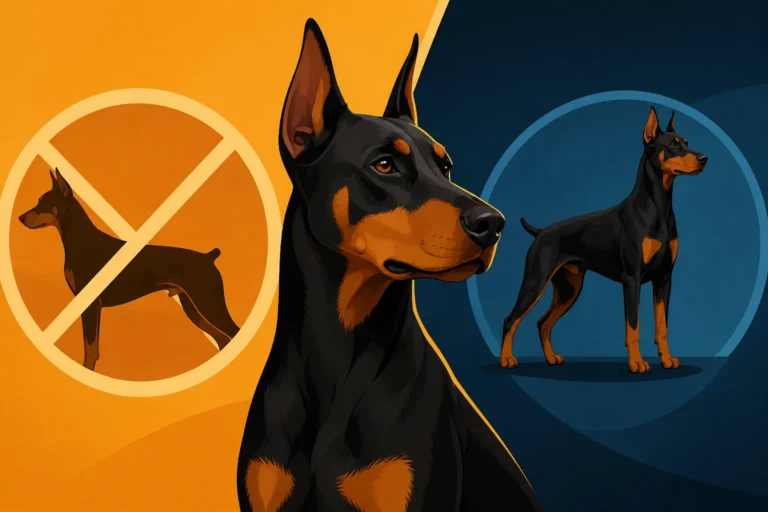
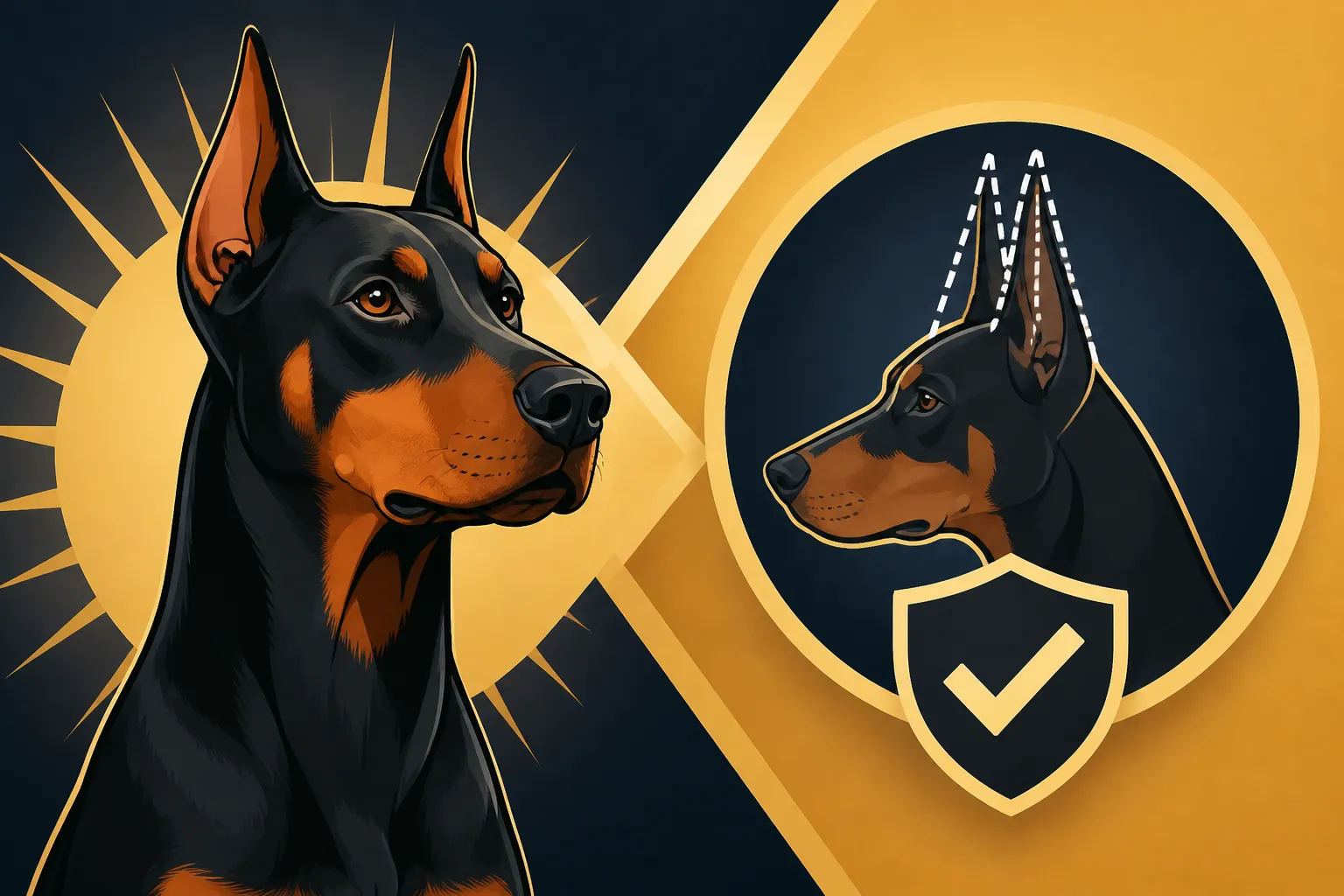
In North America, the AKC Doberman Pinscher standard explicitly describes the ideal ear as "normally cropped and carried erect." It goes on to detail the preferred length and set, stating that "The size of the ear should be in proportion to the head, and the crop should be of a length to allow for an alert appearance." While it does acknowledge that "uncropped ears are permitted in the show ring," it often subtly implies a preference for the cropped look by detailing it first and more thoroughly. For many judges, the overall "picture" of the Doberman, as defined by the standard, includes those erect ears. It's not a disqualification to have natural ears, but it can be an uphill battle in the show ring, as the cropped aesthetic is deeply ingrained. You can learn more about this in The Doberman the AKC Standard Describes.
Conversely, the FCI standard, which governs many European countries and is followed by numerous national kennel clubs worldwide, has taken a different path. For many years now, in countries adhering strictly to the FCI rules (or where national animal welfare laws prohibit cosmetic surgeries), cropping and docking are either explicitly forbidden or simply not part of the standard's description. Therefore, a Doberman shown in Germany, for example, will have natural, uncropped ears and a full tail, and the judges will assess the dog based on that appearance. This reflects a shift towards prioritizing animal welfare over traditional aesthetics in many regions.
Here's a simple comparison:
| Feature | AKC Doberman Standard | FCI Doberman Standard (General) |
|---|---|---|
| Ears | "Normally cropped and carried erect," detailed description of ideal crop. Uncropped ears permitted. | Natural, uncropped ears. Cropping often prohibited by national laws. |
| Tail | "Docked, and appearing to be a continuation of the spine." | Natural, full tail. Docking often prohibited by national laws. |
| Emphasis | Traditional, alert working appearance. | Natural appearance, functional without cosmetic alteration. |
The "Look" and Silhouette of a Doberman
Beyond the explicit wording of any standard, there's the intangible "look" that generations of Doberman enthusiasts have come to associate with the breed. The cropped ears, along with the docked tail, create a distinct silhouette – one of sleek lines, sharp angles, and an undeniable air of aristocratic athleticism.
Many argue that without the cropped ears, the Doberman loses some of its characteristic intensity and elegance. The natural drop ear, while perfectly healthy and functional, can soften the head's appearance, changing the perceived expression. For those deeply entrenched in the traditional Doberman world, the cropped ear enhances the breed's severe, intelligent, and watchful expression. It draws attention to the powerful arch of the neck and the chiseling of the head, contributing to the overall impression of a dog bred for purpose and presence. This isn't just about show ring aesthetics; it's about what people expect a Doberman to look like, an image perpetuated through media, historical photos, and popular culture. This strong visual identity is a key reason why the standard, particularly in the US, has been slow to move away from including cropped ears. The debate continues, often passionately, because this "look" is so deeply woven into the breed's history and perception.
The Ongoing Debate and Changing Perceptions
The tradition of ear cropping is far from universally accepted, and in recent decades, the debate has intensified globally. What was once common practice is now viewed critically by many.
Ethical Concerns and Veterinary Opposition
The primary driver behind the changing perception of ear cropping is the growing ethical concern for animal welfare. Opponents argue that cropping is a purely cosmetic procedure, performed solely for aesthetic reasons, with no proven health or behavioral benefits to the dog. It involves a surgical procedure on a young puppy, typically between 7 and 12 weeks of age, under general anesthesia. Following the surgery, the ears require weeks, sometimes months, of diligent posting and care to stand erect, which can be an uncomfortable and often painful process for the puppy. Doberman Ear Cropping From Surgery to Last Posting gives a full breakdown of the process and commitment involved.
Veterinary organizations around the world have largely condemned elective cosmetic surgeries like ear cropping and tail docking. Groups like the American Veterinary Medical Association (AVMA) state that these procedures are not medically indicated and pose unnecessary risks (e.g., anesthesia complications, infection, chronic pain, improper healing) to the animal. They advocate for natural ears and tails, emphasizing that the focus should be on the dog's health and well-being rather than modifying its appearance to fit a traditional standard. This strong stance from the veterinary community carries significant weight, influencing public opinion and, in many regions, legislative action.
Geographic Differences in Practice
The global landscape for ear cropping is incredibly varied. If you've spent any time researching Dobermans, you've probably noticed the distinct differences between dogs from different regions.
In most of Europe, Australia, and parts of Canada, ear cropping (and tail docking) is now illegal or severely restricted. These bans are largely a result of successful animal welfare campaigns and legislative changes that deem the procedures unethical. Consequently, Dobermans bred and shown in these regions invariably have natural ears and full tails. This has led to a natural evolution in what constitutes the "norm" for a Doberman's appearance in these areas. Breeders have adapted, and judges are accustomed to evaluating natural-eared dogs according to the standard. This stark contrast often surprises North American enthusiasts who are used to seeing Dobermans primarily with cropped ears.
In the United States and some other countries, ear cropping remains legal, though often performed by a dwindling number of veterinarians due to ethical concerns. The practice is often seen as a cultural tradition, deeply rooted in the history of certain breeds, and many breeders and owners fiercely defend their right to choose the traditional look. This creates a fascinating divergence where the same breed, the Doberman, can look quite different depending on which side of the Atlantic (or Pacific) it calls home. This also affects how breeders operate and what they offer to prospective owners; some provide cropped puppies, while others offer natural ears or allow buyers to make the choice.
Navigating the Standard for Modern Doberman Owners
So, if you're a prospective Doberman owner today, how do you reconcile the breed standard's traditional description with contemporary animal welfare concerns and diverse global practices?
Showing a Doberman with Natural Ears
For those interested in showing their Doberman, especially within the AKC system, the question of natural versus cropped ears is a common one. While the AKC standard still describes the ideal ear as cropped, it's crucial to understand that an uncropped Doberman can compete in conformation events. The standard explicitly states that "uncropped ears are permitted in the show ring."
However, the reality can be more nuanced. Many judges have a strong preference for the traditional cropped look, as it's what they've been trained to evaluate and what aligns with their ingrained image of the Doberman. This means a natural-eared Doberman might face an unconscious bias, even if the judge strives for impartiality. The dog must be exceptional in every other aspect—conformation, gait, temperament—to truly shine and overcome this traditional preference. Think of it as an extra challenge. That said, as more people opt for natural ears, and as societal views continue to shift, the acceptance of uncropped Dobermans in the show ring is slowly but surely growing. Whether an Uncropped Doberman Can Win delves deeper into the practicalities of showing an uncropped dog. It's a testament to the quality of the dog itself, not merely its ear aesthetic.
Finding a Reputable Breeder's Stance
When you're looking for a Doberman puppy, finding a reputable breeder is paramount, and their stance on ear cropping is an important discussion point. A truly responsible breeder prioritizes the health and temperament of their dogs above all else. The Health Testing a Doberman Breeder Must Show will help you identify ethical breeders.
Many reputable breeders, especially in North America, will offer cropped puppies, as it aligns with the AKC standard and the preference of many buyers. They will often work with experienced, ethical veterinarians who specialize in cropping to ensure the procedure is done safely and correctly, with proper pain management and aftercare instructions. Be prepared for The Average Price of a Doberman Ear Crop to be a significant part of the puppy's initial cost, if the breeder includes it. Some breeders might also offer puppies with natural ears, or give you the choice if you commit to the puppy early enough.
If you are set on a Doberman with natural ears, communicate this clearly with potential breeders. A good breeder will respect your wishes and educate you on the care of natural ears (which, contrary to some myths, are not inherently more prone to infection if properly maintained). Conversely, if a breeder pressures you into cropping against your comfort, or seems unwilling to discuss the ethical implications, it might be a red flag. A reputable breeder will always be transparent and put the well-being of their puppies first, regardless of ear style.
Disclaimer
This article is for general informational purposes only and does not constitute professional advice. Laws, prices and regulations vary by location and change over time. Consult a qualified professional for guidance on your specific situation.