Why Dobermans Have a Frightening Reputation
It’s a tough truth that many Doberman owners face: mention you have one, and you’re often met with a flicker of fear, a nervous chuckle, or even an outright question about their aggression. This isn't just a slight annoyance; it's a deep-seated misunderstanding that impacts everything from finding housing to how your beloved companion is perceived on a simple walk in the park. This guide delves into the layered reasons behind the Doberman's often frightening reputation, peeling back the history, media portrayals, and common behavioral misconceptions to reveal the complex truth behind this magnificent breed.
The Historical Roots of the Doberman's Image
To truly understand why Dobermans carry such a formidable reputation, we have to travel back in time to their very origins. This breed wasn't simply developed for companionship or a pretty face; they were born out of a very specific, practical need for protection.
The Breed's Origins as a Guardian
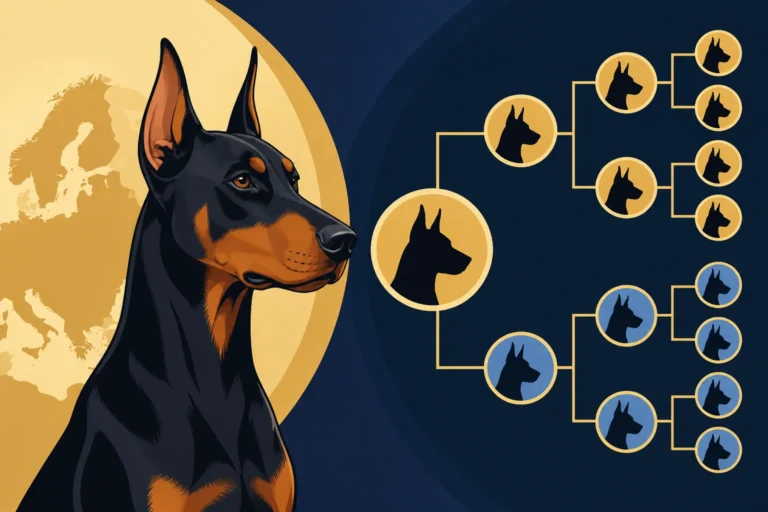
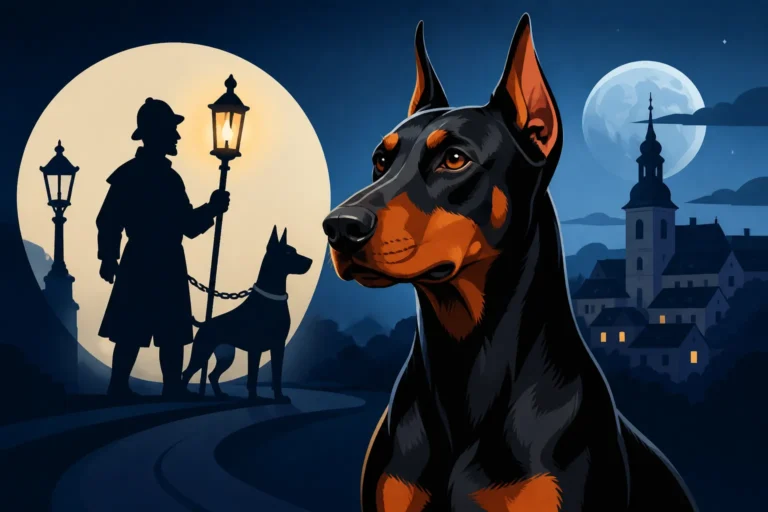
Imagine living in 19th-century Apolda, Germany, working as a tax collector. You're carrying valuables, often alone, through potentially dangerous areas. This was the reality for Karl Dobermann, and it's precisely why he embarked on creating a dog that could be a fearless, intelligent, and utterly devoted protector. He wasn't looking for a lapdog; he needed a canine bodyguard, a partner capable of deterring threats and acting decisively if needed. This very foundation, born of a need for personal security, meant that traits like alertness, courage, and a strong protective instinct were prioritized from day one. He meticulously selected dogs with these attributes, focusing on a robust temperament and an imposing presence. This early emphasis on guardianship laid the groundwork for the Doberman's image as a serious working dog, one not to be trifled with. You can learn more about The Tax Collector Who Invented the Doberman and the incredible story behind his vision.
The result was a dog that excelled at its intended purpose. Early Dobermans quickly earned a reputation for being exceptionally loyal to their owners, but also wary and highly vigilant around strangers. This isn't aggression for aggression's sake; it's a deep-seated instinct to assess and protect their immediate family. However, this natural wariness, combined with their striking appearance, could easily be misinterpreted by those unfamiliar with the breed. A quick, piercing stare from a Doberman observing a stranger isn't an invitation to violence, but a careful assessment of intent, yet to an untrained eye, it can seem profoundly intimidating.
War Dogs and Military Service
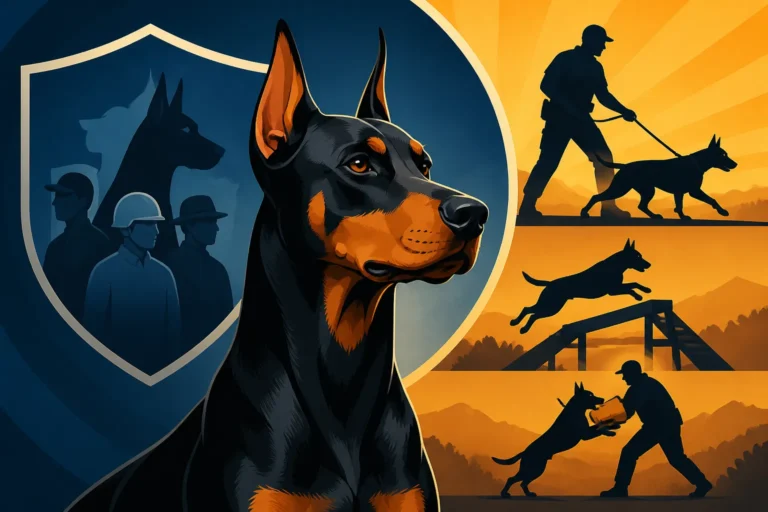
The Doberman's prowess as a protector didn't stay confined to German tax routes for long. Their intelligence, trainability, and unwavering courage made them prime candidates for military and police work. Fast forward to World War II, and Dobermans gained immense recognition, particularly with the U.S. Marine Corps, where they served with distinction in the Pacific theater. These dogs were famously known as "Devil Dogs," guiding patrols, detecting enemies, and even carrying messages under fire. The stories of their bravery and effectiveness on the battlefield are legendary, solidifying their image as fierce, uncompromising warriors.
This widespread exposure during wartime cemented the Doberman's status as a serious, no-nonsense breed, capable of confronting danger head-on. While these roles highlighted their incredible capabilities and loyalty, they also inadvertently contributed to the public perception of Dobermans as inherently aggressive or dangerous animals. The context of their work, often involving confronting threats, became conflated with their innate temperament, leading many to believe that their ferocity was a default setting rather than a highly trained and channeled instinct. The monument on Guam, honoring the Dobermans who served and sacrificed, is a testament to their incredible contributions during this period, and you can read more about The Doberman's War Record. This heroic but intense history plays a significant role in the historical perception of the breed as formidable and, yes, often frightening.
Media Portrayals and Public Perception
Beyond their historical origins, perhaps nothing has shaped the Doberman's "frightening reputation" more dramatically than the way they've been depicted in popular media. Hollywood, in particular, has a lot to answer for.
Hollywood's Fierce Villains
Think about the Doberman in movies and television. What comes to mind? More often than not, they are the menacing guard dogs of villains, the snarling, aggressive animals chasing heroes, or silent, ominous figures patrolling dark estates. Films like "The Omen" with its pack of terrifying Dobermans, or countless action thrillers where they serve as canine henchmen, have deeply ingrained this image into the collective consciousness. These portrayals rarely show the Doberman as a loving family pet, a goofy companion, or an agile sport dog; they are consistently cast as symbols of danger and aggression.
This cinematic stereotype is incredibly powerful because it shapes public perception, often without people even realizing it. A child growing up seeing Dobermans as the bad guy's dog in movies might develop an instinctive fear that lasts into adulthood. It's a classic case of typecasting, where a specific image becomes so pervasive that it overshadows the reality. For owners, this means battling preconceived notions every time they step out with their dog. People cross the street, pull their children closer, or give wide berths, not because of the individual dog in front of them, but because of a lifetime of media reinforcement. It's a frustrating cycle, as these fictional portrayals often have little to do with the actual temperament of a well-bred and properly socialized Doberman.
Sensationalized News Stories
Another significant contributor to the Doberman's reputation is the way individual incidents are often reported by the news media. If a Doberman is involved in an unfortunate incident, it often makes headlines, sometimes with sensationalized language. The breed itself becomes the focus, rather than the specific circumstances, the individual dog's history, or the owner's responsibility. This selective reporting can paint an unfair picture, implying that all Dobermans are inherently prone to aggression.
Consider a story about a dog bite: if it's a Golden Retriever, the headline might focus on the "tragic accident" or "unforeseen circumstances." If it's a Doberman, however, the headline might be "Doberman Attacks," immediately associating the entire breed with the negative event. These stories often lack crucial context, such as whether the dog was provoked, neglected, or improperly trained. The sheer impact of such headlines means that even rare incidents are amplified, leading to a disproportionate fear among the public. This contributes to the widespread belief that Why Dobermans Have a Frightening Reputation is justified, even when the vast majority of Dobermans live happy, uneventful lives as cherished family members. It's a challenge that responsible Doberman owners and advocates constantly work to overcome, trying to replace fear with education and understanding.
Misunderstandings of Doberman Temperament and Training
Beyond historical roles and media stereotypes, a significant part of the Doberman's frightening reputation stems from fundamental misunderstandings about their temperament and the critical role of proper training and socialization.
The Doberman's Natural Alertness vs. Aggression
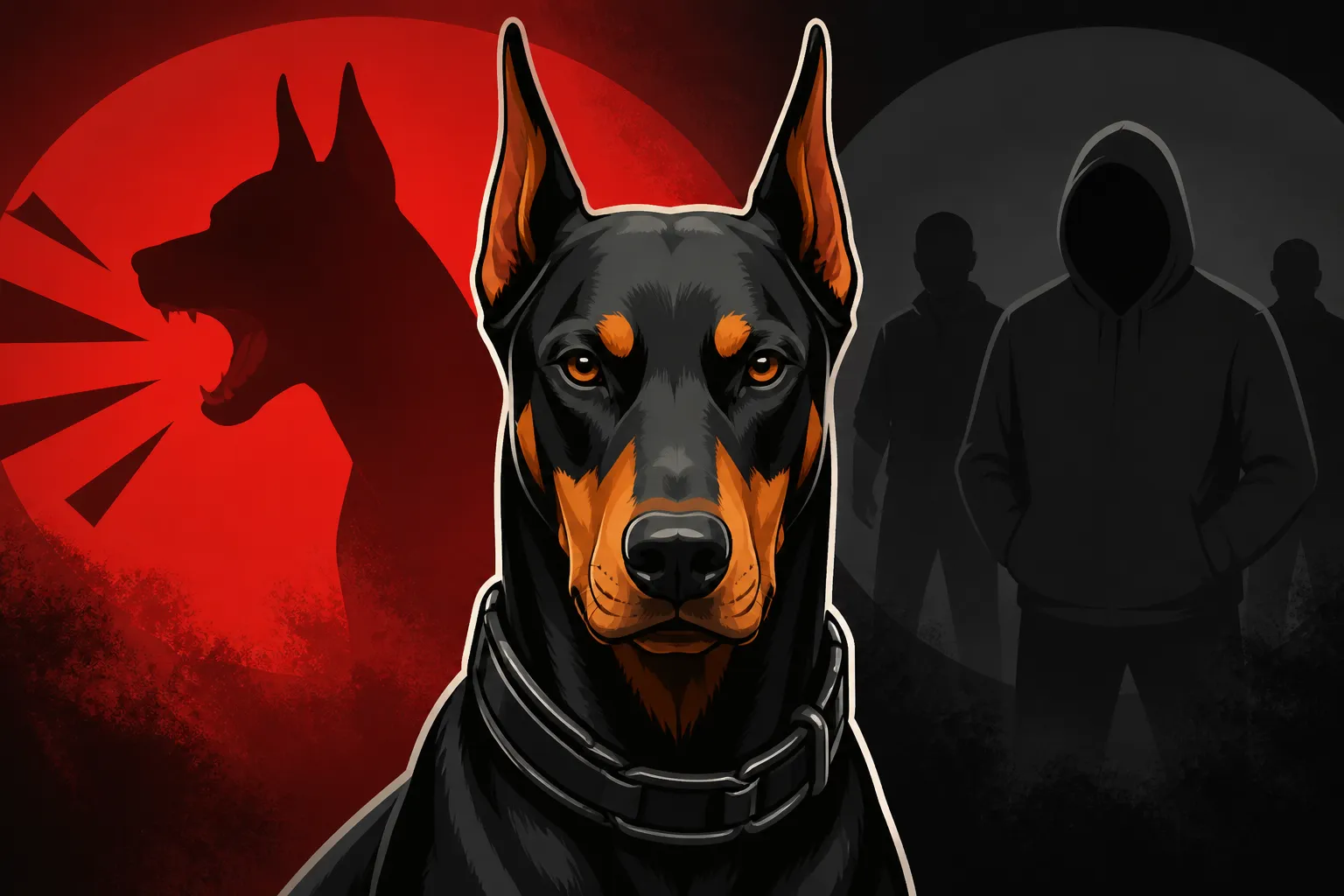
One of the biggest misconceptions about Dobermans is confusing their natural alertness and protective instincts with aggression. A well-bred Doberman is inherently watchful; it's part of their genetic makeup as guardians. This means they are often very aware of their surroundings, quick to notice anything out of the ordinary, and may be reserved or aloof with strangers. This isn't aggression; it's discernment. They observe first, assess, and then decide how to react. A Doberman might stand between their owner and a perceived threat, or bark to alert their family, which is exactly what they were bred to do. This is Doberman Guarding Instinct and Where It Tips Over, a fine line between protective and problematic that relies heavily on training and a strong bond.
Furthermore, Dobermans are famously known as "Velcro dogs" because of their intense loyalty and desire to be constantly near their people. If you own a Doberman, you know Where the Velcro Doberman Nickname Comes From – they are often leaning on you, following you from room to room, and thriving on close interaction. This deep bond means they are acutely tuned into their family's emotions and safety. When they react defensively, it's often out of a profound sense of duty to protect those they love, not an innate desire to harm. However, for someone who doesn't understand this breed, a large, powerful dog standing guard with an intense gaze can be genuinely frightening, especially if they mistake vigilance for hostility.
The Impact of Improper Training and Socialization
The Doberman is an incredibly intelligent and sensitive breed. They thrive on clear, consistent training and early, positive socialization. However, their intelligence can be a double-edged sword; Why a Clever Doberman Is Harder to Train can be true if you're not consistent, as they pick up on inconsistencies just as quickly as they learn cues. A Doberman left unsocialized or subjected to harsh, fear-based training methods can indeed develop behavioral issues, including fear-aggression or defensiveness.
Early socialization, meaning exposing a puppy to a wide variety of people, places, sounds, and other friendly dogs in a positive way, is absolutely paramount for a Doberman. Without it, their natural wariness can solidify into genuine fear or reactivity, leading to behaviors that reinforce the negative stereotypes. A Doberman puppy that isn't introduced to the world safely and gently from a young age might grow up to be insecure, and an insecure dog, regardless of breed, is more likely to react fearfully or defensively. That’s why it’s so critical that Why a Doberman Puppy Must Meet the World Early is understood by every prospective owner. These dogs need careful guidance to ensure their protective instincts are channeled appropriately, making them confident and trustworthy companions rather than reactive ones.
Physical Appearance and Breed Specific Legislation
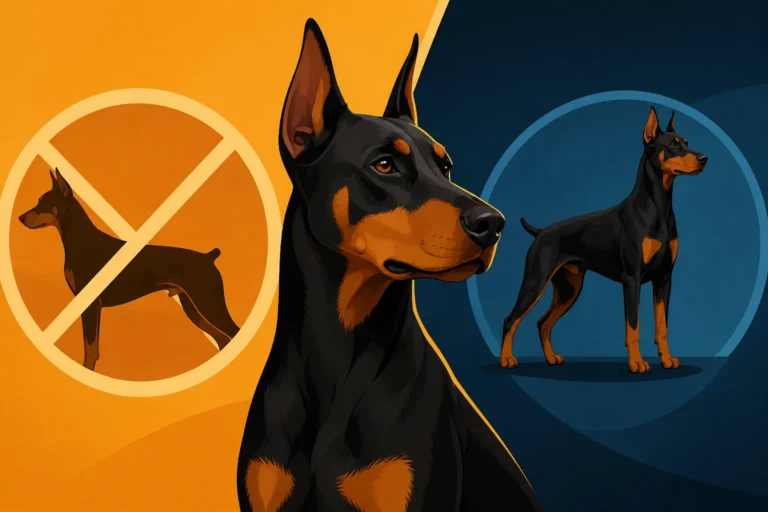
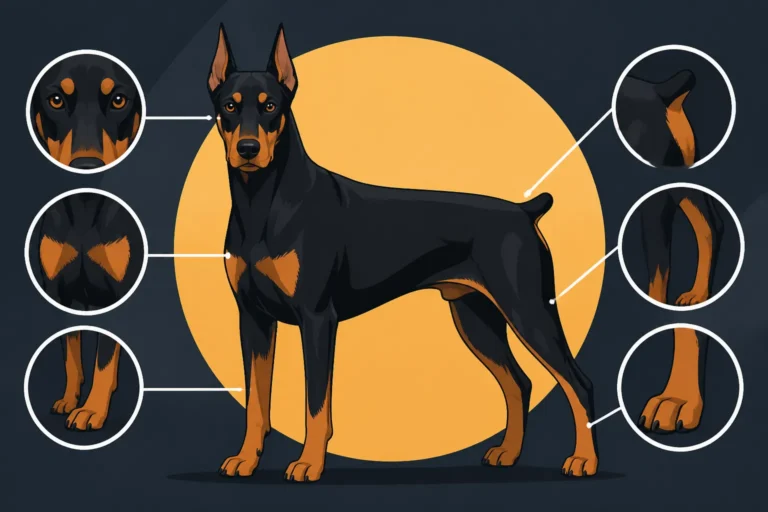
Let's be honest: a Doberman’s appearance itself, for many, is part of why they seem frightening. Their sleek, muscular build, intelligent eyes, and often cropped ears and docked tail create a silhouette that commands attention and, for some, apprehension. The practice of Doberman Ear Cropping in the Standard to create those erect, pointed ears, while traditional, undeniably contributes to a sharper, more intimidating look compared to their natural floppy ears. This imposing aesthetic, combined with the other factors we've discussed, has led to Dobermans being frequently targeted by breed-specific legislation (BSL) and insurance restrictions.
It's a frustrating reality that merely owning a Doberman can put you on the wrong side of certain rental agreements, HOA rules, or even insurance policies. Many Insurers That Name the Doberman on a Refusal List simply due to their breed, regardless of the individual dog's temperament or training. This isn't based on actual bite statistics or individual risk assessment, but rather on the breed's generalized "frightening reputation." This legislative and administrative discrimination further reinforces the public's perception of Dobermans as inherently dangerous, even when statistics often show that bite incidents are more strongly linked to factors like irresponsible ownership, lack of training, or neglect, rather than breed alone. It creates a vicious cycle where reputation leads to restrictions, which in turn solidifies the negative reputation.
Here's a quick look at common misconceptions versus reality:
| Misconception | Reality |
|---|---|
| Dobermans are naturally aggressive. | Well-bred Dobermans are naturally alert, discerning, and protective of their family, not inherently aggressive. |
| They are unpredictable and prone to violence. | Dobermans are highly intelligent and predictable with proper training; issues arise from poor handling. |
| Their appearance signals danger. | Their sleek, muscular look and cropped ears can appear intimidating, but don't define their character. |
| They are only good as guard dogs. | While excellent guardians, they are also sensitive, affectionate "Velcro dogs" who crave companionship. |
| They are too much dog for the average owner. | They require a dedicated, knowledgeable owner committed to training and socialization, but are not inherently "too much." |
Reclaiming the Doberman's True Nature
Despite the hurdles of historical perception, media stereotypes, and misunderstandings, the tide is slowly turning. Responsible Doberman owners and advocates are tirelessly working to showcase the true nature of this incredible breed.
Responsible Ownership and Advocacy
The most powerful tool in changing the Doberman's frightening reputation lies in the hands of responsible owners. A Doberman thrives when it has The Owner a Doberman Actually Needs: someone who is committed, consistent, and understands the importance of early socialization, ongoing training, and consistent leadership. When a Doberman is raised with love, clear boundaries, and ample opportunities for positive experiences, they blossom into confident, affectionate, and well-adjusted companions. These dogs are intensely loyal, often goofy, and surprisingly sensitive, especially with their immediate family.
Advocacy also plays a huge role. Doberman rescue organizations work tirelessly to rehabilitate and rehome dogs, often correcting behavioral issues that arose from previous neglect or misunderstanding. They educate potential adopters about the breed's needs and help them understand what it truly means to live with a Doberman. By showcasing successful adoptions and demonstrating the incredible resilience and loving nature of these dogs, they chip away at the negative stereotypes one dog at a time. Every well-behaved Doberman seen calmly walking down the street, politely greeting a stranger (if appropriate), or happily playing with children helps to shift public perception more than any movie plot.
Education and Exposure
Education is key to dismantling the myths surrounding Dobermans. When people understand the breed's history, their innate drive to protect, and how that translates into their behavior, they can start to see beyond the stereotypes. Encouraging positive interactions, always supervised and respectful, can make a huge difference. Allowing people to meet a well-socialized Doberman and experience their gentle side, their intelligent gaze, and their occasional goofy antics can be transformative.
Many Dobermans excel in a variety of canine sports, proving their versatility and intelligence. From competitive obedience and agility to rally and nose work, these dogs demonstrate incredible focus and eagerness to please. The Working Sports a Doberman Was Built For aren't just about showing off; they're about proving the breed's trainability and partnership potential. Seeing a Doberman perform complex tasks with grace and precision helps to counteract the image of a mindless attack dog. Organizations like the Doberman Pinscher Club of America also provide valuable resources, promoting responsible breeding, health testing, and education to ensure the breed's future is defined by its true character: an intelligent, noble, and devoted companion.
Disclaimer
This article is for general informational purposes only and does not constitute professional advice. Laws, prices and regulations vary by location and change over time. Consult a qualified professional for guidance on your specific situation.