Why a Doberman’s Narrow Deep Chest Twists
It's one of those heart-stopping moments no Doberman owner ever wants to experience: seeing your beloved dog suddenly look anxious, pace restlessly, and try to vomit with nothing coming up. This terrifying scenario often points to a condition called bloat, or more technically, Gastric Dilatation-Volvulus (GDV), where a Doberman's uniquely structured chest can tragically twist its stomach, becoming an immediate life-threatening emergency. This guide will help you understand why your Doberman's chest makes them vulnerable, how to spot the signs, and what you can do to protect them.
Understanding Gastric Dilatation-Volvulus GDV in Dobermans
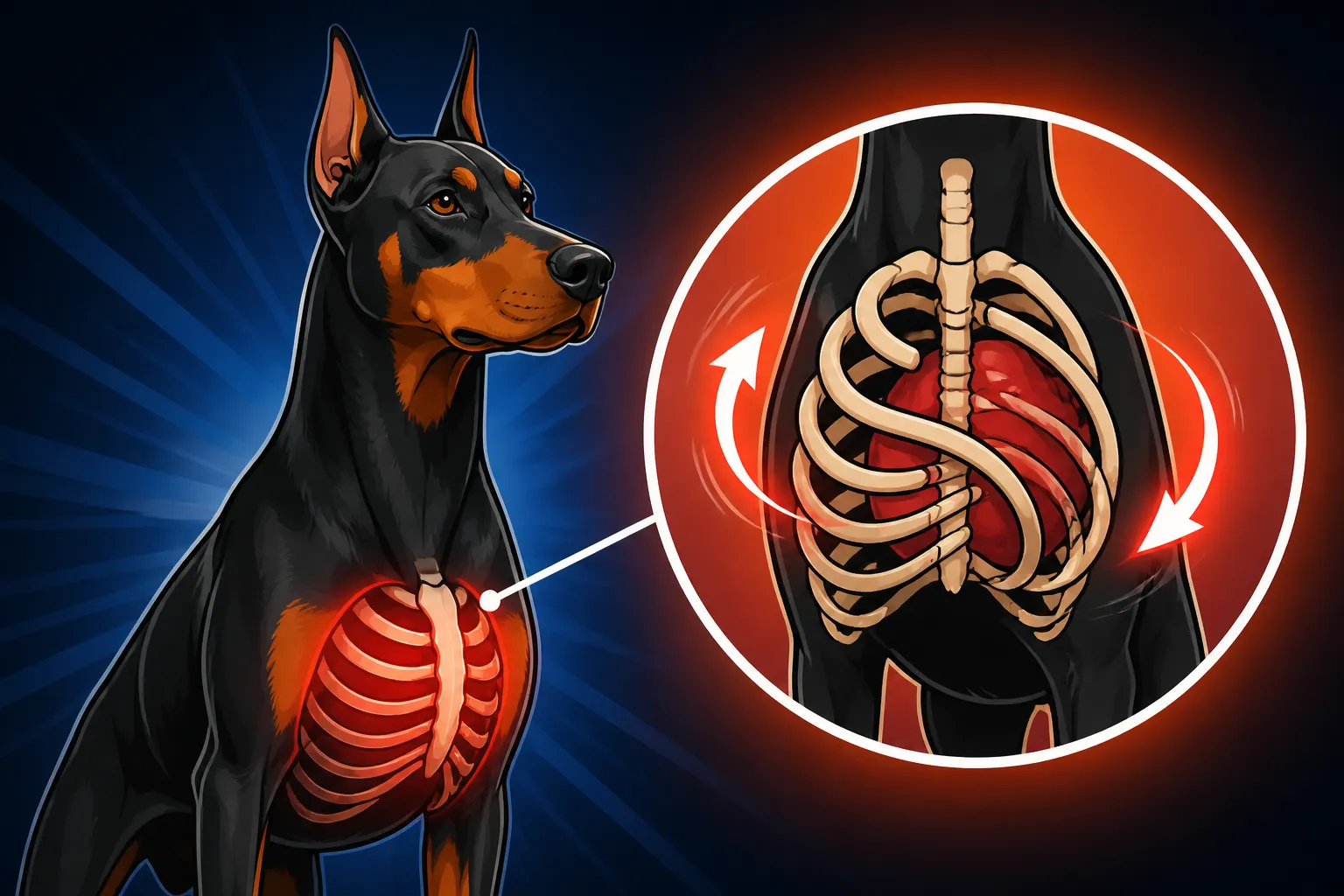
Gastric Dilatation-Volvulus, or GDV, is an acute, life-threatening condition that primarily affects large, deep-chested dog breeds like our Dobermans. It's not just a "stomach ache" – it's a medical catastrophe that can unfold in a matter of hours, leading to shock and death if not treated immediately. The term "gastric dilatation" refers to the stomach filling with gas and expanding, while "volvulus" describes the stomach then twisting on its axis. This twist cuts off blood supply and prevents gas from escaping, creating a rapidly escalating crisis.
The Mechanics of a Doberman Stomach Twist
Imagine a balloon. If you inflate it (dilatation) and then twist its neck tightly, nothing can get in or out, and the air pressure inside builds up. That's essentially what happens with GDV. Gas and fluid accumulate in the Doberman's stomach because both the entrance (esophagus) and exit (duodenum) are pinched shut by the twist. As the stomach expands further, it puts immense pressure on surrounding organs, including the diaphragm, making it difficult for your Doberman to breathe.
The stomach's rotation can also pull the spleen with it, damaging blood vessels and causing internal bleeding. This rapid onset of pain, organ damage, and shock means every minute counts. Without immediate intervention, the tissue of the stomach wall will die, leading to rupture, peritonitis, and an almost certain fatal outcome. It's a truly devastating condition because it can strike seemingly healthy dogs without much warning, turning a normal evening into a frantic race to the veterinary emergency room.
Why the Doberman's Anatomy Plays a Major Role
Our Dobermans are admired for their sleek, athletic build and that distinctive deep, narrow chest. Unfortunately, this very trait, so characteristic of the breed, is also a significant predisposing factor for GDV. Think of it this way: in a dog with a broad, shallow chest, the stomach is somewhat cradled and has less room to swing freely. In a deep-chested breed like the Doberman, the stomach hangs lower and has more space to move, particularly after a meal when it's full.
This anatomical predisposition, combined with weaker ligaments that might normally hold the stomach more securely in place, creates a perfect storm for twisting. When the Doberman ingests air rapidly, perhaps while eating too quickly or during strenuous exercise after a meal, the gas builds up. With enough gas and the right kind of sudden movement, that full stomach can easily rotate, setting off the entire cascade of events that characterize bloat. It's not just about the volume of food, but the combination of gas, stomach mobility, and that specific deep-chested structure that makes Dobermans so vulnerable. You might also be interested in why a Doberman's narrow deep chest twists, as this article delves into the specific anatomical considerations in greater detail.
Recognizing the Silent Killer: Symptoms of Bloat
Bloat is often referred to as a "silent killer" because its initial symptoms can be subtle, easily mistaken for indigestion or simple discomfort. However, the progression from mild discomfort to critical emergency can be incredibly rapid. Knowing what to look for, and reacting swiftly, is paramount for Doberman owners. Trust your gut instinct if something feels off; it could save your Doberman's life.
Early Warning Signs of Gastric Distress
The very first signs of bloat are often behavioral changes stemming from discomfort. Your Doberman might become restless, unable to settle, pacing back and forth, or shifting positions uncomfortably. They might look at their flank or abdomen, whimper, or stand with an arched back. Another common early indicator is excessive drooling, often a sign of nausea or pain.
Perhaps the most classic early sign, and one that sends shivers down the spine of any Doberman owner, is unproductive retching or dry heaving. Your Doberman will make repeated attempts to vomit, often forcefully, but nothing, or only a small amount of foamy saliva, will come up. This is because the twisted stomach prevents anything from passing through. They might try to drink water, only to immediately throw it up or continue dry heaving. Any combination of these symptoms, especially in a Doberman, should immediately trigger alarm bells.
Advanced Stages and Critical Distress
As bloat progresses and the stomach expands further, the symptoms become much more severe and unmistakably urgent. The abdomen will become visibly distended and feel tight or drum-like to the touch, particularly on the left side behind the last rib. This distension can be incredibly rapid, sometimes appearing within minutes. The pressure within the abdomen also makes it difficult for your Doberman to breathe, leading to rapid, shallow breathing or gasping.
As the condition worsens, your Doberman will enter a state of shock. Their gums may appear pale or bluish, indicating poor circulation and oxygenation. Their heart rate will be elevated, and their pulse weak. They may become weak, stumble, collapse, and lose consciousness. At this stage, time is of the absolute essence. There is no waiting to see if things improve; this is a full-blown veterinary emergency, and delay means almost certain death. Understanding how to recognize a Doberman stomach twist in time is literally a matter of life and death.
Immediate Action When Bloat Strikes
If you suspect bloat, even for a moment, do not hesitate. This is not a wait-and-see situation. The difference between life and death for your Doberman can be measured in minutes, not hours. Acting decisively and immediately is the single most important thing you can do.
The Race Against Time to the Vet
The moment you observe any combination of the alarming symptoms – pacing, unproductive retching, drooling, or a distended abdomen – you need to get your Doberman to the nearest emergency veterinary clinic immediately. Call ahead if you can, to let them know you are coming and suspect GDV. This allows them to prepare for your arrival, potentially saving precious minutes. Do not attempt to treat your Doberman at home, give them anything by mouth, or try to "decompress" their stomach yourself. These actions can be dangerous and waste critical time.
Every second counts. The longer the stomach remains twisted and dilated, the more damage occurs to the stomach lining, spleen, and other internal organs, and the deeper your Doberman sinks into shock. Survival rates significantly decrease the longer treatment is delayed. Be prepared to explain the symptoms clearly and concisely upon arrival, so the veterinary team can begin assessment and treatment without delay. Remember, a Doberman that faints on a walk or tires faster than it used to may be showing signs of other serious health issues, but if it includes dry heaving and abdominal distension, think bloat.
Emergency Veterinary Care for GDV
Once at the emergency vet, the team will quickly assess your Doberman's condition. This typically involves taking X-rays to confirm GDV, as the characteristic "double bubble" appearance of the gas-filled, twisted stomach is diagnostic. Blood work will also be performed to assess their overall health and degree of shock. Initial treatment focuses on stabilizing your Doberman: administering IV fluids to combat shock, pain medication, and antibiotics.
Often, the vet will attempt to decompress the stomach by carefully passing a tube down the esophagus into the stomach to release gas and fluid. If a tube cannot be passed, a large-bore needle may be used to pierce the abdominal wall and stomach (trocarization) to relieve pressure. Once stable, surgical intervention is required to untwist the stomach (gastric detorsion) and assess any damage. Crucially, the surgeon will also perform a gastropexy, which involves permanently attaching the stomach to the abdominal wall. This procedure, often referred to as tacking a Doberman's stomach while it is under, is vital for preventing future episodes of volvulus, even though it doesn't prevent dilatation. Without gastropexy, the recurrence rate of GDV is extremely high.
Proactive Prevention Strategies
Given the life-threatening nature of bloat, prevention is undeniably better than emergency treatment. For Doberman owners, understanding and implementing proactive measures is a crucial part of responsible ownership. While no strategy offers 100% guaranteed protection, these steps can significantly reduce the risk.
Surgical Prevention: Prophylactic Gastropexy
The most effective preventative measure against the volvulus (twisting) component of GDV is a prophylactic gastropexy. This surgical procedure permanently attaches the stomach to the abdominal wall, preventing it from rotating. While it doesn't stop the stomach from dilating with gas, it eliminates the deadly twist. Many Doberman owners elect to have this procedure done when their dog is already under anesthesia for another routine surgery, such as spaying or neutering.
If you have a Doberman puppy, discussing prophylactic gastropexy with your veterinarian during their early visits is highly recommended. It can be a literally life-saving decision, especially considering the breed's high risk. The procedure can be performed conventionally or, increasingly, laparoscopically (minimally invasive), which often means a quicker recovery for your Doberman. The peace of mind knowing your Doberman is protected against the twist is invaluable.
Management Through Feeding and Lifestyle
Beyond surgery, several daily management practices can help minimize the risk of bloat. One of the most common recommendations is to feed your Doberman multiple smaller meals throughout the day, rather than one large one. Splitting their daily ration into two or three meals reduces the amount of food and gas that can accumulate in the stomach at any one time.
Consider using a slow feeder bowl, especially if your Doberman tends to gulp down their food quickly. These bowls have obstacles that force your dog to eat more slowly, thereby reducing the amount of air they swallow with their meal. Avoid strenuous exercise or excitement for at least an hour before and after meals. A full stomach bouncing around during play or running can increase the likelihood of twisting. The debate around elevated food bowls continues; some studies suggest they might increase risk, while others show no clear effect. It's best to consult your vet for advice tailored to your Doberman. Understanding meal timing on a deep-narrow Doberman chest is crucial for effective prevention.
Risk Factors Beyond Anatomy
While the deep chest is a primary factor, it's not the only one. Genetics play a significant role; Dobermans with a first-degree relative (parent or sibling) who experienced GDV are at an increased risk. Age also matters, with older Dobermans generally being more susceptible, although it can occur at any age. Stress or anxious temperament has been implicated in some studies as a contributing factor, though the exact mechanism is not fully understood.
Rapid changes in diet, certain types of food (though the link to "grain-free" is still being studied, and the focus is more on legumes in boutique diets), and even drinking large amounts of water too quickly after exercise can contribute. Knowing your Doberman's individual habits and temperament can help you tailor preventative measures. For example, if you know your Doberman is a "gulper," a slow feeder is non-negotiable. If you have an anxious Doberman, working on stress reduction strategies could also be beneficial. It's important to remember that even with all precautions, some Dobermans may still develop bloat, which underscores the importance of quick recognition and action.
Here's a quick overview of key risk factors and preventative measures:
| Risk Factor | Description | Preventative Measure |
|---|---|---|
| Deep, Narrow Chest | Doberman breed characteristic, allows stomach more room to move and twist. | Prophylactic gastropexy is the most effective. |
| Eating Too Quickly | Rapid ingestion leads to swallowing excessive air, increasing stomach gas. | Use slow feeder bowls; supervise meal times. |
| Large Meals | One big meal fills the stomach, making it heavier and more prone to rotation. | Feed 2-3 smaller meals daily. |
| Strenuous Exercise Pre/Post-Meal | Physical activity can cause a full stomach to bounce, potentially leading to twisting. | Restrict exercise 1 hour before and after meals. |
| Drinking Large Amounts Rapidly | Similar to eating quickly, rapid water intake can introduce excess air and stomach distension. | Offer smaller amounts of water more frequently, especially after activity. |
| Stress/Anxiety | Anxious dogs may be more prone to aerophagia (swallowing air) or physiological stress responses. | Manage stress, ensure a calm feeding environment. |
| Genetics/Family History | Dobermans with relatives who had GDV are at higher risk. | Choose breeders who track GDV incidence; consider prophylactic gastropexy. |
| Age | Older Dobermans are generally considered to be at higher risk. | Maintain vigilance with age, discuss with vet. |
The Financial and Emotional Toll of GDV
Dealing with a bloat emergency is not only terrifying and emotionally draining but also comes with a significant financial burden. Understanding these aspects beforehand can help you be better prepared, should the unthinkable happen.
Understanding the Costs of Bloat Surgery
When a Doberman experiences bloat, the immediate need is emergency veterinary care, which is inherently expensive. Diagnostics like X-rays, blood tests, IV fluids, pain medication, and the highly complex surgery to untwist the stomach and perform a gastropexy can quickly accumulate into a bill ranging from several thousands of dollars, often upwards of $5,000 to $10,000 depending on your location, the extent of damage, and any complications. This cost often includes post-operative critical care, which might involve several days of hospitalization, further medication, and monitoring.
For many owners, this sudden, unexpected expense can be devastating, forcing difficult decisions in an already highly stressful situation. The emotional toll of watching your Doberman suffer, combined with the financial strain, is immense. It's a stark reminder of the serious commitment and potential costs involved in caring for a Doberman. To get a clearer picture, you might want to look into what bloat surgery costs a Doberman owner and what a Doberman costs month to month more broadly.
The Role of Pet Insurance and Financial Preparedness
This is where pet insurance can be a literal lifesaver. Policies from providers like Healthy Paws can significantly mitigate the financial stress of an emergency like GDV. If your Doberman is enrolled in pet insurance before any signs of bloat appear (as it would be considered a pre-existing condition otherwise), the policy can cover a large percentage of the emergency veterinary bills. This allows you to focus on getting your Doberman the best possible care without being overwhelmed by the cost.
When choosing pet insurance, look for plans that cover emergency surgery, hospitalization, and specialist care. Many Doberman owners wisely opt for comprehensive policies that address the breed's known health issues, including heart conditions like the heart disease that reaches most Dobermans, which also require significant ongoing care. While no one wants to think about their Doberman facing a life-threatening crisis, having financial protection through pet insurance, like a plan from Healthy Paws, ensures you're prepared for unforeseen medical emergencies. It's worth considering whether any Doberman owner should skip insurance, given the breed's predisposition to several serious health conditions.
Conclusion
Living with a Doberman is a truly rewarding experience, but it comes with the responsibility of understanding and mitigating the unique health risks they face. Gastric Dilatation-Volvulus is perhaps one of the most frightening of these, capable of turning a happy, healthy dog into a critical patient in mere hours. By being aware of your Doberman's anatomical predisposition, recognizing the subtle and overt symptoms, knowing exactly what steps to take in an emergency, and implementing preventative strategies like prophylactic gastropexy and careful feeding, you can significantly improve your Doberman's chances against this deadly condition. Vigilance and swift action are your Doberman's best defenses.
Disclaimer
The information provided in this article is for educational purposes only and is not a substitute for professional veterinary advice. Always consult with a qualified veterinarian for any health concerns or before making any decisions about your Doberman's care.