The Age Doberman Wobbler Signs Appear
It's an utterly heartbreaking moment when you start noticing something isn't quite right with your Doberman's gait. One day they're bounding around, a picture of grace and power, and the next, there's a slight wobble in their hindquarters, a hesitant step, or a subtle drag of a paw. If you're seeing these changes and are worried about Wobbler Syndrome, you're not alone. This guide will walk you through the typical age when Doberman Wobbler signs appear, what to look for, and how to navigate this challenging condition.
Understanding Wobbler Syndrome in Dobermans
Wobbler Syndrome, formally known as Cervical Spondylomyelopathy (CSM), is a neurological condition that can be truly devastating for Doberman owners. It's not just a fancy name for clumsiness; it refers to a compression of the spinal cord and/or nerve roots in the neck region. Imagine a garden hose that's kinked – the water flow (nerve signals) gets interrupted, leading to a host of neurological issues that primarily affect movement.
What is Wobbler Syndrome Exactly?
At its core, Wobbler Syndrome in Dobermans stems from abnormalities in the cervical (neck) vertebrae. These abnormalities can include malformation of the bones themselves, instability between vertebrae, or a bulging of the intervertebral discs that then press on the delicate spinal cord. In essence, the spinal canal, which is supposed to be a safe, roomy tunnel for the spinal cord, becomes too narrow in places, causing pressure. This pressure disrupts the flow of neurological signals from the brain to the rest of the body, particularly the limbs. The result is a characteristic "wobbly" gait, especially in the hind legs, though it can affect all four. This condition is why Doberman neck vertebrae compress the cord, leading to the debilitating symptoms we observe. It's a progressive disease, meaning if left unchecked, the compression often worsens, and so do the symptoms.
The Typical Age Range for Onset
One of the most common questions Doberman owners have is, "When does this typically show up?" The answer isn't a hard and fast rule, but for Dobermans, Wobbler Syndrome signs most frequently appear in middle-aged to older dogs. We're generally talking about Dobermans between two and eight years of age, with a significant peak often observed around three to five years old.
It's relatively rare to see full-blown Wobbler signs in a very young Doberman puppy, though the underlying structural issues are genetic and present from birth. Some Dobermans might have very mild, intermittent symptoms that are easily dismissed in their younger years, only to become undeniably apparent as they mature and the compression progresses. So, while your Doberman puppy might seem perfectly fine, the potential for this condition looms large in the breed's future. Keep a watchful eye as they enter those prime middle years.
Why Dobermans Are Predisposed
You might wonder why Dobermans, specifically, seem to draw the short straw with Wobbler Syndrome. It boils down to a combination of genetics and their unique conformation. Dobermans have a long, elegant neck, and unfortunately, this very trait can make them more susceptible. The breed's genetic makeup contributes to the likelihood of developing these vertebral abnormalities. Researchers are still working to pinpoint specific genes, but it's widely accepted that there's an inherited component. Beyond genetics, the Doberman's rapid growth rate as a puppy and adolescent, coupled with their active lifestyle, can exacerbate existing structural weaknesses in the cervical spine. The deep, narrow chest and overall athletic build of a Doberman also contribute to the forces at play on their spine, making them prime candidates for developing this particular spinal cord compression. It's a sad reality that while we love their distinctive look, it comes with this inherent risk.
Recognizing the Early Signs of Wobbler Syndrome
Catching Wobbler Syndrome early can make a significant difference in management and outcome. However, the initial signs can be incredibly subtle, often mistaken for something else entirely – a minor sprain, a bit of clumsiness, or just your dog "getting old." This is where a keen eye and understanding of your Doberman's normal behavior become paramount.
Subtle Changes in Gait and Posture
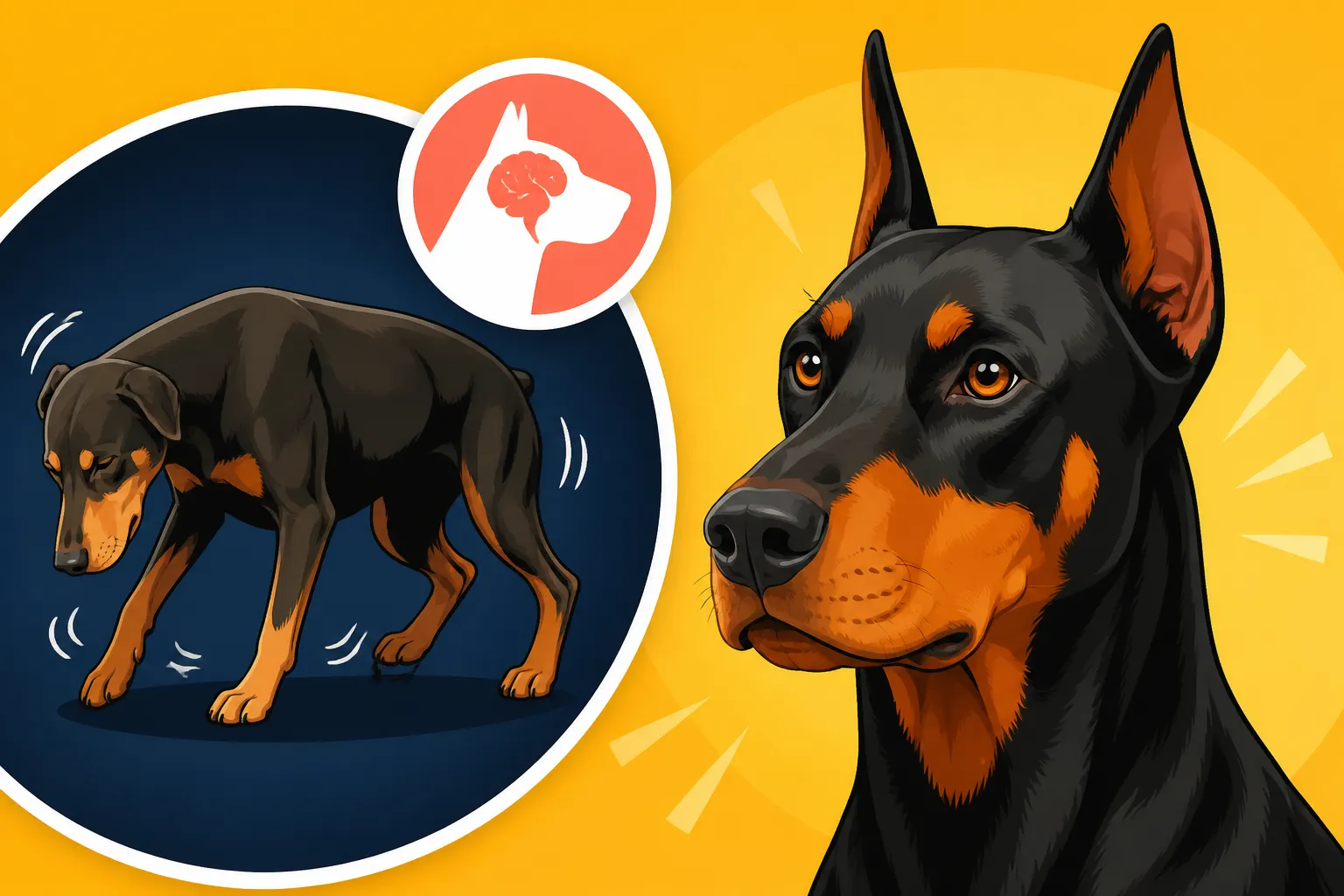
The hallmark sign of Wobbler Syndrome is, as the name suggests, a "wobbly" or uncoordinated gait, especially noticeable in the hind limbs. This is medically referred to as ataxia. You might observe your Doberman struggling to maintain balance, swaying more than usual when standing still, or taking unusually wide steps. They might look like they're walking on a boat, even on solid ground. Initially, this might only be noticeable when they're turning sharply or trying to get up from a lying position.
Beyond the actual wobbling, watch for these specific indicators:
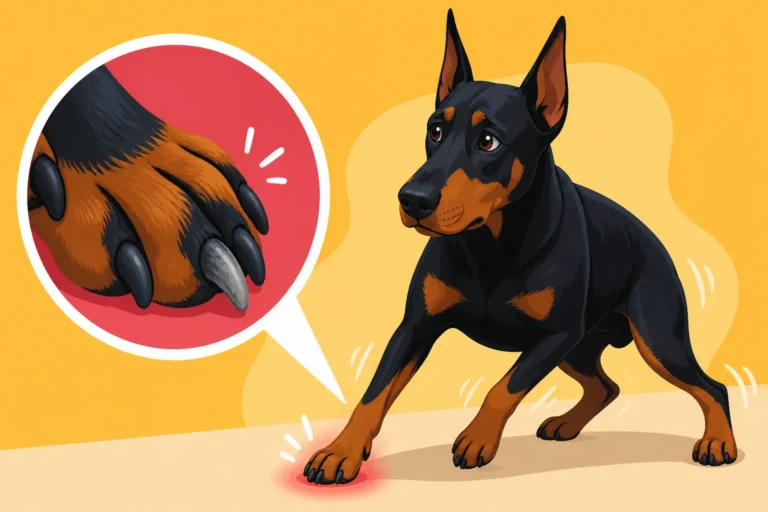
- Hind Limb Weakness: Their back legs might seem weak, dragging slightly, or placing their feet in unusual positions. You might notice them scuffing nails on a Wobbler Doberman, particularly the top of their hind paws, as they don't lift their feet high enough. This causes the nails to wear down unevenly, sometimes even bleeding.
- A "Drunken Sailor" Walk: The ataxia can be described as a "two-engine gait," where the front and rear legs don't seem to be working in harmony. The front legs might take short, choppy steps while the hind legs are overreaching, giving a characteristic high-stepping appearance, especially in the front.
- Head Down Posture: Many Dobermans with Wobbler Syndrome will adopt a posture where they walk with its head down. This isn't just sadness; it's often an attempt to alleviate pain or discomfort in their neck by extending it downwards, which can momentarily decompress the spinal cord.
- Difficulty with Stairs or Jumping: What was once effortless becomes a struggle. Your Doberman might hesitate at stairs, jump less frequently onto furniture, or even refuse to do so altogether.
Progression of Symptoms
Unfortunately, Wobbler Syndrome is typically a progressive disease. What starts as mild clumsiness can, over time, develop into severe neurological deficits. The speed of progression varies greatly between individual dogs; some may decline slowly over months or years, while others can experience a rapid worsening of symptoms in a matter of weeks.
As the condition progresses, you might notice:
- Increased ataxia, affecting all four limbs.
- More pronounced hind limb weakness, potentially leading to partial or complete paralysis.
- Loss of muscle mass in the shoulders and hindquarters due to nerve damage and disuse.
- Difficulty getting up from a lying position, or even collapsing during walks.
- Neck pain, evidenced by yelping when touched around the neck, reluctance to turn their head, or extreme sensitivity.
- In severe cases, loss of bladder or bowel control.
It’s crucial to understand how fast Doberman Wobbler signs progress, as this can heavily influence treatment decisions and prognosis.
Here’s a simplified look at symptom progression:
| Stage | Early Signs | Moderate Signs | Advanced Signs |
|---|---|---|---|
| Gait | Mild wobbling, especially when turning | Noticeable incoordination, broad-based stance | Severe ataxia, difficulty standing/walking, stumbling |
| Hind Limbs | Occasional scuffing, slight weakness | Consistent knuckling/scuffing, weakness, decreased muscle | Partial to complete paralysis, significant muscle atrophy |
| Front Limbs | High-stepping, short stride, some stiffness | More pronounced stiffness, dragging toes | Significant weakness, difficulty weight-bearing |
| Neck/Pain | Head held low, reluctance to bend neck | Visible neck pain, muscle spasms, crying out | Severe pain, guarding neck, crying at slight touch |
| Overall | Reduced activity, hesitant movements | Loss of balance, difficulty with stairs/ramps | Unable to stand/walk unassisted, loss of bodily functions |
Acute vs. Gradual Onset
Wobbler Syndrome can manifest in two main ways: acute or gradual onset.
- Gradual Onset: This is the more common scenario, especially in Dobermans. The signs develop slowly over weeks, months, or even years. Owners might attribute the initial subtle changes to aging or minor aches. Your Doberman might simply seem a bit stiffer after a nap, or take a little longer to get up. It's a slow, insidious creeping of symptoms that makes it hard to pinpoint an exact start date. This gradual progression allows the dog some time to adapt, but it also means the underlying compression is slowly getting worse.
- Acute Onset: Less common but more dramatic, acute onset occurs when symptoms appear suddenly and severely, often after a specific incident like a fall, a sudden twist of the neck, or even rough play. A Doberman might go from seemingly normal to severely wobbly or even unable to use its hind legs overnight. This immediate and severe presentation often means more significant spinal cord trauma and typically warrants immediate veterinary attention.
Regardless of the onset, any suspicion of a neurological issue in your Doberman should prompt a visit to your veterinarian right away. Early intervention can make a significant difference.
Diagnosing and Managing Wobbler Syndrome
If you've noticed any of the signs we've discussed, it’s time to seek professional help. Your primary veterinarian is your first stop, but they will likely refer you to a veterinary neurologist for a definitive diagnosis and treatment plan. Don't delay; the earlier a diagnosis is made, the better the chances of effective management.
The Diagnostic Process
Diagnosing Wobbler Syndrome involves a thorough neurological examination, followed by advanced imaging.
- Neurological Examination: Your vet or a specialist will perform a comprehensive exam to assess your Doberman's reflexes, coordination, proprioception (awareness of limb position), and sensation. They'll look for signs like ataxia, knuckling, muscle atrophy, and pain responses.
- X-rays: While routine X-rays can show some vertebral abnormalities, they don't provide a clear picture of the spinal cord itself, which is where the real problem lies. However, they can rule out other bone-related issues.
- Advanced Imaging (MRI or CT Scan): This is the gold standard for diagnosing Wobbler Syndrome. A specialized MRI (Magnetic Resonance Imaging) or CT (Computed Tomography) scan allows the neurologist to visualize the spinal cord and pinpoint the exact location and nature of the compression. This process involves putting your Doberman under general anesthesia to ensure they remain perfectly still for the scan. Scanning a Doberman for a compressed neck requires sophisticated equipment and expertise, which is why a referral to a specialty clinic is common. What a Doberman MRI shows for Wobblers is crucial for planning any surgical intervention.
- Myelography: Sometimes, especially if an MRI isn't available, a myelogram may be performed. This involves injecting a contrast dye into the spinal canal and then taking X-rays. The dye highlights the spinal cord, showing areas of compression, but it's more invasive than an MRI and carries slightly higher risks.
These diagnostic tests, especially MRIs, can be costly. This is where pet insurance, like a policy from Healthy Paws, can become a lifeline, helping to cover a significant portion of these unexpected expenses.
Treatment Options and Prognosis
Once Wobbler Syndrome is diagnosed, your veterinary neurologist will discuss the available treatment options. These generally fall into two categories: conservative medical management or surgical intervention.
Conservative Medical Management
This approach is often recommended for Dobermans with mild to moderate symptoms, especially if their pain is manageable and their neurological deficits are not rapidly progressing. It focuses on reducing inflammation, managing pain, and supporting spinal health.
- Restriction of Activity: Limiting strenuous exercise, jumping, and rough play is crucial. Controlled leash walks are often the only permitted exercise.
- Medication:
- Anti-inflammatory drugs: Non-steroidal anti-inflammatory drugs (NSAIDs) or corticosteroids (like steroids and rest for a Doberman Wobbler) are used to reduce inflammation around the spinal cord, which can temporarily alleviate pressure and pain.
- Pain relievers: Medications like gabapentin or tramadol may be prescribed to manage discomfort.
- Muscle relaxants: These can help with muscle spasms in the neck.
- Physical Therapy: Gentle exercises, hydrotherapy, and therapeutic massage can help maintain muscle strength, improve balance, and enhance range of motion.
- Harness Use: Switching from a neck collar to a well-fitting chest harness is vital to avoid any pressure on the sensitive neck area. Whether a Doberman Wobbler should wear a collar is a definite "no."
Conservative management aims to improve the dog's comfort and quality of life, but it does not fix the underlying structural problem. It can be effective for a period, but many Dobermans will eventually see a progression of their symptoms.
Surgical Intervention
Surgery is generally considered for Dobermans with severe or rapidly progressing neurological signs, or those who do not respond well to conservative management. The goal of surgery is to decompress the spinal cord by addressing the specific point of compression. There are various surgical techniques, including:
- Dorsal Laminectomy: Removing part of the vertebral arch to relieve pressure.
- Ventral Slot: Removing a portion of the vertebral body and disc to access and remove compressive material.
- Distraction-Stabilization: Using implants to stabilize unstable vertebrae and decompress the spinal cord.
Whether a Doberman Wobbler surgery works depends on many factors, including the severity and duration of the compression, the specific surgical technique used, and the dog's overall health. While surgery can offer significant improvement or even a cure for some dogs, it's a major procedure with risks, a long recovery period, and substantial costs. Many owners face the agonizing decision of surgery against management for Doberman Wobblers. The prognosis can be good for carefully selected candidates, but it's not a guaranteed fix. Post-operative rehabilitation is critical for successful recovery.
Living with a Doberman with Wobbler Syndrome
Receiving a Wobbler Syndrome diagnosis for your beloved Doberman can feel overwhelming. It means making significant adjustments to their life and yours, but with proper care and support, many Dobermans can still enjoy a good quality of life.
Adjusting Your Doberman's Lifestyle
Life with a Doberman who has Wobbler Syndrome will inevitably change. Your focus shifts from high-impact activities to managing comfort and mobility.
- Environmental Modifications:
- Rugs and Runners: If you have slick floors, laying down rugs or runners can provide traction and prevent slips and falls, which can be devastating for a wobbly Doberman.
- Ramps or Steps: Provide ramps to help your Doberman get onto furniture or into the car, reducing strain on their neck and back.
- Raised Food and Water Bowls: These can help reduce the need for your Doberman to bend its neck excessively, which can be painful.
- Avoid Stairs: If possible, limit or prevent your Doberman from using stairs, especially during recovery periods or if their gait is severely affected.
- Exercise Adjustments: High-impact activities like fetching, jumping, and agility sports are generally out. Instead, focus on short, controlled leash walks on soft surfaces. Hydrotherapy (swimming) can be incredibly beneficial as it allows for exercise without weight-bearing strain on the spine.
- Harness Over Collar: As mentioned earlier, a well-fitted harness that distributes pressure across the chest and shoulders is crucial. A traditional neck collar can put direct pressure on the already compromised cervical spine, potentially worsening the condition or causing acute pain.
- Assisted Mobility: For Dobermans with significant weakness or paralysis in their hindquarters, a support harness or even a dog wheelchair can help them maintain mobility and enjoy walks. Living with a Doberman that cannot walk straight requires patience and adaptability, and these tools can make a world of difference.
Financial Considerations and Support
The reality of Wobbler Syndrome often comes with a hefty price tag. Diagnostic imaging, specialist consultations, medications, physical therapy, and potentially surgery can add up quickly. It's a significant financial burden that many owners are not prepared for.
- Insurance: If you don't already have pet insurance, it’s worth looking into it as soon as your Doberman is healthy and before any symptoms manifest. Once a condition is diagnosed, it's typically considered pre-existing, and new policies won't cover it. However, if your Doberman is already insured, a reputable provider like Healthy Paws can significantly ease the financial strain, covering eligible costs and allowing you to focus on your dog's care rather than the escalating bills.
- Budgeting for Long-Term Care: Even with conservative management, there will be ongoing costs for medications, supplements, and regular vet check-ups. If surgery is performed, there are considerable costs associated with post-operative care and rehabilitation. Creating a dedicated budget or savings plan for potential health issues is a smart move for any Doberman owner.
- Support Groups: Connecting with other Doberman owners who are navigating Wobbler Syndrome can provide invaluable emotional support and practical advice. They can share experiences, tips for home care, and even recommendations for vets and specialists in your area.
Dealing with Wobbler Syndrome is a marathon, not a sprint. It requires dedication, financial planning, and a strong partnership with your veterinary team. But with love and commitment, you can help your Doberman live as comfortably and happily as possible, even with this challenging diagnosis.
Disclaimer
The information provided in this article is for general informational purposes only and is not intended to be a substitute for professional veterinary advice, diagnosis, or treatment. Always seek the advice of your veterinarian or other qualified animal health provider with any questions you may have regarding a medical condition.