What the Doberman DCM2 Variant Changes
It's absolutely devastating to learn that your beloved Doberman, a breed known for its incredible spirit and loyalty, is prone to a silent killer like Dilated Cardiomyopathy, or DCM. The worry often starts when you first hear about the genetic predisposition, and then the confusion sets in when you try to understand what all these different gene variants, like DCM2, actually mean for your dog's future. This guide aims to clear up that confusion, diving deep into what the DCM2 Titin variant signifies and how it might impact your Doberman's health journey.
Understanding Dilated Cardiomyopathy DCM in Dobermans
Before we delve into the specifics of the DCM2 variant, let’s take a moment to understand the bigger picture: Dilated Cardiomyopathy itself. This isn't just a vague term; it describes a very real, progressive disease where your Doberman's heart muscle becomes thin and weak, making it less efficient at pumping blood. Imagine your heart as a powerful pump; with DCM, that pump starts to lose its oomph, becoming enlarged and floppy. This means the heart struggles to move blood effectively to the rest of the body, leading to a host of problems. It’s a truly frightening diagnosis, particularly because Dobermans are so vulnerable to this condition. If you want a full overview of the devastating impact, you can read more about The Heart Disease That Reaches Most Dobermans.
What DCM Actually Means for Your Doberman's Heart
In a healthy heart, each beat is a strong, coordinated contraction that pushes oxygen-rich blood out to the body and brings deoxygenated blood back to the lungs. With DCM, the ventricles—the main pumping chambers of the heart—become dilated, meaning they get larger. However, this enlargement isn't a sign of strength; it's a sign of weakness. The walls of these chambers thin out, and their ability to contract forcefully diminishes. Think of it like a rubber band that's been stretched too many times; it loses its elasticity and can't snap back with the same force.
This reduced pumping efficiency can lead to several severe consequences. Initially, your Doberman might show no symptoms at all – these are often referred to as The Silent Years Before a Doberman's Heart Shows. As the disease progresses, signs can include lethargy, exercise intolerance, coughing, difficulty breathing, and even fainting. Ultimately, if left untreated, it leads to congestive heart failure, where fluid builds up in the lungs and abdomen, or sudden cardiac death due to arrhythmias (irregular heartbeats). The progression can be swift or agonizingly slow, adding to the uncertainty and anxiety for Doberman owners. It's a cruel reality that Why a Doberman Heart Fails Before Anyone Notices is often due to the silent nature of the occult phase.
The Genetic Landscape of Doberman DCM
The heartbreaking truth is that Doberman DCM is largely hereditary. It's not just a random occurrence; it's deeply rooted in the breed's genetic makeup. For years, researchers have been working tirelessly to identify the specific genes responsible, hoping to provide breeders and owners with tools to combat this disease. This effort has led to the identification of several genetic markers, including the two most commonly discussed: DCM1 and DCM2.
It’s easy to feel overwhelmed by the science, but understanding these genetic pieces is crucial for proactive management. It’s not just one single gene that dictates fate; rather, it’s a complex interplay. Sometimes, a Doberman may carry one variant, sometimes both, and sometimes neither, yet still develop the disease. This complexity is why relying solely on genetic testing isn't enough; regular cardiac screening remains paramount. Still, knowing the genetic predispositions, such as those covered by The Two Doberman DCM Gene Tests, offers valuable insight and empowers responsible breeding practices.
Delving Into the DCM2 Titin Variant
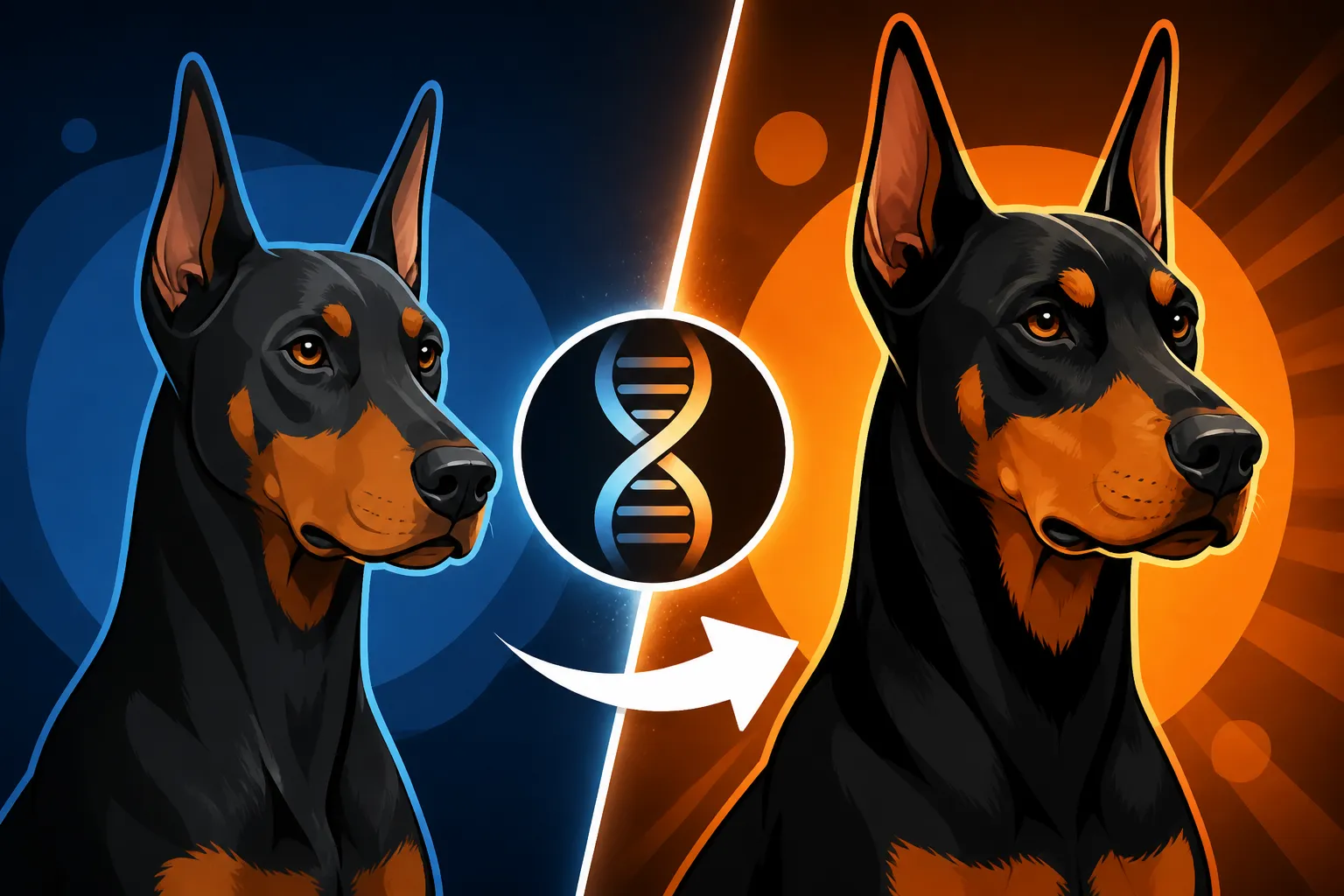
Now, let's zoom in on the specific genetic culprit we're discussing today: the DCM2 variant, which is associated with a mutation in the Titin gene. This variant has been a significant focus for researchers and Doberman enthusiasts alike, offering another piece of the puzzle in understanding and predicting DCM in the breed.
How the DCM2 Variant Differs from DCM1
When people talk about Doberman DCM genetics, they usually refer to two primary mutations: DCM1 and DCM2. The DCM1 variant, also known as the PDK4 deletion, was the first gene mutation widely recognized and tested for. It's associated with a higher risk of developing DCM and is often linked to earlier onset and more severe forms of the disease. You can learn more about The DCM1 Gene Test Explained for Doberman Owners.
The DCM2 variant, on the other hand, is a different mutation affecting a different gene: the Titin gene (specifically, it's often referred to as the Titin gene variant or TTN variant). While both are linked to DCM, they are distinct genetic markers. A Doberman can carry one, both, or neither. The presence of DCM2 is also associated with an increased risk of developing DCM, but some studies suggest its impact might be slightly different or often additive, especially when combined with DCM1. It's not as simple as "DCM1 is bad, DCM2 is less bad"; rather, they contribute to a cumulative genetic risk profile. It’s important to understand that these aren't mutually exclusive and understanding Whether a Doberman Positive for Both Genes Is Doomed adds another layer of complexity for owners.
The Impact of the Titin Gene on Heart Function
The Titin gene is absolutely massive – it’s one of the largest genes in the canine and human genome. It plays a critical role in the heart muscle by producing the Titin protein, which is essential for the structure, elasticity, and contractility of cardiac muscle cells. Think of Titin as the internal scaffolding and spring system within each heart muscle cell. It helps the muscle cells maintain their shape, provides passive stiffness, and contributes to the heart's ability to stretch and recoil with each beat.
When there's a mutation in the Titin gene, like the DCM2 variant, this crucial protein can be faulty or insufficient. This defect can compromise the structural integrity and mechanical function of the heart muscle cells. Over time, this can lead to the thinning and weakening of the heart walls characteristic of DCM. It essentially means the heart's internal support system isn't as robust as it should be, making it more susceptible to dilating and failing under the constant strain of pumping blood. This fundamental cellular dysfunction is why the Titin variant is so significant in the development of Doberman DCM.
Interpreting Your Doberman's DCM2 Test Results
Getting a genetic test for your Doberman and then staring at the results can feel like trying to decipher an ancient scroll. For the DCM2 Titin variant, your dog's results will typically fall into one of three categories:
- Clear (N/N or Homozygous Normal): This means your Doberman does not carry the DCM2 variant. This is excellent news for this particular gene! However, remember that being clear for DCM2 (or even both DCM1 and DCM2) doesn't guarantee your Doberman will never develop DCM. There are other genetic factors not yet identified, and environmental influences can play a role. As frustrating as it sounds, a Doberman can indeed A Doberman That Tests Clear and Still Gets DCM.
- Carrier (N/D or Heterozygous Affected): This indicates your Doberman carries one copy of the DCM2 variant. Dogs in this category have an increased risk of developing DCM compared to clear dogs, though perhaps not as high as those with two copies. They can also pass this variant on to their offspring. This is a critical result for breeders to consider to avoid perpetuating the mutation in future generations.
- Affected (D/D or Homozygous Affected): This means your Doberman has two copies of the DCM2 variant. Dogs with two copies are at the highest genetic risk for developing DCM associated with this specific variant. The likelihood of them developing the disease is significantly elevated, and they will pass on a copy of the variant to all of their offspring.
It’s important to discuss these results thoroughly with your veterinarian and, ideally, a veterinary cardiologist. They can help you understand the specific implications for your dog, including the estimated risk and recommended monitoring schedule. Genetic testing is a snapshot of one piece of the puzzle; it needs to be combined with regular physical exams and cardiac screenings to provide a complete picture of your Doberman's heart health.
Managing the Risk Associated with DCM2
Discovering your Doberman carries the DCM2 variant can feel like a heavy burden. However, knowledge is power. Understanding this genetic predisposition allows you to be proactive in managing your Doberman's health, potentially delaying the onset of symptoms and improving their quality of life.
Proactive Screening and Monitoring for DCM2 Positive Dobermans
For any Doberman, but especially those carrying a DCM variant like DCM2, a robust screening protocol is non-negotiable. Regular cardiac examinations by a board-certified veterinary cardiologist are the cornerstone of proactive care. These typically involve:
- Echocardiograms (Echos): This is an ultrasound of the heart that allows the cardiologist to visualize the heart's structure, measure chamber sizes, assess wall thickness, and evaluate how efficiently the heart is pumping blood. This non-invasive test is crucial for detecting the subtle changes of DCM before clinical signs appear. For Dobermans at risk, including those with the DCM2 variant, annual or even semi-annual echos might be recommended, often starting around 2-3 years of age. Understanding What a Doberman Echo Actually Measures is key to appreciating its value.
- Holter Monitors: This is a portable ECG device that your Doberman wears for 24 hours. It continuously records the heart's electrical activity, allowing the cardiologist to detect arrhythmias (irregular heartbeats) that might not be present during a brief office visit. Arrhythmias, especially Ventricular Premature Contractions (VPCs), are often an early indicator of DCM in Dobermans. Regular Holter monitoring, typically done yearly, is vital. You'll want to know about Twenty-Four Hours of Holter on a Doberman and how to interpret the results, including Reading a Doberman's Holter Result.
This combination of tools helps detect the disease in its occult (hidden) phase, long before your Doberman shows any outward signs of illness. Early detection is critical because it can allow for the initiation of medications, such as pimobendan, which has been shown to prolong the symptom-free period and improve outcomes in Dobermans with preclinical DCM. You can explore How Much Longer Early Treatment Buys a Doberman to appreciate the impact of this proactive approach. These screenings can be expensive, and planning for them is a big part of Doberman ownership. That's where a good pet insurance policy, perhaps from a provider like Healthy Paws, can be a lifesaver, helping to offset the costs of these crucial diagnostic tests.
| Test Type | What It Measures | Frequency (DCM2 Positive Doberman) | Importance |
|---|---|---|---|
| Echocardiogram (Echo) | Heart chamber size, muscle thickness, pumping efficiency | Annually (or more) | Detects structural changes of DCM in the occult phase. |
| Holter Monitor | 24-hour heart electrical activity, presence of arrhythmias | Annually | Identifies irregular heartbeats (VPCs) often present before structural changes. |
| ProBNP Blood Test | Levels of N-terminal pro-B-type natriuretic peptide | Annually | Can indicate cardiac stress or damage, used as an adjunctive screening tool, though not definitive on its own. |
Breeding Considerations for Dobermans with the DCM2 Variant
For responsible Doberman breeders, knowing the genetic status of their breeding stock regarding DCM variants like DCM2 is paramount. The goal should always be to reduce the incidence of DCM in future generations while preserving the overall health and temperament of the breed.
If a Doberman tests positive for the DCM2 variant (either as a carrier or affected), breeders face tough decisions. Breeding two affected dogs together would produce 100% affected puppies, which is highly irresponsible. Breeding an affected dog with a carrier would also produce a high percentage of affected and carrier offspring. Even breeding a carrier to a clear dog will result in a percentage of carrier puppies.
The prevailing advice from veterinary geneticists and ethical Doberman clubs is to avoid breeding affected Dobermans entirely. For carriers, the decision can be more nuanced. Some breeders may choose to breed a carrier to a clear dog only if the carrier possesses exceptional qualities in other areas (temperament, conformation, working ability) and rigorous cardiac screening confirms no signs of DCM. In such cases, all puppies must be genetically tested for DCM2, and only clear offspring should be considered for future breeding. This strategy aims to slowly breed out the variant over generations, retaining valuable traits.
This is why it's so important to purchase a Doberman puppy from a breeder who is transparent about their health testing, including genetic screens for both DCM1 and DCM2, and provides results for their breeding dogs. Always ask Whether a Doberman Should Be Screened Before Breeding and review the comprehensive health testing records. A responsible breeder will prioritize the health of their lines above all else, making these difficult but necessary choices to improve the breed's future.
Living with a Doberman Positive for DCM2
Receiving a DCM2 positive result for your Doberman is understandably distressing. It changes the dynamic of how you approach their care. While it doesn't mean an immediate death sentence, it does mean a heightened awareness and commitment to their well-being.
Daily Care and Lifestyle Adjustments
Living with a Doberman carrying the DCM2 variant means you become an extra vigilant observer of their health. Here are some key lifestyle adjustments and daily care considerations:
- Regular Vet Check-ups: Beyond the specialized cardiac screenings, regular veterinary check-ups are crucial. Your general vet can monitor overall health, weight, energy levels, and listen for any subtle heart murmurs or lung sounds.
- Controlled Exercise: While exercise is vital for Dobermans, moderation is key for those at risk of DCM. Avoid overexertion, especially in hot weather. Intense, prolonged sprints or agility work might need to be scaled back. Instead, focus on consistent, moderate walks and mental stimulation. Pay attention to any signs of fatigue, shortness of breath, or reluctance to exercise, and communicate these to your vet immediately.
- Diet and Nutrition: Work with your vet or a veterinary nutritionist to ensure your Doberman is on a high-quality, balanced diet. While no specific diet prevents DCM, maintaining an ideal body weight is crucial to avoid putting extra strain on the heart. Some cardiologists might recommend certain supplements, such as taurine and carnitine, though their efficacy for DCM prevention or treatment varies and should always be discussed with a specialist. You can learn more about Taurine and Carnitine for a Doberman Heart.
- Stress Reduction: Try to minimize stress in your Doberman’s life. Stress can elevate heart rate and blood pressure, potentially exacerbating cardiac conditions. A calm, consistent routine is beneficial.
- Awareness of Symptoms: Be hyper-aware of any subtle changes in your Doberman's behavior or physical condition. This includes changes in appetite, increased panting, coughing (especially at night or when resting), decreased energy, weakness, or any episodes of fainting or collapse. Early recognition of these signs can lead to prompt veterinary intervention.
These adjustments aren't about restricting your Doberman's life but about optimizing it to support their cardiac health. It's about being their best advocate, keenly attuned to their needs and working closely with your veterinary team.
Financial Planning for Potential DCM Treatment
One of the most significant, and often overlooked, aspects of owning a Doberman, especially one with a genetic predisposition to DCM, is the financial commitment. DCM can be an incredibly expensive disease to manage.
- Diagnostic Costs: As discussed, regular echocardiograms and Holter monitors are crucial for early detection. These specialist appointments and diagnostics can range from several hundred to over a thousand dollars annually.
- Medication Costs: Once DCM is diagnosed, particularly in the symptomatic phase, lifelong medication is almost always required. This can include pimobendan, diuretics, ACE inhibitors, and antiarrhythmics. These medications can cost hundreds of dollars per month, and as the disease progresses, the number and dosage of medications often increase.
- Emergency Care: Dobermans with DCM are at risk of sudden cardiac events or acute congestive heart failure, requiring emergency veterinary care. An emergency visit, including diagnostics, hospitalization, oxygen therapy, and intensive care, can quickly run into thousands of dollars.
- Specialist Consultations: Regular follow-ups with a board-certified veterinary cardiologist are essential, adding to ongoing costs.
This financial reality is why pet insurance becomes less of a luxury and more of a necessity for Doberman owners. Enrolling your Doberman early, ideally before any genetic test results or initial cardiac screenings that might indicate a problem, is critical. Companies like Healthy Paws are often recommended because they cover a wide range of illnesses and accidents, which can be invaluable when facing chronic conditions like DCM. However, it’s crucial to understand the policy details, especially regarding pre-existing conditions. Many policies will not cover DCM if signs or diagnoses occurred before enrollment or during a waiting period. Therefore, getting coverage when your Doberman is still a puppy and seemingly healthy is the best strategy for managing these potentially astronomical bills down the line. Investing in pet insurance is investing in peace of mind and your Doberman's longevity. Remember, Insuring a Doberman Before the Heart Turns is key to comprehensive coverage.
Disclaimer
The information provided in this article is for educational and informational purposes only and does not constitute medical advice for your pet. Always consult with a qualified veterinarian or veterinary cardiologist for any health concerns or before making any decisions about your Doberman's medical care.