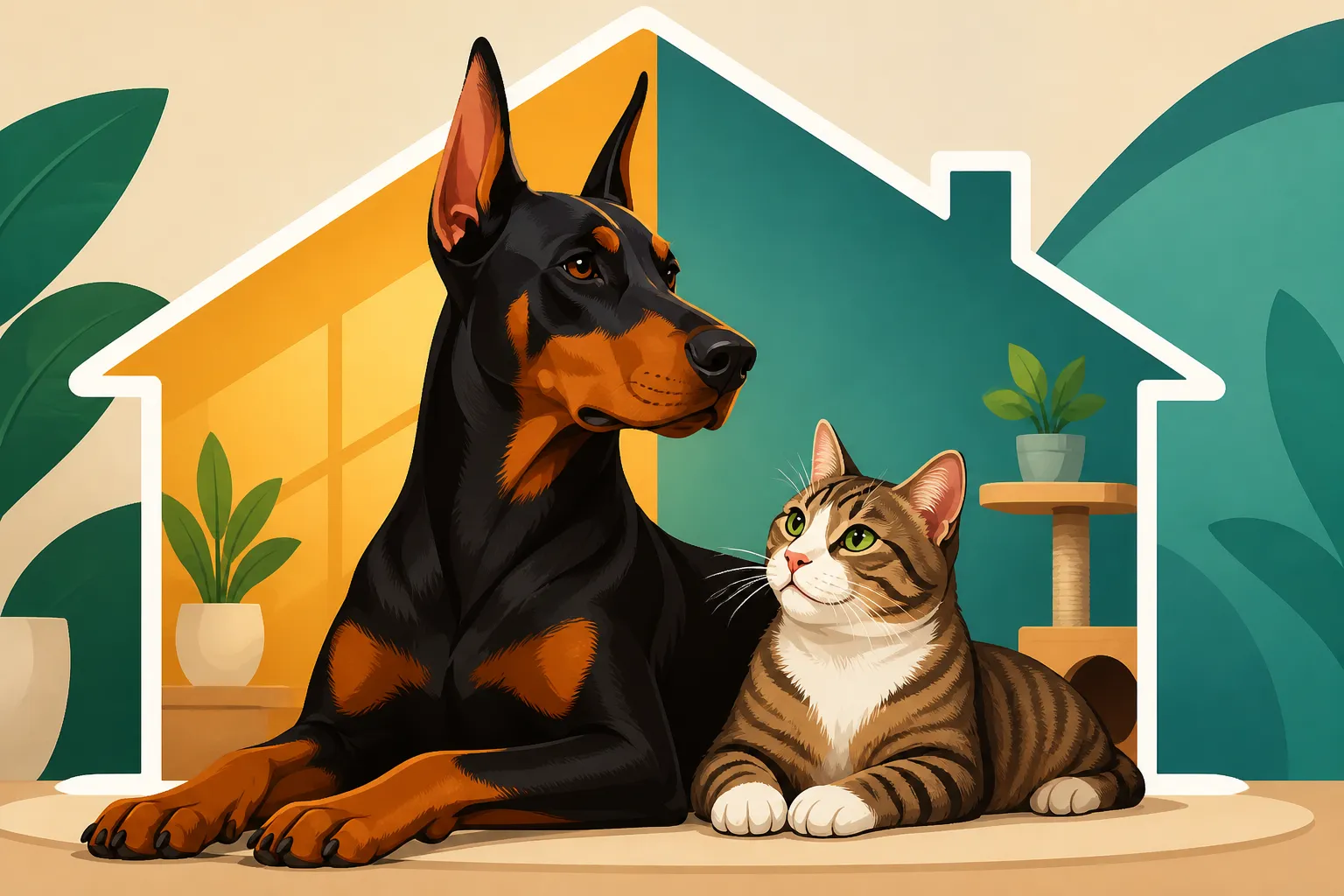
Dobermans and Cats Under One Roof
Bringing a Doberman into a home that already has a feline resident, or vice versa, can feel like setting up a delicate negotiation. Many Doberman owners worry about their dog's renowned prey drive and how it might impact a smaller, faster household member. This comprehensive guide will walk you through understanding both species, preparing your home, and implementing a careful, structured introduction process to foster harmony between your Doberman and your cat.
Understanding the Doberman's Instincts
Dobermans are powerful, intelligent dogs originally bred for protection. This heritage means they come with certain hardwired traits that need to be understood and managed, especially when introducing them to other household pets like cats. It’s not about demonizing the breed, but about appreciating their nature to work with it.
Prey Drive and Its Impact
One of the most significant concerns for Doberman owners considering a cat is the breed's inherent prey drive. This isn't aggression; it's a natural instinct to chase and capture smaller, fast-moving animals. Cats, with their darting movements, can easily trigger this drive. A Doberman puppy might see a scampering cat as a fun game, while an adult Doberman might see it as something to pursue. It’s vital to recognize that even the most well-behaved Doberman can have this instinct, and it’s something you’ll need to manage consistently. This drive can manifest as intense staring, whining, or even a sudden burst of speed. The key is to teach your Doberman appropriate responses and provide alternative outlets for this energy.
The Doberman's Loyal and Protective Nature
Despite their prey drive, Dobermans are also known for their intense loyalty and protective instincts towards their human family. Once a cat is accepted as part of the "pack," a Doberman can become quite protective of them. I've heard countless stories of Dobermans guarding their feline companions from perceived threats, whether it's an unfamiliar visitor or even another dog in the household. This loyalty means that if you successfully integrate your cat, your Doberman will likely extend that protective circle to them. This isn't a guarantee, of course, and depends heavily on a solid foundation of training and successful integration, but it's a wonderful aspect of the Doberman temperament when it happens. Think of it as a large, often clumsy, but well-meaning bodyguard.
Energy Levels and Exercise Needs
Dobermans are high-energy dogs. They require significant mental and physical exercise to be well-adjusted and calm indoors. A bored Doberman is a Doberman looking for something to do, and a fast-moving cat can become a very tempting target for that pent-up energy. Ensuring your Doberman receives ample exercise – vigorous walks, playtime, training sessions, and Puzzle Work That Actually Tires a Doberman – is crucial. A tired Doberman is far less likely to instigate a chase or bother a cat. Conversely, if your Doberman is constantly under-exercised, you're setting yourself up for challenges in a multi-species household. It's about channeling that incredible drive into appropriate activities.
Assessing Your Cat's Personality
While we often focus on the Doberman in this equation, your cat's personality is just as, if not more, critical to the success of this cohabitation. Some cats are naturally more resilient and adaptable, while others will find the presence of a large, energetic dog incredibly stressful.
The Bold vs. The Skittish Cat
Cats come in a vast spectrum of personalities. A bold, confident, or "dog-savvy" cat that has lived with dogs before or isn't easily intimidated will have a much higher chance of success. These cats are less likely to run and more likely to stand their ground, which can actually be safer. A quick run is a trigger for a Doberman's prey drive. On the other hand, a naturally skittish, fearful, or overly sensitive cat will likely find the Doberman's presence overwhelming and constantly stressful. For such a cat, living with a Doberman might not be fair, as their quality of life could significantly diminish. Honestly, knowing your cat's true nature is step one.
Age and Prior Experience with Dogs
A cat's age and past experiences play a huge role. A kitten introduced to a Doberman puppy might grow up never knowing life without a dog, potentially seeing the Doberman as a large, clumsy sibling. However, introducing an adult Doberman to a kitten still requires extreme caution due to the size difference and the Doberman's potential predatory instincts. An older cat that has never encountered a dog might be less adaptable and more set in their ways, finding a Doberman's energy intrusive. Conversely, a cat that has happily lived with dogs previously will likely adjust much faster, understanding canine body language and knowing how to navigate it. Whether a Doberman Tolerates Small Dogs in general can be a good indicator, but cats are different.
Claws and Defenses: A Cat's Tools
Never underestimate a cat's ability to defend itself. A cat's claws and teeth are formidable weapons, and a well-placed scratch to a Doberman's sensitive nose or eye can teach a valuable lesson in boundaries. While we never want our pets to get hurt, a cat's ability to protect itself can sometimes be a deterrent for an overly enthusiastic Doberman. However, this defense mechanism also means potential injury to your Doberman. Ensure your cat's claws are kept in good condition but not declawed, as declawing removes their primary defense and can lead to increased fear or biting. Remember, a cat cornered will fight, and that can lead to unpleasant (and expensive) vet visits for both animals.
Here's a quick comparison of cat personalities and their potential compatibility with a Doberman:
| Cat Personality Trait | Compatibility with Doberman | Management Strategy |
|---|---|---|
| Bold/Confident | High | Focus on Doberman training; provide vertical space. |
| Dog-Savvy | Very High | Reinforce positive interactions; minimal adjustment. |
| Curious/Playful | Moderate-High | Supervise play closely; ensure cat has escape routes. |
| Reserved/Tolerant | Moderate | Ensure safe zones; avoid forcing interaction. |
| Skittish/Fearful | Low | May require separate living spaces or significant management. |
| Aggressive/Defensive | Low | High risk of injury to Doberman; professional help crucial. |
The Initial Introduction Process
This phase is critical and should never be rushed. Patience, supervision, and a methodical approach are your best friends. A single bad experience can set you back weeks or even months.
Scent Swapping Before First Sight
Before your Doberman and cat even lay eyes on each other, start with scent swapping. This helps each animal get used to the other's presence in a non-threatening way. Take a towel or blanket that your cat has slept on and place it in your Doberman's bed or kennel. Do the same with a Doberman-scented item for your cat's area. Observe their reactions – curiosity is good; extreme fear or aggression is a red flag. This familiarization helps desensitize them to each other's scent, making the visual introduction less startling. Repeat this for several days, associating the new scent with positive things like treats or praise.
Controlled Visual Introductions
Once they're comfortable with each other's scent, it's time for controlled visual introductions. This usually involves a barrier like a baby gate, a crate, or even a glass door. Keep your Doberman on a leash (even indoors, especially if they are still learning Leash Manners for an Eighty-Pound Doberman) and introduce them calmly. Offer high-value treats to both animals when they are calm in each other's presence. Short, positive sessions are far better than long, stressful ones. Watch for signs of stress in either animal: flattened ears, stiff body language, growling, hissing, dilated pupils. If you see these, end the session calmly and try again later. Never force an interaction. Many pet parents find success by allowing the Doberman to settle into a "place" command on a mat while the cat freely explores nearby, safely out of reach.
Maintaining Safe Spaces
Every cat needs a sanctuary. This is absolutely non-negotiable. Cats are masters of vertical space, so cat trees, shelves, or even just high furniture can provide excellent escape routes where the Doberman cannot reach. Gates (like those available on Amazon that can span wide doorways) are essential for partitioning off areas where the cat can eat, use their litter box, and simply relax without canine intrusion. Ensure litter boxes are in Doberman-proof areas – you don't want your dog discovering a new "snack." Similarly, cat food should be fed in a high location or behind a closed door, as Dobermans are notoriously food-driven. Always provide multiple escape routes and perches for your cat in common areas. This gives them agency and reduces their stress, knowing they can retreat if needed.
Managing Daily Life and Living Arrangements
Once initial introductions are (somewhat) successful, the real work begins: integrating them into a smooth daily routine. This requires consistent management and thoughtful planning.
Feeding Routines and Locations
Feeding time can be a high-stress event in a multi-pet household, especially with a Doberman's guarding instincts. To prevent resource guarding or simply a Doberman gobbling up the cat's food, always feed pets separately. This means the cat's food bowls should be placed in an elevated location (like on a counter, a cat tree, or a shelf) or in a room with a cat door that the Doberman cannot access. For the Doberman, establish a strict feeding schedule and location where they can eat undisturbed. Never leave food out for either animal, as this invites trouble. Make sure both pets feel secure during meal times. Feeding an Eighty-Pound Doberman Well involves careful portion control, so you certainly don't want them getting extra calories from kitty kibble!
Supervision and Leash Management Indoors
For the initial months, and potentially for the lifetime of your pets, direct supervision is paramount when the Doberman and cat are together. Even if they seem to be coexisting peacefully, instincts can kick in unexpectedly. Keep your Doberman on a lightweight house leash indoors during supervised times. This allows you to quickly and safely intervene if the Doberman starts to show too much interest in the cat. Never leave them unsupervised until you are absolutely certain of their compatibility, and even then, long absences are best handled by separating them into different areas of the house. This might mean crating your Doberman (especially useful if you've done Getting a Doberman to Rest in a Crate training) or ensuring the cat has a secure room when you're out.
Enrichment for Both Species
A happy, fulfilled Doberman and a happy, confident cat are less likely to cause trouble for each other. Provide plenty of individual enrichment for both animals. For your Doberman, this means daily walks, training sessions, chew toys, and puzzle feeders. Keeping their mind and body engaged reduces boredom-driven behaviors. For your cat, offer climbing structures, scratching posts, interactive toys, and window perches. These outlets allow them to express their natural behaviors without bothering the Doberman. A fantastic online resource for consistent training, especially for a Doberman puppy, is BAXTER & Bella. Their comprehensive programs can help you build the foundation obedience commands necessary to manage your Doberman's interactions with a cat. Engaging your Doberman with their training can help channel their intelligence productively.
Troubleshooting Common Challenges
Even with the best planning, issues can arise. Knowing how to identify and address them is key to maintaining harmony.
When Chasing Becomes a Problem
The most common issue is the Doberman chasing the cat. If this happens, immediate intervention is necessary. Use a sharp, clear "no" or "leave it" command (which you should teach rigorously beforehand), and redirect your Doberman to an appropriate toy or a "place" command. Reward heavily for disengaging from the cat. Never allow chasing to become a game. If your Doberman struggles with this, go back to more structured, brief interactions with your Doberman on a leash, reinforcing calm behavior. Sometimes, a cat's quick movements are simply too tempting. You might need to consider Muzzle Training a Doberman Before It Is Needed as a safety measure during particularly challenging phases of integration, ensuring the cat can't be harmed even if the Doberman acts on impulse.
Resource Guarding and Food Issues
Dobermans can be prone to guarding their resources, whether it's their food bowl, a favorite toy, or even their human. If your Doberman shows any signs of guarding against the cat (e.g., stiffening, growling, lunging over a toy), you need to address this immediately. Practice trading games, ensuring your Doberman learns that giving up an item leads to something even better. Always feed separately to avoid food-related conflicts. If the Doberman guards you, ensure the cat has other avenues for attention and space. Sometimes, guarding stems from insecurity, and building confidence in your Doberman through positive training can help. See Doberman Guarding Instinct and Where It Tips Over for more on this topic.
Signs of Stress in Either Pet
It's crucial to be able to read the body language of both your Doberman and your cat to Spotting the Moment a Doberman Is Uncomfortable or a cat is distressed.
Signs of Doberman Stress:
- Yawning, lip licking, averting gaze
- Panting (when not hot or exercising)
- Stiff body, raised hackles
- Tail tucked low or held very stiffly
- Freezing or whale eye (showing the whites of their eyes)
- Excessive shedding or drooling
Signs of Cat Stress:
- Hissing, spitting, growling
- Flattened ears, dilated pupils
- Swishing tail (can indicate irritation or fear)
- Hiding excessively, reluctance to eat
- Inappropriate urination/defecation
- Over-grooming to the point of bald patches
If you notice consistent signs of stress in either animal, it's a sign that you need to re-evaluate your introduction strategy, increase separation, or seek professional help. The goal is coexistence, not constant anxiety.
Long-Term Harmony and Continued Management
Achieving harmony isn't a one-time event; it's an ongoing commitment. Consistency in training and management is key.
Reinforcing Positive Interactions
Actively encourage and reward calm, positive interactions. If your Doberman is lying quietly while your cat walks by, praise and offer a treat. If your cat ventures closer without fear, reward them. The goal is to create positive associations with each other's presence. Avoid forcing interactions or punishing natural curiosity unless it escalates into problematic behavior. Gentle coexistence is the aim, not necessarily best friends cuddling on the couch, though that can certainly happen! Celebrate the small victories, like both animals calmly sharing a room, even if they aren't interacting.
Ongoing Training and Consistency
Your Doberman's training isn't a one-and-done deal, especially in a multi-pet household. Commands like "leave it," "stay," "off," and a solid recall are invaluable. Practice these commands regularly, ensuring your Doberman is responsive even with distractions. Consistency is paramount. Every family member needs to be on the same page with rules and expectations. For example, if one person allows the Doberman to chase the cat, it undermines all the hard work everyone else is doing. Regular refresher sessions and using positive reinforcement techniques, perhaps leveraging online resources like those from BAXTER & Bella for continued learning, will keep your Doberman responsive and well-managed. A well-trained Doberman is a joy to live with, and that includes coexisting peacefully with a cat.
When Professional Help is Needed
There are times when despite all your best efforts, you might feel stuck or overwhelmed. This is not a failure on your part, but a sign that professional intervention could be beneficial. A certified professional dog trainer or a veterinary behaviorist can assess your specific situation, identify underlying issues, and provide tailored strategies. They can offer insights into body language you might be missing or help address deeper behavioral problems. Do not hesitate to seek help if you're experiencing persistent chasing, aggression, extreme fear in either pet, or if you simply feel out of your depth. Investing in professional guidance can save stress for everyone involved and ultimately create a safer, happier home for your Doberman and your cat. Getting ahead of potential problems is always better than reacting to a serious incident.
Bringing a Doberman and a cat together under one roof is a rewarding journey that demands patience, dedication, and a deep understanding of both species. By respecting their individual needs, managing their environment carefully, and consistently reinforcing positive behaviors, you can create a harmonious home where your majestic Doberman and independent feline can truly thrive side-by-side. The effort is significant, but the peace and companionship that result are absolutely worth it.
Disclaimer
This article is for general informational purposes only and does not constitute professional advice. Laws, prices and regulations vary by location and change over time. Consult a qualified professional for guidance on your specific situation.