Spotting the Moment a Doberman Is Uncomfortable
It’s a common frustration for Doberman owners: you have this magnificent, intelligent dog, but sometimes it feels like they’re a closed book. Their naturally reserved demeanor, coupled with that intense stare and often cropped ears, can make it genuinely hard to tell when they’re feeling less than comfortable. This guide is here to help you peel back those layers, recognizing the subtle cues your Doberman gives before their discomfort escalates into something more obvious, and ultimately, ensuring they feel understood and safe.
Understanding the Doberman's Stoic Nature
Dobermans, by their very nature, can be a bit stoic. They aren't always the most overtly expressive dogs, especially compared to some of the more "jolly" breeds out there. This can make deciphering their mood a real challenge, particularly for new owners or those accustomed to more demonstrative canines. It’s not that they don't feel things deeply; it’s more that their default "game face" can be hard to read.
Why Their Appearance Can Be Deceiving
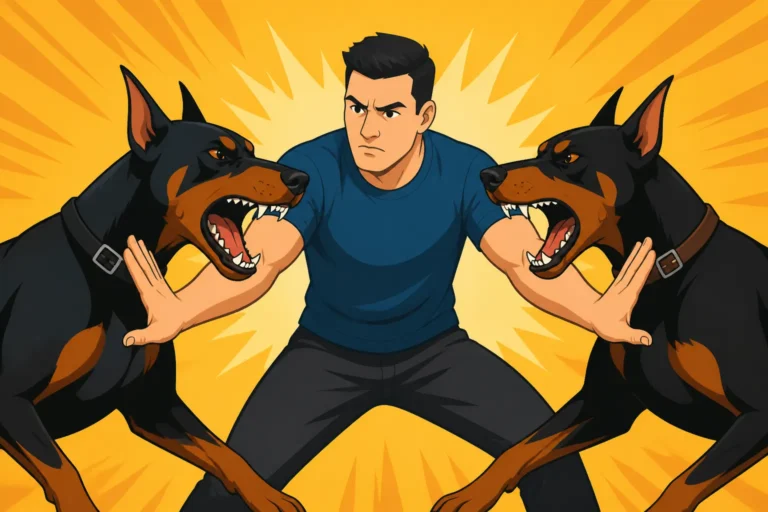
Let's be honest: a Doberman's appearance is striking, powerful, and for many, a little intimidating. Their sleek, muscular build, their alert stance, and those piercing eyes contribute to an image of unshakeable confidence and readiness. This strong visual can often lead people—even other dog owners—to misinterpret their more subtle signals. A Doberman might be feeling overwhelmed or unsure, but because they look so formidable, others might incorrectly assume they are being aggressive or defiant. This can put both you and your dog in awkward, or even dangerous, situations if their true feelings aren't recognized.
Moreover, this inherent "toughness" in their looks can sometimes prevent owners from realizing just how sensitive Dobermans actually are. They are often incredibly tuned into their people and their environment, and can pick up on small changes or perceive threats long before we do. However, if we're not looking for the right signs, we might miss their internal processing of these events, assuming their outward calm means they are perfectly fine. Understanding this disconnect is the first step in learning to truly "read" your Doberman.
The Mask of the Cropped and Docked Doberman
A significant factor contributing to the Doberman's often unreadable expression is the traditional practice of ear cropping and tail docking. While these practices are becoming less common in some regions, many Dobermans still present this way, and it undeniably impacts their ability to communicate with us and with other dogs. A dog's ears and tail are primary tools for expressing emotion, intention, and comfort levels. Think about how much information you get from a golden retriever's wildly wagging tail or a chihuahua's pinned-back ears.
When a Doberman has cropped ears that stand erect, the natural flattening or turning of the ears that signals anxiety, fear, or submission is largely lost. Similarly, a docked tail can’t give those big, sweeping arcs of happiness or the subtle tuck between the legs that indicates fear. Owners are left to rely on more nuanced body language from the rest of the dog, which takes a more discerning eye. This is why it’s so crucial for Doberman owners to learn to spot the small tremors, shifts in weight, or subtle eye movements that other breeds might broadcast more obviously with their natural appendages. It really means we have to become expert detectives of canine communication. What Cropped Ears Hide About a Doberman's Mood dives deeper into this topic.
Early Warning Signs: Body Language Cues
Learning to read your Doberman means becoming a student of their subtle shifts. It’s not about waiting for a growl or a snip; it's about noticing the tiny tells that indicate they're feeling a bit uneasy, unsure, or outright uncomfortable. These early signals are your chance to intervene, remove them from the situation, or simply offer reassurance before things escalate. It truly is a delicate dance of observation.
Subtle Facial Expressions and Eye Contact
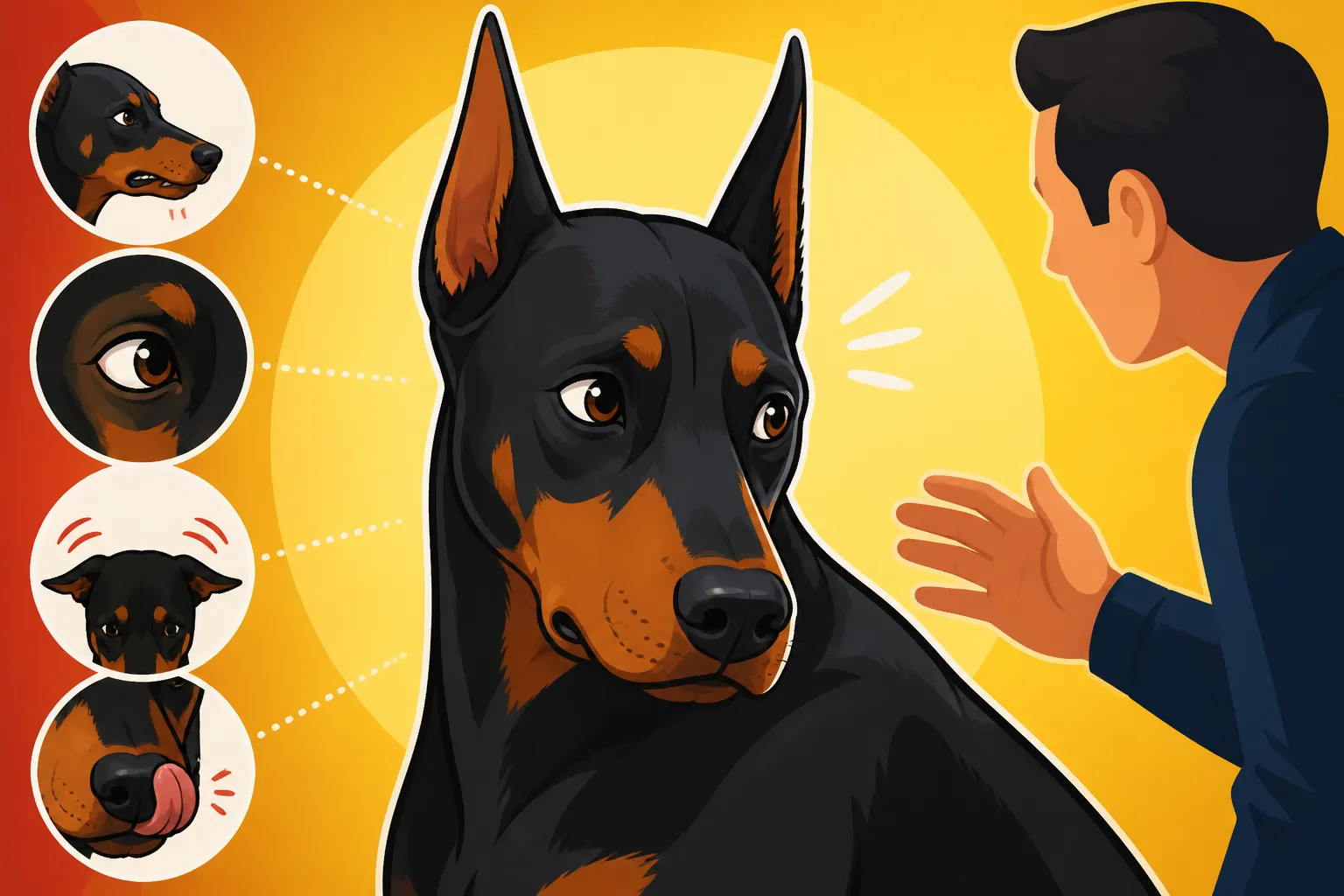
A Doberman's face, especially their eyes, can tell a fascinating story if you know how to interpret it. Direct, hard eye contact might seem like confidence, but paired with a stiff body, it can actually be a warning sign, signaling that they're feeling challenged or threatened and are holding their ground. Conversely, quickly averting their gaze, wide "whale eye" where the whites of their eyes are visible, or repeated blinking can indicate stress, fear, or submission. A Doberman that looks away sharply when approached, or squints their eyes, might be trying to signal "I don't want trouble, please give me space."
Also, pay close attention to their mouth. Is it tightly closed, perhaps with slight tension around the lips? This can be a sign of stress or discomfort. Are they repeatedly licking their lips when no food is present? This is often a displacement behavior, a way for dogs to self-soothe when they're feeling anxious. A soft, relaxed mouth, perhaps slightly open with a loose tongue, is generally a sign of a comfortable, happy Doberman. Any deviation from this relaxed state warrants your attention. What a Doberman Whale Eye Means Trouble offers more context here.
The Language of the Ears and Tail (or Lack Thereof)
Even with cropped ears and a docked tail, these areas still offer clues. While cropped ears stand erect, you can still observe subtle movements: are they slightly pulled back and flattened against the head, even minimally? This can suggest apprehension. Are they swiveling constantly, trying to pinpoint a sound, which might indicate hyper-vigilance or anxiety about their surroundings? The direction they point and how rigidly they are held can give insight into their focus and emotional state.
As for the tail, even a docked stub can betray tension. A stiff, held-high stub might indicate arousal or a challenge, while a tightly tucked, almost invisible nub can signal significant fear or submission. A low, slow, or barely perceptible wag often means something very different from a relaxed, medium-height wag that involves the whole hindquarters. Essentially, any stiffness or unnatural holding of either the ears or the tail, even if minimal due to cropping and docking, should prompt you to investigate further.
Posture, Movement, and Tension
Your Doberman's overall posture and how they move (or don't move) is perhaps one of the most reliable indicators of their comfort level. A truly relaxed Doberman will have a fluid gait, their weight evenly distributed, and their muscles will appear soft. They might offer a playful bow, stretch languidly, or roll onto their back for a belly rub. This is the picture of canine contentment.
On the flip side, watch for stiffness throughout their body. A Doberman holding their breath, freezing in place with wide eyes, or walking with a low, slinking posture is clearly uncomfortable. Piloerection (the raising of hackles along their spine) is a huge red flag that they are highly aroused, fearful, or feeling threatened, even if they aren't outwardly aggressive. A Doberman that repeatedly shakes off, yawns, or scratches excessively when not actually itchy might be trying to release tension or calm themselves. If they suddenly become rigid and stare, possibly even A Doberman That Stiffens Before It Growls, it’s a strong signal that they feel cornered or are about to react. Remember, these subtle cues often appear long before any overt growling or snapping, giving you valuable time to intervene.
Vocalizations and Other Auditory Signals
When we think of a dog communicating discomfort, a growl or a bark often comes to mind first. And while those are certainly important signals, Dobermans, like many dogs, also employ a range of more subtle vocalizations and even the absence of sound to convey their feelings. Learning to interpret these can be just as crucial as understanding their body language.
Beyond the Growl: Whines, Yawns, and Lip Licks
It's easy to dismiss a whine as just "being needy" or a yawn as "being sleepy," but in context, these can be powerful indicators of discomfort. A soft, continuous whine, especially when paired with restless movement or trying to hide, often means your Doberman is anxious, stressed, or even in pain. It's a plea for help or comfort. Furthermore, a yawn when your dog hasn't just woken up, or when they're in a moderately stimulating situation, is frequently a displacement behavior – a sign they're feeling uneasy or conflicted. It's their way of trying to de-stress or signal to others that they're not a threat. What a Doberman Yawn Actually Means goes into more detail on this.
Similarly, repetitive lip licking, especially without any food around, is a classic sign of anxiety or appeasement. It’s almost like they’re saying, "I'm a little stressed, please don't hurt me." Pay attention to the frequency and context. If your Doberman licks their lips every time a certain person approaches, or before you do something they dislike (like nail trims), you’ve got a clear signal of their internal state. Recognizing these less obvious signals means you can address their discomfort proactively, rather than waiting for a more urgent display.
Sudden Silence or "Freezing"
While vocalizations are important, sometimes the most telling sign of a Doberman's discomfort is a complete lack of sound or movement. We call this "freezing," and it's a very serious warning signal that often precedes a bite or flight response if the dog feels further pressured. A Doberman that suddenly stops moving, becomes very still, perhaps holding its breath, and stares intently at the source of its discomfort, is a dog that feels trapped and is preparing for a potential confrontation. This isn't a dog being well-behaved; it's a dog operating on instinct, trying to appear as non-threatening as possible in the hopes that the threat will pass.
This "freeze" can be incredibly subtle. They might not even look stiff to the casual observer, but if you know your dog, you'll see a lack of fluidity, a tension that wasn't there moments before. It's their internal alarm bell ringing loud and clear. If you see your Doberman go still and silent in a stressful situation, immediately create distance and assess what's causing their distress. This is not the time to push them further or attempt to "make" them comfortable. Removing them from the situation is paramount.
Common Triggers for Doberman Discomfort
Dobermans, despite their tough exterior, are incredibly sensitive and intelligent creatures. They're often highly attuned to their environment and the people within it, which means certain situations can easily become sources of stress or discomfort. Understanding these common triggers can help you anticipate and manage them, making life much more pleasant for your Doberman and everyone around them.
Approaching Strangers and Unfamiliar Dogs
One of the most frequent sources of discomfort for many Dobermans is the approach of unfamiliar people or dogs. While some Dobermans are social butterflies, many possess a natural reserve and a strong guarding instinct. They may not appreciate being rushed by a stranger who wants to pet them, or having an unknown dog bound up to them without proper introduction. This isn't aggression; it's often a manifestation of their protective nature combined with a need for personal space and a cautious temperament. Exposing a Doberman Puppy to Strangers is vital for this reason.
You might notice your Doberman tensing, slightly leaning away, or giving those subtle lip licks when a stranger approaches too quickly. With other dogs, they might stiffen, lower their head, or exhibit "hard" stares rather than engaging in loose, playful body language. It's crucial for owners to advocate for their dogs in these situations, politely asking people to give space, and managing introductions to other dogs carefully. Using a well-fitting harness and leash, perhaps even from a brand like Ruffwear (available on Amazon), can give you better control and prevent unwanted encounters. Remember, your Doberman looks out for you; you need to look out for them. A Doberman That Reacts to Every Dog It Sees is a common scenario for many owners.
Resource Guarding and Personal Space
Dobermans can develop strong attachments to their possessions, their food, their resting spots, and even their people. This can sometimes manifest as resource guarding, where they become uncomfortable if someone (human or canine) approaches their valued item or personal space. While it's a natural canine behavior, if left unmanaged, it can lead to serious issues. A Doberman might subtly shift their body over a toy, give a low growl when approached while eating, or even block you from moving away from them if they are guarding your attention.
It's not about being "mean"; it's about feeling vulnerable and possessive. Training, such as the comprehensive online programs offered by BAXTER & Bella, can be invaluable here. They teach you how to set boundaries and work on "trade" exercises, helping your Doberman feel secure that their resources won't be taken away, thus reducing their need to guard. Respecting their space, especially when they are eating or resting, is also paramount. Never try to snatch something away from a Doberman who is showing signs of guarding; instead, offer an even higher value trade or simply back away.
Environmental Stressors and Novelty
Dobermans are intelligent and can be highly sensitive to their environment. Loud noises, busy crowds, unfamiliar places, or even new objects in their home can be significant stressors. A sudden loud bang, like fireworks or a car backfiring, can cause them to jump, pant excessively, or try to hide. A visit to a bustling veterinarian's office or a crowded park can be overwhelming for a Doberman who prefers quieter, more predictable environments.
Novelty itself can be a trigger. A new piece of furniture, a changed routine, or even just walking a new route can cause an otherwise confident Doberman to become cautious and uncomfortable. Look for subtle signs like hesitation, sniffing the air excessively, or looking to you for reassurance. Gradual, positive exposure to new experiences during puppyhood is critical, as detailed in Why a Doberman Puppy Must Meet the World Early. If your Doberman is already an adult and struggles with novelty, take things slowly, using positive reinforcement to build their confidence, and always be prepared to remove them from a situation that's proving too much.
Building a Foundation of Trust and Observation
Ultimately, being able to spot your Doberman's discomfort boils down to the relationship you build with them and your commitment to truly understanding their unique communication style. It's an ongoing process of learning, adjusting, and being present.
The Importance of Early Socialization and Training
One of the greatest gifts you can give your Doberman puppy is thorough, positive socialization. This isn't just about exposing them to many different things; it's about ensuring those exposures are positive and confidence-building. A well-socialized Doberman puppy, who has met a wide variety of people, sounds, environments, and other friendly, stable dogs, will be much better equipped to handle novel situations as an adult. They learn that the world isn't a scary place and that new things can be exciting, not threatening.
Coupled with socialization, consistent, reward-based training is absolutely essential. Dobermans are incredibly smart dogs, and they thrive on having a job and understanding expectations. Training builds a common language between you and your dog, strengthening your bond and making them feel secure in your leadership. Programs like those offered by BAXTER & Bella provide structured guidance from puppyhood through adolescence, helping you shape a confident, well-adjusted Doberman. A dog that understands cues like "watch me," "leave it," or "come" is a dog you can better manage and reassure when they start to feel uncomfortable. Training a Doberman That Is Smarter Than You Expect is a challenge that pays off.
Becoming Your Doberman's Advocate
Your Doberman relies on you to be their voice, their protector, and their guide in the human world. This means being an active advocate for their comfort. If you notice your Doberman tensing up when a child runs towards them, step in and politely ask the child's guardian to call them back. If another dog is relentlessly sniffing your Doberman, who is clearly uncomfortable, be prepared to physically block the other dog or move your own dog away. Don't be afraid to say "no" or "please give us space."
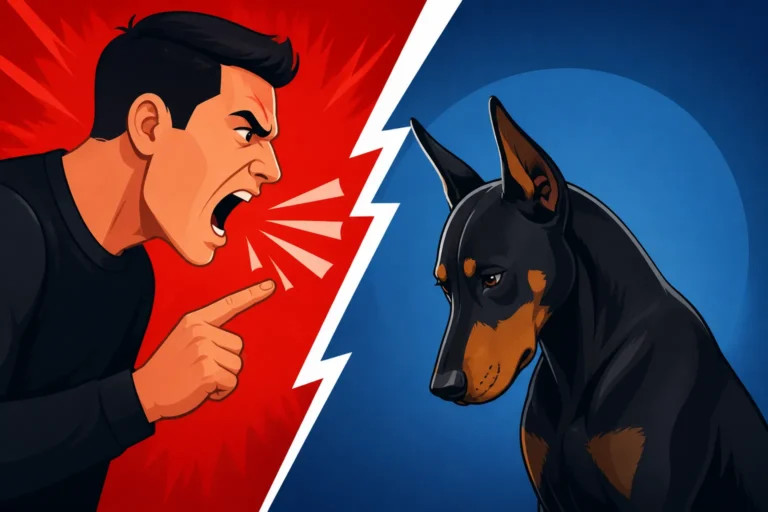
Being an advocate also means respecting their "no." If your Doberman signals discomfort with a certain interaction, don't force it. Pushing a dog past their comfort threshold rarely ends well and can erode trust. Instead, acknowledge their signal, create distance, and re-evaluate. Remember, your Doberman looks intimidating to many, so people might not realize when they are the ones making your dog uncomfortable. It’s up to you to manage these interactions proactively.
Professional Guidance and Continued Learning
Even the most experienced Doberman owners benefit from ongoing education and, at times, professional help. If you're consistently struggling to read your Doberman, or if their discomfort is escalating into concerning behaviors, don't hesitate to seek guidance from a certified professional dog trainer or a veterinary behaviorist. They can offer invaluable insights into canine body language, help you identify specific triggers, and develop a management and training plan tailored to your dog's needs. Resources like books on dog behavior available on Amazon can also deepen your understanding.
Continuously observing your Doberman in different environments, noting their reactions, and reflecting on how you managed the situation is a powerful learning tool. Every interaction is an opportunity to refine your understanding of their unique personality and communication style. The more you learn, the stronger your bond will become, and the more confidently you and your Doberman can navigate the world together.
Disclaimer
This article is for general informational purposes only and does not constitute professional advice. Laws, prices and regulations vary by location and change over time. Consult a qualified professional for guidance on your specific situation.