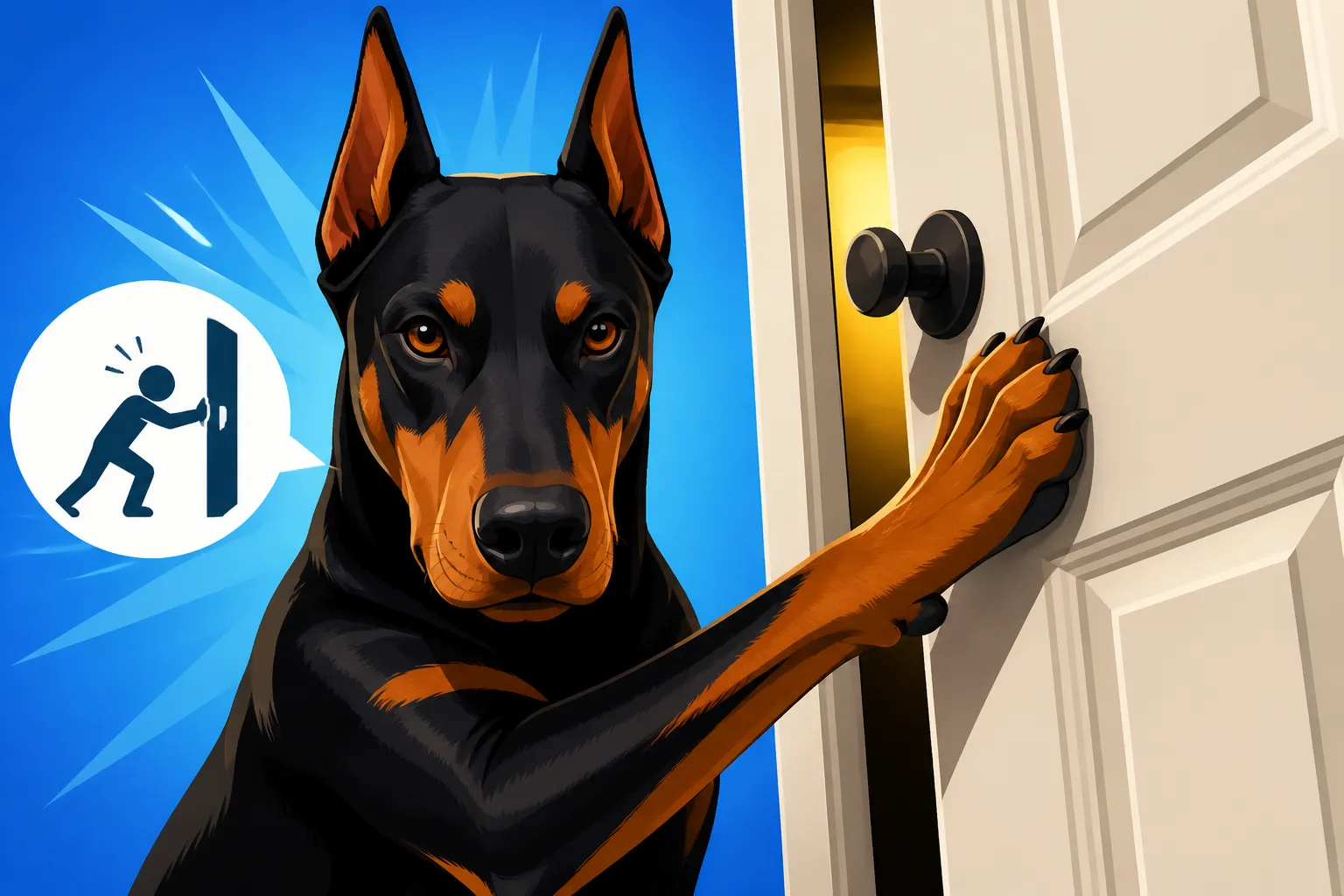
Why a Doberman Will Not Let You Shut a Door
It's a familiar scene for many Doberman owners: you're just trying to slip into the bathroom for a moment of peace, or maybe grab something from the pantry, and suddenly, there's an eighty-pound shadow planted firmly in the doorway, blocking your path. This isn't just an annoying quirk; it can be a genuine frustration, hindering your ability to move freely in your own home or creating a tripping hazard. This guide will delve into the various reasons why your Doberman might be insisting on being your personal doorstop and offer practical strategies to help you reclaim your doorways.
Understanding the "Velcro" Instinct in Dobermans
Dobermans are famously known as "Velcro dogs," a nickname that perfectly describes their tendency to stick close to their human companions. This isn't just a cute trait; it's deeply ingrained in their breed history and temperament. They were originally bred as personal guardians, always alert and ready to protect their owners. This inherent desire to be near you, to monitor your movements, and to be involved in whatever you're doing often manifests as them being right underfoot, including in doorways.
The Doberman's Need for Proximity
From the moment they're puppies, Dobermans often seek physical closeness. They thrive on being part of the family unit, and for many, that means literally being in the same room, if not touching you. When you move to another room, their instinct kicks in – they want to follow, to know what you're up to, and to continue their "guarding" duties. A closed door represents a barrier, a separation from their human, and that can feel profoundly unsettling to a dog wired for companionship and protection.
Imagine a scenario where you're just trying to do laundry in the basement. Your Doberman, let's call him Rex, follows you down the stairs. As you reach for the doorknob, he sits directly in front of it, gazing up at you with those deep, intelligent eyes. He's not being defiant; he's simply communicating, "Hey, where are you going? Can I come? If not, I'm staying right here to make sure you're safe." This isn't necessarily a sign of a problem, but rather a strong bond and a manifestation of their natural inclination. It's often where the saying Where the Velcro Doberman Nickname Comes From truly hits home for owners.
Guarding or Just Curious?
Sometimes, the door-blocking behavior isn't just about wanting to be near you; it can have a subtle element of guarding. Dobermans were bred to be vigilant, and they can perceive doorways as strategic choke points in their "territory." If you're trying to leave a room, they might be positioning themselves to observe who else might be entering or simply to assert their presence at a perceived entry point. This is usually not aggressive, but rather a more nuanced expression of their protective instincts.
Consider your Doberman, Bella, sitting squarely in the kitchen doorway while you're cooking. She's not blocking you from the kitchen, but rather blocking access to the kitchen from the rest of the house. She's effectively "on guard," watching the main thoroughfare. This behavior can be particularly prevalent in breeds like Dobermans that are keenly aware of their surroundings and have a strong sense of personal space and territory. It’s a natural extension of their drive.
Addressing Over-Reliance and Boundary Issues
While the Doberman's clinginess is endearing, it can become problematic when it infringes on your ability to have personal space or create safety hazards. When a Doberman consistently prevents a door from closing, it often signals an over-reliance on your presence or a lack of understanding about boundaries within the home. This isn't about dominance, but usually about insecurity or an untrained expectation that they have unlimited access to you.
Establishing Crate or Mat Training for Alone Time
One of the most effective ways to teach a Doberman that they don't need to be in your lap or underfoot every second is through dedicated "place" or "mat" training, or by making their crate a comfortable, safe haven. The goal is to teach them that they can relax and be content in a designated spot, even when you're not right there. This gives them a job and a clear expectation.
Start with short durations. Ask your Doberman to go to their mat or crate, reward them heavily, and then briefly step away. Close the door to the room you're leaving for just a few seconds, then return and reward them again. Gradually increase the time the door is closed. This helps them build confidence that you will always return. Tools like a comfortable, durable dog bed (Dobermans appreciate good cushioning, as they don't have a lot of body fat) or a sturdy crate can be helpful here. You can find excellent options for these on sites like Amazon. For more detailed guidance, resources such as Teaching a Doberman to Settle in Another Room can provide invaluable step-by-step instructions.
Managing Separation Anxiety Tendencies
For some Dobermans, the inability to let you close a door can stem from mild to moderate separation anxiety. They aren't just being clingy; they're genuinely distressed by the idea of being cut off from you. This can manifest as whining, pawing at the door, or even destructive behavior if left alone for longer periods. It's crucial to distinguish between a strong bond and genuine anxiety.
If your Doberman shows signs of distress (pacing, whining, barking, destructive chewing on the door frame) when you attempt to close a door and leave them even for a short time, it's worth considering if they're struggling with separation-related behaviors. This often ties into a broader difficulty with being left alone. For dogs with more pronounced anxiety, simply closing the door can trigger a full-blown panic response. Articles like A Doberman That Cannot Cope When You Go Out offer further insights into this complex issue.
Training Strategies for Door Manners
Tackling the door-blocking habit requires consistent training and clear communication. Your Doberman is smart, and they can learn what's expected of them, but it's up to you to teach them kindly and consistently.
"Stay" and "Wait" Commands at Thresholds
The "stay" and "wait" commands are your best friends when it comes to managing doorways. "Wait" is particularly useful as it implies a temporary pause, often at a threshold, before being released. Teach your Doberman to "wait" at an open door, then you can step through, close the door, and then open it again and release them. This teaches them to respect the boundary of the doorway and to wait for your permission to pass.
Practice this in various doorways around your home. Start with a door you use frequently, like the entrance to the kitchen or office. Have your Doberman sit, then ask them to "wait." Take one step through the doorway, pause, and if they hold their position, step back and reward them. Slowly increase the number of steps you take through, the duration you're on the other side, and eventually, the act of closing the door. Remember, consistency is key. A valuable resource for general obedience, including structured exercises like this, can be found through platforms like BAXTER & Bella, which offer comprehensive online training programs.
Using Physical Barriers and Management Tools
Sometimes, immediate solutions are needed while you're working on training. Baby gates are fantastic for Dobermans. They allow you to create temporary barriers, especially in rooms where you need privacy (like a bathroom) or where you want to keep your dog out for a short period without completely closing them off in another room. This gives them a visual boundary without feeling fully isolated.
Imagine you're trying to work in your home office, but your Doberman constantly nudges the door open or sits against it, preventing it from latching. Installing a pressure-mounted baby gate at the office doorway can be a game-changer. It allows your Doberman to see you, hear you, and feel connected, but it prevents them from physically impeding the door. This can reduce their stress while giving you the space you need. You can find robust, tall baby gates suitable for a Doberman's size on Amazon, ensuring they can’t easily jump over or push them down.
Here's a quick comparison of approaches:
| Approach | Description | Best For | Considerations |
|---|---|---|---|
| "Place" / "Mat" | Teaching the Doberman to relax on a designated spot away from the door. | Building independence, general calmness. | Requires consistent training and a comfortable "place." |
| "Wait" Command | Instructing the Doberman to pause at a threshold until released. | Doorway etiquette, preventing darting, temporary separation. | Must be practiced consistently; Dobermans are smart and will test boundaries. |
| Baby Gates | Physical barriers to temporarily restrict access to a room while maintaining visual contact. | Immediate management, mild clinginess, fostering independence. | Must be sturdy and tall enough for a Doberman; not a substitute for training. |
| Crate Training | Providing a safe, comfortable den where the Doberman can be alone and relax. | Separation anxiety, safe confinement, long-term independence. | Requires positive association; some Dobermans may resist initially if not introduced properly. |
| Enrichment Toys | Providing mentally stimulating toys (e.g., puzzle feeders) to distract during alone time. | Reducing boredom, mild separation distress. | Doesn't directly address door blocking but can help manage underlying anxiety. |
When to Seek Professional Guidance
While most Doberman door-blocking can be managed with consistent training and household adjustments, there are times when it's beneficial to bring in a professional. If the behavior is accompanied by intense anxiety or aggression, it's always best to consult an expert.
Recognizing Signs of Deeper Anxiety
If your Doberman reacts to a closed door with frantic barking, destructive chewing on the door frame, urinating or defecating indoors, or self-harm (like chewing paws), these are clear indicators of more serious separation anxiety. In these cases, simply using baby gates or "wait" commands might not be enough. The distress is too profound, and punishment will only exacerbate the fear.
It's important to understand that separation anxiety isn't about disobedience; it's a panic attack for your dog. A Doberman that screams the moment the door shuts needs more than just training. They need a comprehensive behavior modification plan, potentially involving medication prescribed by a vet, and guidance from a certified professional dog trainer or veterinary behaviorist. These experts can help you implement a desensitization and counter-conditioning protocol to gradually help your Doberman cope with your absence. Learning how to build Building a Doberman's Alone Time From Minutes is crucial here.
Consulting a Certified Professional Dog Trainer or Veterinary Behaviorist
For persistent or escalating issues, especially if you suspect underlying anxiety or if the behavior feels overwhelming to manage on your own, don't hesitate to reach out for professional help. A good trainer experienced with Dobermans can assess the specific triggers for your dog's behavior and develop a tailored plan. They can observe your interactions and offer insights you might miss.
A certified professional dog trainer (CPDT-KA) can guide you through positive reinforcement techniques to teach appropriate door manners and build your Doberman's confidence. If the anxiety is severe, a veterinary behaviorist (DACVB) can offer a more holistic approach, including behavioral modification, environmental management, and pharmacological interventions if necessary. They can help you discern whether your Doberman simply has whether a Doberman learns your routine too well or if it’s a more complex issue requiring specialized attention. Remember, getting help isn't a sign of failure; it's a sign of a responsible owner committed to their Doberman's well-being.
Disclaimer
This article is for general informational purposes only and does not constitute professional advice. Laws, prices and regulations vary by location and change over time. Consult a qualified professional for guidance on your specific situation.