Teaching a Doberman to Settle in Another Room
Many Doberman owners experience the unique challenge of a devoted companion who absolutely insists on being by their side, following them from room to room, even to the bathroom. While this "Velcro Doberman" trait is endearing, it can quickly become overwhelming when you need a moment of privacy or want your dog to comfortably settle somewhere while you handle tasks in another part of the house. This guide will offer realistic, step-by-step strategies to gently teach your Doberman to relax and be content in a different room, building their independence without breaking that special bond.
Understanding the "Velcro" Nature of Dobermans
The Doberman Pinscher is renowned for its loyalty and intense attachment to its family. This isn't just a cute quirk; it's deeply rooted in their history and temperament. Understanding why they struggle with separation, even short ones, is the first step toward helping them.
The Deep-Seated Bond and Instinct
Dobermans were originally bred to be close personal guardians. Their instinct is to protect and be vigilant over their human companions. This means they are often wired to be highly aware of your presence and movements. When you move to another room, in their mind, you might be moving away from the "pack" or entering an unsecured area. This can trigger a primal urge to accompany you, ensuring your safety and maintaining their vigilant role. It's not defiance; it's a deep-seated desire to fulfill their perceived duty. They thrive on connection, often making them feel most secure when physically near their chosen human. This strong bond is one of the most cherished aspects of owning a Doberman, but it also means we need to proactively teach them how to handle periods of non-contact. You might find yourself thinking, Living With a Doberman That Follows You Everywhere, and it’s true—they are often right there, every step of the way.
Intelligence and Owner Anticipation
Dobermans are incredibly intelligent dogs, consistently ranking high in canine intelligence studies. This sharp mind means they are excellent at learning routines, predicting your next move, and understanding subtle cues. If your Doberman has learned that every time you stand up, it means they get to follow you, they will preemptively move. They can anticipate the sound of a doorknob, the shift in your weight, or even the direction of your gaze. This predictive behavior, while a testament to their smarts, can make it challenging to establish new patterns of behavior where they don't follow. They are constantly observing and learning, which means we need to be very consistent and intentional in our training to gently override these ingrained habits. Their intelligence is a double-edged sword: it makes them highly trainable, but also means they can quickly learn behaviors that aren't always convenient.
The Slippery Slope to Separation Distress
For some Dobermans, the inability to settle in another room can escalate beyond simple clinginess into genuine anxiety. If a Doberman never learns to cope with even mild separation, the underlying stress can manifest as whining, barking, destructive chewing, or even accidents in the house when left alone. This isn't necessarily full-blown A Doberman That Cannot Cope When You Go Out immediately, but rather a spectrum of discomfort that starts small. Imagine your Doberman pacing by the door, whining softly, or scratching at the wood whenever you step out of sight. These are early warning signs that their emotional resilience to being alone, even just briefly, needs some careful building. Ignoring these signals can inadvertently reinforce the idea that your absence is a negative, stressful event, making it harder to teach them independence later on.
Laying the Groundwork for Independence
Before you can ask your Doberman to stay in a different room for extended periods, you need to establish a solid foundation of positive associations with staying put and being comfortable on their own terms.
The Power of a Designated "Place" or "Mat"
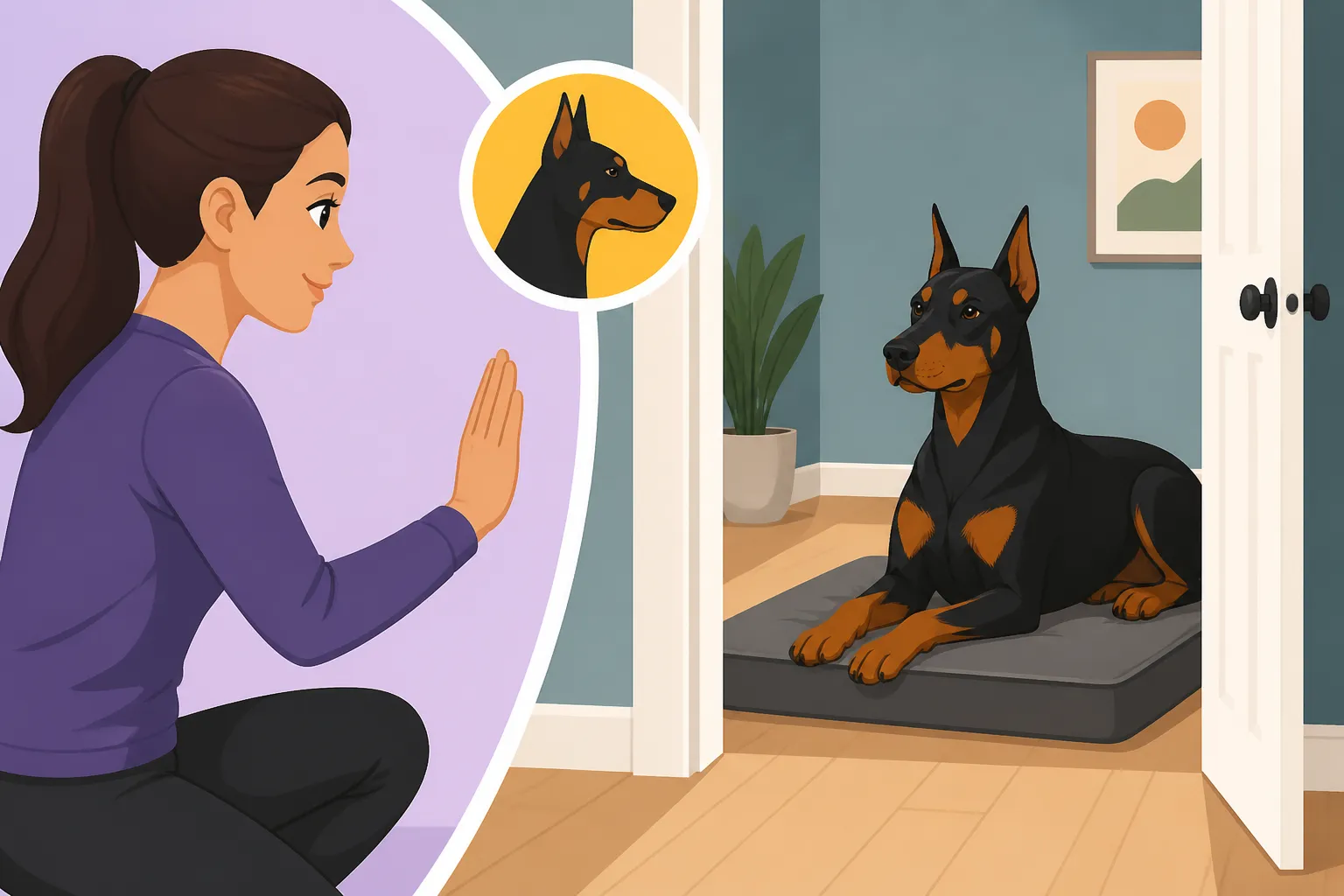
One of the most effective tools for teaching a Doberman independence is the "place" command. This involves teaching your dog to go to a specific spot—a dog bed, mat, or raised cot—and remain there until released. This isn't just about obedience; it's about giving them a safe, predictable zone of their own. Start with short durations, rewarding heavily for staying on the mat. Use high-value treats and praise. Gradually increase the time they spend on their place, moving a few steps away, then coming back and releasing them. The goal is for them to see their "place" as a cozy, calm sanctuary, not a punishment. This command becomes invaluable when you want them to settle in the living room while you cook in the kitchen. Many online training programs, like those offered by BAXTER & Bella, have excellent modules on teaching a solid "place" command, breaking it down into manageable steps for intelligent breeds like Dobermans. Teaching a Doberman to Settle in Another Room will depend heavily on this initial investment.
Crate Training as a Safe Haven
A well-introduced crate isn't a jail cell; it's a personal den, a secure space where your Doberman can feel safe and relaxed. For Dobermans, whose deep chests can be prone to bloat, a crate can also offer a safe space for quiet digestion after meals. If your Doberman isn't already crate trained, this is an excellent opportunity to introduce it positively. Start with short periods, feeding meals inside, offering special toys (like a KONG filled with peanut butter), and never using it for punishment. Once your Doberman views their crate as a comfortable retreat, you can begin to close the door for brief moments while you're still in the room, slowly building up to leaving the room for a few seconds. This helps them learn that being separated doesn't mean abandonment and can be a peaceful experience. For tips on sizing and selection, you might find Choosing a Crate for a Doberman helpful, ensuring your dog has ample space to stretch out comfortably. You can find a wide variety of durable crates and comfortable crate pads on Amazon to get started.
Building Short, Positive Absences
The key to independence is to start small and make every step a success. Begin by simply stepping out of sight for a second or two, then immediately returning and rewarding your Doberman for staying calm. This might mean stepping behind a corner in the living room, or ducking into a pantry. Don't make a big fuss when you leave or return; keep it casual. The goal is to make your brief absences a non-event. If they show signs of distress (whining, pacing), you've gone too far, too fast. Shorten the duration or distance. Practice this multiple times a day. Over time, those seconds will naturally extend to minutes. Think of it like a game: you disappear, they stay calm, you reappear, and they get a reward. This positive reinforcement gradually builds their confidence that you will return.
Gradually Increasing Distance and Duration
Once your Doberman is comfortable with short, unseen absences, you can begin to systematically increase both the distance and the length of time they spend settled in one room while you are in another.
Mastering the Door Threshold
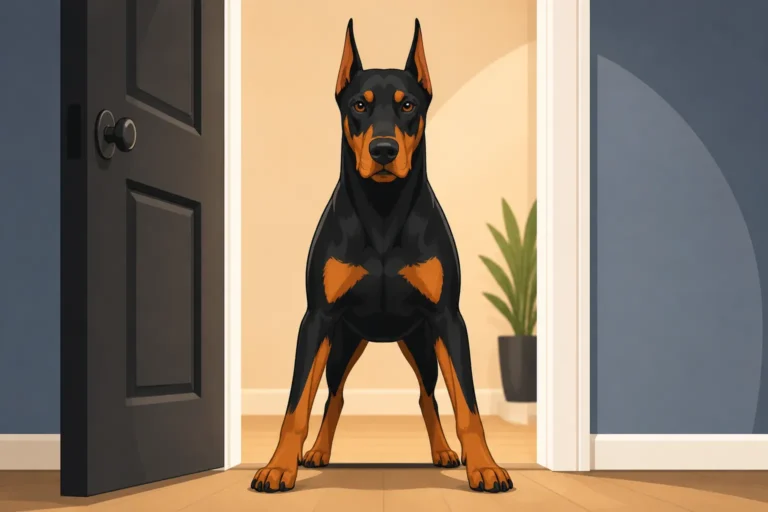
The door threshold is often the biggest hurdle for Dobermans who want to follow you everywhere. Start by standing at the doorway of the room you want them to stay in (e.g., the living room) while you step into an adjacent room (e.g., the kitchen). Give your "stay" or "place" command. If they attempt to follow, gently guide them back without scolding, and ask them to stay again. The moment they pause, even for a split second, reward them. Slowly increase the time you stand on the other side of the threshold. You can keep the door open initially. The goal is for them to understand that the boundary is the doorway, and your absence behind it is temporary and doesn't warrant panic. This gradual exposure helps them internalize the boundary and build trust that you haven't vanished. This process is crucial for helping them understand A Doberman That Learns Your Routine Too Well and needs new expectations set.
Utilizing Physical Barriers and Gates
Sometimes, a visual and physical barrier can be immensely helpful, especially in the early stages. Baby gates or exercise pens can be used to block off doorways, creating a clear boundary without fully closing a door and making your Doberman feel isolated. For example, if you're in the kitchen, place a baby gate in the doorway, allowing your Doberman to see and hear you from the living room. This creates a sense of proximity while reinforcing the idea that they need to stay on their side of the barrier. It's a stepping stone before asking them to stay in a room with a closed door. Ensure the gate is tall and sturdy enough for a Doberman – a determined Doberman can clear or push through flimsy barriers! Many reliable and tall pet gates are available on Amazon that can withstand the enthusiasm of a strong Doberman. This technique helps your Doberman practice remaining calm even when you're visible but inaccessible.
Here's a simple comparison of barrier types:
| Barrier Type | Pros | Cons | Best Use Case |
|---|---|---|---|
| Baby Gate | Visual connection, clear boundary | Can be jumped by determined Dobermans | Transitional steps, keeping dog in sight |
| Exercise Pen | Larger contained area, portable | Less sturdy for strong pushers | Creating a larger "place" area, temporary containment |
| Closed Door | Full separation, mimics true alone time | Can cause distress if not introduced gradually | Advanced stage, once dog is comfortable with gates |
Extending Alone Time in Increments
Once your Doberman is comfortable behind a gate or staying on their "place" with you just out of sight, it's time to extend the duration. Start with very short periods, perhaps just 30 seconds, then a minute, then two. Use a timer if it helps you stay consistent. Crucially, return before your Doberman gets distressed. The goal is for them to realize you always come back, reinforcing a calm expectation rather than anxious anticipation.
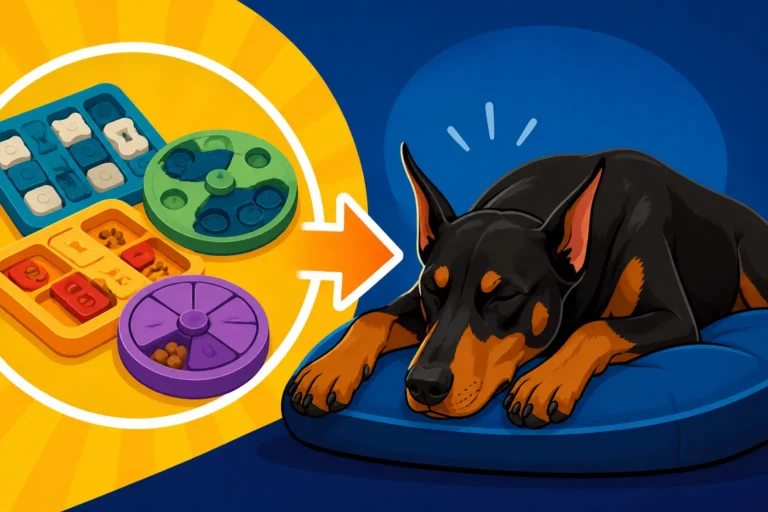
Scatter some long-lasting, safe chew toys, like a KONG stuffed with frozen wet food or a puzzle toy, before you leave the room. This gives them something positive to focus on while you're gone. These quiet activities can be a game-changer for independent settling. Puzzle Work That Actually Tires a Doberman can be very effective here. Remember to keep your departures and arrivals low-key. No big goodbyes or excited greetings. Just a calm "I'll be back" and a quiet return. This helps prevent their excitement levels from spiking, which can lead to anxiety. This entire process of Building a Doberman's Alone Time From Minutes is about gradual exposure and positive association.
Troubleshooting Common Hurdles and Setbacks
Even with the best intentions, training a Doberman for independent settling can present challenges. It's important to recognize common issues and address them effectively.
Addressing Vocalizations and Attention-Seeking
Whining, barking, or scratching at the door when you leave the room are common attention-seeking behaviors. The absolute hardest part for us humans is to ignore them. If you return or respond when your Doberman is vocalizing, you've just taught them that whining works. It's tough, I know. My Doberman, Diesel, once went through a phase where he'd let out the most mournful single whine the second I closed the bedroom door. But consistency is key. Wait for a brief moment of silence, even if it's just a second, before you re-enter the room. As soon as you step back in, calmly reward them if they are quiet. If the vocalizations are intense and persistent, you may be asking too much too soon, and need to go back to shorter durations and smaller distances. Sometimes, a white noise machine or calming music can help muffle household sounds that might trigger their alert response.
Redirecting Destructive Chewing
If your Doberman starts chewing on doorframes, furniture, or other inappropriate items when left alone, it's a clear sign of anxiety or boredom. First, ensure they have appropriate, durable chew toys available. Providing high-value, long-lasting chews that are only given during alone time can create a positive association. Think sturdy rubber toys you can stuff with treats. Secondly, this behavior signals that your Doberman is likely struggling emotionally with the separation. You need to re-evaluate your training progression and likely go back to shorter, more successful periods of alone time. Supervise closely and prevent access to tempting, destructive items. For a Doberman, a bored mouth is often a destructive mouth. Make sure their mental and physical exercise needs are met before you ask them to settle. A well-exercised Doberman is a much calmer Doberman.
Recognizing and Managing True Separation Anxiety
There's a significant difference between a Doberman who struggles with being alone and one who suffers from true separation anxiety. A dog with separation anxiety will often exhibit a cluster of severe symptoms: frantic escape attempts resulting in self-injury, relentless destructive behavior, continuous vocalizations (howling, barking), inappropriate urination or defecation, and even excessive drooling. If your Doberman displays these intense behaviors, it's more than just a training issue; it's a panic disorder.
In such cases, simply continuing training steps might not be enough. You should consult with a professional veterinary behaviorist or a certified professional dog trainer specializing in separation anxiety. They can help create a tailored desensitization and counter-conditioning plan, and in some severe cases, medication might be considered to help your Doberman cope while training is underway. Do not hesitate to seek expert help; it's not a sign of failure, but rather a commitment to your dog's well-being. This is where topics like Medication for a Doberman With Separation Distress become relevant, as it's a serious condition that often requires a multi-faceted approach. Monitoring your Doberman with an inexpensive home camera from Amazon can provide invaluable insights into their behavior when you're truly out of sight, helping you and your chosen professional diagnose the severity of the issue.
Disclaimer
This article is for general informational purposes only and does not constitute professional advice. Laws, prices and regulations vary by location and change over time. Consult a qualified professional for guidance on your specific situation.