A Doberman That Chews Through the Door
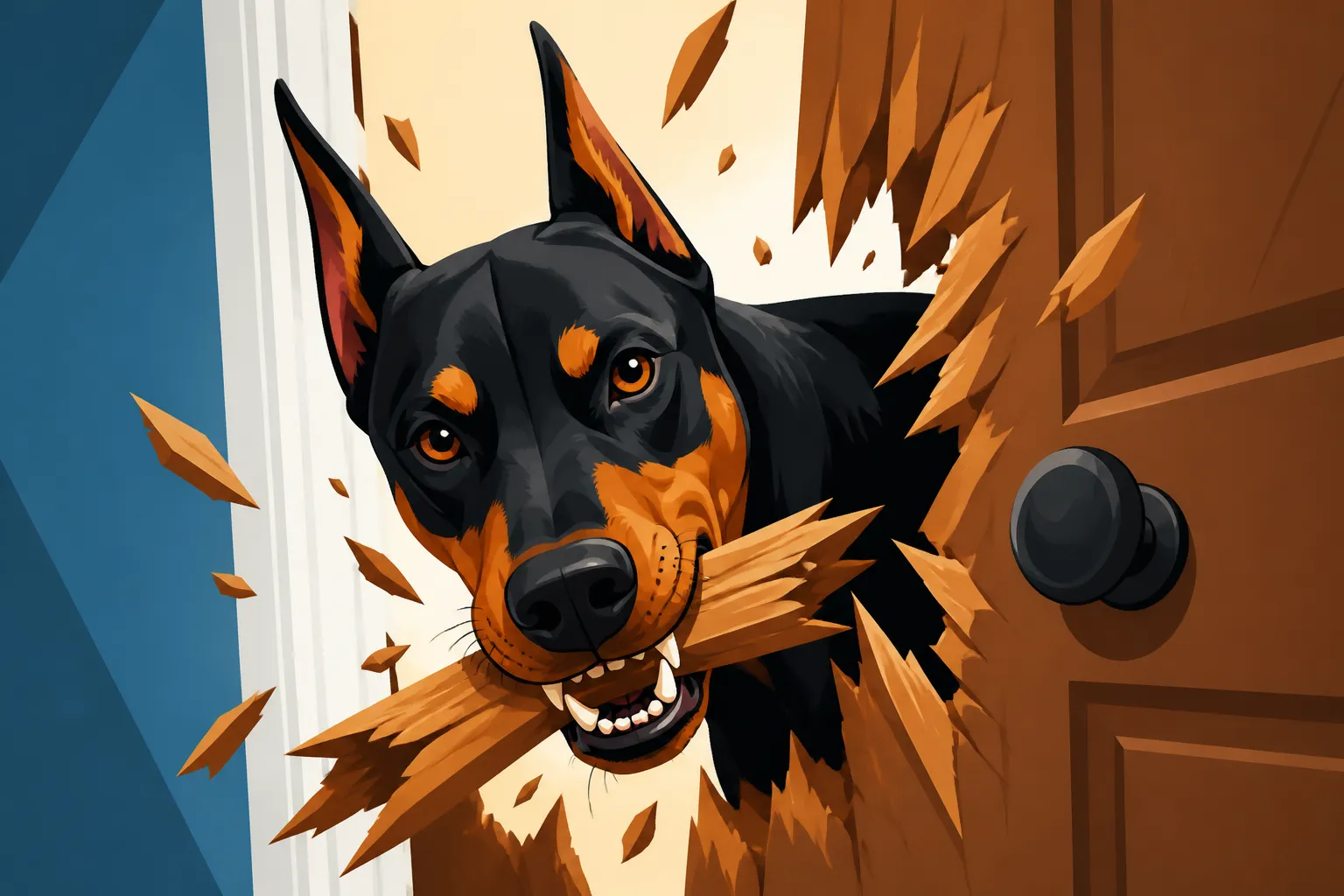
The moment you walk back into your home and see that chewed-up door frame, the splintered wood, the claw marks, your heart sinks. It's not just the damage to your home that hurts, but the knowledge that your Doberman was likely in distress, battling loneliness, or simply overwhelmed by an abundance of unmet energy. This guide is here to walk you through understanding why your Doberman might be resorting to such destructive behavior, and more importantly, how you can help them (and your doors) find peace.
The Underlying Reasons a Doberman Destroys Doors
When a Doberman resorts to chewing and clawing at a door, it's never out of spite. It's a symptom, a visible sign that something deeper is at play. Understanding the root cause is the first, crucial step toward finding a lasting solution for both your dog and your home. These are highly intelligent, sensitive, and energetic dogs, and their needs, when unmet, can manifest in rather dramatic ways.
Separation Anxiety vs. Boredom and Lack of Exercise
It can be tough to distinguish between a Doberman that's genuinely panicking from separation anxiety and one that's simply bored out of its mind. Both can lead to destructive behavior around doors, but the underlying emotional state is vastly different, and so are the solutions.
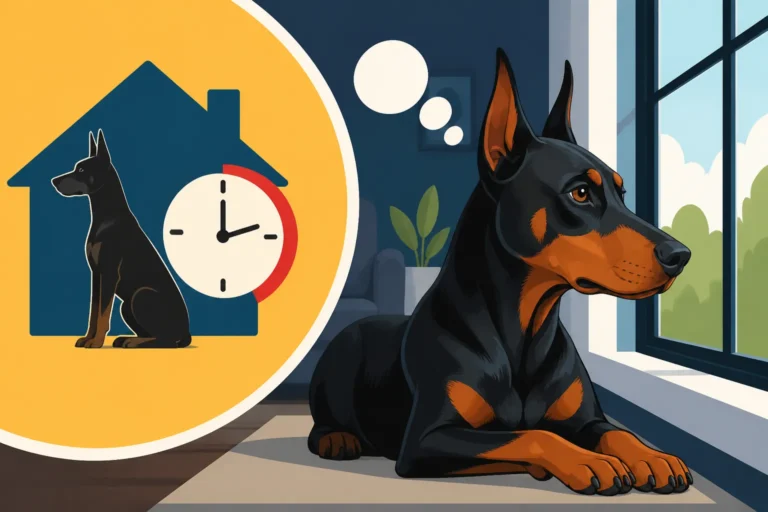
Separation anxiety is a profound fear response. Imagine being trapped in a room and truly believing your most important person is never coming back. That's a glimpse into the terror a Doberman with severe separation anxiety might feel. Symptoms often go beyond just chewing the door. You might see frantic pacing, excessive drooling, vocalizing (barking, howling, whining) the entire time you're gone, and even house-soiling, especially if they are otherwise perfectly house-trained. The destruction is usually focused around exit points – doors, windows – in an attempt to get to you. It's an escape attempt driven by panic.
On the other hand, boredom and a lack of mental or physical exercise, while less emotionally intense, are equally potent drivers of destruction for a Doberman. These dogs are working breed through and through. They were bred to be active, engaged, and to have a job to do. If they're left alone for hours with nothing to stimulate their sharp minds or burn off their boundless energy, they'll create their own "job." This job might involve systematically dismantling your door frame, chewing on furniture, or shredding pillows. The key difference here is often the intensity and focus. A bored Doberman might chew indiscriminately around the house, whereas an anxious Doberman typically focuses their efforts on escape routes. However, even bored dogs can become intensely focused on a door if it's the only barrier between them and potential stimulation.
Unmet Needs for Mental and Physical Stimulation
Let's be real: a Doberman isn't a couch potato. They are a magnificent breed, but they come with an engine that needs to run and a brain that needs to think. Many owners underestimate just how much exercise and mental engagement a Doberman requires on a daily basis. A quick walk around the block simply won't cut it.
When a Doberman's fundamental needs for activity aren't met, that pent-up energy has to go somewhere. It builds up, becoming a physical and mental pressure cooker. This isn't just about physical exertion; it's about giving their intelligent minds a challenge. Think about it: a Doberman that quickly learns complex commands and enjoys puzzle toys needs that kind of consistent mental workout. If they don't get it, they'll find their own puzzles – and your door might just be the next grand project.
This isn't a small thing. Imagine being cooped up all day with nothing to do. You'd probably find something to occupy yourself, right? For a Doberman, that might be trying to dig through the carpet by the door, or systematically gnawing at the wood trim. It's a testament to their drive and intelligence, albeit a frustrating one for us humans. This is why it's so important to explore ways of Keeping a Doberman Mentally Tired as well as physically tired.
Immediate Strategies to Mitigate Door Destruction
Okay, so you've identified the potential reasons. Now, how do you stop the immediate damage and give yourself some breathing room to implement long-term training? Sometimes, you just need a quick fix to protect your home and your Doberman from further frustration or injury.
Securing the Environment and Providing Safe Alternatives
First and foremost, you need to stop the cycle of destruction. This often means physically preventing access to the door or providing a more appropriate, safer outlet for their chewing instincts.
A heavy-duty crate can be a lifesaver, but only if your Doberman is properly crate-trained. A crate should be a safe haven, not a punishment. If your Doberman associates the crate with panic or loneliness, forcing them into it will only exacerbate the problem. However, if introduced correctly, a secure crate sized appropriately for a Doberman can provide a den-like space where they feel safe. Make sure you've chosen a crate that's robust and large enough for them to stand, turn around, and lie down comfortably. If you're unsure about sizing or types, there's a lot of helpful information on Choosing a Crate for a Doberman that can guide you.
For doors that are already targets, you can try various protective measures. Door scratch protectors (often used for cats, but can work for dogs), heavy-duty plastic sheeting, or even temporary plywood barriers can buy you time. Some people have found success with bitter apple sprays or similar deterrents applied to the doorframe. However, these are often a hit-or-miss solution; some Dobermans are completely unfazed by the taste.
More importantly, provide irresistible, long-lasting chews and puzzle toys. Think robust Kongs stuffed with frozen peanut butter or cream cheese, antlers (ensure they are safe and don't splinter), or durable chew toys designed for strong chewers. The idea is to give them an approved, satisfying outlet for their natural chewing behavior. Rotate these toys to keep them novel and exciting. Many excellent options for puzzle toys and long-lasting chews can be found on online retailers like Amazon, offering a wide variety to suit your Doberman's preferences and chewing strength.
Adjusting Your Departure Routine
Our departure cues can inadvertently trigger anxiety in our Dobermans. The jingle of keys, picking up your bag, putting on your shoes – these mundane actions become predictors of loneliness. By making your departures (and arrivals) as low-key as possible, you can begin to break this association.
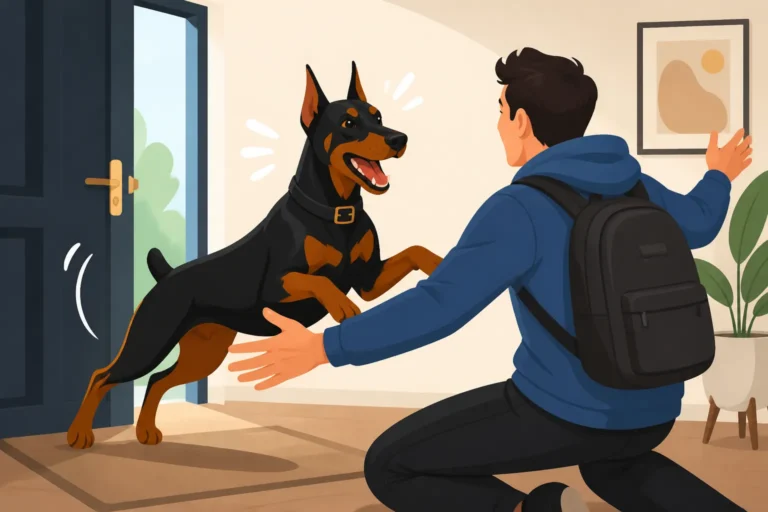
Try to avoid emotional goodbyes, lingering hugs, or dramatic pronouncements of "Be a good boy!" Instead, act like leaving is the most natural, unexciting thing in the world. Similarly, when you return, resist the urge for an immediate, effusive greeting. Wait until your Doberman is calm, then offer a quiet greeting and praise.
Practicing short departures is also incredibly valuable. Start by leaving for just a minute or two, then return before your Doberman has a chance to escalate into destructive behavior. Gradually increase the duration. The goal is to teach them that your departures are always temporary and uneventful, and that you always come back. This builds trust and confidence, replacing panic with peaceful waiting.
| Behavior Trait | Separation Anxiety | Boredom/Lack of Stimulation |
|---|---|---|
| Primary Motivation | Panic, fear of abandonment, distress | Seeking activity, mental engagement, physical release |
| Vocalization | Persistent barking, howling, whining (often for duration of absence) | Sporadic, attention-seeking barking; less continuous |
| Destruction Focus | Entry/exit points (doors, windows, crates) in attempt to escape | More generalized; furniture, shoes, walls, can include doors |
| Timing of Behavior | Starts shortly after owner leaves, persists | May start after initial calm, escalate over time; less predictable |
| House Soiling | Common, even in house-trained dogs (often urination/defecation) | Less common; typically only if left for excessive periods without access outside |
| Physiological Signs | Drooling, panting, trembling, pacing | Less common, generally calmer demeanor until action starts |
| Reaction to Return | Frantic greetings, excessive excitement | Happy greeting, but less intense; may show guilt or appeasement |
Long-Term Solutions: Training and Management
While immediate strategies can prevent further damage, truly solving the problem of a Doberman chewing through the door requires a commitment to long-term training and management. This is where patience, consistency, and sometimes professional guidance come into play.
Building Up Alone Time Gradually
This is the cornerstone of addressing any alone-time issues. Your Doberman needs to learn that being alone is not scary, but rather a normal, quiet part of their day. This is a slow and deliberate process, not something you can rush.
Start by practicing "mock" departures. Pick up your keys, put on your coat, walk to the door, then simply sit back down. Repeat this several times a day without actually leaving. The goal is to desensitize your Doberman to these cues, stripping them of their predictive power.
Once they are calm with mock departures, begin actual short absences. Leave for just a few seconds, step outside the door, then come back in. If your Doberman remained calm, reward them with a quiet treat or praise. The critical part is to return before they show any signs of distress or destruction. If they start panicking, you've left for too long. Over days and weeks, gradually extend the time you're gone. This slow, methodical approach helps build confidence. You might find it incredibly useful to consult guides like Building a Doberman's Alone Time From Minutes to get a detailed step-by-step plan.
Consider investing in a pet camera that allows you to monitor your Doberman remotely. This is invaluable for observing their behavior while you're gone and ensuring you return before they reach a panic state. You can find excellent pet cameras on Amazon that offer two-way audio and treat dispensing, which can also be helpful for positive associations.
Enriching Your Doberman's Daily Life
A tired Doberman is a good Doberman, both physically and mentally. This breed thrives on having a purpose and sufficient outlets for their energy.
Before you leave your Doberman alone, ensure they've had a substantial amount of physical exercise. This could be a vigorous run, a long walk, or a session of fetch in a securely fenced yard. The goal is to get them genuinely tired. But don't stop there. Mental stimulation is just as vital. Engage their minds with obedience training, interactive puzzle toys (many available on Amazon that can be filled with treats), or scent work games. A Doberman who has spent an hour working their brain is far more likely to settle down and rest when left alone. Take a look at Puzzle Work That Actually Tires a Doberman for some great ideas.
For Dobermans who are social and enjoy the company of other dogs, enrolling them in a reputable dog daycare a few times a week can be incredibly beneficial. It provides structured playtime, socialization, and supervision, ensuring they get plenty of exercise and mental engagement. Just ensure the daycare is a good fit for your Doberman's temperament, as not all Dobermans thrive in large group settings. Resources like Daycare That Accepts a Doberman can help you find suitable options.
A structured training program can also provide excellent mental enrichment and build a stronger bond between you and your Doberman. Programs like those offered by BAXTER & Bella provide comprehensive online guidance, helping you teach essential obedience, tackle behavioral challenges, and build your Doberman's confidence. These types of consistent, positive training efforts channel their intelligence into productive behaviors.
Seeking Professional Help
Sometimes, despite your best efforts, the problem persists. This is when it's crucial to seek professional help.
Veterinary Check-up: Always start with a visit to your veterinarian. Rule out any underlying medical conditions that might be contributing to anxiety or discomfort. Pain, thyroid issues, or other health problems can sometimes manifest as behavioral changes, including increased anxiety or destructive tendencies. The Doberman Years When Everything Shows Up can give you an idea of common health issues to be aware of at different ages.
Certified Professional Dog Trainer (CPDT) or Veterinary Behaviorist (DACVB): If the destruction is truly due to separation anxiety, a certified professional dog trainer or, for more severe cases, a veterinary behaviorist is your best resource. These professionals have specialized knowledge and can help you create a tailored behavior modification plan. They can differentiate between genuine separation anxiety and other issues and guide you through the nuanced process of reducing your Doberman's distress. They might also discuss medical interventions if the anxiety is severe enough. In some instances, for very severe cases of separation anxiety, a veterinary behaviorist might recommend medication in conjunction with behavior modification. This isn't a "cure-all" but can help your Doberman be calm enough to learn to cope. Information on Medication for a Doberman With Separation Distress can provide more insight into this option.
Understanding the Doberman Mindset
Living with a Doberman means understanding their unique blend of loyalty, intelligence, and protective instincts. These traits, while wonderful, can also contribute to behaviors like door destruction if not properly channeled.
The "Velcro Dog" Tendency
The Doberman is famously known as a "Velcro dog," and for good reason. They develop incredibly strong bonds with their chosen humans and have a deep desire to be near them almost constantly. It's truly endearing, that shadow that follows you from room to room, leaning on you, resting their head on your lap. But this intense attachment means that being separated from you can be profoundly distressing for them. Where the Velcro Doberman Nickname Comes From perfectly encapsulates this breed trait.
This isn't just about wanting to be in the same room; it's a deep-seated need for connection and reassurance. When you leave, that connection is suddenly severed, and for some Dobermans, it can feel like a profound loss. Their attempt to chew through the door is often an attempt to re-establish that connection, to get back to their person. It's not a sign of a bad dog, but a sign of a dog that loves you deeply and struggles with your absence.
The Importance of Consistency and Patience
Solving destructive door chewing in a Doberman, especially if it stems from anxiety, is not a quick fix. There's no magic wand. It requires immense consistency, endless patience, and a realistic understanding that setbacks will happen.
Dobermans are smart. They learn quickly, but they also learn our habits and their own coping mechanisms quickly. If chewing the door has, in the past, led to you returning (even if you were just coming back to check on them), they might have inadvertently learned that the destructive behavior gets a result. Unlearning this takes time and a very consistent approach.
Every time you leave, you are either reinforcing their anxiety or helping them build resilience. Stick to your training plan. Don't skip steps, and don't expect miracles overnight. It might take weeks, months, or even a year to truly reshape your Doberman's feelings about being alone. Celebrate small victories, like an extra five minutes of calm, or a door that remains unscathed after a slightly longer absence. Remember, you're not just trying to stop a behavior; you're trying to change an emotional response, and that takes time, empathy, and unwavering commitment. You can't expect them to cope well for How Long a Doberman Copes Alone if you haven't put in the work to train them. Training is an ongoing process for a Doberman, not just a puppy-phase activity. Even as adults, they benefit from continued structure and mental work, otherwise, these sorts of behaviors can resurface. Teaching a Doberman to Settle in Another Room can be a great first step in building comfort with distance and alone time even when you're home.
Disclaimer
This article is for general informational purposes only and does not constitute professional advice. Laws, prices and regulations vary by location and change over time. Consult a qualified professional for guidance on your specific situation.