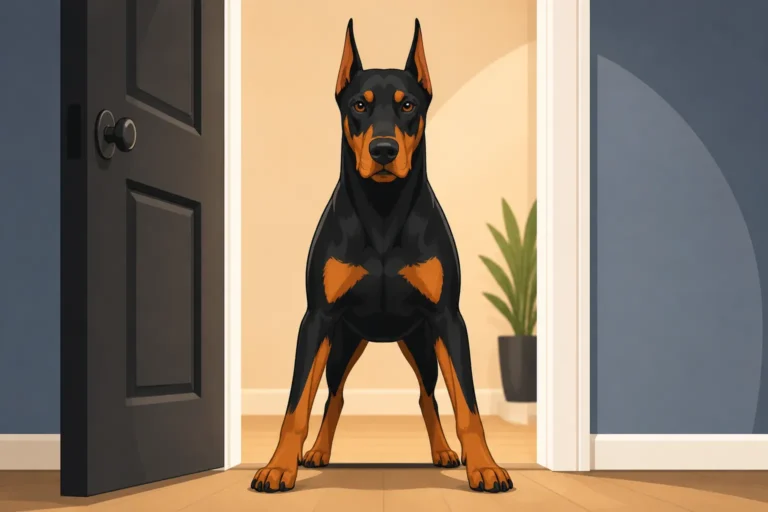
A Doberman That Reacts to Every Dog It Sees
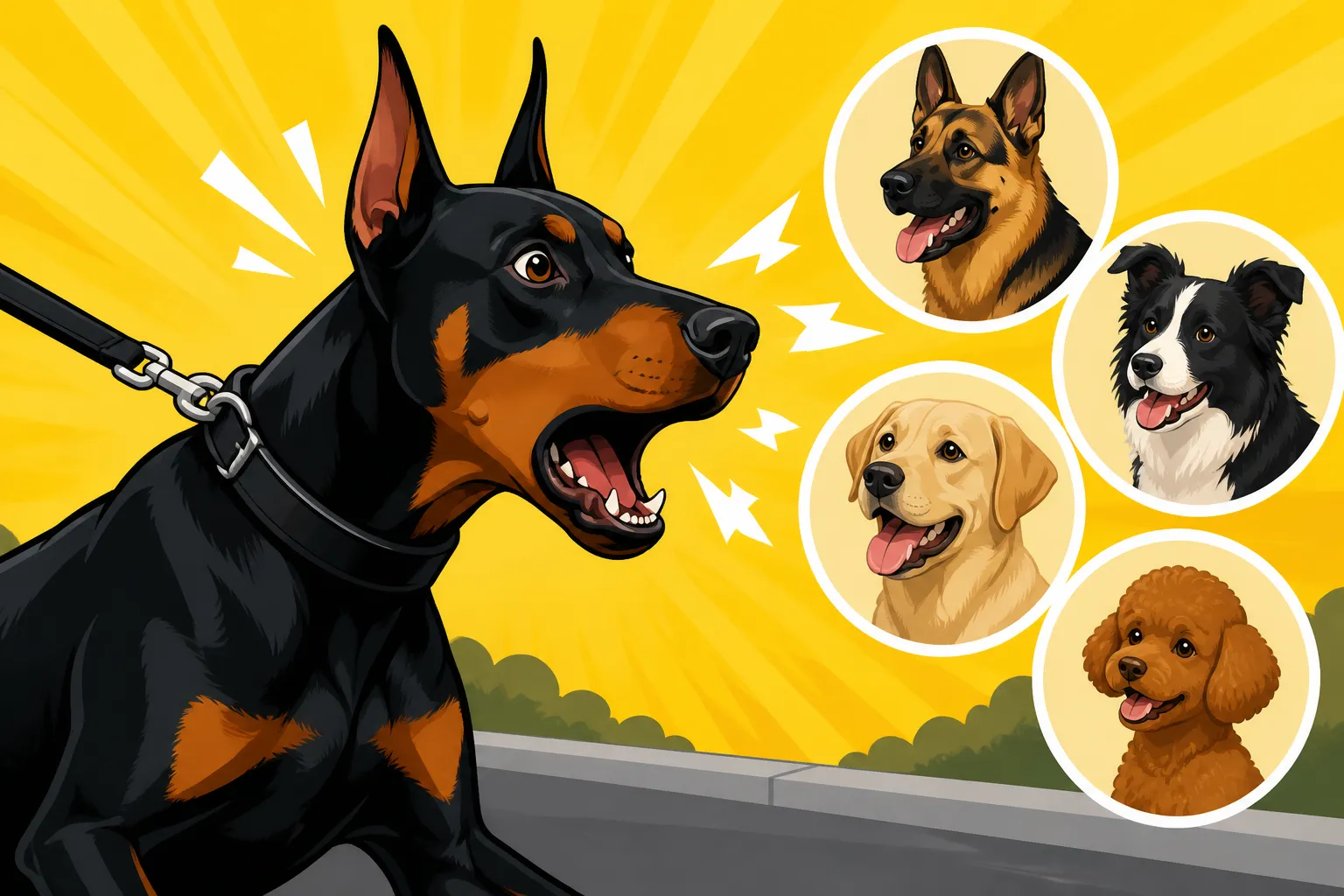
It’s a scenario many Doberman owners know all too well: you’re out for a peaceful stroll, enjoying the crisp air with your majestic companion, when suddenly, another dog appears. In a flash, your calm Doberman transforms into a lunging, barking, pulling tornado at the end of the leash. The embarrassment, the frustration, the sheer physical struggle—it’s enough to make you dread walks. This comprehensive guide will delve deep into why Dobermans can become reactive to other dogs and, more importantly, equip you with empathetic, realistic strategies to navigate and improve these challenging encounters.
Understanding Doberman Reactivity: More Than Just "Aggression"
When your Doberman explodes on the leash at the sight of another dog, it’s easy for onlookers (and even for us, in the heat of the moment) to label it as "aggressive." But the truth is often far more complex, and understanding the nuances of reactivity is the first step toward helping your Doberman, and yourself. It’s not about malice; it’s about a dog struggling to cope.
What Reactivity Really Looks Like
Reactivity isn't a single behavior; it's a spectrum, and it manifests differently in individual dogs. For a Doberman, it might involve a dramatic display of barking, lunging forward with full body tension, growling deep in the chest, or even a frantic, high-pitched whining. They might pull so hard you feel like your arm is being yanked out of its socket, desperate to get closer – or further away – from the other dog. Sometimes, their hackles go up, their tail might be tucked or rigid, and their eyes could be dilated, fixed on the perceived threat or source of intense interest.
It's crucial to understand that these intense reactions are often rooted in a cocktail of emotions like fear, frustration, or sometimes, an overwhelming surge of over-excitement. A fearful Doberman might bark and lunge to create distance, believing that a strong display will make the "threat" retreat. A frustrated Doberman, perhaps one who desperately wants to play or greet but is held back by the leash, might erupt because they can’t get what they want. And an over-excited Doberman might simply lack the impulse control to manage their enthusiasm, leading to a boisterous and often misinterpreted greeting attempt. In all these cases, your Doberman is experiencing a significant amount of internal stress. Their body is flooded with adrenaline and cortisol, making it incredibly difficult for them to think clearly or respond to your cues. It’s not about them being "bad"; it’s about them being overwhelmed.
Common Triggers for Doberman Reactivity
Identifying your Doberman's specific triggers is like finding the key to unlocking their calmer self. The most common trigger, of course, is the mere presence of another dog, but the specifics can vary wildly. Some Dobermans have a "threshold" – a certain distance at which they can tolerate another dog without reacting. Cross that invisible line, and the explosion begins. For some, it might be when a dog suddenly appears from behind a bush or rounds a corner without warning, catching them off guard.
Consider the context: Is it only certain breeds that elicit a reaction? Perhaps smaller, yappier dogs trigger a chase response, or larger, more boisterous breeds create fear. The size, gait, and even the body language of the other dog can be a trigger. A Doberman might react differently to a stiff, direct stare from another dog versus a bouncy, playful approach. Beyond the other dog itself, your own behavior plays a huge role. A tight leash, often a natural reaction when we anticipate a lunge, can actually escalate the situation, signaling to your Doberman that there's something to be worried about. Your own tension, anxiety, or even a deep sigh can be picked up by your sensitive Doberman, confirming their suspicion that something is amiss. Finally, a lack of early, positive socialization as a puppy can leave gaps in their understanding of canine etiquette, making every novel encounter potentially alarming. Exposing a Doberman Puppy to Strangers and different environments is key, but so is controlled exposure to other dogs.
Here's a quick look at common reactive behaviors and what might be fueling them:
| Behavior | Potential Underlying Motivation | What it Looks Like |
|---|---|---|
| Lunge & Bark (Forward) | Fear, Frustration, Over-excitement | Dog pulls hard, barks loudly, body stiff, eyes fixed |
| Growl (Low & Rumbling) | Fear, Warning, Discomfort | Low vocalization, often with stiff body, lip curl |
| Whine & Strain | Frustration, Desire to Greet/Play | High-pitched vocalization, pulling, sometimes jumping |
| Snapping/Air Biting | Fear (creating distance), Over-arousal | Quick, sharp mouth movement, often not making contact |
| Hackles Raised | Arousal (fear, excitement, aggression) | Hair standing up on neck/back, can be any emotion |
| Stiff Body, Wide Eyes | Fear, Alertness, Stress | Tense posture, darting or fixed gaze, whale eye |
The Doberman Temperament and Reactivity Predispositions
The Doberman isn't just any dog. They were bred for a specific purpose, and many of their innate characteristics, while desirable in the right context, can also contribute to reactivity if not properly channeled and understood. The Doberman Temperament as the Standard Describes It paints a picture of a loyal, intelligent, and protective companion, but these traits come with responsibilities.
Guarding Instincts and Natural Suspicion
Dobermans were originally bred by Karl Dobermann to be formidable guardians, accompanying him on his rounds as a tax collector. This history means they come pre-programmed with strong guarding instincts and a natural wariness of strangers and new situations. This isn't inherently bad; it's what makes them excellent protectors of their homes and families. However, this same instinct can easily tip into reactivity when they encounter other dogs on a walk. Your Doberman might perceive another dog as a potential threat to their territory (the walking path), their person (you), or even themselves.
They might feel it's their job to "warn off" the approaching canine, leading to those loud, dramatic displays. This isn't necessarily aggression born of malice, but rather an overzealous sense of duty. If a Doberman isn't taught how to appropriately assess and respond to novel stimuli, or if they haven't had enough positive experiences with other dogs in a controlled environment, that natural suspicion can morph into a default reactive response. They might bark, lunge, or growl not because they want to attack, but because their internal alarm bells are ringing, and they're executing what they believe is their job: protect and deter.
Sensitivity and Handler Focus
Dobermans are known for being incredibly intelligent and highly attuned to their owners. They often earn the nickname "Velcro dogs" for a reason – they want to be close to you, involved in what you're doing, and they soak up your emotions like a sponge. This intense bond, while wonderful, can also be a double-edged sword when it comes to reactivity. Your Doberman is likely picking up on every subtle shift in your body language, every sigh, every tightening of the leash, and every anxious thought you have when another dog approaches. If you're nervous, they're nervous. If you brace for impact, they brace too.
Furthermore, their strong bond with you can sometimes lead to what looks like "resource guarding" of their person. They might see other dogs as competitors for your attention, affection, or even your physical presence, prompting a reactive display to drive the "competition" away. Because they are so handler-focused and sensitive, Why a Clever Doberman Is Harder to Train can sometimes come into play. They learn quickly, but they also learn your habits, good or bad, and adapt. Therefore, maintaining a confident, calm, and clear leadership presence is paramount. They need to trust that you've got things handled, that you will protect them, and that they don't need to take matters into their own paws. This isn't about dominance, but about providing security and consistent guidance.
Why Traditional Methods Often Fail (and What to Do Instead)
For generations, the go-to advice for a barking, lunging dog was often some form of harsh correction: a leash pop, a firm "no," or even a physical reprimand. While these methods might seem to suppress the behavior in the short term, they rarely address the underlying emotional state, and in the long run, they can actually make reactivity worse, especially for a sensitive breed like the Doberman.
The Problem with Punishment-Based Approaches
Imagine your Doberman is terrified of other dogs. Every time they see one, their heart races, their instincts scream danger, and they react by barking and lunging. Now, imagine that every time they do this, you deliver a sharp leash correction, a loud yell, or a swift jerk of a prong collar. What does your Doberman learn from this? They don't learn that other dogs are okay. Instead, they learn that seeing other dogs predicts pain, discomfort, or fear from their trusted human. This creates an even stronger negative association with other dogs. The presence of another dog now means double the stress: the fear of the other dog and the fear of your impending punishment.
This creates a vicious cycle. The dog's anxiety around other dogs increases, their reactions might become more intense or, conversely, they might become "shut down," appearing calm but internally boiling with stress. Such suppression can be dangerous, as a dog that feels they cannot communicate their discomfort (by barking or growling) might suddenly escalate to a bite with little warning. Why Yelling Shuts a Doberman Down is a concept well understood in positive reinforcement. For a Doberman, who bonds so deeply and seeks to please, harsh corrections can break trust, create fear of the handler, and ultimately undermine the very relationship you need to build to address the reactivity effectively. These methods don't teach a dog what to do; they only teach them what not to do through fear.
Positive Reinforcement: Building a New Association
The goal with positive reinforcement isn't to punish the reaction away, but to change your Doberman's emotional response to other dogs. We want them to go from thinking "Oh no, a dog! Danger/Frustration!" to "Oh, a dog! That means good things happen!" This is achieved through classical conditioning and operant conditioning.
The core principle is simple: pair the sight of another dog (the trigger) with something incredibly positive and rewarding. This might be delicious treats, a favorite toy, or enthusiastic praise. One of the most effective games is called "Look at That" (LAT). The steps are:
- Your Doberman sees another dog.
- The moment they notice the other dog (before they react!), you mark the behavior (with a clicker or a verbal marker like "Yes!").
- Immediately give them a high-value treat.
- The other dog passes, or you move away.
Over time, your Doberman starts to associate the sight of another dog with receiving a reward. Their emotional response shifts. Instead of tensing up, they might look at the other dog, then immediately look back at you, anticipating their treat. This is a game-changer. It's about empowering your Doberman to make a calm, positive choice in a stressful situation, rather than forcing them into submission. It builds confidence and trust, reinforcing that you are their safe harbor, and that good things happen when they pay attention to you around other dogs.
Practical Strategies for Managing On-Leash Reactivity
Managing on-leash reactivity requires a multi-faceted approach, combining environmental control, proper equipment, and consistent training. It’s about setting your Doberman up for success, not expecting them to magically cope in overwhelming situations.
Mastering the Environment and Your Walk
One of the most immediate and impactful things you can do is to become a master of your walking environment. This means actively avoiding triggers as much as possible, especially in the initial stages of training. If you know certain times of day or specific routes are dog-heavy, simply change your schedule or your path. Walk your Doberman at off-peak hours, explore quieter residential streets, or find secluded trails where you're less likely to encounter other dogs. The goal is to minimize accidental encounters that reinforce the reactive behavior and to create opportunities for successful, controlled training.
A key concept here is finding your Doberman's "threshold." This is the distance at which they can observe another dog without reacting. It might be 50 feet, 100 feet, or even further. Your job is to stay below that threshold during your training sessions. If you notice your Doberman stiffen, stare intently, or show any precursor to a reaction, you've gone too close. Increase the distance immediately. This might mean crossing the street, ducking behind a car, or simply turning around and walking in the opposite direction. Be a proactive observer: constantly scan ahead for potential triggers. If you see another dog approaching, act before your Doberman reacts. This proactive management prevents rehearsals of unwanted behavior and keeps your Doberman under their emotional threshold, where learning can actually occur.
Essential Tools and Equipment
The right equipment can make a huge difference in managing a reactive Doberman, both for your comfort and their safety.
- No-Pull Harnesses: These are often excellent for Dobermans, especially those that pull hard. Front-clip harnesses, which have the leash attachment point on the dog's chest, are particularly effective. When your Doberman pulls, the leash redirects their momentum to the side, gently turning them back towards you, making it difficult for them to pull forward with full force. Brands like the Easy Walk Harness or Freedom No-Pull Harness are popular choices and readily available on platforms like Amazon. They distribute pressure more evenly than a flat collar, which can reduce strain on your Doberman's neck and throat, especially if they lunge.
- Flat Collars and Leashes: While useful for ID tags, a flat collar offers little control for a lunging Doberman and can put dangerous pressure on their throat. Always use a sturdy, comfortable leash that gives you a good grip.
- Head Halters: For some Dobermans, a head halter (like a Gentle Leader) can be incredibly effective. It works by steering the dog's head, and where the head goes, the body follows. It offers a surprising amount of control with minimal physical force. However, it requires a careful introduction and desensitization process, as many dogs initially dislike the feeling of something around their muzzle.
- Prong Collars: While some trainers advocate for prong collars, they are a punishment-based tool and should be approached with extreme caution, if at all, especially with reactive Dobermans. As discussed, punishment can exacerbate fear and anxiety, making reactivity worse in the long run. If you choose to use one, it should only be under the direct, expert guidance of a certified force-free trainer who understands how to use it as a management tool without causing fear or pain, and is teaching you to transition away from it.
- Treat Pouches & High-Value Treats: Keep treats easily accessible! A dedicated treat pouch worn on your waist means you can reward quickly without fumbling. High-value treats (think cooked chicken, cheese, hot dogs) are crucial for capturing your Doberman's attention amidst distractions. For a Doberman who really struggles, generic kibble just won't cut it.
- Muzzle: For Dobermans with a bite history or those who pose a safety risk, a well-fitted basket muzzle is a responsible tool. It ensures safety for everyone involved while you work on behavior modification without inhibiting breathing, panting, or taking treats. Muzzle Training a Doberman Before It Is Needed is a fantastic proactive step for any Doberman owner.
Training Drills to Change Your Doberman's Mindset
Once you've mastered environmental management and have the right tools, it's time to actively teach your Doberman new, positive ways to respond to other dogs. These training drills are designed to systematically change their emotional associations and build better coping mechanisms.
The "Engage-Disengage" Game
This game, also known as the "Look At That" (LAT) game, is a cornerstone of reactivity training. It’s all about teaching your Doberman to see another dog, check in with you, and then disengage from the trigger in a calm, rewarded manner.
Here's how to play it:
- Find Your Threshold: Start at a distance where your Doberman notices the other dog but doesn't react. This is crucial. If they're already barking and lunging, you're too close.
- Observe and Mark: The moment your Doberman's head turns and they look at the other dog, mark that behavior with a clicker or a verbal marker ("Yes!"). Do this the instant they orient towards the dog, before any tension builds or a reaction starts.
- Reward: Immediately after marking, give your Doberman a super high-value treat. Your Doberman should turn their head away from the trigger to take the treat from you. This is the "disengage" part.
- Repeat (briefly): Let them look again, mark, reward. Do this a few times, then move away from the trigger or let the other dog pass. Keep sessions short and positive.
- Gradual Reduction of Distance: Over many, many successful sessions, you can very slowly, incrementally, decrease the distance to the trigger. The key is always to stay under their threshold. If they react, you went too fast or too close. Reset, increase distance, and try again.
The goal isn't for your Doberman to ignore other dogs entirely, but to calmly observe them and then redirect their attention to you, knowing a reward is coming. This changes the emotional association from negative/anxious to positive/anticipatory.
Parallel Walking and Structured Exposure
Once your Doberman is making good progress with the "Engage-Disengage" game at a comfortable distance, you can introduce more structured exposure, ideally with the help of a calm, neutral "helper dog" and its cooperative owner. This is often best done with a professional trainer facilitating the session. Finding a Trainer Who Has Worked With Dobermans is vital for this kind of work.
- Start Far Apart: Begin with both dogs walking parallel to each other at a very generous distance – again, where neither dog is reacting.
- Focus on Individual Dogs: Both handlers should focus on keeping their own dog calm and engaged, rewarding them for looking at their handler, staying loose on the leash, and generally being relaxed in the presence of the other dog.
- Gradual Proximity: Over multiple sessions, if both dogs remain calm, you can very gradually decrease the distance between them. This process might take weeks or months. The key is never to force an interaction or push the dogs past their comfort zone.
- Avoid Direct Greetings: In these early stages, direct face-to-face greetings on leash should generally be avoided, as they can be high-pressure and often lead to reactivity, especially for Dobermans who might struggle with direct approaches. The goal is coexistence, not necessarily playmates.
This structured exposure allows your Doberman to learn that other dogs can exist in their environment without being a threat or a source of overwhelming frustration, all while remaining calm and connected to you.
Enrichment and Lifestyle Adjustments for Reactive Dobermans
Living with a reactive Doberman isn't just about what happens on the walk; it's about their entire lifestyle. A well-adjusted, mentally stimulated, and less stressed Doberman is far more likely to make progress in reactivity training.
Mental Stimulation Beyond Walks
Dobermans are highly intelligent dogs, and physical exercise alone, while important, often isn't enough to satisfy their keen minds. A Doberman who is physically tired but mentally bored can still be a reactive Doberman. Engaging their brains is just as crucial as exercising their bodies.
Consider incorporating:
- Puzzle Toys: These require your Doberman to figure out how to get treats or kibble, providing a mental workout. You can find a vast selection of durable puzzle toys on Amazon, from treat-dispensing balls to more complex sniff puzzles.
- Scent Work/Nose Work: Dobermans have excellent noses! Hiding treats around the house or yard and letting them sniff them out is a fantastic, low-impact way to engage their brain and build confidence. It's mentally exhausting in the best way.
- Obedience Training: Ongoing obedience training, even simple "sit," "stay," and "down" commands, provides structure and a sense of purpose. It strengthens your bond and reminds your Doberman that listening to you is rewarding. Platforms like BAXTER & Bella offer online resources and structured learning programs that can be incredibly helpful for keeping your Doberman mentally engaged with new skills and challenges, all from the comfort of your home. These programs often break down complex behaviors into manageable steps, which is perfect for a smart Doberman.
- Trick Training: Teaching your Doberman fun tricks isn't just entertaining; it’s a great mental exercise and a fantastic way to build communication and confidence.
The goal is to tire their minds as much as their bodies, leading to a calmer, more settled dog at home and, subsequently, a more receptive dog on walks.
Stress Reduction and Routine
A reactive Doberman is often a stressed Doberman. Therefore, actively working to reduce their overall stress load is paramount.
- Consistent Routine: Dogs thrive on predictability. A consistent daily schedule for meals, walks, training, and rest helps reduce anxiety. They know what to expect, which can be incredibly comforting.
- Quiet Spaces: Ensure your Doberman has a designated "safe space" in your home where they can retreat and feel secure. This might be a crate covered with a blanket, a comfy bed in a quiet room, or their own corner away from household hustle and bustle. Teach them that this is their sanctuary, where they won't be bothered.
- Adequate Sleep: Just like humans, dogs need quality sleep. Ensure your Doberman gets plenty of undisturbed rest, especially after stimulating training sessions or walks.
- Handler Stress: This is a big one. As mentioned, Dobermans are incredibly sensitive to their handler's emotions. If you are stressed, anxious, or tense before and during walks, your Doberman will pick up on it. Take a deep breath, practice mindfulness, and try to project a calm, confident demeanor. Your emotional state is contagious.
- Calming Supplements/Veterinary Consultation: For some Dobermans, especially those with severe anxiety or a high baseline stress level, calming supplements (such as L-theanine or Zylkene) might be helpful when used in conjunction with behavior modification. Always discuss these options with your veterinarian first. In more severe cases, a vet might recommend anti-anxiety medication to help reduce their overall arousal, allowing the dog to be more receptive to training. Medication for a Doberman in the Occult Phase talks about heart medication, but the principle of reducing underlying physiological stress for training holds here, too.
Remember that reactivity is often a symptom of underlying stress or fear. By creating a calm, predictable, and mentally enriching environment, you're not just managing symptoms; you're building a foundation for a happier, less reactive Doberman.
When to Seek Professional Help
It’s easy to feel overwhelmed and isolated when dealing with a reactive Doberman. There's often a sense of failure, embarrassment, and not knowing where to turn. While the strategies outlined here are a strong starting point, there are definite times when bringing in a professional isn't just helpful, but absolutely essential. Don't view it as a failure on your part, but as a commitment to giving your Doberman the best possible chance at a calmer life.
Identifying the Need for a Certified Professional
You’ve been diligently practicing the "Engage-Disengage" game, adjusting your walk routes, and providing mental enrichment. But what if progress stalls? What if your Doberman's reactions seem to escalate despite your best efforts? Or, most importantly, what if there's a safety concern, either for other dogs, people, or even yourself? These are clear indicators that it's time to call in the cavalry.
A certified professional dog trainer (CPDT-KA) or a certified dog behavior consultant (CDBC) can offer an objective perspective and expertise that's hard to gain on your own. They can observe your Doberman's body language in real-time, pinpoint subtle triggers you might be missing, and tailor a behavior modification plan specifically for your dog and your unique situation. They can also provide hands-on guidance, demonstrating techniques and helping you perfect your timing and mechanics. Doberman Dog Reactivity on Leash is a complex issue, and an expert can help dissect the root cause, whether it's truly fear, frustration, over-excitement, or a mix of all three. They can also help you understand cues your Doberman might be giving before an explosion, allowing you to intervene earlier. It's about getting personalized support for a deeply challenging problem.
When looking for a professional, prioritize those who use positive reinforcement and force-free methods. Avoid anyone who promises quick fixes through harsh corrections or intimidating tactics, as these often exacerbate reactivity in sensitive Dobermans. Ask about their certifications, experience with Dobermans or similar guardian breeds, and their philosophy on reactivity.
The Role of Veterinary Behaviorists and Medication
Sometimes, reactivity isn't solely a behavioral issue; it can have underlying medical components. Pain, for instance, can make a normally tolerant dog irritable and reactive. Thyroid imbalances can also affect mood and behavior, leading to increased anxiety or aggression. If you've noticed a sudden onset of reactivity, or if your Doberman also shows other signs of discomfort or illness, a veterinary check-up is always the first step. Rule out any medical causes before diving deep into behavior modification.
For severe cases of anxiety-based reactivity, or when a dog's baseline stress levels are so high that they can't even begin to learn, a veterinary behaviorist can be an invaluable resource. These are veterinarians who have specialized training in animal behavior. They can assess your Doberman comprehensively, considering both their physical and mental health. They might recommend anti-anxiety medication, not as a standalone solution, but as a tool to lower your Doberman's overall stress and anxiety to a point where they can be receptive to behavior modification training. Think of it like a cast for a broken leg: the cast doesn't heal the bone, but it stabilizes it so the healing can occur. Medication can similarly stabilize a dog's emotional state, making it possible for them to learn and respond to training. It's often used temporarily or in conjunction with ongoing behavioral work, allowing your Doberman to function below their panic threshold and build new, positive associations.
Dealing with a reactive Doberman can be exhausting, but remember that you’re not alone, and there are effective, compassionate ways to help your dog navigate the world with greater calm and confidence.
Disclaimer
This article is for general informational purposes only and does not constitute professional advice. Laws, prices and regulations vary by location and change over time. Consult a qualified professional for guidance on your specific situation.