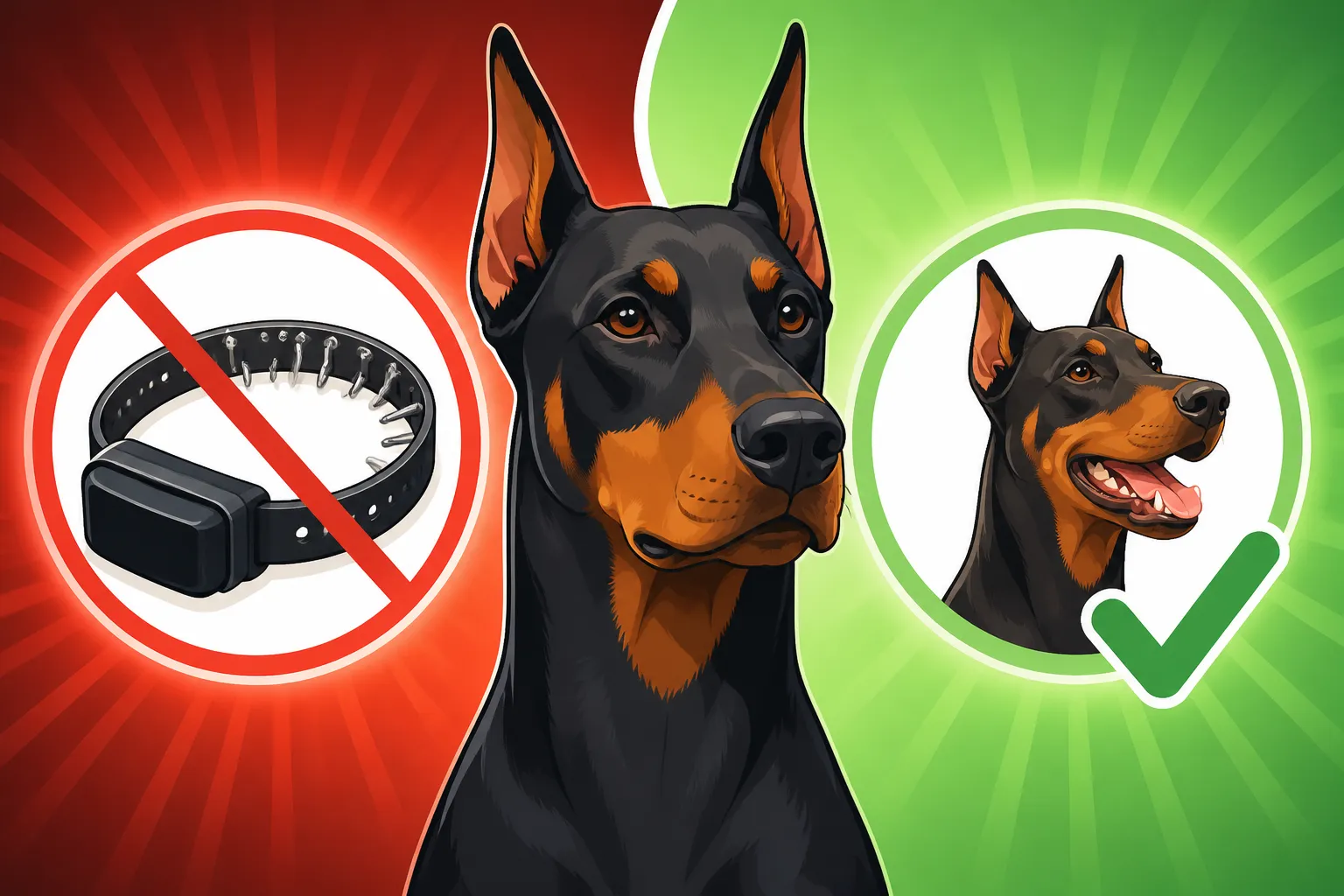
Whether an E-Collar Belongs on a Doberman
Oh, the e-collar debate! If you're a Doberman owner, or even just thinking about bringing one of these magnificent dogs into your life, you've probably heard all sorts of opinions about whether an e-collar, sometimes called a "shock collar," "remote collar," or "electronic collar," has any place in their training. It's a truly polarizing topic, and it can leave you feeling confused and honestly, a little judged, no matter which way you lean. This guide isn't here to scold or preach, but to lay out the realities of e-collar use with our intelligent, sensitive Dobermans, exploring the pros, cons, and alternatives so you can make an informed decision that feels right for you and your dog.
Understanding E-Collars and How They Work
Before we dive into the deep end of the debate, let's make sure we're all on the same page about what an e-collar actually is and how it's designed to function. There's a lot of misunderstanding, and frankly, some fear-mongering around these tools, so a clear picture is essential.
The Technology Behind the "Correction"
At its core, an e-collar is a training device that delivers a remote stimulation to your dog. Now, when most people hear "shock collar," they often envision something akin to a cattle prod – harsh, painful, and outright cruel. The reality, at least with modern, reputable e-collars, is generally different, though the principle of aversive stimulation remains. These devices typically consist of a receiver collar that your dog wears, and a handheld remote control.
The "correction" isn't usually a full-blown shock on quality units. Instead, it’s a static pulse, vibration, or an audible tone. The static stimulation is usually adjustable across a wide range of levels, from a barely perceptible tingle (often described as a "tap" or "muscle contraction") to a much stronger, uncomfortable sensation. The idea is to find the lowest possible working level that gets your dog's attention without causing undue distress or pain. Many trainers who advocate for their use often refer to it as "communication" or "pressure," similar to a leash correction, but at a distance. For example, a Doberman might feel a low-level static pulse as an interruption to an unwanted behavior, like chasing a squirrel too far, prompting them to look back at you. It's meant to be a deterrent, a signal that they need to disengage from what they're doing and re-focus on their handler.
Common Reasons Owners Consider E-Collars for Dobermans
It’s easy for those who are against e-collars to dismiss owners who consider them as uncaring or lazy. But in my experience, Doberman owners often turn to e-collars out of genuine concern for safety, frustration, or a desperate desire for control. These are powerful, intelligent dogs with incredible drives, and managing them can be a real challenge.
Think about it: Dobermans are known for their strong prey drive. That flash of a rabbit across the park, or a squirrel darting up a tree, can instantly flip a switch, turning your otherwise obedient companion into a laser-focused hunter. If your Doberman has a habit of bolting after wildlife, potentially into traffic, the thought of an e-collar for a reliable recall might seem like a lifesaver. Owners often feel that without a remote correction, their Doberman's recall isn't reliable enough to guarantee their safety off-leash in public spaces.
Another common scenario involves managing reactivity or guarding behaviors. While we love our Dobermans for their protective instincts, sometimes those instincts can spill over into inappropriate reactions towards strangers or other dogs. If you have a Doberman that lunges or barks excessively on walks, despite your best efforts with positive reinforcement, you might start looking for something that provides an immediate, undeniable interruption. The intense focus and dedication Dobermans have can sometimes manifest as stubbornness when they've decided on a course of action. An e-collar is often seen as a way to "cut through" that intense focus and re-establish the handler's command, especially when physical correction isn't feasible at a distance. A Doberman That Lunges at Passing Dogs is a huge source of stress for owners, and many feel an e-collar is their last resort.
The Potential Downsides and Risks for Dobermans
While the allure of off-leash reliability and instant corrections can be strong, especially with a Doberman, it's absolutely crucial to understand the significant downsides and risks associated with e-collar use. These aren't just minor concerns; they can profoundly impact your Doberman's emotional well-being and your relationship.
Impact on a Doberman's Sensitive Temperament
Dobermans are exceptionally intelligent dogs, yes, but they are also incredibly sensitive. They form deep bonds with their families and thrive on clear, fair communication and a strong sense of partnership. Unlike some "harder" working breeds that might tolerate a more forceful approach, a Doberman can be easily "shut down" by harsh or confusing corrections.
Imagine your Doberman, trying their best to understand what you want, suddenly receiving an unpleasant static pulse. If the timing is off, or if the dog doesn't understand why they received it, it can lead to confusion, anxiety, and fear. Instead of associating the correction with the unwanted behavior, they might associate it with the presence of the handler, the environment they're in, or even other dogs or people who happen to be nearby when the correction is delivered. This misassociation can be devastating, leading to a breakdown in trust between you and your Doberman. A dog that fears its handler's hand (or remote) isn't truly trained; it's simply suppressed. This can manifest as submissive behaviors, avoidance, or even fear-based aggression down the line. We often talk about how Why Yelling Shuts a Doberman Down – an e-collar can have an even more profound, and silent, impact. Their intense loyalty makes them vulnerable to feeling betrayed if they perceive your actions as unfair or unpredictable.
The Risk of Incorrect Application and Timing
One of the biggest arguments against e-collars, even from some trainers who occasionally use them, is the sheer difficulty of using them correctly and humanely. It takes immense skill, precise timing, and a deep understanding of canine behavior to apply an e-collar in a way that truly teaches the dog, rather than just punishing or scaring them.
Most owners, even with the best intentions, simply don't have this level of expertise. It's incredibly easy to deliver a correction at the wrong moment, leading your Doberman to form an incorrect association. For example, if you correct your Doberman for barking at the mail carrier, but the correction comes after the mail carrier has passed, your Doberman might associate the correction with the mail carrier leaving, thus reinforcing the barking behavior as a way to make the "threat" disappear. Or worse, they might associate the mail carrier itself with the unpleasant sensation, increasing their fear and potentially leading to a more aggressive reaction in the future.
Furthermore, deciding on the "right" level of stimulation is a delicate balance. Too low, and it's ineffective. Too high, and it's unnecessarily punitive and can be genuinely painful or terrifying. Without professional, hands-on guidance from an experienced, ethical trainer (and even then, there's debate), the likelihood of misuse and negative consequences is very high. It’s a very common story to hear about dogs whose confidence was shattered or whose reactivity worsened due to improperly used e-collars. If you've ever had to work on Rebuilding Trust With a Harshly Handled Doberman, you know how long and difficult that road can be.
Masking Underlying Behavioral Issues
Perhaps one of the most insidious dangers of e-collar use is its tendency to suppress symptoms without addressing the root cause of a behavior. When a Doberman exhibits an unwanted behavior, like lunging at other dogs or demonstrating fear, it's often a manifestation of underlying anxiety, insecurity, lack of appropriate socialization, or even pain.
An e-collar might effectively stop the lunging or barking in the moment by creating an aversive experience. Your Doberman learns that if they lunge, they feel uncomfortable, so they stop lunging. But has the underlying fear or anxiety gone away? Almost certainly not. Instead, the dog is now learning to associate the presence of other dogs (or whatever their trigger is) with an uncomfortable sensation plus their existing fear. This can create a highly conflicted, stressed animal. The outward behavior might disappear, but the internal emotional state can worsen dramatically.
Imagine a Doberman that is genuinely scared of new people. An e-collar could stop them from growling or backing away. On the surface, it looks like the problem is solved – no more growling! But inwardly, the fear has intensified, and the dog now has no outlet for communicating its distress. This suppression can lead to a sudden, unpredictable bite from a dog that has been pushed past its internal breaking point. Instead of teaching a Doberman how to cope or what to do instead, e-collars often just teach them what not to do through fear, which isn't true training for a complex, intelligent breed like ours.
| Feature / Aspect | E-Collar Training | Positive Reinforcement Training |
|---|---|---|
| Primary Mechanism | Aversive stimulation (static, vibration, tone) to deter unwanted behavior. | Rewards (food, toys, praise) to encourage desired behavior. |
| Focus | Stopping unwanted behaviors quickly. | Teaching and strengthening desired behaviors; managing environment. |
| Learning Process | Avoidance of discomfort/pain. | Seeking rewards, building positive associations. |
| Relationship Impact | Can damage trust, create fear, lead to suppression. | Builds strong bond, trust, and willingness to cooperate. |
| Addressing Root Cause | Often masks symptoms; rarely addresses underlying emotional states. | Focuses on identifying and resolving the underlying cause of behaviors. |
| Skill Required | High skill, precise timing, deep behavioral knowledge to avoid misuse and negative fallout. | Understanding motivators, consistent timing, patience. |
| Emotional State | Can lead to anxiety, fear, learned helplessness, aggression. | Fosters confidence, enthusiasm, and a happy working attitude. |
| Long-term Outcome | Behavior suppression, potential for rebound or new behavioral problems. | Reliable, joyful responses based on genuine understanding and motivation. |
Exploring Positive Reinforcement and Alternative Training Methods
If e-collars carry such significant risks, what are the alternatives? For Dobermans, and indeed for most dogs, positive reinforcement and modern, science-based training methods offer a far more humane, effective, and sustainable path to a well-behaved companion. These methods focus on building a strong relationship and teaching your Doberman what to do, rather than punishing what not to do.
Building Trust and Motivation with a Doberman
Dobermans thrive on partnership. They are often called "Velcro dogs" for a reason – they want to be with you, please you, and work alongside you. This inherent desire to connect is your most powerful training tool. Instead of relying on fear or aversion, positive reinforcement leverages this motivation.
When you train with positive reinforcement, you're essentially teaching your Doberman that good things happen when they make good choices. When they offer a desired behavior (like sitting calmly when a guest arrives, or coming when called), they receive a reward. This could be a tasty treat, a favorite tug toy, enthusiastic praise, or even a game of fetch. The key is that the reward is genuinely motivating for your specific Doberman. This builds a positive association with the training process, making them eager to learn and participate. You're not just training a behavior; you're strengthening your bond, building their confidence, and fostering a happy, willing learner. This approach encourages your Doberman to think and offer behaviors, rather than just reacting to avoid punishment. You'll find that Marker Training a Doberman From Scratch can be incredibly effective because it's so clear and positive. They learn quickly what earns them the good stuff!
Effective Tools and Techniques for Off-Leash Reliability
"But what about off-leash reliability?" you might ask. "How do I ensure my Doberman comes back when called without that remote correction?" This is a very valid concern, and thankfully, there are many effective, humane ways to achieve a rock-solid recall and excellent leash manners without resorting to e-collars.
- Long Lines: Before trusting your Doberman off-leash, practice recall in increasingly distracting environments using a long line (15-50 feet). This allows you to safely practice recall from a distance, reeling them in if they don't respond, without delivering an aversive correction. It bridges the gap between on-leash and off-leash freedom.
- High-Value Rewards: Dobermans are highly food motivated and often love to play. Discover Whether a Doberman Works Better for Food or Tug and use that motivator consistently for recall practice. Make coming back to you the absolute best thing in their world!
- Engagement and Games: Instead of just practicing "come," turn recall into a fun game. Play "hide-and-seek" in a safe area, or have family members call your Doberman back and forth, rewarding heavily each time. Build strong engagement cues like "watch me" to grab their attention even amidst distractions.
- Proofing: Gradually introduce distractions, starting small and building up. Don't expect your Doberman to have a perfect recall at a busy dog park if they've only practiced in your quiet backyard.
- Positive Reinforcement Training Programs: Many online and in-person training programs, like those offered by BAXTER & Bella, focus entirely on positive, reward-based methods to build obedience, including reliable recall, without the use of aversive tools. They break down complex behaviors into manageable steps, helping you understand how to motivate your Doberman.
- Appropriate Equipment: For on-leash control, focus on comfortable, well-fitting harnesses or head halters rather than relying on pain-based collars. Harnesses That Hold a Strong Doberman can make a huge difference in managing their power respectfully. Teaching Leash Manners for an Eighty-Pound Doberman through positive methods might take more patience, but the results are far more reliable and enjoyable for both of you.
Managing Environmental Factors and Preventing Problems
Sometimes, the best "training tool" isn't a piece of equipment at all, but rather intelligent management of your Doberman's environment. This proactive approach prevents unwanted behaviors from happening in the first place, reducing frustration for both you and your dog.
- Secure Containment: For Dobermans with a high prey drive or a tendency to explore, a securely fenced yard is paramount. If your Doberman can clear a standard fence, you might need to consider Fence Height for a Doberman That Can Clear It or other secure containment options. Preventing escapes removes the need for a distant "recall" correction.
- Leash Use: Until your Doberman's recall is truly bulletproof in all environments, keep them on a leash or long line in unenclosed public spaces. It's a simple, reliable safety measure.
- Avoidance of Triggers: If your Doberman struggles with reactivity towards other dogs or people, proactively avoid situations that trigger those reactions while you work on desensitization and counter-conditioning. Cross the street, create distance, or choose quieter walking routes. This isn't about hiding your dog, but about setting them up for success during their training journey.
- Enrichment: A bored Doberman is a destructive or problematic Doberman. Ensure your dog gets plenty of physical exercise and mental stimulation through puzzle toys, training sessions, and appropriate playtime. A tired, mentally stimulated Doberman is generally a happier and better-behaved Doberman.
Making an Informed Decision for Your Doberman
Ultimately, the choice of training methods rests with you, the Doberman owner. However, it's a decision that carries significant weight, impacting not just your dog's behavior, but their overall well-being and your cherished relationship. My hope is that this guide empowers you to make that decision with a deeper understanding of all the facets involved.
Consulting Qualified Professionals
If you're struggling with a particular behavior, or just want to ensure you're setting your Doberman up for success, seeking professional guidance is always a wise step. But here's the critical part: choose your trainer wisely. The dog training world is unregulated, and anyone can call themselves a "trainer."
Look for trainers who use modern, humane, science-based methods, focusing on positive reinforcement and force-free techniques. These professionals prioritize understanding your dog's behavior and emotions, building confidence, and teaching you how to communicate effectively without fear or pain. A good starting point is to look for certifications from organizations like the Certification Council for Professional Dog Trainers (CCPDT) or the Karen Pryor Academy (KPA). These trainers will help you diagnose the root cause of issues and develop a plan that works for your Doberman's sensitive nature. When searching for Finding a Trainer Who Has Worked With Dobermans, specifically ask about their methods and philosophy. A trainer who immediately suggests an e-collar as a primary solution, or who avoids discussing positive alternatives, might not be the right fit for your Doberman.
Prioritizing Your Doberman's Well-being and Relationship
Consider what kind of relationship you want with your Doberman. Do you want a dog that obeys out of fear of correction, or one that responds happily and willingly because they understand and trust you? A Doberman truly blossoms in an environment of clear communication, consistent guidance, and unwavering affection. They are partners, not automatons.
While the convenience of an e-collar might be tempting for quick fixes, the potential long-term damage to your Doberman's spirit and your bond can be immense. Many of the issues Doberman owners face – from reactivity to stubbornness – can be effectively addressed with patience, consistency, and positive reinforcement. Investing your time and effort into these methods will build a stronger, more resilient, and happier Doberman who genuinely wants to work with you. You'll find many excellent training resources available on platforms like Amazon, offering everything from long lines and puzzle toys to books on positive reinforcement, all of which can support a force-free approach to training your beloved Doberman. Your Doberman's confidence, joyful spirit, and trust are precious, and they are worth protecting.
Disclaimer
This article is for general informational purposes only and does not constitute professional advice. Laws, prices and regulations vary by location and change over time. Consult a qualified professional for guidance on your specific situation.